

We’re here to help you stay a step ahead of your competitors with our competitor analysis consulting!
Your competitors influence the value of almost every strategic move you make.
You may have identified an attractive market, a promising product, a new channel, a pricing opportunity, or a strategic account. But the outcome will not depend on your plan alone. It will also depend on what competitors want, what they can do, how quickly they can act, and how they are likely to respond when your move threatens their position.
That is why competitor analysis should not end with a profile, a database, or a presentation full of facts. It should help you make a better choice.
At Midas Consulting, we help your leadership team understand how competitors think and compete, and translate that understanding into practical strategic options. We assess their objectives, assumptions, strategies, capabilities, constraints, vulnerabilities, visible moves, and likely responses so you can decide where to compete, how to differentiate, what to protect, and which actions deserve investment.
The result is not more information for its own sake. It is a clearer strategy, stronger preparation, and a more credible path to growth.
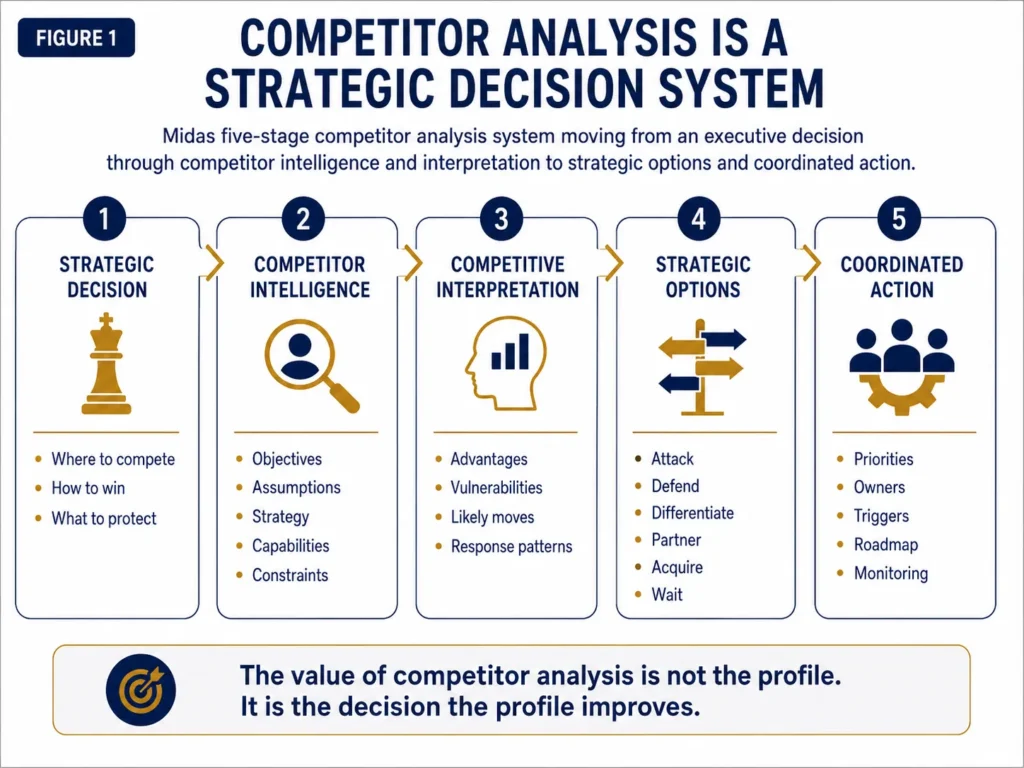
Figure 1. Competitor analysis creates value when intelligence about rivals changes your strategic options, priorities, and actions.
Which Strategic Decision Are You Trying to Make?
A useful competitor-analysis engagement begins with your decision—not with a request to find everything about several companies.
Where should you compete?
You may need to prioritize countries, regions, segments, applications, channels, or customer groups. Market attractiveness alone is not enough. An opportunity becomes more or less attractive depending on competitor strength, customer loyalty, barriers to entry, likely retaliation, and the resources required to win.
How should you win?
You may need to sharpen your value proposition, change your service model, improve availability, strengthen a channel, redesign the offer, or focus on a competitor weakness that customers genuinely care about.
How should you price?
A competitor’s visible price may reflect cost position, inventory, capacity, channel margins, financing, bundling, account strategy, or a temporary commercial move. We help you understand the logic behind the price so you can respond selectively rather than react across the entire market.
Which customers and accounts should you prioritize?
Competitor analysis can reveal which accounts are truly loyal, which are protected by switching costs, which are dissatisfied, and where a credible opening exists. It can also show how competitors may defend the accounts that matter most to them.
Which channel or partner model should you use?
You may need to select, replace, negotiate with, or challenge distributors, dealers, integrators, importers, or service partners. We assess customer ownership, geographic reach, technical capability, inventory, credit, commitment, conflicts, and the partner’s strategic importance to competitors.
Should you enter, invest, partner, or acquire?
A competitor or local company may offer market access, production, technology, customers, licenses, distribution, or service capabilities that would take years to build. We can assess whether organic entry, partnership, acquisition, or another route gives you the stronger strategic position.
How should you respond to a competitive move?
A rival may launch a product, cut price, acquire a company, change distributors, expand capacity, enter your market, or target your strategic accounts. We help you interpret the objective behind the move, estimate its likely impact, and compare response options before urgency narrows your choices.
How can you avoid being surprised?
We can identify the signals that would indicate a competitor is preparing to act and define what your team should monitor, who should own the response, and which trigger should move you from observation to action.
What a Strategic Competitor Analysis Must Explain
Objectives and priorities
What is the competitor trying to achieve? It may be protecting leadership, increasing utilization, entering a higher-margin segment, defending installed base, securing distribution, preparing an acquisition, accelerating growth, or preserving cash.
Assumptions and management beliefs
What does its leadership appear to believe about the market, customers, technology, regulation, channels, and your company? Competitors can make rational decisions based on assumptions that differ from yours.
Current strategy and business model
Where does the competitor choose to compete? How does it create and capture value? Which customers, products, channels, capabilities, and economic drivers are central to its model?
Capabilities and sources of advantage
Relevant capabilities may include cost, production, technology, brand, sales, relationships, service, installed base, regulatory access, supply, financing, data, talent, channels, or decision speed.
Constraints and vulnerabilities
Capacity, cash, imported supply, channel dependence, service gaps, product complexity, organizational approval, customer concentration, reputation, or regulation may limit the competitor’s response.
Likely moves and response patterns
Which accounts, products, and markets is the competitor most likely to defend? Will it lower price broadly, respond selectively, improve service, pressure channels, accelerate a launch, partner, acquire, or avoid escalation?
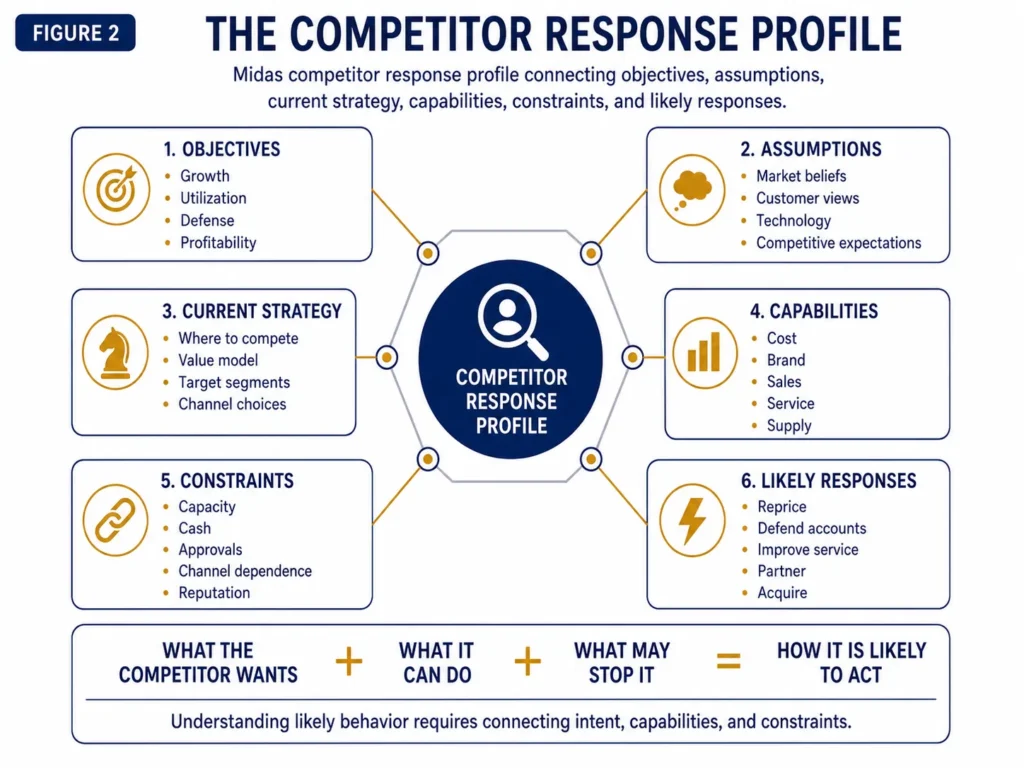
Figure 2. Understanding likely behavior requires connecting what a competitor wants with what it can execute and what may constrain it.
From Competitor Intelligence Consulting to Strategic Options
Finding that a competitor is strong does not tell you what to do. Your leadership team still needs to interpret the implication and compare alternatives.
Our recommendations may help you decide whether to:
- Attack a vulnerable segment, region, channel, or account.
- Defend a profitable position before the competitor invests further.
- Differentiate around a customer need competitors do not satisfy.
- Change pricing, terms, bundling, financing, or service selectively.
- Improve supply, availability, capacity, or response speed.
- Appoint, replace, support, or challenge a channel partner.
- Reposition, simplify, expand, or rationalize a product portfolio.
- Partner with a company that closes a capability or access gap.
- Acquire a competitor, distributor, technology, asset, or route to market.
- Delay a move until the competitive economics become more attractive.
- Prepare a contingent response and monitor defined signals.
We make the trade-offs explicit. An aggressive response may protect share but destroy margin. A fast entry may alert an incumbent before your capabilities are ready. An acquisition may provide access but bring integration risk. A broad price reduction may be unnecessary if the competitor is discounting only a few strategic accounts.
When Competitor Analysis Consulting Should Be Combined with Other Services
Market Analysis Consulting
Use market analysis when you also need to understand demand, customer needs, market size, growth, value pools, regulation, and overall attractiveness.
Benchmarking Consulting
Use benchmarking when the question is why competitors or reference companies perform better and which practices or capabilities explain the gap.
Win-Loss Analysis
Use win-loss analysis when you need direct customer evidence about why you win, lose, retain, or fail to convert opportunities.
Value Proposition Consulting
Use value-proposition consulting when competitor insight reveals that your offer is insufficiently differentiated.
Business Wargaming
Use business wargaming when your move is likely to trigger reactions and countermoves. A simulation lets your leadership team stress-test strategy before committing resources.
Strategy Consulting
Use broader strategy consulting when the central question is where to compete, how to win, which capabilities to build, and how to allocate resources.
How Our Competitor Analysis Consulting Engagement Works
1. Define the decision and critical assumptions
We clarify the objective, scope, timing, markets, competitors, assumptions, internal disagreements, and ways competitor behavior could affect the outcome.
2. Translate the decision into intelligence questions
We identify what you need to know in order to choose among options. Questions may concern economics, customers, pricing, channels, production, service, investments, acquisitions, vulnerabilities, or likely responses.
3. Build and triangulate the fact base
We combine relevant secondary research with primary market insight. Depending on the assignment, this may include interviews with customers, distributors, dealers, suppliers, former industry participants, experts, regulators, and institutional buyers.
4. Develop competitor analysis and response profiles
We connect the evidence to each competitor’s objectives, assumptions, strategy, capabilities, constraints, vulnerabilities, and likely moves.
5. Compare strategic options
We compare options according to impact, risk, feasibility, timing, investment, likely reaction, and fit with your capabilities.
6. Align your team and support action
We present the results in an executive-ready format and work with your team to define priorities, ownership, triggers, and next steps. Preliminary findings are shared during the engagement so the project can evolve with the decision.
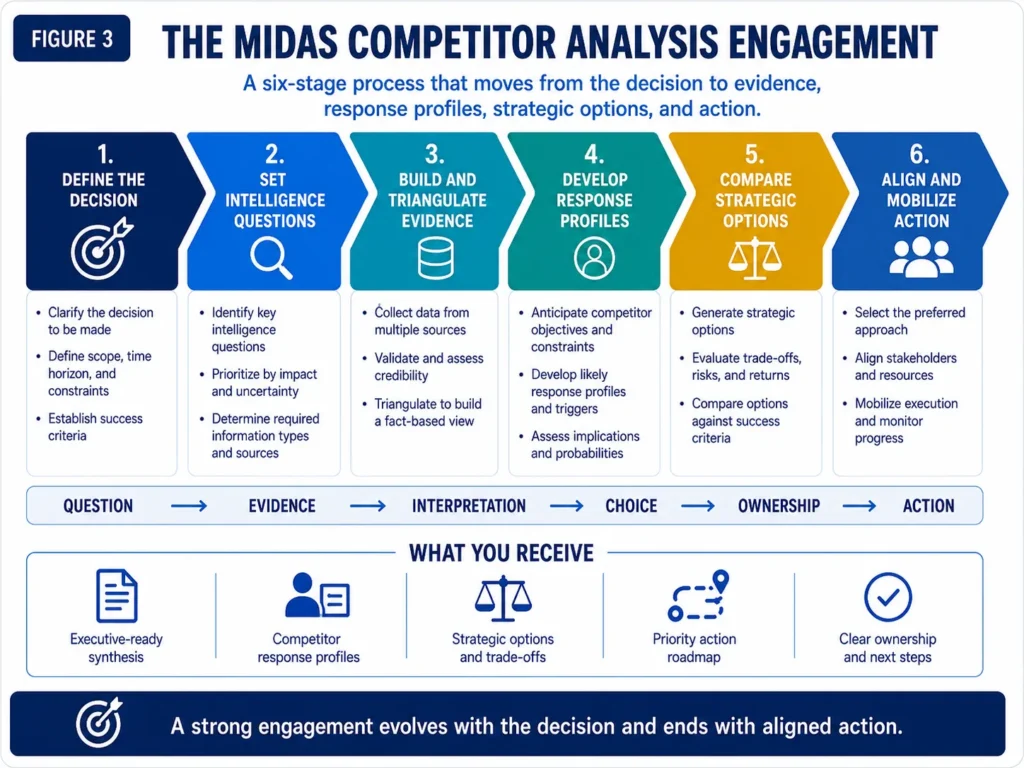
Figure 3. Our engagement begins with your decision and ends with aligned strategic choices, ownership, and action.
What You Receive with Our Competitor Analysis Consulting
- An executive synthesis of the competitive situation and its strategic implications.
- Prioritized competitor, substitute, partner, or target maps.
- Competitor objectives, assumptions, strategies, capabilities, constraints, and vulnerability profiles.
- Product, pricing, channel, service, value-proposition, and business-model comparisons.
- Customer, distributor, supplier, expert, or institutional perspectives.
- Regional, country, segment, channel, application, and account-level comparisons.
- Competitor response profiles and plausible future moves.
- Early-warning indicators and management triggers.
- Strategic options with trade-offs, risks, and recommended actions.
- An executive presentation and leadership working session.
- A prioritized action roadmap with responsibilities and next steps.
How We Maintain Ethical and Legal Standards
We comply with SCIP’s Code of Ethics, the profession’s gold standard. We comply with applicable laws, accurately disclose relevant identity and organizational information before interviews, avoid conflicts of interest, provide honest recommendations, and promote ethical conduct throughout the engagement.
We do not seek trade secrets, request confidential documents, misrepresent who we are, induce contractual breaches, or facilitate improper exchanges of competitively sensitive information.
Our analysis is built from lawful public information, professional primary research, observable market behavior, customer and channel perspectives, economic logic, and disciplined strategic inference.
Review SCIP’s ethical intelligence guidance and Code of Ethics.
Why Leadership Teams Choose Midas for Competitor Analysis Consulting
We focus on the decision, not the data collection
We begin with the strategic choice you need to make and collect evidence according to its ability to change that choice.
We explain why competitors act
We go beyond visible products, prices, and announcements to examine objectives, assumptions, incentives, capabilities, and constraints.
We connect current insight with future response
We identify likely moves, plausible reactions, observable signals, and contingent actions without pretending that one future can be predicted with certainty.
We combine local depth with regional perspective
We can investigate specific countries and markets while preserving a common framework for regional comparison and coordination.
We use primary research where public information is insufficient
Our work can include structured interviews with knowledgeable market participants when databases and public sources do not answer the strategic question.
We work interactively with your team
Preliminary findings and implications are discussed during the project, improving relevance and creating ownership of the recommendation.
We bring extensive experience in competitor analysis consulting
Midas Consulting has completed more than 300 competitor-analysis projects across Latin America, Spain, and Portugal, supporting decisions in a wide range of B2B, B2C, industrial, healthcare, technology, consumer, and regulated markets.
“We’ve done competitor analysis before, but never have I been so clear on how and why competitors act the way they do.”
— Regional Leader
“They are responsive, professional, detail-oriented, and client-focused. I love that Midas prioritizes ‘co-success with the client’ and works hard to meet our needs and solve our problems.”
— Executive Chair
Industries We Serve with our Competitor Analysis Consulting
Selected Strategic Applications
Preparing a defense against new competition
We assessed how biosimilar competitors could enter multiple Latin American markets, how pricing, regulation, reimbursement, partnerships, and commercialization would differ, and which defenses required regional coordination or local adaptation.
Selecting an acquisition target
We compared five private Brazilian competitors across market position, customers, capacity, growth, profitability, risk, owner willingness, and strategic fit. The analysis allowed the client to prioritize the strongest target and ultimately improve its position through acquisition.
Reframing pricing and channel strategy
We investigated equipment configurations, effective pricing, warranties, financing, distribution, and customer value in Chile and Brazil. The findings helped the client adjust pricing structures, channel choices, warranties, and regional sales approaches.
Avoiding the wrong transaction
We discreetly assessed whether a Peruvian competitor was willing to sell a production line that could accelerate market entry. The seller’s conditions were unattractive, allowing the client to avoid unnecessary exposure and negotiation.
Competitor Analysis Across Latin America
Learn More About the Strategic Discipline
For a detailed educational explanation of competitor analysis, including the process, analytical dimensions, benefits, strengths, and limitations, visit our Competitor Analysis Step-by-Step Guide.
For early-warning systems, competitor moves, response triggers, wargaming, and strategic preparedness, visit Strategic Foresight and Competitive Response: Executive Insights.
Frequently Asked Questions About Competitor Analysis Consulting
What is competitor analysis consulting?
It is a decision-oriented service that helps your leadership team understand how rivals compete, why they act, where they are strong or vulnerable, how they may respond, and what those findings mean for your strategy.
How is this different from buying a market report?
A market report provides standardized information. Our work begins with your decision, develops tailored intelligence questions, combines secondary and primary research, interprets competitor behavior, and recommends actions specific to your company.
Can you predict what a competitor will do with your competitor analysis consulting?
No analysis can predict behavior with certainty. We develop evidence-based hypotheses, assess confidence levels, identify observable indicators, and help you prepare for several plausible outcomes.
Can you investigate private companies?
Yes. We can assess private companies through lawful public sources, market interviews, operational evidence, customer and channel perspectives, economic logic, and other ethical methods.
Can you analyze prices, discounts, and commercial terms with your competitor analysis consulting?
When relevant and ethically obtainable, we can assess list prices, effective prices, discounts, rebates, bundles, financing, payment terms, channel margins, service inclusions, and account-specific patterns.
Can you analyze likely competitor reactions to our strategy?
Yes. We can examine objectives, incentives, capabilities, constraints, historical behavior, and priority markets or accounts to develop plausible response profiles.
Can the engagement cover several countries with your competitor analysis consulting?
Yes. We establish common analytical dimensions while adapting the evidence and interpretation to each country.
Do you conduct interviews?
Yes, when primary research is useful and appropriate. Interviews may involve customers, distributors, suppliers, former industry participants, specialists, regulators, and institutional buyers.
How do you protect confidentiality in your competitor analysis consulting?
We design the research approach to protect your interests, comply with applicable laws and SCIP’s Code of Ethics, and avoid unnecessary disclosure.
How long does a competitor analysis consulting project take?
The timing depends on the decision, number of competitors, markets, interviews, and questions. We scope the work around your deadline and can deliver preliminary findings in phases.
What happens during the project?
You receive preliminary findings before the final delivery so your team can challenge conclusions, refine priorities, and redirect research toward emerging questions.
About Midas Competitor Analysis Consulting
Midas Consulting is the corporate author and provider of this competitor-analysis service.
We help C-level executives and leadership teams make stronger decisions through competitor analysis, strategic intelligence, market analysis, benchmarking, market entry, go-to-market strategy, value proposition development, win-loss analysis, business wargaming, and strategy consulting.
We have completed more than 300 competitor-analysis projects across Latin America, Spain, and Portugal.
Our competitor-analysis practice is led by Adrian Alvarez, PhD, Managing Partner of Midas Consulting, Wharton Alumnus, MBA Professor at Universidad Argentina de la Empresa (UADE), and Competitive Intelligence Fellow. His experience strengthens the firm’s methodology, but the service, recommendations, and page authorship belong to Midas Consulting as an organization.
Last reviewed: August 2026
What Competitive Decision Are You Facing?
You may be preparing a market entry, defending share, reviewing pricing, challenging an incumbent, selecting a distributor, evaluating an acquisition, launching a product, or trying to understand why a competitor continues to outperform you.
You do not need a generic profile of the market. You need to understand how competitor behavior changes your options and what your leadership team should do next.
In an initial conversation, we will discuss your decision, the competitors and markets involved, what your team already knows, the deadline you face, and which uncertainties could materially change the strategy.
We can then propose a tailored engagement with a clear scope, research approach, collaboration model, deliverables, timing, and investment.
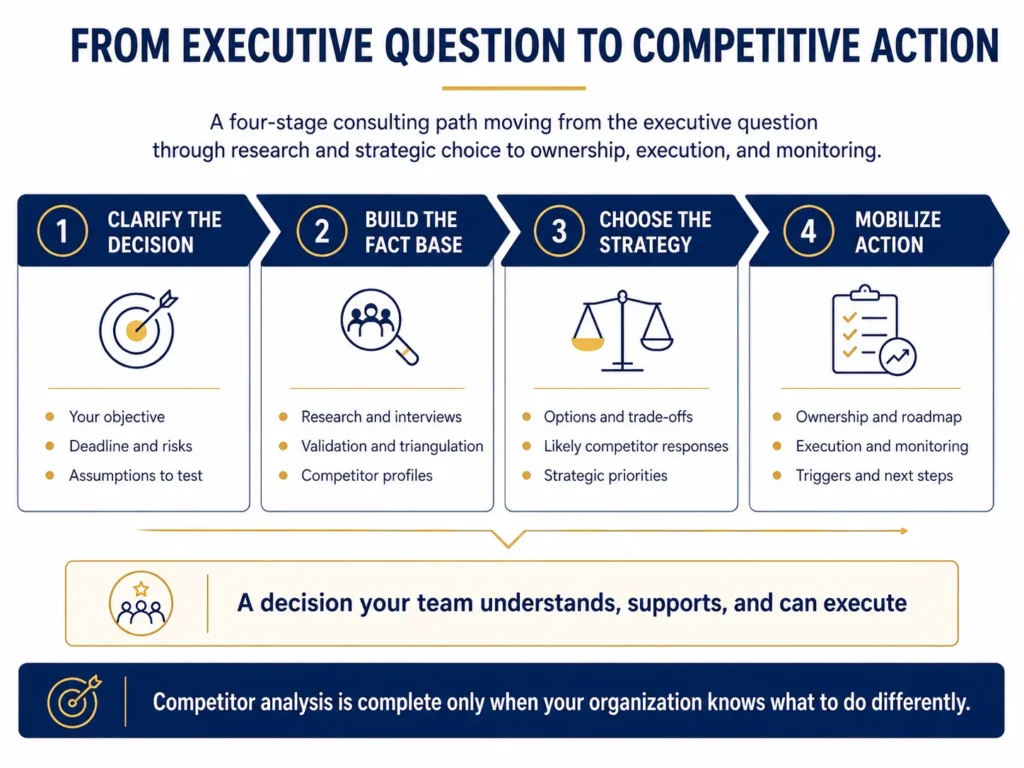
Figure 4. The engagement is complete when your team has an evidence-based choice, clear ownership, and a practical response plan.