

Wargame Consulting to Craft or Improve Your Strategy.
A strategy can look convincing in the boardroom and still fail once competitors, customers, distributors, regulators, or other market actors react. If their response could materially change the outcome, you should test that reaction before you commit major resources.
That is the purpose of our wargame consulting. At Midas Consulting, we design and facilitate structured business simulations that help your leadership team pressure-test strategic moves, anticipate plausible competitor reactions, reveal blind spots, prepare countermoves, and align around what to do next.
A business wargame is not a prediction exercise, a role-playing game for its own sake, or another brainstorming workshop. It is a disciplined decision process. We define the strategic question, build the competitive fact base, create evidence-based playbooks, simulate moves and reactions, challenge assumptions, and translate what your team learns into actions, owners, priorities, early-warning indicators, and follow-up.
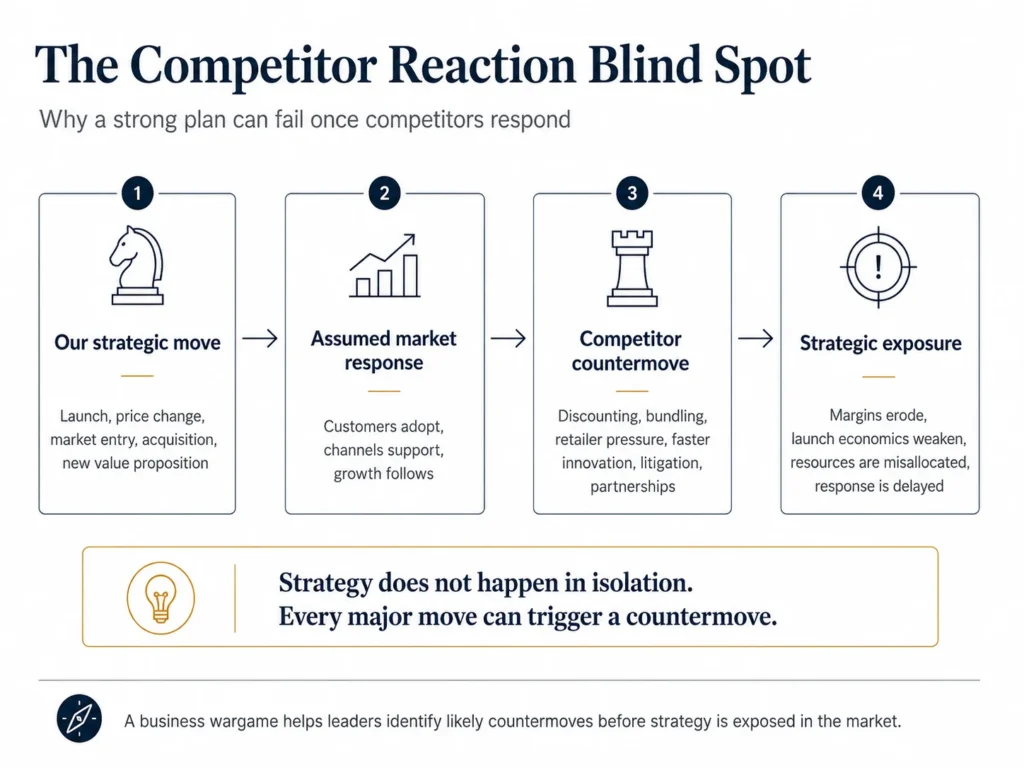
Figure 1: A strategy rarely unfolds in isolation. A business wargame helps you anticipate likely countermoves before competitor reactions erode margins, weaken launch economics, misallocate resources, or force a late response.
When a Business Wargame Is the Right Tool
You do not need a wargame every time you make a strategic decision. It becomes valuable when the move matters, other actors can influence the result, and understanding their reactions could improve the decision before execution.
A wargame can be particularly useful when you need to:
- Test a market-entry strategy before committing resources.
- Anticipate competitor responses to a product launch, pricing move, acquisition, channel strategy, commercial campaign, or repositioning.
- Evaluate whether your strategy is vulnerable to retaliation, imitation, escalation, or disruption.
- Prepare offensive and defensive countermoves before competitors act.
- Challenge internal assumptions that competitors, customers, distributors, or regulators will behave as expected.
- Align marketing, sales, finance, operations, product, regional, and leadership teams around competitive risks and implementation priorities.
- Explore how customers, substitutes, channels, partners, regulators, or new entrants could change the outcome.
- Decide whether an important strategic move is robust enough to execute or needs to be redesigned first.
The key question is not whether a wargame would be interesting. The key question is whether better anticipation of market reactions could change your strategy, reduce risk, or improve preparedness.
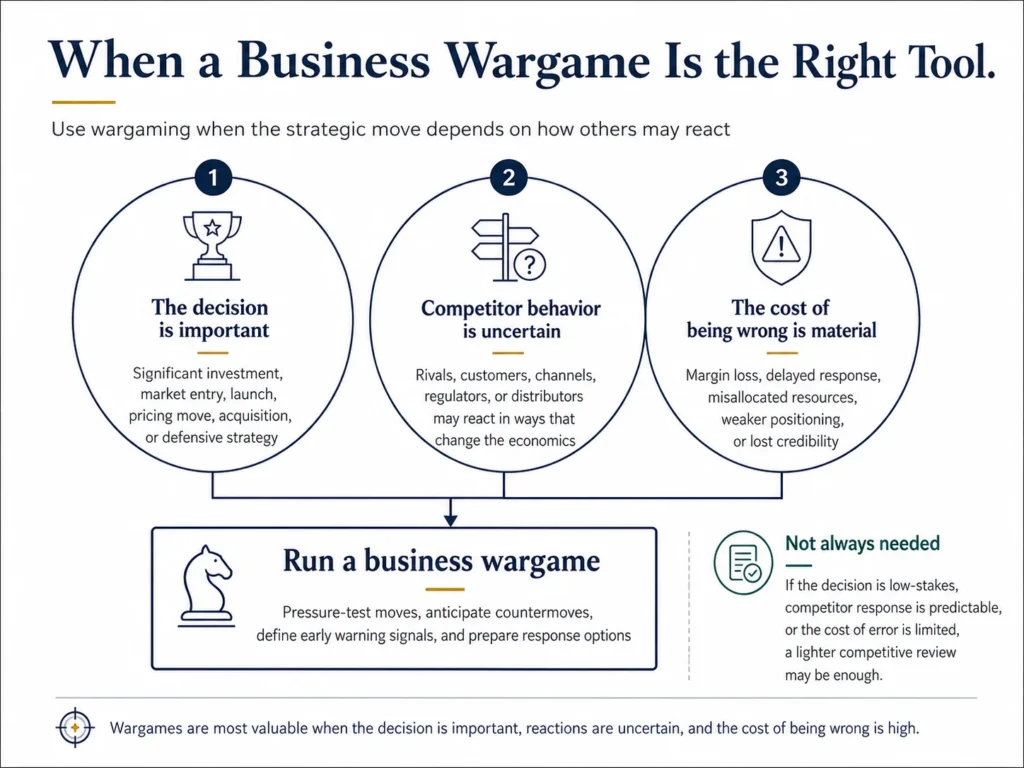
Figure 2: Wargaming creates the most value when three conditions come together: the decision is important, market reactions are uncertain, and the cost of getting the response wrong is material.
What a Business Wargame Actually Tests
Most strategies contain assumptions that are never stated explicitly: a competitor will not respond quickly, customers will value the new offer as expected, distributors will support the move, price changes will not trigger escalation, or regulation will remain stable.
A wargame makes those assumptions visible by forcing your team to see the market from outside your own organization. Participants temporarily stop defending the current plan and instead ask what each relevant actor wants, what it is capable of doing, what constraints it faces, and which response would make sense from its perspective.
That distinction matters. The goal is not to predict one exact future. It is to identify plausible reactions, test whether your strategy remains attractive under pressure, and prepare responses before uncertainty becomes a real market problem.
Three Executive Benefits of Wargame Consulting
1. Pressure-test the strategy before competitors do
A plan may look attractive while everyone in the room evaluates it from your company’s perspective. The picture changes when a competitor team explores how it might cut price, change positioning, lock up distributors, protect key customers, launch a counteroffer, expand capacity, or escalate commercially.
The simulation helps you see whether the strategy remains strong once the market stops being passive.
2. Reveal blind spots and hidden assumptions
Some of the most important risks are not visible in the strategy itself. They sit inside the assumptions behind it. By asking teams to behave like other market actors, the wargame exposes assumptions that may otherwise go unchallenged.
Sometimes you discover a serious vulnerability. Sometimes you discover that a competitor is less capable of responding than your organization assumed. Both insights can materially change the decision.
3. Build alignment around countermoves and execution
Competitive reactions rarely affect only one function. A competitor move may require decisions across pricing, sales, marketing, operations, finance, legal, product, supply chain, channels, or regional leadership.
A well-designed wargame lets those functions see the same risks, understand the reasoning behind the response, and build practical countermoves together. That improves both strategic quality and implementation readiness.
The Quality of the Wargame Depends on What Happens Before the Session
The live simulation is the most visible part of a wargame, but much of its value is created during preparation. If the strategic question is vague, the competitive intelligence is weak, the playbooks are superficial, or participants arrive unprepared, the session may generate lively discussion without creating reliable strategic insight.
That is why Midas treats preparation as a core part of the engagement. We work with you to define the decision, identify the actors that matter, build the fact base, prepare evidence-based playbooks, select the right participants, design the simulation rounds, establish decision criteria, and test the mechanics before the event.
When important information is missing, preparation may include competitor analysis, market analysis, customer or distributor interviews, pricing analysis, channel assessment, regulatory research, internal data, or other strategic intelligence.
If you want the full methodology, our step-by-step guide to designing and implementing a business wargame explains the preparation phase, playbooks, participant selection, simulation rounds, debrief, and conversion of insights into action in detail.
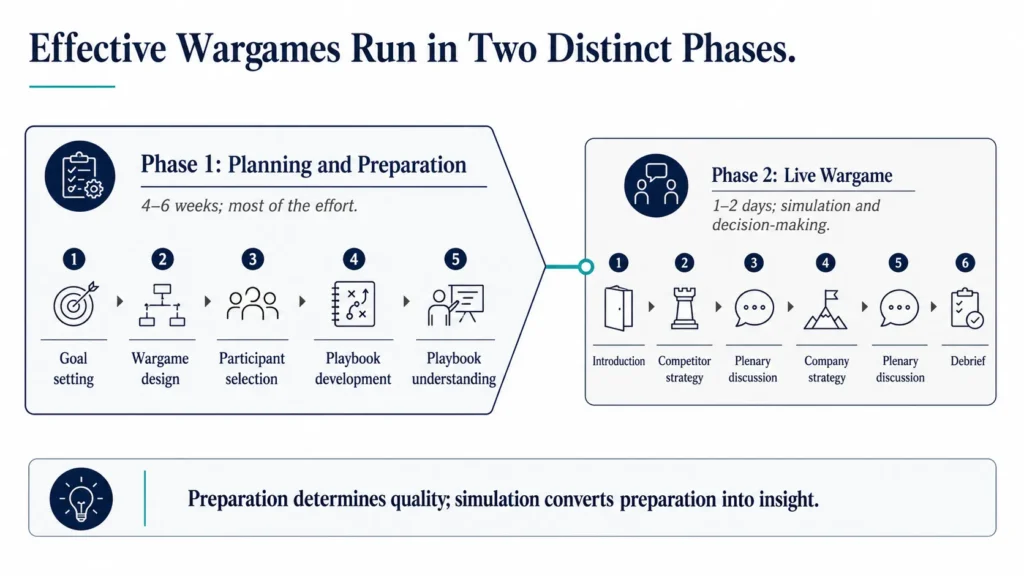
Figure 3: Strong wargames are built twice: first through disciplined preparation and a credible fact base, then through a structured live simulation that turns reactions into strategic learning.
How Our Wargame Consulting Engagement Works
1. Define the strategic decision
We begin with the move or decision you need to test. It may be market entry, a new product, a pricing action, a channel shift, a competitive response, an acquisition, a repositioning, a defensive strategy, or another high-stakes choice.
2. Identify the actors that can change the outcome
We determine which players should be represented. Direct competitors may be central, but customers, distributors, regulators, substitutes, new entrants, strategic partners, or other market actors may matter just as much.
3. Build the competitive fact base
The simulation should be grounded in evidence. We assemble the information participants need to understand objectives, incentives, capabilities, constraints, customer relationships, economics, likely priorities, and plausible moves.
4. Develop evidence-based playbooks
Each team receives a playbook that summarizes the actor it will represent. A strong playbook does not tell participants exactly what to do. It gives them enough evidence and context to think credibly from that actor’s perspective.
5. Design and rehearse the simulation
We structure the rounds, moves, presentations, reactions, challenges, decision criteria, timing, and outputs. We also pre-test the mechanics so the live session is focused on strategic thinking rather than process confusion.
6. Simulate moves and reactions
During the live wargame, teams think and act from the perspective of their assigned players. They develop moves, present their logic, respond to the scenario, and challenge one another’s assumptions.
7. Design and prioritize countermoves
Your team then returns to your company’s perspective. We identify what should change, which responses should be prepared, and which actions deserve priority based on impact, probability, feasibility, urgency, and strategic importance.
8. Translate learning into execution
The engagement ends with decisions, not observations. We consolidate the lessons into strategic implications, countermoves, priorities, owners, timing, early-warning indicators, and follow-up actions.
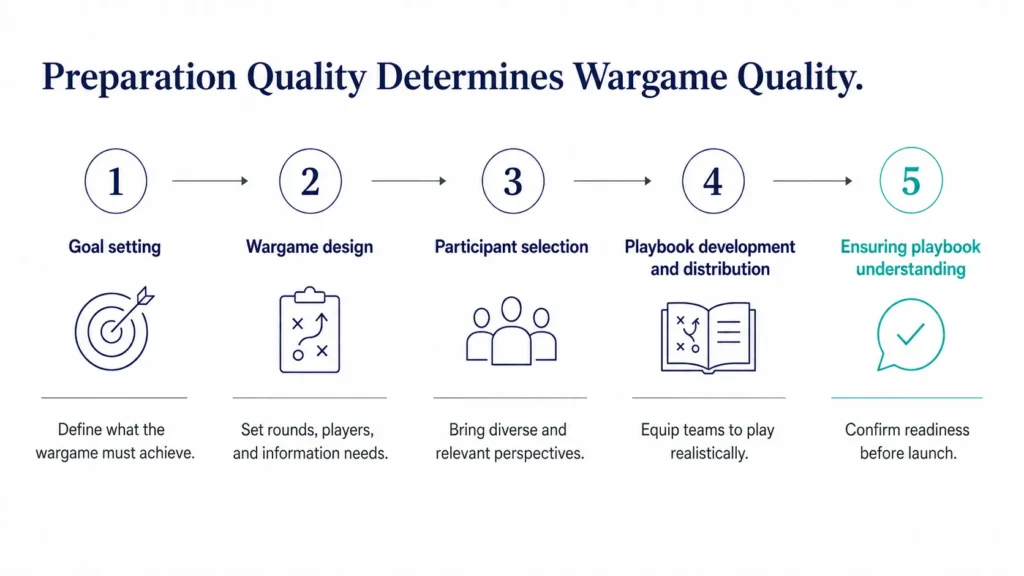
Figure 4: The goal of a wargame is not to predict the exact future. It is to expose fragile assumptions, simulate plausible reactions, and prepare stronger countermoves before the market reacts.
What You Receive From a Wargame Consulting Engagement
The precise deliverables depend on the decision and scope, but a typical engagement may include:
- A clearly defined strategic question and simulation objective.
- Identification of the competitors and other actors that matter.
- Competitive and market fact base relevant to the game.
- Evidence-based playbooks for each simulated player or team.
- Participant briefing and pre-read materials.
- Custom-designed simulation rounds and facilitation.
- Competitor or actor moves and plausible reaction patterns.
- Strategic vulnerabilities and assumptions exposed during the exercise.
- Prioritized offensive and defensive countermoves.
- Changes recommended to the strategy or execution plan.
- Early-warning indicators and decision triggers.
- Action plan with owners, timing, and follow-up.
Wargaming and Strategic Foresight: Prepare Before the Signal Becomes a Crisis
A wargame is especially powerful when it becomes part of a broader preparedness system rather than a one-time event. The simulation can reveal which assumptions matter most, which competitor or market developments deserve attention, and which signals would indicate that a prepared response should be activated.
That creates a natural link with strategic foresight. Instead of attempting to forecast one exact future, your leadership team identifies plausible developments, monitors weak signals, defines thresholds, and prepares responses in advance.
Our Strategic Foresight and Competitive Response executive insights bring together Midas thinking on early-warning systems, competitive intelligence, competitor response, wargaming, and the connection between strategic intent and market execution.
Why Executives Choose Midas for Wargame Consulting
More than 20 years facilitating business wargames
Midas has been facilitating business wargames for more than two decades. That experience matters because the quality of a simulation depends on much more than facilitation on the day: it requires the right strategic question, credible player behavior, relevant competitive intelligence, disciplined playbooks, realistic rounds, careful participant preparation, and a debrief that produces decisions.
We prepare before asking your team to simulate
We do not ask executives to improvise competitor behavior from intuition alone. Where necessary, we strengthen the fact base before the event so the simulation reflects plausible objectives, capabilities, incentives, constraints, and market realities.
We design around your decision, not a standard game
Every wargame is built around the strategic move you need to test, the relevant actors, your market, your industry, your geographic scope, and the decisions the leadership team needs to make afterward.
We involve the people who will need to execute
Cross-functional participation helps surface operational barriers before implementation and builds shared understanding around the response. Depending on the question, participants may include leadership, marketing, sales, finance, product, operations, regulatory, supply chain, regional teams, or other relevant functions.
We rehearse the mechanics before the live session
The live event should be used for strategic thinking, not debugging the format. We test the process, timing, materials, and likely simulation paths in advance so participants can focus on the decisions that matter.
Clients recommend the experience
Client feedback collected by Midas between 2020 and 2025 produced a Net Promoter Score of 82.2%. We treat that as one trust indicator alongside repeat assignments, referrals, and participant feedback about the quality of the preparation, facilitation, insights, and strategic outputs.
Industries We Serve with Wargame Consulting
We have experience in a wide range of industries, such as:
A Wargame Example: Reversing a Market-Share Decline
In one engagement, a multinational consumer-goods company faced a prolonged loss of market share in a highly competitive environment. A new manager wanted the organization to move beyond incremental responses and develop a more proactive competitive strategy.
Midas facilitated two rounds of wargaming. The first focused on understanding the competitor’s likely next moves. The second used those insights to design and challenge the company’s own counter-strategies.
The process helped the team move away from one undifferentiated response and develop strategies adapted to different regional conditions. It also strengthened coordination and commitment across the organization and shifted the team from reacting to competitors toward anticipating them.
The client subsequently reversed the market-share decline and regained momentum. As with any case example, results depend on market conditions, company capabilities, implementation quality, and other factors; no specific outcome is guaranteed.
What Clients Say About Working With Midas
“We left with great ideas to grow our market share. I realized there’s not just one way to win, but many.”
Marketing Manager
“Thanks to Midas, we walked away with a clear, well-organized strategy. The collaboration between different business units and the fresh market insights were outstanding.”
Go-to-Market Manager
“They were with us every step of the way. I believe that was the key to the event’s success.”
Senior Brand Manager
Wargame Consulting Works Best With the Right Supporting Evidence
A wargame can be a focused standalone engagement, but some strategic questions become more powerful when other Midas disciplines strengthen the preparation or follow-up.
Competitor analysis can build a stronger understanding of rival objectives, assumptions, capabilities, constraints, and likely moves before the simulation. Market analysis can clarify demand, customers, channels, economics, regulation, and market dynamics. Strategy consulting can help leadership incorporate the learning into broader strategic choices and implementation priorities.
For high-uncertainty decisions, strategic foresight can extend the exercise into early-warning indicators and response triggers. For broader executive challenges that require several disciplines around one high-stakes decision, our business strategic advisory approach may be the better starting point.
If you want a broader view of all the problems and consulting disciplines Midas can support, visit our Business Consulting Services hub.
Wargame Consulting vs. the Step-by-Step Guide: Which Should You Read?
This page is the service page. It explains when Midas wargame consulting can help, what the engagement is designed to achieve, what you receive, and why leadership teams use us.
Our How to Design and Implement a Wargame article is the methodology guide. Use it when you want to understand in detail how to define the strategic question, identify players, build playbooks, select participants, design rounds, facilitate the simulation, prioritize implications, and run the debrief.
Our Strategic Foresight and Competitive Response page is the authority layer. It connects wargaming with early warning, competitor response, strategic intelligence, and executive decision-making under uncertainty.
Frequently Asked Questions About Wargame Consulting
What is a business wargame?
A business wargame is a structured strategic simulation in which participants role-play competitors, customers, distributors, regulators, or other relevant actors to test how a strategic situation may evolve. The objective is to challenge assumptions, explore plausible reactions, prepare countermoves, and improve the decision before execution.
Can a wargame accurately predict what competitors will do?
No method can predict competitor behavior with certainty. A strong wargame instead narrows uncertainty by grounding the simulation in evidence, incentives, capabilities, constraints, and plausible scenarios. Its value is preparedness, not false precision.
How is a wargame different from a strategy workshop?
A strategy workshop usually focuses on your organization’s choices, priorities, and alignment. A wargame deliberately asks participants to think like competitors or other market actors and simulate how they might react. The two approaches can complement each other, but they solve different problems.
Do you need competitor intelligence before a wargame?
Usually, you need enough evidence for the simulated players to behave plausibly. If the available fact base is weak, Midas can conduct competitor analysis, market research, customer or channel interviews, pricing analysis, or another targeted workstream before the live session.
Who should participate in a wargame consulting workshop?
The group should include the functions whose knowledge or execution responsibilities matter to the decision. Depending on the issue, that can include senior leadership, marketing, sales, finance, product, operations, supply chain, regulatory, legal, market intelligence, country teams, or regional teams.
Can customers, distributors, or regulators be simulated in a wargame consulting workshop too?
Yes. Direct competitors are only one part of the market system. A strong simulation includes whichever actors could materially change the outcome, including customers, channels, distributors, regulators, substitutes, partners, or new entrants.
How long does a wargame consulting project take?
Timing depends on the strategic question, number of players, research required, geographic scope, participant group, and complexity of the simulation. The live session may be one or more days, but the preparation normally begins weeks earlier because the fact base, playbooks, simulation design, participant briefing, and rehearsal are critical to the quality of the outcome.
Can a wargame consulting project be run virtually?
Yes. Virtual wargames can work well with the right group size, collaboration tools, breakout structure, facilitation, and preparation. In-person sessions can be preferable when the exercise involves a larger executive group, complex cross-functional interaction, or several simulation rounds.
What should happen after the wargame consulting?
The team should convert the learning into decisions: which strategic assumptions changed, which risks matter most, which countermoves should be prepared, which actions should begin now, which signals should be monitored, who owns each response, and when leadership will review the plan.
How do you protect confidential information?
We treat client information, strategic plans, research objectives, playbooks, and simulation outputs as confidential. When appropriate, projects can operate under a mutual nondisclosure agreement. Public case examples are anonymized unless a client has explicitly authorized disclosure.
About Midas Consulting — Corporate Author
Midas Consulting is the corporate author and provider of this wargame consulting service. We have facilitated business wargames for more than 20 years and help leadership teams test strategy, anticipate competitor and market reactions, reveal blind spots, prepare countermoves, and improve execution readiness.
Our broader consulting experience spans more than 25 years across Latin America and selected international markets. Our partners and directors bring senior experience in strategy, competitive intelligence, market research, marketing, sales, finance, business development, and operating leadership. You can learn more about the people behind the work on our Midas Consulting team page.
Our wargame consulting practice is led by Adrian Alvarez, PhD, Managing Partner of Midas Consulting, Wharton Alumnus, MBA Professor at Universidad Argentina de la Empresa (UADE), Competitive Intelligence Fellow, and former SCIP Board Member. His experience strengthens the firm’s methodology, but the service, recommendations, and page authorship belong to Midas Consulting as an organization.
Last reviewed: August 2026
What Strategic Move Would You Like to Test Before You Make It?
You may be preparing a market entry, launch, price move, channel change, acquisition, repositioning, competitive response, or another strategic initiative where the reactions of others could change the outcome.
Bring us the decision you need to test. In an initial conversation, we can discuss the strategic question, the players that matter, what your team already knows, where the uncertainty sits, and whether a business wargame is the right tool—or whether another analytical step should come first.