
Win-loss analysis is often treated as a sales exercise. At Midas Consulting, we see it differently: win-loss analysis is a strategic buyer insight tool that helps companies understand why customers choose them, why they choose competitors, and what must change to improve growth, differentiation, and execution.
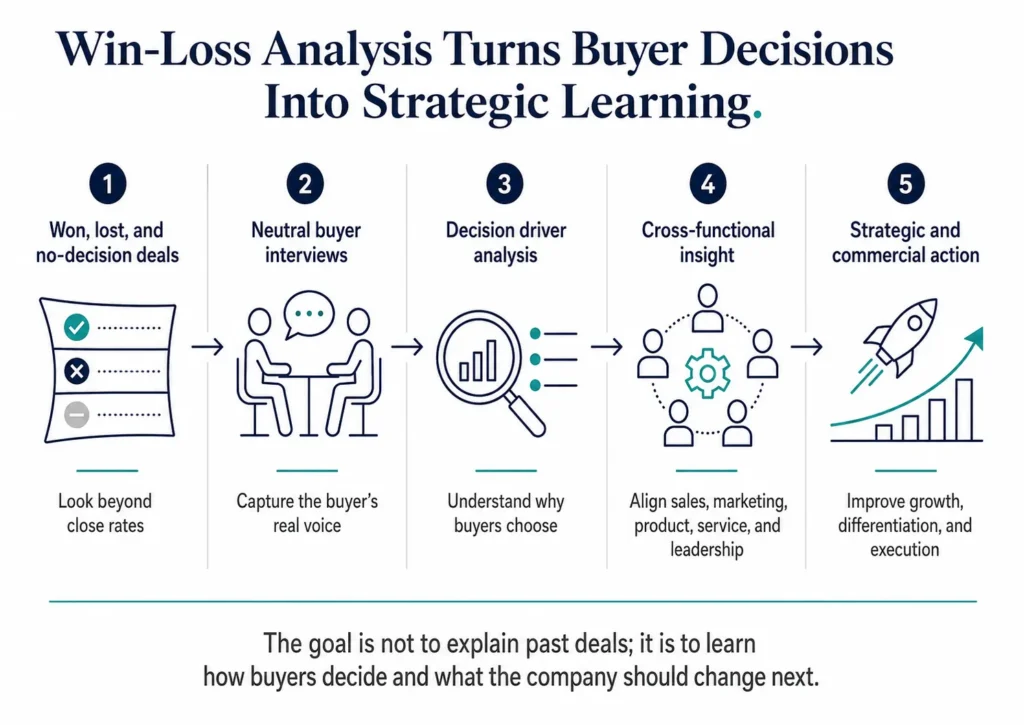
Figure 1: The goal is not to explain past deals; it is to learn how buyers decide and what the company should change next.
The real value of win-loss analysis is not simply knowing why a deal was won or lost. The real value is uncovering the decision drivers behind customer behavior: what buyers valued, what they doubted, which competitors they considered, how they compared alternatives, what risks they perceived, and what ultimately shaped the decision.
This matters because internal explanations are often incomplete. Sales teams may attribute losses to price, timing, or lack of budget. Product teams may assume the issue was a missing feature. Marketing teams may believe the positioning was clear. But buyers often see the decision differently. Win-loss analysis creates an external reality check by going directly to the people who made or influenced the buying decision.
This is especially important in B2B markets, where buying decisions are complex, involve multiple stakeholders, and often depend on risk perception, implementation confidence, procurement logic, internal alignment, service expectations, and competitive alternatives. Research and practitioner guidance on win-loss programs emphasize the importance of capturing feedback directly from buyers, not relying only on CRM fields or internal interpretations.
For that reason, we often combine win-loss analysis with value proposition consulting, competitor analysis, market analysis, benchmarking, brand consulting, and strategy workshops.
In this article, we explain what win-loss analysis is, when it is most useful, how it creates value beyond sales, how to run it effectively, where its limitations are, and how it can help leadership teams make better strategic decisions.
When Win-Loss Analysis Is the Right Tool
Win-loss analysis is most useful when your company needs to understand how buyers actually make decisions. It is especially valuable when leadership teams need to:
- Understand why the company is winning certain opportunities and losing others.
- Identify whether losses are driven by price, product fit, service expectations, sales process, risk perception, competitor strength, or unclear differentiation.
- Clarify why customers choose competitors and what competitors are doing better in the buyer’s eyes.
- Improve the value proposition, messaging, sales tools, proposals, demos, or negotiation approach.
- Detect gaps between what internal teams believe and what customers actually think.
- Prioritize product, service, onboarding, support, pricing, or channel improvements based on real buyer feedback.
- Build a stronger fact base before launching a product, redesigning a go-to-market strategy, entering a new segment, or repositioning the company.
The key point is that win-loss analysis should not be designed only to ask “Why did we win or lose?” It should be designed to answer a more strategic question: What can buyer decisions teach us about how to compete more effectively?
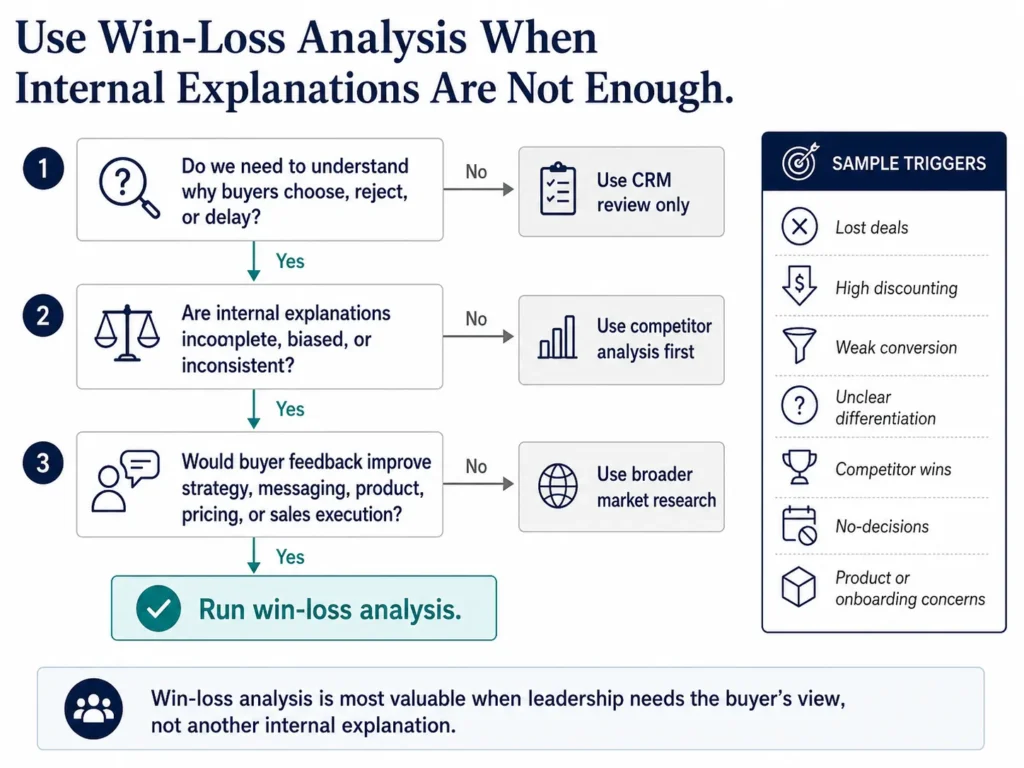
Figure 2: Win-loss analysis is most valuable when leadership needs the buyer’s view, not another internal explanation.
What Is Win-Loss Analysis?
Win-loss analysis is the structured process of collecting, interpreting, and applying feedback from buyers after sales opportunities are won, lost, or abandoned. It seeks to understand the real reasons behind buyer decisions and translate those insights into strategic and commercial action.
A strong win-loss analysis typically explores several dimensions:
- Buyer needs and priorities: What problem the buyer was trying to solve, what outcomes mattered most, and which decision criteria were most important.
- Decision process: Who was involved, how the decision was made, what steps mattered, and where uncertainty appeared.
- Perceived value: How the buyer understood the company’s value proposition, strengths, weaknesses, proof points, and differentiation.
- Competitor comparison: Which alternatives were considered, why they were attractive, and how the company compared against them.
- Sales experience: How the buyer perceived the sales process, responsiveness, expertise, proposal quality, and ability to address concerns.
- Pricing and commercial terms: How the buyer evaluated price, total cost, risk, flexibility, financing, discounts, or contract conditions.
- Product or service fit: Whether the offer solved the buyer’s problem and where gaps, doubts, or implementation concerns appeared.
- Actionable implications: What the company should change in its offer, positioning, sales process, pricing, service model, or go-to-market approach.
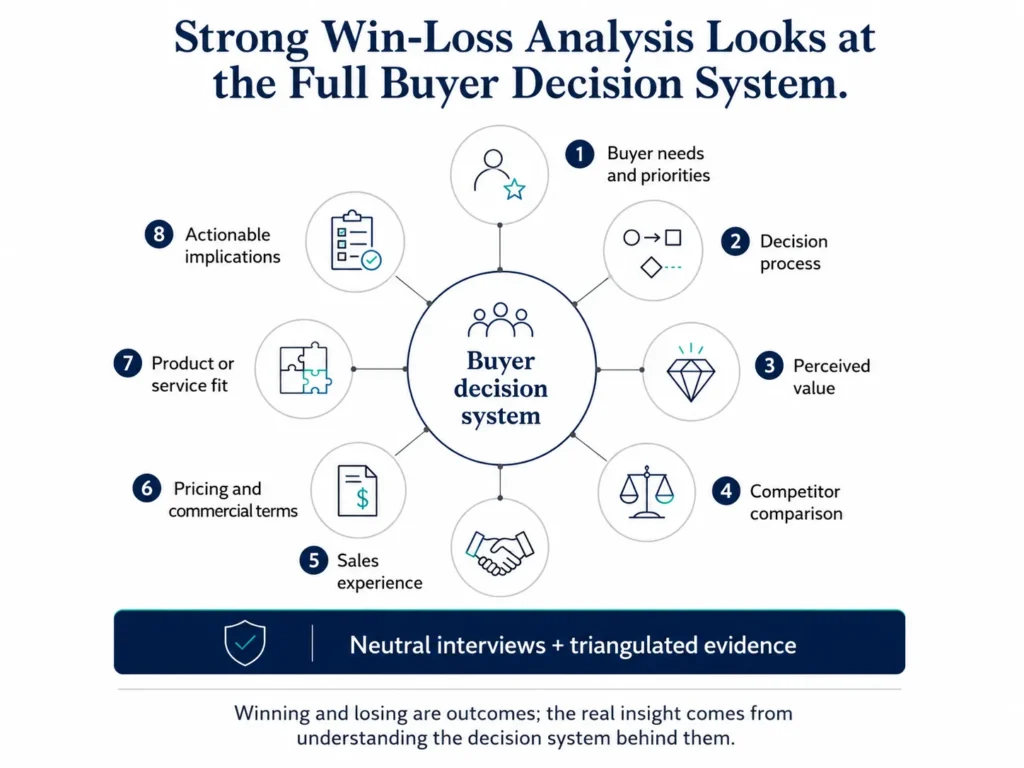
Figure 3: Winning and losing are outcomes; the real insight comes from understanding the decision system behind them.
Win-loss analysis is strongest when interviews are conducted by a neutral party. Buyers are often more candid with someone who was not directly involved in the sale, especially when discussing competitor advantages, internal doubts, pricing concerns, or weaknesses in the sales process.
Five Executive Benefits of Win-Loss Analysis
1. Improve revenue growth by understanding real decision drivers
Win-loss analysis helps companies understand what truly influences buying decisions. Instead of relying on assumptions, leadership teams can see which factors actually move deals forward or cause them to stall.
This may include pricing, proof of value, implementation risk, competitor credibility, service expectations, internal politics, procurement requirements, product fit, or the buyer’s confidence in the supplier.
The goal is not simply to improve close rates. The goal is to understand where the company is creating value, where the buying process is breaking down, and what must change to increase profitable growth.
“We stopped guessing. Once we understood the real reasons behind our losses, we changed our pitch and won a key client within weeks.”
Sales VP, B2B Services Company, Win-Loss Analysis Project, 2023
2. Strengthen competitive intelligence
Lost deals often reveal how competitors are really perceived by buyers. Win-loss interviews can uncover which competitors were considered, what buyers liked about them, which claims were credible, how they positioned their offer, and where they appeared stronger or weaker.
This type of insight is difficult to obtain from public information alone. It shows how the competitive battle is experienced by the buyer, not only how competitors present themselves in the market.
When combined with competitor analysis, win-loss analysis can help companies refine positioning, anticipate competitor moves, improve sales messaging, and identify where they can differentiate more effectively.
3. Improve product, service, and customer experience decisions
Win-loss analysis can reveal whether product or service gaps are affecting customer decisions. Sometimes the issue is a missing feature. Sometimes it is onboarding, integration, support, delivery time, documentation, implementation confidence, or perceived risk.
This helps product, service, and operations teams prioritize improvements based on buyer evidence rather than internal debates. It also helps distinguish between “nice to have” improvements and issues that truly influence revenue.
In this way, win-loss analysis connects market feedback with roadmap priorities, service improvements, customer experience, and retention.
“After our first win-loss cycle, we deprioritized a major feature in favor of improving onboarding speed. That single change reduced churn by 15%.”
Director of Product, B2B Software Firm, Win-Loss Analysis, 2025
4. Sharpen the value proposition
A value proposition is only strong if buyers understand it, believe it, and see it as relevant to their situation. Win-loss analysis tests the value proposition in the real world.
Buyer feedback can show which messages resonate, which claims are generic, which proof points are missing, and which benefits customers actually care about. It can also show whether the company is overemphasizing features that matter internally but not to the buyer.
This makes win-loss analysis especially useful for companies that want to strengthen value proposition design, reposition an offer, improve sales materials, or reduce dependence on discounts.
“We learned that our main competitor’s support SLA was the real draw—our product was objectively stronger, but buyers valued that guarantee. We fixed our SLA, and it made all the difference.”
Head of Product Marketing, SaaS Company, Win-Loss Analysis Project, 2021
5. Challenge internal bias and create alignment
Every company develops internal explanations for why it wins or loses. Some may be accurate. Others may reflect sales folklore, product assumptions, leadership beliefs, or incomplete CRM data.
Win-loss analysis brings an external voice into the discussion. It helps teams compare what they believe with what buyers actually experienced.
This creates a stronger shared fact base across sales, marketing, product, customer success, service, and leadership. The result is not only better insight, but better alignment around what needs to change.
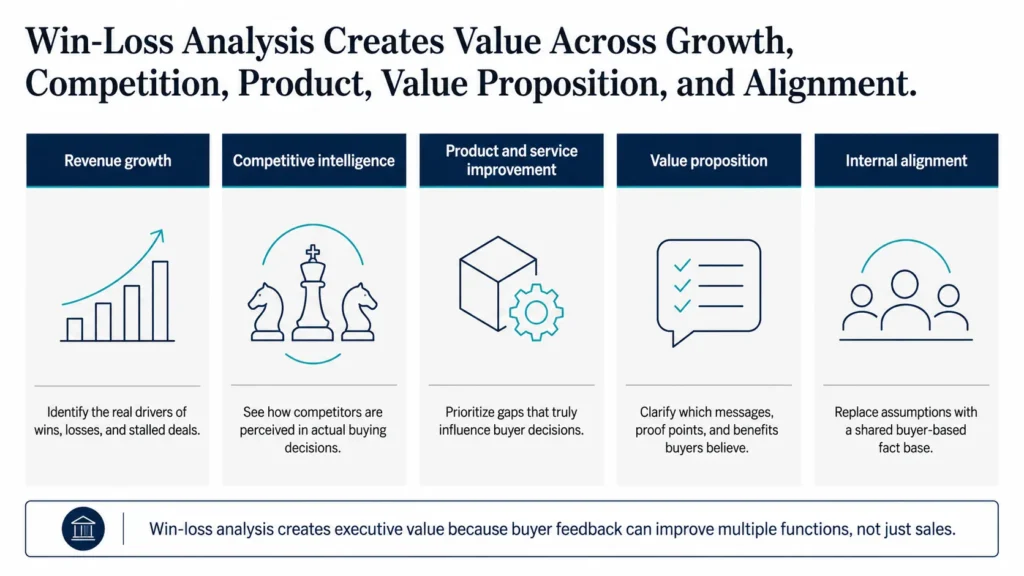
Figure 4: Win-loss analysis creates executive value because buyer feedback can improve multiple functions, not just sales.
“We thought our 24/7 support was our strongest hook, but buyers were hung up on integration speed. We shifted our messaging—and suddenly, the demo-to-close funnel tightened.”
Marketing Director, IT Company, Win-Loss Project, 2024
How to Run a Strong Win-Loss Analysis
A useful win-loss analysis should be structured, neutral, and connected to action. The objective is not to produce interview summaries. The objective is to identify patterns that help the company make better decisions.
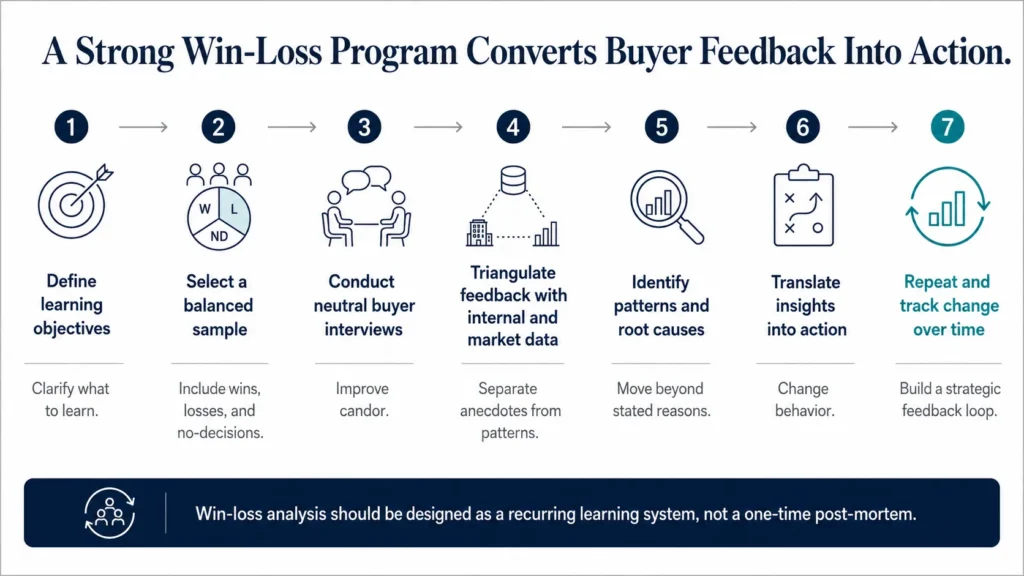
Figure 5: Win-loss analysis should be designed as a recurring learning system, not a one-time post-mortem.
Step 1. Define the learning objectives
Start by clarifying what the company needs to learn. Are you trying to understand lost deals, improve sales effectiveness, evaluate competitors, refine the value proposition, test pricing, improve onboarding, or support a new go-to-market strategy?
The learning objectives determine which deals to analyze, which buyers to interview, and which questions to ask.
Step 2. Select a balanced sample of wins, losses, and no-decisions
Do not analyze only lost deals. Wins explain what is working. Losses reveal barriers and competitor advantages. No-decisions show why buyers decide not to move forward at all.
A balanced sample should include different segments, deal sizes, regions, products, sales teams, competitors, and outcomes. For an initial diagnostic, 10 to 20 interviews can often reveal useful patterns. For ongoing programs, the sample should be refreshed regularly.
Step 3. Conduct neutral buyer interviews
Interviews should ideally be conducted by someone who was not directly involved in the sale. This improves candor and reduces the risk that buyers soften their feedback to protect the relationship.
Questions should explore the full decision journey: initial need, alternatives considered, decision criteria, perceived strengths and weaknesses, competitor comparison, pricing, sales experience, implementation concerns, and final decision drivers.
Step 4. Triangulate buyer feedback with internal and market data
Buyer interviews are essential, but they should not be analyzed in isolation. Compare them with CRM data, proposal history, pricing, sales notes, competitor intelligence, product information, customer success feedback, and market analysis.
Triangulation helps distinguish individual opinions from recurring patterns.
Step 5. Identify patterns and root causes
The goal is to move beyond surface explanations. “Price” may mean the offer was too expensive, but it may also mean the value was unclear, the risk felt high, the competitor created stronger proof, or the buyer lacked internal alignment.
A strong win-loss analysis should identify root causes, not only stated reasons.
Step 6. Translate insights into action
The final output should connect insights to decisions. Actions may include changes to value proposition, sales enablement, pricing, packaging, product roadmap, onboarding, service model, competitor response, segmentation, or go-to-market strategy.
Win-loss analysis creates value only when the organization uses the findings to change behavior.
Step 7. Repeat and track change over time
Buyer priorities, competitors, pricing expectations, and product alternatives change. A one-time study can be useful, but recurring win-loss analysis is more powerful because it tracks shifts in the market and shows whether actions are improving results.
This makes win-loss analysis a strategic feedback loop, not a one-time post-mortem.
Practical Example: From “We Lost on Price” to a Better Strategic Response
A B2B company asked Midas Consulting to understand why it was losing opportunities to a competitor. Internally, the dominant explanation was price. Sales teams believed the competitor was winning because it was cheaper.
The win-loss analysis showed a more complex reality. Price mattered, but it was not the main reason buyers chose the competitor. Interviews revealed that buyers perceived the competitor as easier to implement, faster to respond, and more credible in reducing execution risk.
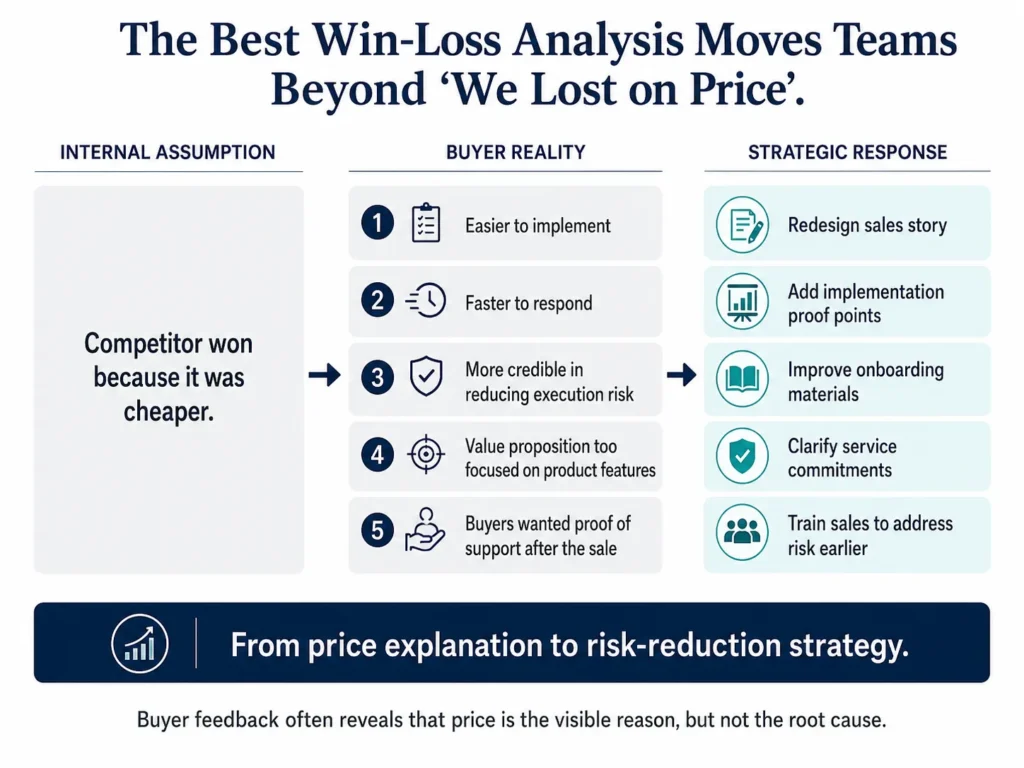
Figure 6: Buyer feedback often reveals that price is the visible reason, but not the root cause.
The company’s offer was technically strong, but the value proposition was too focused on product features. Buyers wanted more evidence that the supplier could make implementation smooth, reduce internal workload, and support the team after the sale.
The recommendation was not simply to reduce price. Instead, the company redesigned its sales story, added proof points around implementation support, improved onboarding materials, clarified service commitments, and trained the sales team to address risk earlier in the buying process.
This is the value of win-loss analysis. It helps companies move beyond internal assumptions and understand the real reasons buyers make decisions.
“Our team insisted integration was too complex. Win-loss proved that wasn’t the blocker—pricing tiers confused buyers. We fixed the tiers, not the code.”
Chief Sales Officer, Entreprise IT Company, Win-Loss, 2025
Strengths and Limitations of Win-Loss Analysis
Win-loss analysis is powerful when it is structured, neutral, and connected to action. But like any strategic tool, it also has limitations.
Strengths
- It brings the buyer’s voice into strategy. It helps companies understand decisions from the customer’s perspective, not only from internal interpretation.
- It reveals real decision drivers. It can show whether buyers are influenced by price, risk, trust, product fit, service, competitors, proof points, or buying process friction.
- It improves cross-functional decisions. Insights can support sales, marketing, product, service, pricing, customer success, and leadership teams.
- It strengthens competitive understanding. It shows how competitors are perceived during actual buying decisions.
- It challenges internal bias. It helps replace assumptions and anecdotes with structured external evidence.
Limitations
- Buyer feedback is retrospective. Buyers may forget details, rationalize decisions, or simplify complex internal dynamics after the fact.
- Sample design matters. If the sample is too small, too recent, too old, or biased toward one sales team, segment, or outcome, the findings may be misleading.
- Stated reasons may not be root causes. A buyer may say “price,” but the deeper issue may be unclear value, low trust, weak proof, competitor credibility, or perceived implementation risk.
- Internal adoption is essential. Insights do not create value unless teams act on them.
- Win-loss analysis is not a substitute for broader market intelligence. It should be complemented with market analysis, competitor analysis, benchmarking, and customer research when the decision requires a broader view.
This is why win-loss analysis should be treated as a strategic learning process, not only as a sales diagnostic.
Conclusion: Win-Loss Analysis Should Turn Buyer Decisions into Strategic Learning
Win-loss analysis is not valuable because it helps companies explain past deals. It is valuable because it helps leadership teams learn from real buyer decisions and improve future performance.
When done well, win-loss analysis helps answer practical questions: Why do buyers choose us? Why do they choose competitors? Which parts of our value proposition are credible? Where does the sales process create confidence or friction? Which product or service gaps matter most? What assumptions do we need to challenge? What should we change next?
At Midas Consulting, we use win-loss analysis to help companies move from internal explanations to buyer-based insight. The goal is not to blame sales, product, pricing, or marketing. The goal is to understand the decision system and identify the changes that can improve growth, differentiation, and execution.
In Latin America, this is especially important because buyer decisions often vary by country, segment, channel, economic context, and competitive landscape. A reason for losing in one market may not apply in another. A value proposition that works in one segment may need to be adapted for another.
If your company is losing opportunities, struggling to explain why buyers choose competitors, relying too heavily on discounts, or trying to improve its value proposition, sales process, product roadmap, or go-to-market strategy, win-loss analysis can help turn buyer feedback into better strategic decisions.
About the Author
By Adrian Alvarez, PhD. Adrian Alvarez is Managing Partner at Midas Consulting, Wharton Alumnus, MBA Professor at Universidad Argentina de la Empresa (UADE), and Competitive Intelligence Fellow. He specializes in competitive strategy, win-loss analysis, competitor analysis, value proposition design, market analysis, business wargaming, and strategic decision-making under uncertainty in Latin America.
He has conducted dozens of win-loss analyses helping companies understand buyer decision drivers, competitive positioning, value proposition gaps, sales process friction, and opportunities for growth. He has also led more than 250 strategy, competitive intelligence, market analysis, and strategic decision-making projects across Latin America.
Adrian is the author of numerous works published in the United States, Spain, and Germany. You can access his library of strategic insights and published research here
View professional profile on LinkedIn
Selected External Sources
This article is informed by Midas Consulting’s experience conducting win-loss analysis, competitor analysis, value proposition, market analysis, and strategy projects across Latin America, as well as by respected sources on buyer feedback, win-loss programs, customer decisions, and B2B sales effectiveness.
- Pragmatic Institute: Comprehensive Approach to Win/Loss Analysis
- Pragmatic Institute: Eight Win-Loss Analysis Best Practices
- Product Marketing Alliance: 8 Tips for Effective Win-Loss Analysis
- Harvard Business Review: Customer Value Propositions in Business Markets
- Harvard Business School Online: 3 Keys to Understanding Jobs to Be Done
Related Midas Insights
For executives who want to go deeper, these Midas articles provide additional context on how win-loss analysis connects with value proposition design, competitor analysis, market analysis, benchmarking, market entry, and strategic foresight:
- Value Proposition: Are You Losing Customers Because You Don’t Have a Strong Value Proposition?
- Competitor Analysis: Benefits and Step-by-Step Guide
- Market Analysis: The Key to Informed Strategic Decisions
- Benchmarking: Improve Your Competitive Position
- Market Entry Analysis: How to Determine Which Markets to Enter
- Strategic Foresight and Competitive Response: Executive Insights
Related Midas Services
Win-loss analysis is often part of a broader strategic decision process. Depending on the question your company needs to answer, Midas Consulting can combine win-loss work with other strategy services:
- Win-Loss Analysis Consulting: When your company needs to understand why buyers choose you, reject your offer, choose competitors, or decide not to move forward.
- Value Proposition Consulting: When buyer feedback shows that customers do not clearly understand why they should choose your company or pay for your offer.
- Competitor Analysis: When the company needs to understand how competitors are positioned, why buyers prefer them, and where they may be vulnerable.
- Market Analysis: When win-loss findings need to be connected with broader market trends, customer needs, segment dynamics, and opportunity attractiveness.
- Benchmarking: When leadership teams need to compare practices, capabilities, performance, service levels, or commercial execution against competitors or reference companies.
- Strategy Consulting: When leadership teams need to make major strategic choices about growth, competitive positioning, market priorities, resource allocation, and execution.
- Brand Consulting: When buyer feedback shows that the issue is not only the offer, but how customers perceive the brand, what drives preference, and how the company can build stronger differentiation.
Together, these services help executive teams move from buyer feedback to sharper differentiation, stronger commercial execution, and better strategic decisions.
Knowing the benefits of win-loss analysis is one thing, but carrying it out smoothly and successfully is another. Don’t worry, we’re here to help every step of the way!
We’ve been where you are, needing win-loss analysis to deal with tough competitors.
After conducting over 250 projects, we’ve perfected our approach. We’re passionate about helping companies like yours leapfrog your competitors!
Some of our customers:






How to move forward:
Schedule a quick call
In a brief call, we’ll ask for some basic information to create a custom proposal for you. Once it’s ready, we’ll send it your way for review. Once approved, we’ll get started on your project
Receive your win-loss analysis
During the project, you’ll receive at least two key deliverables:
First, we’ll share preliminary findings and adjust the project based on your actual needs
Then, we’ll deliver our final recommendations
Outperform your competitors
By following our recommendations, you’ll be able to leapfrog your competition!
We’re ready when you are! Let’s work together to achieve your goals!