
Brand Consulting in Chile: Connect with customers, strengthen your positioning, and boost your sales
In Chile, being known is not enough. Your brand needs to be chosen, trusted, and defended against credible alternatives.
Customers may recognize your name, understand your category, and still prefer a competitor they see as more innovative, more reliable, more locally relevant, easier to work with, or safer after the sale.
That gap between recognition and preference is especially important in a mature and demanding market. Customers often compare alternatives carefully. Incumbents benefit from familiarity. Strong local references matter. Claims without evidence can lose credibility quickly. A polished campaign cannot compensate for weak differentiation, inconsistent service, or a customer experience that contradicts the promise.
At Midas Consulting, we help you move beyond awareness scores and fragmented brand metrics. We combine customer research, competitive benchmarking, brand diagnosis, perceived-value analysis, and strategic foresight to understand how your brand is really seen, and what leadership should change.
The result is not another tracking report. It is a brand decision system that connects evidence with positioning, proof, pricing, portfolio, channels, service, customer experience, and growth.
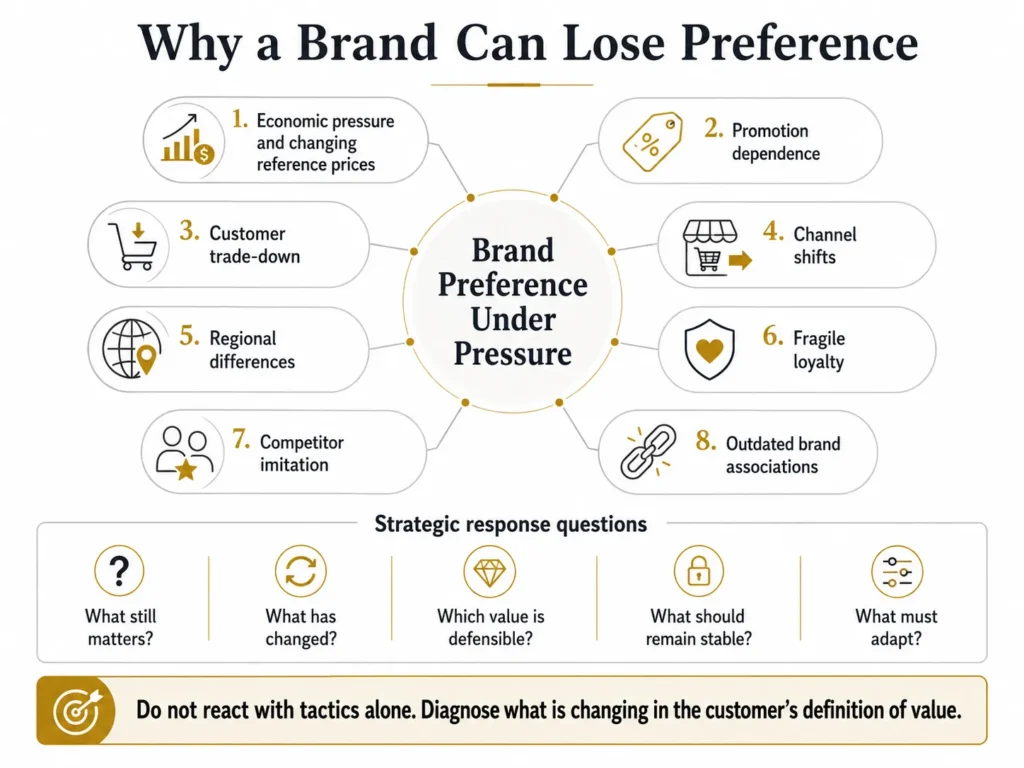
Figure 1. In Chile, awareness can fail to become preference when the brand lacks clear differentiation, credible local proof, consistent service, or a compelling price-value equation.
The Strategic Question Is Not “How Do We Increase Awareness?”
The stronger executive question is:
Why should a Chilean customer choose your brand instead of a familiar incumbent, a credible local specialist, a lower-cost alternative, or a multinational competitor—and what evidence makes that choice defensible?
A strong brand strategy should help your leadership team decide:
- Which customer needs and risks truly drive preference.
- Whether the brand is differentiated or simply familiar.
- Which competitors define the frame of reference.
- Which proof points customers believe.
- How local references and service affect confidence.
- Whether price reflects clear value or creates doubt.
- Where communication and experience are misaligned.
- Which customer segments deserve priority.
- What must change across positioning, portfolio, channels, sales, and service.
Recognition Can Hide a Weak Brand Position
A well-known brand may still be:
- Seen as interchangeable.
- Trusted but outdated.
- Technically strong but rigid.
- Respected but not emotionally relevant.
- Recognized nationally but weak in certain regions or segments.
- Strong before the sale but disappointing afterward.
- Considered credible but difficult to justify at a premium.
- Visible in communication but inconsistent in experience.
Leadership therefore needs to understand the complete progression from awareness to relevance, consideration, preference, purchase, loyalty, and recommendation.
Mature Markets Reward Clarity and Proof
In a mature category, customers often know the main options and understand the basic product claims.
That means generic promises such as quality, innovation, service, or leadership may not create enough distinction.
Your brand may need to prove:
- Why its performance is meaningfully better.
- How it reduces risk.
- Why its service model is more reliable.
- How it creates stronger economics.
- Why its local experience matters.
- How it solves a problem competitors overlook.
- Why the customer experience will be consistent after purchase.
Brand consulting helps leadership identify which advantage is both relevant to customers and credible for the organization to own.
Incumbents Benefit from Familiarity and Perceived Safety
A customer may believe your offer is attractive and still prefer the incumbent.
The established brand may benefit from:
- Known performance.
- Existing user habits.
- Historical trust.
- Approved-supplier status.
- Local references.
- Familiar service processes.
- Internal advocates.
- Lower perceived switching risk.
- A proven post-sale relationship.
Your brand must therefore do more than communicate superiority. It must make change feel safe, practical, and worthwhile.
Local Proof Can Matter More Than Global Reputation
Global recognition can create initial credibility. It may not answer the customer’s local questions.
Chilean customers may want to know:
- Has this worked for a comparable customer in Chile?
- Who will support us locally?
- How quickly will the company respond?
- Does the team understand our market and operating environment?
- What happens if implementation becomes difficult?
- Will service remain consistent after the sale?
- Can the supplier provide relevant evidence rather than generic claims?
- Is Chile strategically important to the company?
A brand can therefore lose preference even when it has stronger global credentials.
Campaigns Cannot Fix an Unclear Value Proposition
A campaign may increase attention without strengthening the brand.
This happens when:
- The central promise is generic.
- The proof is weak.
- The experience contradicts the message.
- The brand speaks to the wrong customer tension.
- The competitive frame is misunderstood.
- The message creates awareness but not a reason to choose.
- The organization changes creative execution without making a strategic choice.
The answer is not necessarily more media. It may be a clearer strategic territory, stronger evidence, better service, or a more relevant experience.
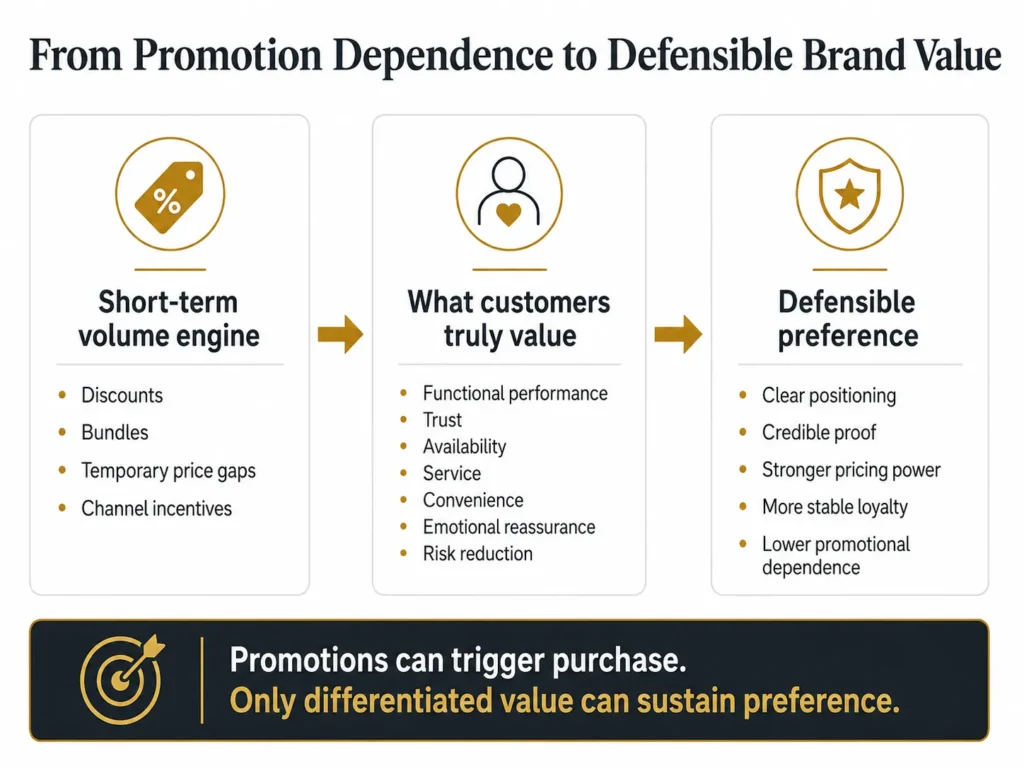
Figure 2. Recognition creates familiarity, but real preference depends on relevance, differentiation, local proof, value, service confidence, and a customer experience that supports the promise.
Price Matters, but the Brand Must Clarify the Value Equation
Chile can be highly price-sensitive in many categories, but price is rarely interpreted in isolation.
Customers may compare price with:
- Performance.
- Reliability.
- Service.
- Risk.
- Total cost.
- Availability.
- Implementation effort.
- Resale value.
- Brand trust.
- Post-sale support.
If the brand does not make those benefits visible and credible, customers may reduce the decision to headline price.
Post-Sale Experience Shapes Pre-Sale Preference
Customers often assess the future relationship before they buy.
They may evaluate:
- Onboarding.
- Technical support.
- Response times.
- Service coverage.
- Problem resolution.
- Account continuity.
- Training.
- Escalation.
- Availability of parts or expertise.
- Long-term supplier commitment.
A brand promise is credible only when the operating model can deliver it.
Data Without Direction Does Not Build Preference
Many companies track awareness, NPS, satisfaction, consideration, campaign recall, and image attributes.
The problem is often not lack of information. It is the inability to convert information into choices.
Brand evidence should help leadership decide:
- Which positioning territory to own.
- Which customer segment to prioritize.
- Which association to strengthen or abandon.
- Which competitor should define the benchmark.
- Which proof should be emphasized.
- Which experience gap must be fixed first.
- Whether pricing reflects the intended position.
- How to align communication, sales, service, and channels.
Brand Strategy Consulting in Chile Requires Foresight
Current research explains the present. Strategic foresight helps leadership prepare for how preference could change.
We examine:
- Emerging customer expectations.
- Weak signals in category behavior.
- New competitor positioning.
- Changes in digital discovery and recommendation.
- Technology and regulatory shifts.
- Potential changes in service expectations.
- New sources of trust and proof.
- Which brand assets may become more or less valuable under alternative futures.
The purpose is not to predict one future. It is to build a positioning that remains attractive under several plausible market conditions.
The Six Tests of a Strong Brand in Chile
1. Relevance
Does the brand address a need, aspiration, or risk that matters to priority Chilean customers?
2. Differentiation
Can customers explain why they should choose it instead of a familiar incumbent, local specialist, multinational, or lower-cost alternative?
3. Credibility
Do local references, product performance, service, and company behavior support the promise?
4. Coherence
Do communication, pricing, sales, channels, service, and customer experience reinforce the same strategic meaning?
5. Local adaptability
Can the brand remain relevant across segments, regions, and channels without fragmenting?
6. Future resilience
Can the positioning withstand changing customer expectations, competitors, technology, channels, and regulation?
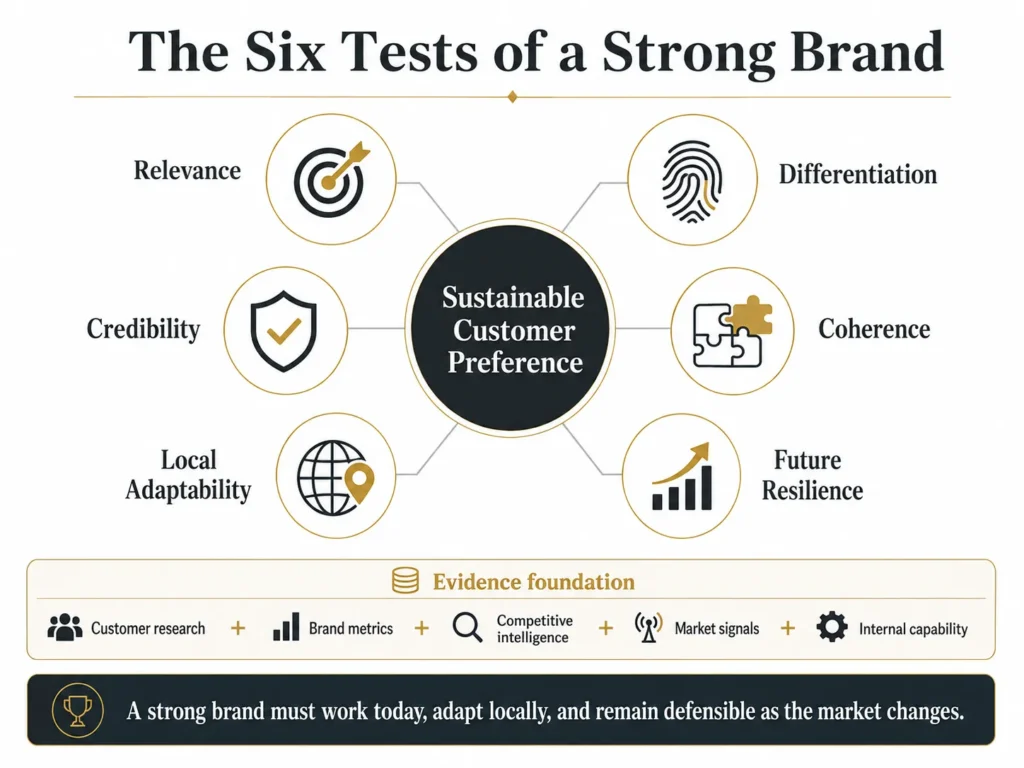
Figure 3. A resilient Chilean brand must remain relevant, differentiated, credible, coherent, locally adaptable, and prepared for future market change.
How Midas Consulting Builds a Stronger Brand Strategy in Chile
1. Define the executive decision
We clarify whether leadership needs to strengthen preference, reposition the brand, improve credibility, protect margins, respond to an incumbent, improve service perceptions, simplify the portfolio, or prepare for changing customer expectations.
2. Build the fact base
We combine existing brand metrics, customer research, commercial data, competitor intelligence, channel input, service evidence, and internal perspectives.
3. Listen to customers and stakeholders
Depending on the decision, we may use qualitative interviews, focus groups, quantitative surveys, win-loss analysis, distributor research, expert interviews, or other methods.
4. Diagnose the brand by market and segment
We examine awareness, relevance, differentiation, credibility, perceived value, consideration, preference, loyalty, advocacy, and experience.
5. Map the competitive brand landscape
We compare incumbents, local specialists, multinationals, lower-cost alternatives, and their positioning territories, proof, service, and customer experience.
6. Identify strategic brand territories
We evaluate potential territories against customer relevance, competitive whitespace, credibility, profitability, organizational fit, and future resilience.
7. Define the strategic core and adaptation rules
We specify what must remain consistent and where segment, channel, regional, or message adaptation is required.
8. Translate strategy into the commercial system
We connect positioning with communication, portfolio, innovation, pricing, sales enablement, channels, service, and customer experience.
9. Mobilize and measure
We define priorities, ownership, indicators, governance, and a learning cycle to track whether the brand is becoming more relevant, preferred, and valuable.
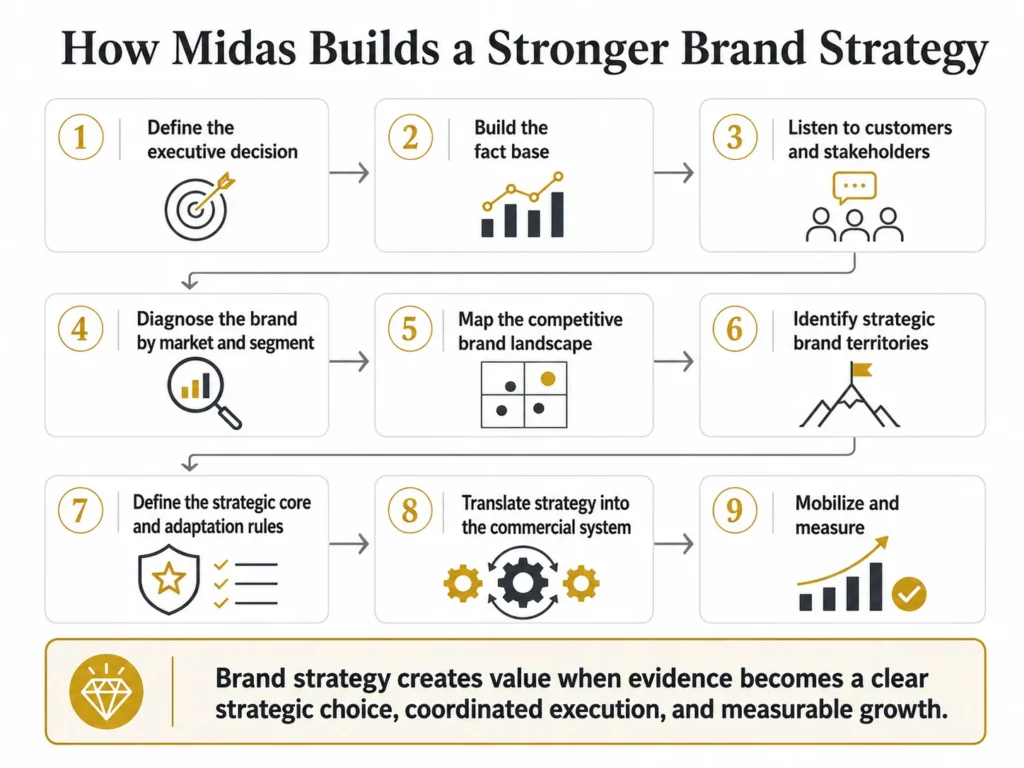
Figure 4. Midas’s nine-stage process turns customer, market, and competitive evidence into a clear strategic choice, coordinated commercial execution, and measurable brand growth.
What Leadership Should Receive In a Brand Consulting Project in Chile
Depending on scope, a Chilean engagement may include:
- An executive diagnosis of the brand’s current position.
- Customer, segment, regional, and channel comparisons.
- Awareness, relevance, differentiation, credibility, preference, and loyalty findings.
- Competitive brand and territory maps.
- Incumbent and switching-risk implications.
- Local-proof and service-perception findings.
- Perceived-value and pricing implications.
- Brand architecture and portfolio recommendations.
- Customer-experience and channel priorities.
- Future signals and competitor-response scenarios.
- A prioritized roadmap with owners and indicators.
- An executive workshop to align leadership.
The deliverable should help your leadership team choose what to change, not simply describe the brand.
Selected Applications of Our Brand Consulting Work in Chile
Home-appliance brand
A nationally recognized brand underperformed in Patagonia and northern markets. Research identified weak service perceptions. After adapting messages and strengthening post-sale processes, regional loyalty reportedly increased by 22%.
Industrial-equipment brand
The company had strong technical capabilities but was seen as rigid. Research showed that customers valued flexibility and customized service, creating a stronger repositioning opportunity for complex B2B sales.
Pharmaceutical brand
Internal teams believed the brand was trusted, while prescribers expressed a different view. Revised sales and communication tools helped strengthen credibility and specialist engagement.
When Brand Consulting Is Especially Valuable in Chile
- Your brand is well known but not preferred.
- Campaign investment is not strengthening brand value.
- Your brand metrics do not lead to clear action.
- An incumbent keeps winning through familiarity and trust.
- You lack strong Chilean references.
- Post-sale experience may be weakening the promise.
- Your proposition sounds generic or imported.
- Customers reduce the comparison to price.
- Your sales, marketing, product, and service teams tell different stories.
- You need a positioning that remains defensible as the market changes.
How This Page Fits the Midas Branding Cluster
This page owns the Chile-specific question: why recognition may not become preference, how incumbent trust, local proof, professional credibility, price-value clarity, and post-sale experience shape brand choice, and what leadership should change.
For the regional framework, visit Brand Consulting in Latin America.
For the full consulting offer, visit Brand Consulting for a Stronger Market Position.
For Midas’s broader perspective on foresight and competitive response, visit Strategic Foresight and Execution: Insights for the Global Executive.
Why Midas for Brand Consulting in Chile?
We connect brand strategy with business performance
We examine how brand perception affects shortlisting, preference, pricing power, loyalty, channel strength, and growth.
We understand mature and demanding markets
We identify whether the brand has a real strategic advantage or relies mainly on awareness and familiarity.
We combine research with competitive benchmarking
We compare customer perceptions, local proof, competitor territories, service, and value rather than relying only on internal metrics.
We incorporate foresight
We examine emerging expectations and competitor moves so the positioning is not designed only for today’s market.
We focus on action
We translate findings into choices about positioning, proof, portfolio, pricing, communication, channels, service, and customer experience.
We bring extensive experience in brand consulting in Chile
Midas has more than 20 years of experience supporting brands in Chile and across Latin America and has conducted more than 200 regional brand studies.
Frequently Asked Questions About Brand Consulting in Chile
Can a high-awareness brand still be weak?
Yes. Awareness does not guarantee relevance, differentiation, credibility, preference, loyalty, or pricing power.
Why do customers choose an incumbent even when our offer is stronger?
The incumbent may benefit from familiarity, approved status, local references, known service, internal advocates, and lower perceived switching risk.
Can branding consulting improve price perception in Chile?
Yes. A clearer value proposition and stronger proof can help customers interpret price relative to performance, risk, service, and total value.
Can brand consulting help B2B companies in Chile?
Yes. In B2B markets, brand perception influences shortlisting, risk, proof requirements, service confidence, and willingness to pay.
Can you evaluate post-sale experience in your brand consulting in Chile?
Yes. We can assess whether onboarding, support, response times, service coverage, and escalation reinforce or weaken the brand promise.
Can you compare us with established incumbents in your brand consulting in Chile?
Yes. We can identify where incumbents benefit from trust and familiarity and where your brand can create a credible alternative.
Can you assess regional or segment differences in your brand consulting in Chile?
Yes. We can compare needs, perceptions, proof, experience, consideration, and preference across segments, regions, and channels.
Can brand research in Chile support pricing decisions?
Yes. Research can show whether the brand creates enough relevance, differentiation, trust, and perceived value to support a premium.
How do you convert brand consulting research in Chile into action?
We connect findings with specific choices, priorities, owners, indicators, governance, and an implementation roadmap.
Can the brand consulting in Chile work include strategic foresight?
Yes. We can examine weak signals, changing customer expectations, competitor moves, and alternative scenarios that could affect future positioning.
About the Author
Víctor Sales Navas, COO, leads Midas Consulting’s Branding Practice and brings more than 34 years of experience across Latin America.
A graduate in Accounting from the Universidad de Buenos Aires, Víctor built his career at leading advertising agencies including Young & Rubicam, ADD, and Gowland. He developed deep expertise in brand strategy, market research, benchmarking, competitive intelligence, and mergers and acquisitions.
He also heads Midas’s Services Practice, advising clients in logistics, ports, consumer goods, and industrial products. Víctor has directed projects throughout the region and successfully led multiple start-ups in Latin America.
He speaks English, Portuguese, and Spanish and is recognized for translating market insight into actionable brand and business strategy.
Build a Brand Chilean Customers Actively Prefer
You may be trying to understand why awareness is not becoming preference, why customers keep choosing the incumbent, whether your local proof is strong enough, or why marketing investment is not strengthening brand value.
You do not need more disconnected metrics. You need a clear view of how customers interpret the brand, what they believe, where they see risk, which strategic territory you can credibly own, and how your organization should act.
In an initial conversation, we will discuss your market position, segments, portfolio, current research, competitors, pricing, service, customer experience, and the executive decisions the engagement must support.
We can then propose a focused diagnosis, positioning project, segment study, or continuous brand-intelligence program tailored to your needs.