
Market entry analysis is often confused with market entry strategy. At Midas Consulting, we separate the two clearly.
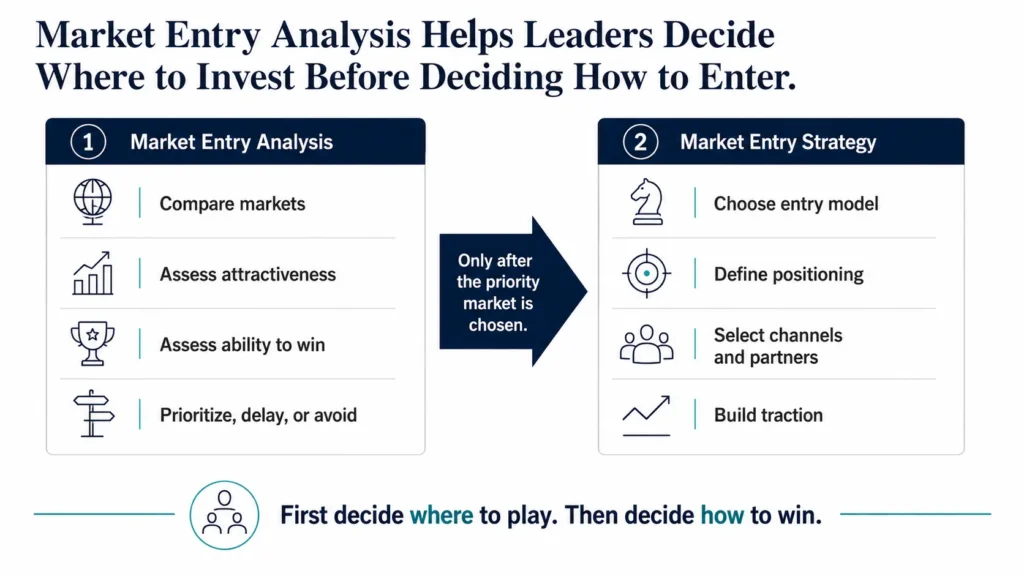
Figure 1: The first expansion question is not how to enter. It is whether the market deserves investment at all.
Market entry analysis helps executives decide which markets, countries, segments, or opportunities deserve investment, and which ones should be avoided. Market entry strategy comes next: once the priority market is selected, it defines how to enter, how to position, which channels to use, which partners to consider, and how to build traction.
This article focuses on the first and most critical decision: how to determine which markets to enter, which markets to prioritize, and which markets not to pursue.
That distinction matters. Many companies start with enthusiasm for expansion and move too quickly into execution questions: Which distributor should we use? What price should we charge? Which sales model should we build? But before answering those questions, leadership teams need a more fundamental assessment: Is this market attractive enough, and can we realistically win there?
At Midas Consulting, we use market entry analysis as a structured go/no-go and prioritization tool. It combines market attractiveness, ability to win, competitive intensity, customer needs, channel access, regulatory constraints, profitability, and execution feasibility. The objective is not to produce a report. The objective is to help executives allocate capital, management attention, and commercial resources where the probability of success is highest.
This page complements our broader guide on market entry in Latin America, which focuses on how companies can navigate regional complexity and execute successfully. Here, the focus is narrower and more analytical: how to rank market opportunities before committing to an entry strategy.
For that reason, market entry analysis often connects with market analysis, competitor analysis, benchmarking, go-to-market strategy, distributor search, and strategy workshops.
When Market Entry Analysis Is the Right Tool
Market entry analysis is most valuable when the company has several possible growth options but limited resources, limited information, or high uncertainty. It is especially useful when leadership teams need to:
- Compare several countries, regions, or segments before deciding where to invest.
- Prioritize opportunities across Latin America or other multi-country regions.
- Evaluate whether a market is large enough, profitable enough, and accessible enough to justify entry.
- Understand whether the company can realistically compete and win in a specific market.
- Identify which assumptions must be tested before committing capital or leadership attention.
- Avoid spreading resources across too many countries, segments, or product categories.
- Decide whether to enter, delay entry, monitor the market, partner, acquire, or avoid the opportunity.
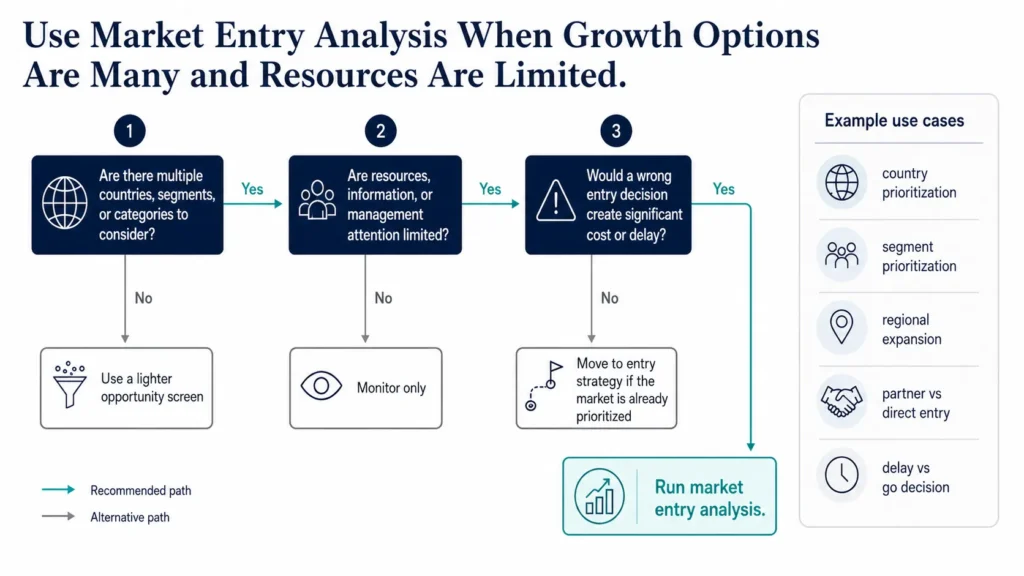
Figure 2: Market entry analysis is most valuable when leadership must choose among several opportunities under uncertainty.
The key point is that market entry analysis should not start with the question “How do we enter?” It should start with a more disciplined question: Which opportunities deserve to be entered at all?
What Is Market Entry Analysis?
Market entry analysis is the structured process used to evaluate, compare, and prioritize potential markets before deciding whether and how to enter them.
At Midas Consulting, we define market entry analysis as:
A decision-oriented process that helps companies determine which markets are attractive, which markets are winnable, and which markets should be avoided or postponed.
This goes beyond estimating market size. A market may be large but unattractive. It may be growing but difficult to access. It may show strong demand but be dominated by entrenched competitors, complex distribution channels, high regulatory barriers, or unfavorable economics.
A rigorous market entry analysis typically evaluates:
- Market size and growth: How large the opportunity is today and how it may evolve.
- Profitability potential: Whether the market can generate attractive margins after local costs, taxes, channel margins, logistics, and commercial investment.
- Customer needs and purchasing behavior: How customers buy, what they value, and what barriers may slow adoption.
- Competitive intensity: Which competitors are active, how strong they are, and how they may respond.
- Channel and partner access: Whether the company can reach customers through distributors, partners, direct sales, digital channels, or acquisitions.
- Regulatory and operational barriers: Certifications, registrations, import requirements, tax exposure, logistics, working capital, and compliance constraints.
- Ability to win: Whether the company has the capabilities, value proposition, resources, and local model needed to compete successfully. Your ability to win also depends on how established players respond. The Midas Import Competition Monitor 2026 analyzes 151 business decisions made as companies responded to increased import competition in Argentina and shows that incumbents do not all react the same way. Some invest, while others reconfigure operations, change their sourcing strategies, regionalize, reduce capacity, or exit the market. Forbes Argentina used our research to examine these different responses. If you are considering entering a market, understanding how incumbents may react is part of determining whether that market is truly winnable for your company.
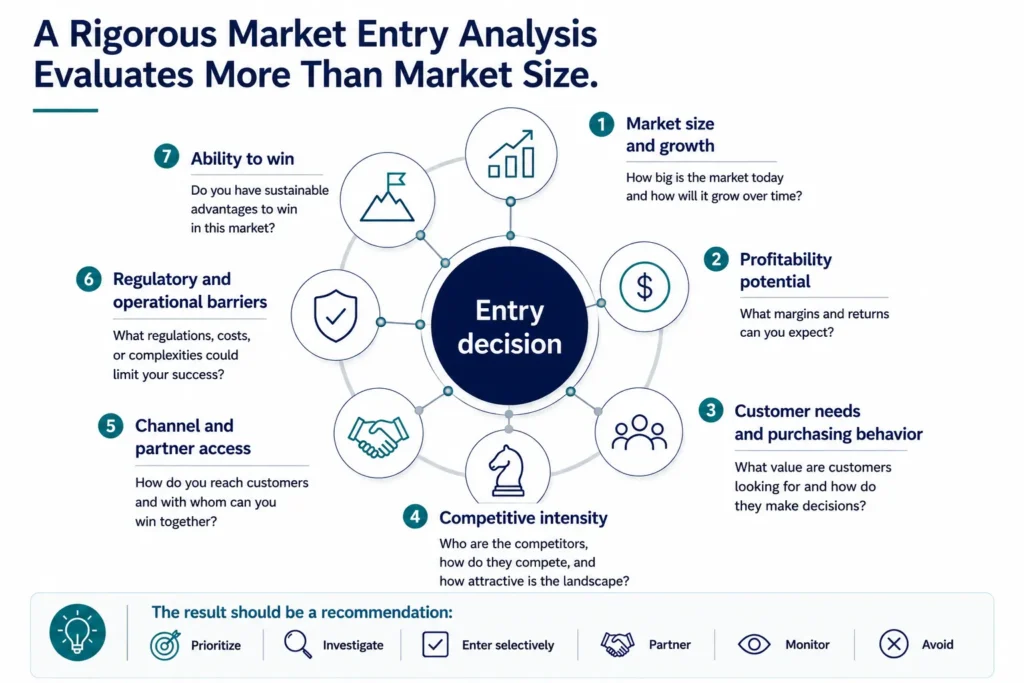
Figure 3: Large markets are not always good markets; the right decision depends on attractiveness, access, economics, and the company’s ability to win.
The result should not be a generic market description. The result should be a clear recommendation: prioritize, investigate further, enter selectively, partner, monitor, or avoid.
Three Executive Benefits of Market Entry Analysis
1. Better market prioritization
Market entry analysis helps leadership teams compare opportunities using a consistent framework. Instead of relying on isolated data points, internal preferences, or the attractiveness of one visible market, executives can compare countries, segments, or categories across the same criteria.
This is especially important when several markets look attractive at first sight. A market with strong growth may have high regulatory complexity. A large market may be difficult to access. A smaller market may offer faster traction, better channel fit, or lower competitive pressure.
The benefit is not only choosing where to enter. It is also choosing where not to invest too early.
2. Stronger capital allocation
Expansion requires capital, management attention, commercial resources, and organizational energy. Market entry analysis helps companies allocate those resources to opportunities with the strongest risk-adjusted potential.
Without structured analysis, companies may spread investment across too many markets or pursue the most visible opportunity instead of the most winnable one. A disciplined prioritization process helps leadership teams focus on markets where growth potential, competitive position, and execution feasibility reinforce each other.
3. Lower risk of entering the wrong market
One of the most valuable outcomes of market entry analysis is the decision not to enter. Avoiding an unattractive or poorly timed market can preserve capital, protect management focus, and prevent years of slow or unprofitable execution.
A strong market entry analysis can reveal risks that are not obvious in high-level data: weak willingness to pay, aggressive local competitors, unreliable channels, regulatory bottlenecks, high cost-to-serve, limited distributor capabilities, or poor fit between customer needs and the company’s offer.
The purpose is not to eliminate uncertainty. The purpose is to make uncertainty visible before the company commits resources.
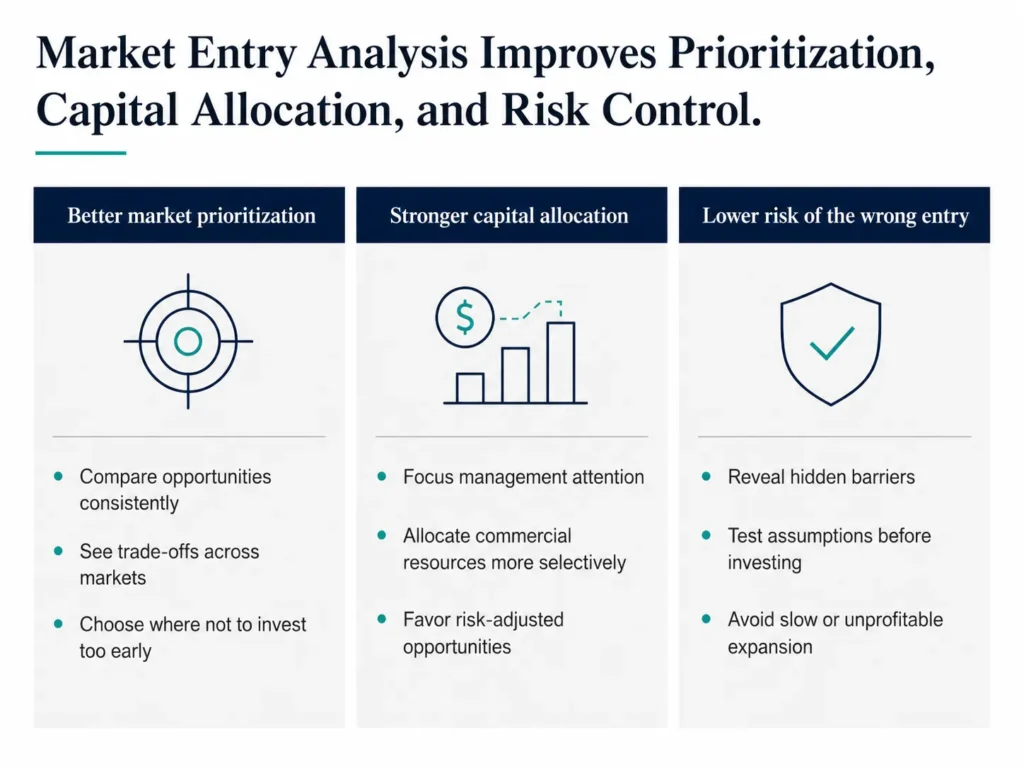
Figure 4: The real payoff is not just entering the right market; it is avoiding the wrong one before capital is committed.
The Midas Market Entry Analysis Methodology
Based on hundreds of market entry, market analysis, competitive intelligence, and opportunity assessment projects, Midas Consulting applies a structured methodology designed to move from a broad list of possible markets to a clear investment recommendation.
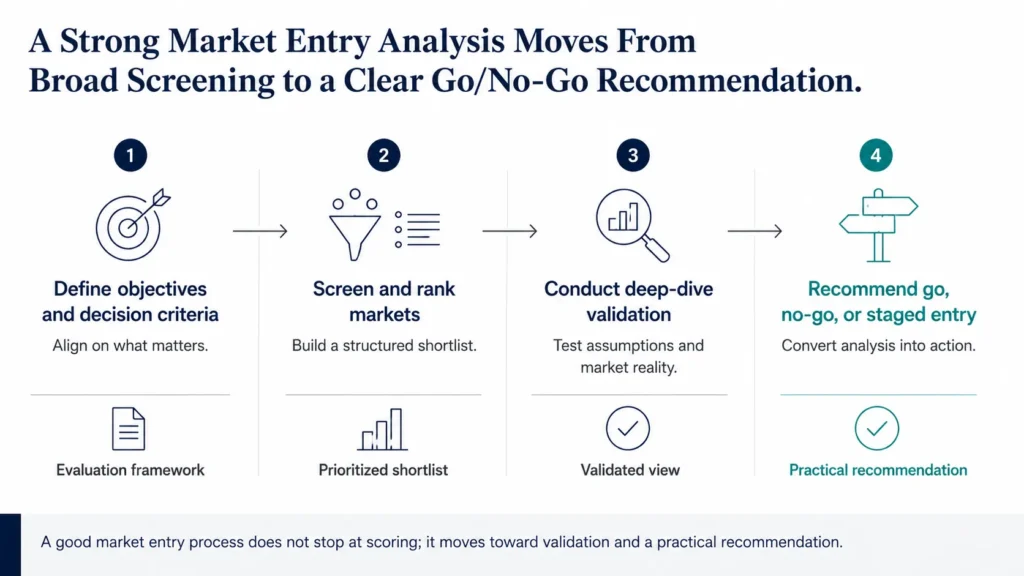
Figure 5: A good market entry process does not stop at scoring; it moves toward validation and a practical recommendation.
The process is designed around one central question:
Which markets offer the best combination of attractiveness, ability to win, and execution feasibility?
Phase 1. Define objectives and decision criteria
Before comparing markets, we clarify what the company is trying to achieve. A company seeking rapid revenue growth may prioritize different markets than a company seeking profitability, strategic positioning, portfolio diversification, manufacturing synergies, or long-term regional presence.
Typical decision criteria include:
- Revenue potential
- Profitability potential
- Strategic fit
- Speed to market
- Investment required
- Risk tolerance
- Ease of execution
- Ability to defend the position over time
Output: A clear evaluation framework that aligns the leadership team before the analysis begins.
Phase 2. Screen and rank markets
The second phase compares markets using a structured scoring model. This usually includes both market attractiveness and ability-to-win criteria.
Market attractiveness may include size, growth, profitability, customer concentration, macroeconomic context, regulatory conditions, and category development. Ability to win may include competitive intensity, channel access, customer fit, product fit, brand credibility, local capabilities, distributor availability, and execution requirements.
Data sources may include national statistics offices, import/export databases, industry associations, company reports, regulatory databases, expert interviews, distributor interviews, customer interviews, and competitive intelligence.
Output: A prioritized shortlist of markets that deserve deeper analysis.
Phase 3. Conduct deep-dive validation
Once the shortlist is defined, the analysis shifts from comparison to validation. This phase tests the assumptions behind the ranking and examines how the market actually works.
Typical questions include:
- How do customers really buy?
- Which segments are most attractive?
- Which competitors are strongest and why?
- What channel or partner model is realistic?
- What price corridors and margins are feasible?
- Which regulations, certifications, or operational constraints could delay entry?
- What would need to be adapted before entering?
Output: A realistic view of whether the market is truly attractive and winnable.
Phase 4. Recommend go, no-go, or staged entry
The final phase converts analysis into an executive decision. Not every attractive market should be entered immediately. Some should be prioritized. Some should be monitored. Some should be entered through partners. Some should be delayed. Some should be avoided.
Recommendations may include:
- Prioritize for entry
- Enter selectively by segment or region
- Test through a distributor or pilot
- Monitor until conditions improve
- Partner or acquire instead of entering directly
- Do not enter
Output: A practical recommendation that clarifies where to focus, what to validate next, and how to reduce entry risk.
How to Compare Markets Without Creating a False Ranking
Market rankings can be useful, but they can also create false precision. A country scoring 82 is not automatically better than a country scoring 79 if the underlying assumptions are uncertain, the data quality differs, or the execution risks are not comparable.
At Midas Consulting, we use scoring models as decision tools, not as mechanical answers. A good market ranking should help executives structure the discussion, reveal trade-offs, and identify which assumptions require deeper validation.
To avoid false precision, market entry scoring should:
- Separate attractiveness from ability to win. A market can be attractive but unwinnable for a specific company.
- Use comparable criteria across all markets. Each market should be assessed using the same logic and definitions.
- Document assumptions clearly. Leadership teams should understand what is known, what is estimated, and what remains uncertain.
- Triangulate data sources. Secondary data should be complemented with interviews, expert input, customer insight, and competitive intelligence.
- Test sensitivity. If a small change in one criterion changes the ranking dramatically, the recommendation should be treated with caution.
- Translate scores into decisions. The output should not be only a table. It should clarify which markets to prioritize, validate, monitor, or avoid.
The goal is not to make market entry look more scientific than it is. The goal is to make the decision more transparent, evidence-based, and disciplined.
A Practical Market Entry Decision Matrix
One useful way to interpret market entry analysis is to compare two dimensions: market attractiveness and ability to win.

Figure 6: The largest market is not always the best market; the right choice balances opportunity with the company’s ability to win.
- Prioritize (High attractiveness / high ability to win): These are the best candidates for entry or deeper investment.
- Explore (High attractiveness / low ability to win): Explore partnerships, acquisitions, staged entry, or capability building before committing.
- Selective entry (Low attractiveness / high ability to win): Consider selective entry only if the market supports a specific strategic objective or niche opportunity.
- Avoid or monitor (Low attractiveness / low ability to win): These markets are unlikely to justify investment.
This matrix helps leadership teams avoid two common mistakes: entering large markets where the company has no realistic path to win, and ignoring smaller markets where execution feasibility is stronger.
The best market is not always the largest market. It is the market where opportunity, competitive position, and execution feasibility come together.
Practical Example: From a Long List of Markets to a Focused Entry Decision
A company asked Midas Consulting to evaluate expansion across multiple Latin American markets. At the beginning of the project, the leadership team had a broad list of possible countries and several internal opinions about which markets looked most promising.
The first step was to align the decision criteria. Together with the client, we defined what mattered most: market size, expected growth, profitability, regulatory complexity, competitive intensity, channel access, product fit, and the company’s ability to execute locally.
The initial screening reduced the list to a smaller group of priority markets. However, the ranking did not end the discussion. It revealed which assumptions needed to be validated through interviews with market experts, customers, distributors, and industry participants.
The deep-dive phase showed that some markets that looked attractive in secondary data were less attractive after considering channel complexity, competitive pressure, or regulatory hurdles. Other markets were smaller but offered faster access, better partner availability, and a clearer path to early traction.
The final recommendation was a focused market entry roadmap: which markets to prioritize now, which markets to monitor, which assumptions to test before investing, and which opportunities should not be pursued in the short term.
This is the real value of market entry analysis. It helps companies move from a long list of attractive possibilities to a disciplined set of strategic choices.
A Vice President of Strategy at a global B2B company summarized the impact during a post-project interview in 2025:
“Midas provided fantastic insights, analysis, and recommendations. We were truly impressed by the depth of research, especially given the short timeframe.”
Strengths and Limitations of Market Entry Analysis
Market entry analysis is powerful when it is structured, comparative, and connected to executive decision-making. But like any strategic tool, it also has limitations.
Strengths
- It improves prioritization. It helps companies compare markets, countries, regions, or segments using a consistent decision framework.
- It reduces expansion risk. It identifies barriers, weak assumptions, and execution challenges before the company commits resources.
- It supports better capital allocation. It helps leadership teams focus investment on opportunities with stronger risk-adjusted potential.
- It creates alignment. It gives executives a shared fact base for discussing growth options and trade-offs.
- It can prevent costly mistakes. Sometimes the most valuable recommendation is to delay or avoid entry.
Limitations
- Data quality varies by market. Secondary data may be incomplete, outdated, inconsistent, or too aggregated to support a decision on its own.
- Scoring models require judgment. A ranking is only as strong as the criteria, assumptions, and evidence behind it.
- Market attractiveness is not enough. A company also needs a realistic ability to win, execute, and adapt locally.
- Competitor reactions may change the outcome. A market may look attractive until incumbents respond aggressively to a new entrant.
- Execution still determines success. Market entry analysis can identify the right opportunity, but success depends on go-to-market execution, local partners, pricing, leadership commitment, and adaptation.
For that reason, market entry analysis should be followed by a practical entry strategy and, when needed, complemented with go-to-market strategy, distributor search, competitor analysis, or business wargaming.
Conclusion: Market Entry Analysis Should Help You Decide Where Not to Enter, Too
Market entry analysis is not only about finding attractive markets. It is about making disciplined strategic choices before capital, leadership attention, and commercial resources are committed.
When done well, market entry analysis helps executives answer practical questions: Which markets should we prioritize? Which opportunities are attractive but not winnable? Which assumptions need validation? Which markets require partners or staged entry? Which markets should we monitor or avoid? What would make entry successful?
At Midas Consulting, we use market entry analysis to help companies move from broad expansion ambition to focused market prioritization. The objective is not to enter as many markets as possible. The objective is to identify where the company has the best combination of opportunity, fit, and ability to win.
This is why the decision not to enter can be as valuable as the decision to enter. Avoiding a market with poor economics, weak fit, excessive barriers, or limited execution feasibility protects capital and allows the company to focus on opportunities with stronger potential.
If your company is comparing countries, segments, regions, or product categories, market entry analysis can help you rank opportunities, test assumptions, and decide where to invest with greater confidence.
About the Author
By Adrian Alvarez, PhD. Adrian Alvarez is Managing Partner at Midas Consulting, Wharton Alumnus, MBA Professor at Universidad Argentina de la Empresa (UADE), and Competitive Intelligence Fellow. He specializes in competitive strategy, market entry analysis, market prioritization, strategic intelligence, go-to-market strategy, competitor analysis, and strategic decision-making under uncertainty in Latin America.
He has designed hundreds of market entry strategies and opportunity assessments for companies expanding across Latin America, helping leadership teams compare countries, prioritize segments, evaluate market attractiveness, assess ability to win, and decide where to enter or avoid investment.
Adrian is the author of numerous works published in the United States, Spain, and Germany. You can access his library of strategic insights and published research here
View professional profile on LinkedIn
Selected External Sources
This article is informed by Midas Consulting’s experience conducting market entry analysis, country prioritization, market screening, competitive intelligence, and go-to-market projects across Latin America, as well as by respected sources on market entry, international expansion, regional economic context, and strategic decision-making.
- World Bank: Latin America and the Caribbean
- Harvard Business Review: When Expanding Into a Foreign Market, Your Outsider Status Is a Competitive Advantage
- MIT Sloan Management Review: Closing the Gap Between Strategy and Execution
- Wharton Executive Education: Making Strategic Decisions
Related Midas Insights
For executives who want to go deeper, these Midas articles provide additional context on how market entry analysis connects with broader market entry strategy, market analysis, competitor analysis, go-to-market strategy, distributor search, and strategic foresight:
- Market Entry in Latin America: Turning Complexity into Growth
- Market Analysis: The Key to Informed Strategic Decisions
- Competitor Analysis: Benefits and Step-by-Step Guide
- Go-to-Market Strategy in Latin America: From Plan to Execution
- Distributor Search in Latin America: Finding the Right Partner to Enter, Grow, or Expand
- Strategic Foresight and Competitive Response: Executive Insights
Related Midas Services
Market entry analysis is often part of a broader strategic decision process. Depending on the question your company needs to answer, Midas Consulting can combine market entry analysis with other strategy services:
- Market Entry Consulting: When your company needs to decide which markets to enter, which opportunities to prioritize, and how to reduce the risk of expansion.
- Market Analysis: When the company needs to understand market size, demand, customer needs, barriers, channels, and opportunity attractiveness before making an entry decision.
- Competitor Analysis: When the company needs to understand incumbent competitors, likely reactions, competitive intensity, positioning, pricing, and barriers to winning.
- Go-to-Market Strategy: When the market has already been prioritized and the challenge becomes how to reach customers, structure channels, define pricing, and execute commercially.
- Distributor Search: When the company needs to identify, evaluate, and select local partners or distributors to enter a market effectively.
- Benchmarking: When leadership teams need to compare practices, capabilities, performance, or entry models against competitors or reference companies.
- Business Wargaming: When the entry decision could trigger competitor reactions and the team needs to test moves, countermoves, and risks before committing resources.
- Strategy Consulting: When leadership teams need to make broader strategic choices about growth, competitive positioning, market priorities, resource allocation, and execution.
Together, these services help executive teams move from market prioritization to entry strategy, partner selection, commercial execution, and long-term growth.
At Midas Consulting, we specialize in delivering thorough and insightful market entry analysis tailored to your unique needs. Whether you’re considering entering a new region or simply want to refine your strategy in an existing market, our team is here to guide you through every step of the process.
As one Go-to-Market Manager at global consumer goods company put it, “We left with a clear and organized strategy. The experience and dynamics were excellent.” This speaks to the transformative power of market analysis in helping businesses not only understand their market but also develop actionable plans that lead to success.
Understanding the market entry process is the first step. Executing it with the right data, local insight, and strategic discipline is what turns analysis into growth. Midas Consulting helps companies evaluate opportunities, prioritize markets, and design entry strategies across Latin America.
You can find more insights on multi-country projects on our insights page.
We’ve been where you are, facing the uncertainties of entering a new market
Based on hundreds of projects, we have refined a structured approach. We’re passionate about helping companies like yours grow and thrive!
Some of our customers:






Benefits that you can expect:
Prioritized market shortlist
Lower entry risk
Clear entry roadmap
Identify which countries or regions deserve deeper analysis
Understand barriers, competition, regulation, and customer dynamics before investing.
Define where to enter, how to position, which channels to use, and what capabilities are needed.
How to move forward:
Schedule an initial consultation
In an initial consultation, we will understand your expansion objectives, target regions, decision criteria, and current assumptions. Based on that conversation, we will prepare a tailored proposal for your market entry analysis
Receive your market entry strategy
Throughout the project, we’ll provide at least two deliverables:
First, we’ll share the preliminary results, so we can fine-tune the project to meet your specific needs
Then, we’ll present our final recommendations
Enter the market with confidence
By implementing this strategy, you’ll have the confidence and knowledge you need to thrive in your new market!
We’re ready when you are! Let’s work together to achieve your goals!
If you liked this blog post, please share it in your networks: