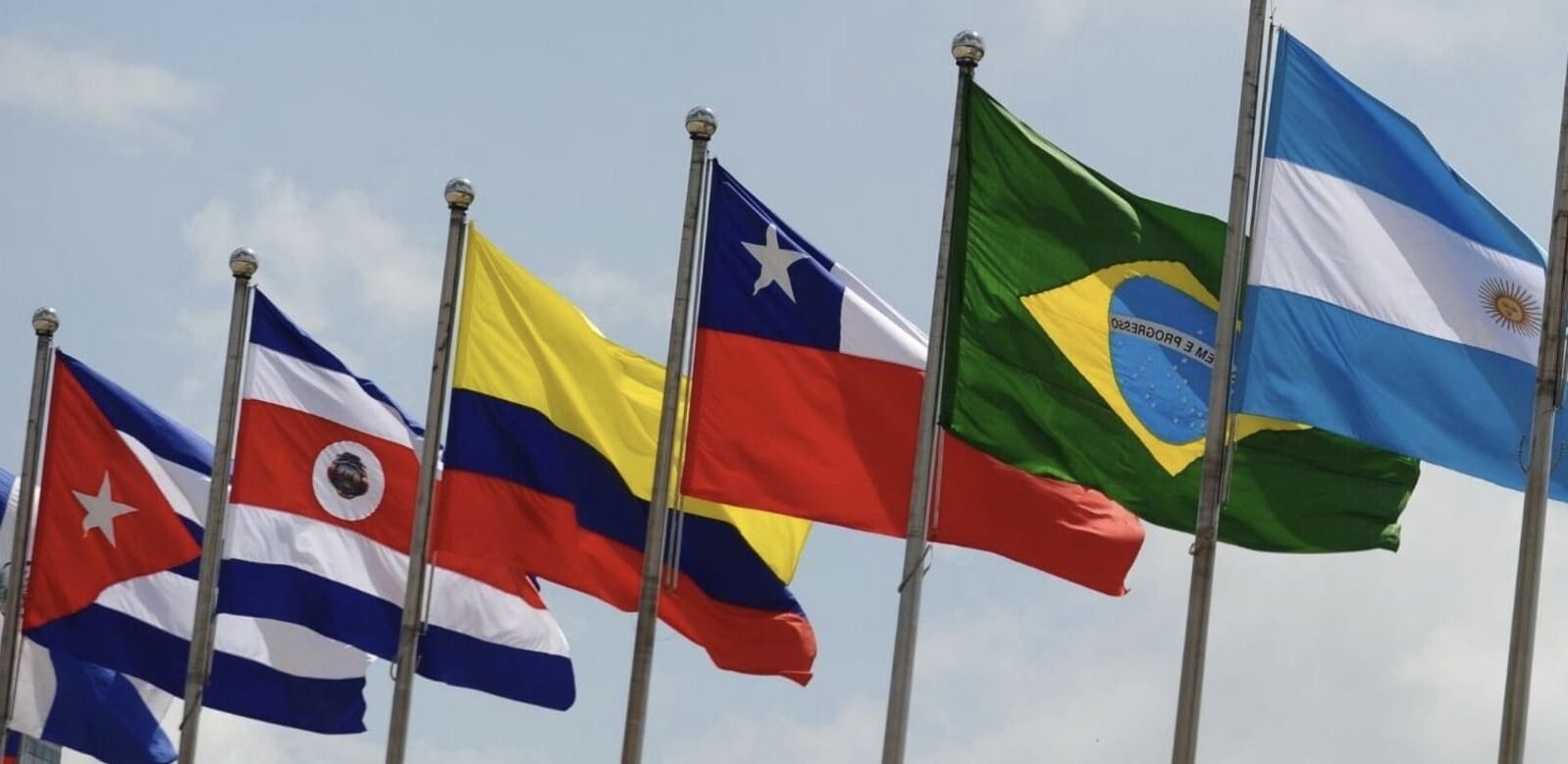
Value proposition in Latin America: Create impact with a bespoke strategy
A value proposition that works in one Latin American country may lose relevance, credibility, or commercial power in another.
Your company may offer the same product, technology, or service across the region. Your customers may not evaluate it in the same way. Their priorities, risks, alternatives, price sensitivity, buying processes, channels, regulatory constraints, service expectations, and reasons to trust a supplier can vary materially by country and segment.
This creates a strategic tension. If you standardize too much, your proposition can feel generic or disconnected from local reality. If you localize everything, your regional strategy becomes fragmented, your sales teams tell different stories, and customers no longer understand what your company consistently stands for.
At Midas Consulting, we help you resolve that tension. We identify the customer value that should remain consistent across Latin America, the elements that must be adapted by market, the proof points that make the promise credible, and the operating changes required to deliver it.
The result is not a slogan translated into several languages. It is a regional value architecture that connects customer need, competitive differentiation, pricing, channels, service, sales execution, and strategic foresight.
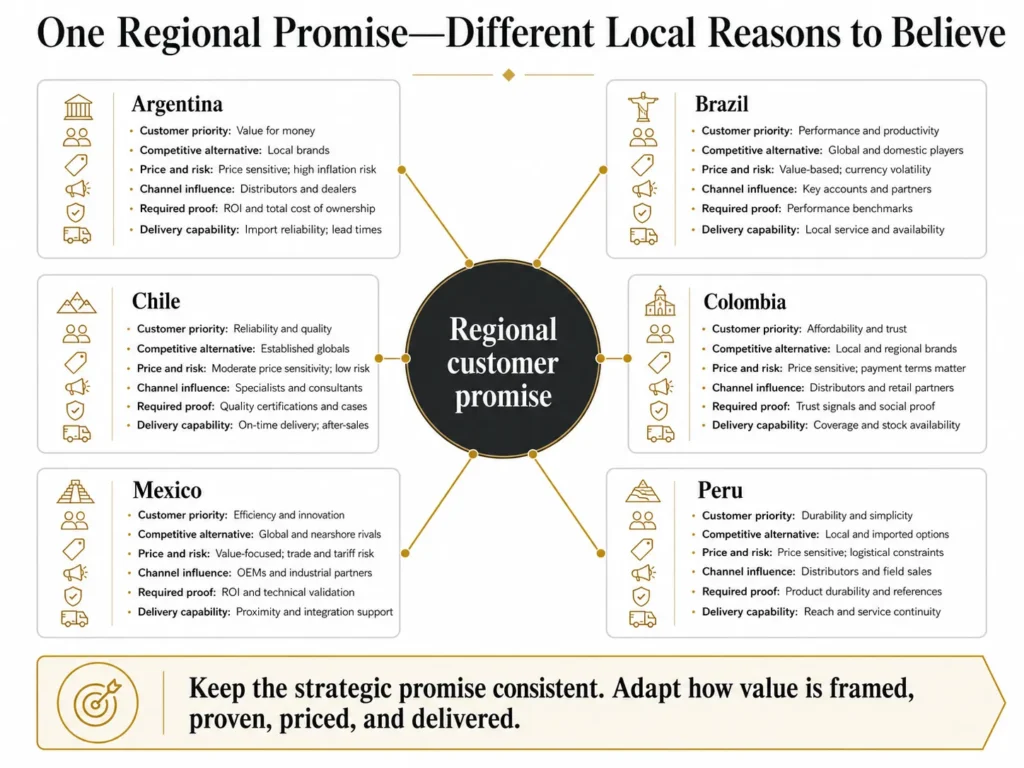
Figure 1. A strong Latin America value proposition preserves a coherent regional promise while adapting customer relevance, proof, pricing, channels, and execution locally.
The Strategic Question Is Not “What Should We Say?”
The stronger question is: What value do you create for a specific customer, why is that value more relevant than the alternatives, why should the customer believe you, and what must your organization do to deliver the promise consistently?
Your leadership team needs to understand:
- Which customer segments and decision-makers the proposition is designed for.
- What outcome, problem, risk, job, or aspiration matters most to them.
- How customers currently solve the problem.
- Why they choose competitors, substitutes, internal solutions, or doing nothing.
- Which benefits are genuinely differentiated and which are only table stakes.
- What evidence makes the promise credible.
- Which elements should remain regionally consistent.
- Which elements must change by country, segment, channel, or use case.
- How pricing, service, sales, product, channels, and customer experience must support the proposition.
- How changing customer needs and competitive moves could weaken it over time.
Why One Message Rarely Works Unchanged Across Latin America
Customer priorities differ
One market may prioritize operating continuity, another affordability, another technical performance, and another local support or regulatory confidence.
Competitive alternatives differ
Your strongest competitor may be a multinational in one country, a local specialist in another, a distributor-owned brand elsewhere, or a lower-cost substitute that is not visible at the regional level.
Channels shape what customers see and believe
Distributors, dealers, integrators, retailers, institutions, and local sales teams can strengthen, reinterpret, or dilute your proposition.
Price sensitivity and financing vary
The same value claim may support a premium in one market but require financing, smaller formats, service bundles, or a different economic proof in another.
Trust is created differently
Customers may require global references, local references, certifications, technical evidence, demonstrations, installed base, service guarantees, or relationships before they believe the promise.
Execution capability differs
A promise based on rapid service, availability, customization, or implementation support is only credible where the organization and its partners can deliver it.
Separate the Regional Core from the Local Expression
The regional core may include:
- The customer outcome your company helps create.
- The strategic problem you solve.
- The capabilities that define your advantage.
- The principles of the customer experience.
- The brand promise and long-term position.
The local expression may include:
- The priority customer segment.
- The strongest pain point or desired outcome.
- The competitive comparison.
- The proof points and reasons to believe.
- The commercial offer and service level.
- The price, financing, and risk-reduction argument.
- The channel and sales activation.
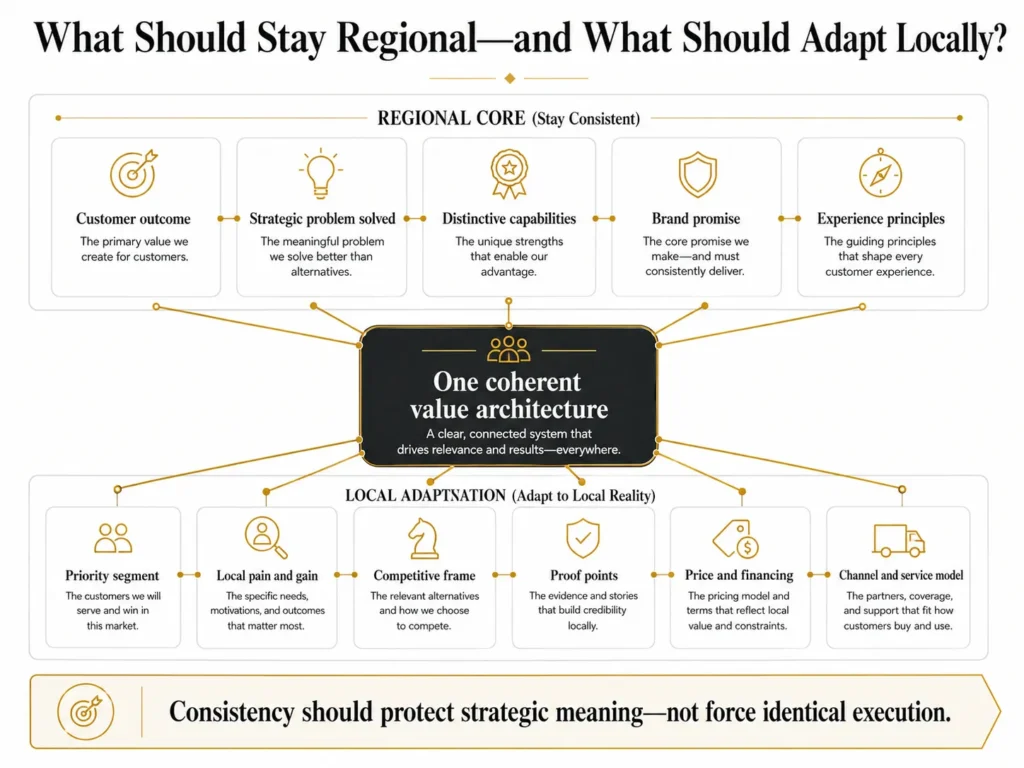
Figure 2. The strongest regional value propositions protect a common strategic core while allowing disciplined local adaptation.
A Strong Value Proposition in Latin America Must Pass Five Tests
1. Relevance
Does the proposition address a customer outcome, risk, or priority that matters enough to influence the decision?
2. Differentiation
Does it explain why your offer is meaningfully better or more appropriate than competitors, substitutes, internal alternatives, or doing nothing?
3. Credibility
Can you support the promise with evidence, capabilities, references, performance, processes, experience, or a clear reason to believe?
4. Economic value
Can the customer understand how the offer improves revenue, cost, risk, productivity, speed, compliance, convenience, confidence, or another valued outcome?
5. Deliverability
Can your product, service, sales, channels, operations, and customer experience consistently deliver what you promise?
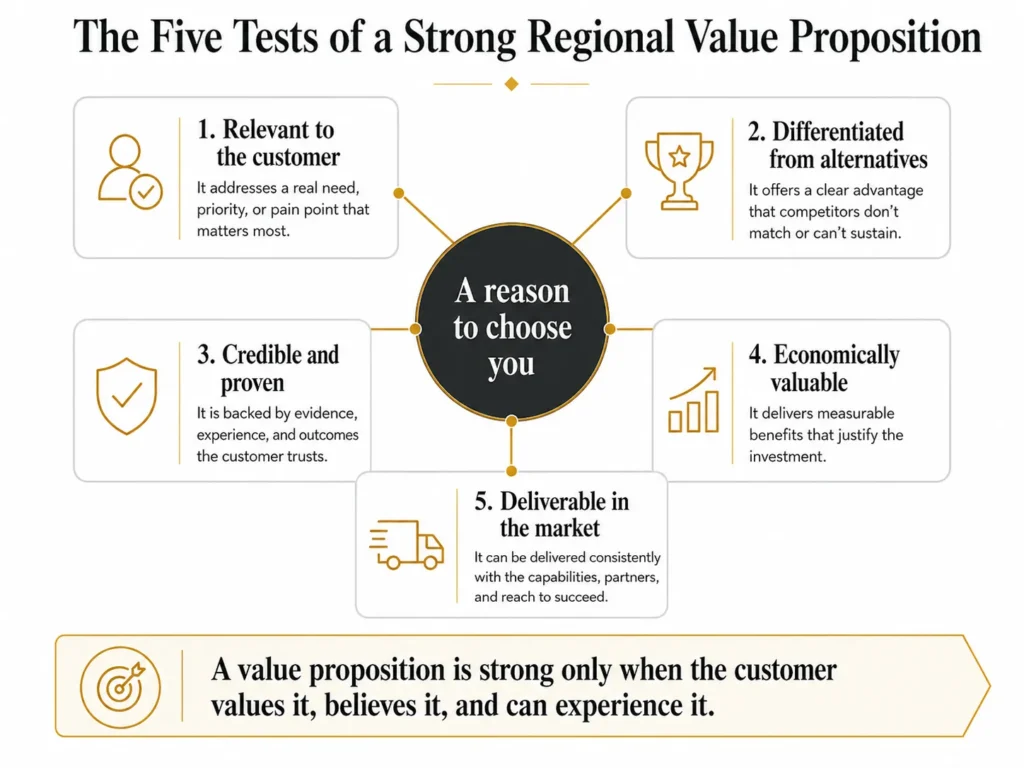
Figure 3. A value proposition becomes commercially powerful when it is relevant, differentiated, credible, economically meaningful, and consistently deliverable.
Do Not Confuse the Value Proposition with the Message
The message is how you express the proposition. The proposition itself is the strategic logic behind the customer’s choice.
It should influence:
- Which customers you prioritize.
- Which products, services, and bundles you offer.
- How you price and defend margins.
- Which proof points sales teams use.
- How distributors and partners represent the offer.
- What service and customer experience you provide.
- Which capabilities you invest in.
- What you choose not to promise.
Customer Insight Must Challenge Internal Assumptions
Leadership, sales, marketing, product, service, and distributors often hold different explanations of why customers buy. We test those assumptions through customer and prospect interviews, win-loss analysis, channel interviews, competitor analysis, pricing evidence, and market research.
The most useful insight often comes from the gap between what the company thinks customers value and what actually determines their choice.
Pricing Power Depends on Visible and Credible Value
A stronger value proposition can help your company move the discussion from features to outcomes, quantify cost or risk impact, explain total value, defend a premium, and reduce unnecessary discounting.
This does not mean price becomes irrelevant. It means price is evaluated within a clearer value equation.
How Competitor Analysis and Strategic Foresight Strengthen the Value Proposition in Latin America
A claim can feel distinctive internally and still be generic in the market. We examine which value themes competitors already claim, which benefits are category expectations, where competitors are credible or vulnerable, and which customer needs remain under-addressed.
We can also test whether the proposition will remain relevant as customer priorities, technologies, regulation, channels, and competitor behavior change.
For the broader executive framework, visit Strategic Foresight and Competitive Response: Executive Insights.
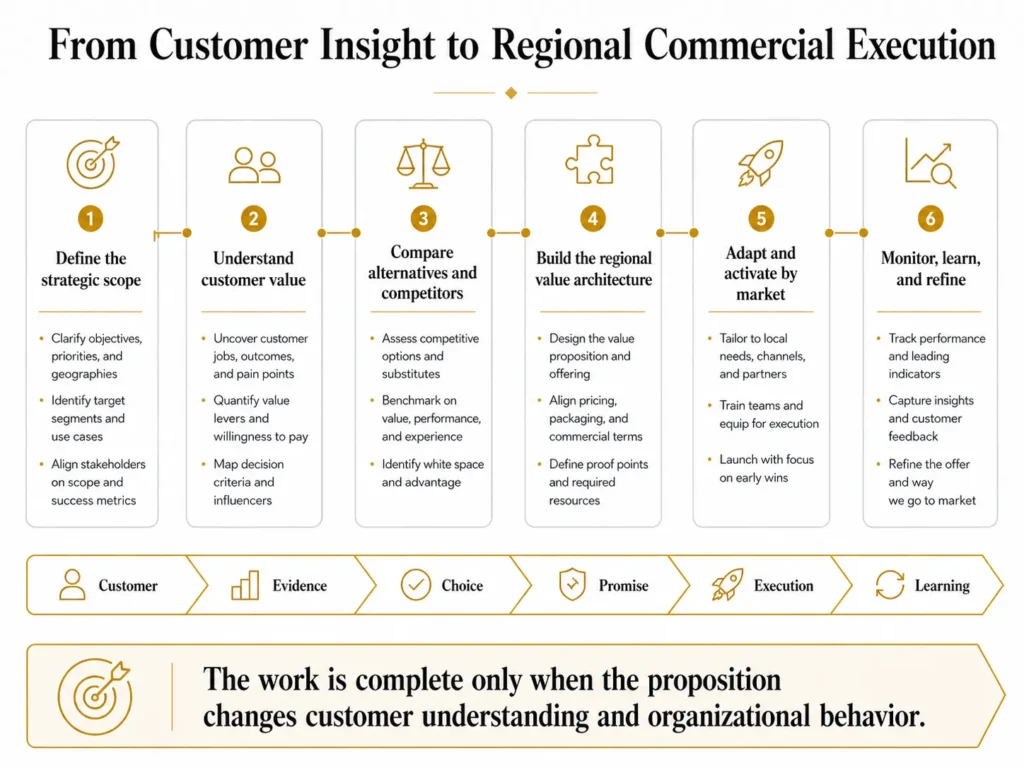
Figure 4. Value proposition design should move from customer evidence and competitive choice to local activation, delivery, and continuous refinement.
How Midas Develops a Regional Value Proposition in Latin America
1. Define the strategic decision and scope
We clarify whether the proposition applies to the company, business unit, brand, product, service, segment, channel, country, or use case.
2. Build the customer and market fact base
We examine customer needs, jobs, pains, gains, decision criteria, alternatives, buying roles, willingness to pay, and market differences.
3. Understand competitors and substitutes
We identify what alternatives promise, where they are credible, what customers associate with them, and where differentiation may be possible.
4. Identify the strongest value themes
We prioritize the themes that are most relevant to customers, most credible for your company, and most differentiated from alternatives.
5. Build proof and reasons to believe
We connect each claim with evidence, capabilities, processes, references, results, guarantees, demonstrations, or other credible proof.
6. Separate the regional core from local adaptation
We determine what should remain consistent and what should change by country, segment, stakeholder, channel, or use case.
7. Translate the proposition into execution
We help align sales, marketing, product, pricing, channels, service, and customer experience with the promise.
8. Test, refine, and monitor
We validate the proposition with customers, prospects, sales teams, partners, and market evidence.
For the complete educational methodology, visit Are You Losing Customers Because You Don’t Have a Strong Value Proposition?.
Case Example: From Generic Benefits to a Clearer Reason to Buy
A company approached Midas with a value proposition built around quality, service, innovation, and experience. Customers heard similar claims from several competitors.
Customer and competitive insight showed that the stronger opportunity was to explain how the company reduced execution risk and supported a smoother implementation. The revised proposition changed the sales conversation from product features to avoiding delays, reducing uncertainty, and protecting business continuity.
“We doubled our sales after designing our value proposition because customers now clearly understand our differentiators.”
— CEO, Consumer Goods Company
“Now that we sell value, we rely on far fewer discounts.”
— Marketing Vice President
When You Need a Regional Value Proposition in Latin America
- Your sales teams use different value arguments across countries.
- Customers see your offer as similar to competitors.
- Your company relies too heavily on discounts.
- A regional message does not resonate locally.
- Local propositions have become fragmented.
- You are entering new countries or segments.
- You are launching or repositioning an offer.
- Channels do not communicate your value consistently.
- Customers do not understand your proof or differentiation.
- Your organization cannot align product, sales, service, pricing, and marketing around one promise.
Country-Specific Value Proposition Strategy in Latin America
- Value proposition in Argentina
- Value proposition in Brazil
- Value proposition in Chile
- Value proposition in Colombia
- Value proposition in Mexico
- Value proposition in Peru
For the full commercial offer, visit Value Proposition Consulting.
Why Midas for Value Proposition Strategy in Latin America?
- We begin with customer evidence—not copywriting.
- We connect regional consistency with local relevance.
- We connect differentiation with credibility.
- We connect value with pricing and margins.
- We connect the proposition with execution.
- We consider competitive response and future change.
- We bring extensive experience. We have more than 300 value proposition projects across B2B and B2C markets and an 82.2% Net Promoter Score.
Ethical and Reliable Customer Intelligence
We comply with SCIP’s Code of Ethics, the profession’s gold standard. We comply with applicable laws, disclose relevant identity before interviews, avoid conflicts of interest, and provide honest recommendations.
We do not seek trade secrets, request confidential documents, misrepresent who we are, or encourage sources to violate legal or contractual obligations.
Frequently Asked Questions About Value Propositions in Latin America
Should one value proposition work across all Latin American countries?
Usually, the regional strategic core should remain consistent, while the customer emphasis, proof, pricing, channel, and delivery model may need local adaptation.
Is a value proposition the same as a slogan?
No. A slogan is an expression. A value proposition defines the customer, outcome, differentiation, proof, and delivery logic behind the choice.
Can you develop separate value propositions for different segments in Latin America?
Yes. A corporate promise can support segment-, product-, stakeholder-, channel-, or use-case-specific propositions.
Can you interview customers for value propositions in Latin America?
Yes. Customer, prospect, channel, and win-loss interviews are often essential for challenging internal assumptions.
Can you compare our value proposition with competitors in Latin America?
Yes. We assess competitor claims, customer perceptions, proof points, strengths, vulnerabilities, and unclaimed value spaces.
Can this help reduce discounting?
Yes, when customers can understand and believe the economic and strategic value of your offer.
Can you help activate the value proposition with distributors in Latin America?
Yes. We can translate it into channel tools, proof points, training, sales arguments, service standards, and governance.
Can value proposition work support a market entry in Latin America?
Yes. It can clarify which customer to target, which problem to solve, how to differentiate, what proof is required, and how the offer should be adapted locally.
How do you test a value proposition in Latin America?
Through interviews, concept testing, sales-team feedback, channel input, win-loss evidence, and market-performance indicators.
How often should the value proposition be reviewed in Latin America?
When customer needs, competitors, regulation, technology, channels, or the offer change materially.
About the Author
Adrian Alvarez, PhD is Managing Partner at Midas Consulting, Wharton Alumnus, MBA Professor at Universidad Argentina de la Empresa (UADE), and Competitive Intelligence Fellow.
He has designed hundreds of value propositions across B2B, B2C, industrial, technology, consumer, and pharmaceutical markets. His doctoral research focuses on value proposition design in specialty pharmaceutical markets.
His work has been published in the United States, Spain, and Germany. You can access his library of strategic insights and published research here
View professional profile on LinkedIn
Turn Regional Complexity into a Clearer Reason to Choose You
You do not need a generic phrase that sounds good in every country. You need a value architecture that identifies what customers value, what differentiates you, what they need to believe, what must adapt locally, and what your organization must deliver.