


A value proposition is often treated as a marketing message. At Midas Consulting, we see it differently: a value proposition is a strategic choice about why a specific customer should choose your company instead of a competitor, a substitute, or doing nothing.
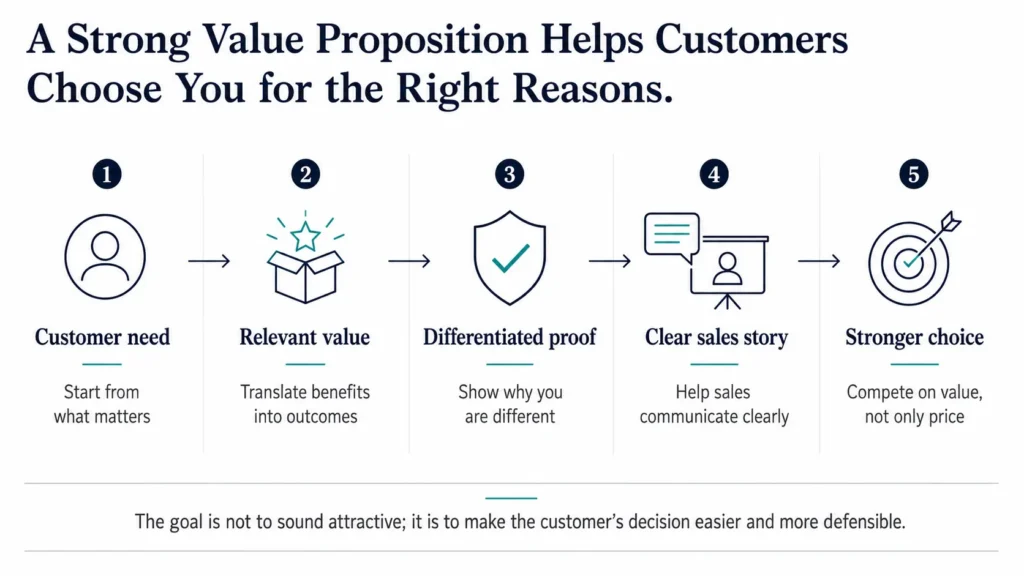
Figure 1: A value proposition’s goal is not to sound attractive; it is to make the customer’s decision easier and more defensible.
The real value of a strong value proposition is not that it sounds attractive. The real value is that it helps customers understand the specific value you create, helps sales teams communicate that value clearly, and helps leadership teams align the company’s offer, capabilities, pricing, channels, and execution around what customers actually need.
This is especially important in competitive markets where customers perceive products and services as similar. When the value proposition is weak, companies often compensate with discounts, generic claims, or sales effort that does not convert. When the value proposition is strong, customers have clearer reasons to buy, sales teams have a sharper story, and the business can compete on value instead of price alone.
In B2B markets, this becomes even more important because customers are not buying features in isolation. They are evaluating business outcomes, risk reduction, operational impact, service reliability, implementation support, total cost, and the credibility of the supplier. As Harvard Business Review’s work on customer value propositions in business markets argues, suppliers need to help customers understand and believe in the superior value of their offerings.
For that reason, we often combine value proposition design with market analysis, competitor analysis, benchmarking, win-loss analysis, brand strategy, and strategy workshops.
In this article, we explain what a value proposition is, when it matters most, why companies lose customers when it is weak, how to build one, where its limitations are, and how value proposition design connects with broader strategic decisions.
As one Business Unit Director of a B2B company put it in a post-project review in 2024:
“Thanks to the workshop, we identified and added key attributes to our product, which significantly boosted sales.”
When Value Proposition Design Is the Right Tool
Value proposition design is most useful when your company needs to clarify why customers should choose you, pay for your offer, or stay with you instead of switching to another option. It is especially valuable when leadership teams need to:
- Understand why customers are not responding to the current offer, message, or sales argument.
- Reduce dependence on discounts by making value clearer and more credible.
- Differentiate a product, service, business unit, or company in a crowded market.
- Align marketing, sales, product, service, and leadership teams around a common customer promise.
- Adapt a value proposition to a new country, segment, channel, or customer type.
- Support a new product launch, market entry, repositioning, or go-to-market strategy.
- Understand what customers truly value, what competitors already claim, and where your company can credibly stand apart.
The key point is that value proposition design should not begin with copywriting. It should begin with a strategic question: What value do we create for a specific customer, and why should that customer believe we are a better choice?
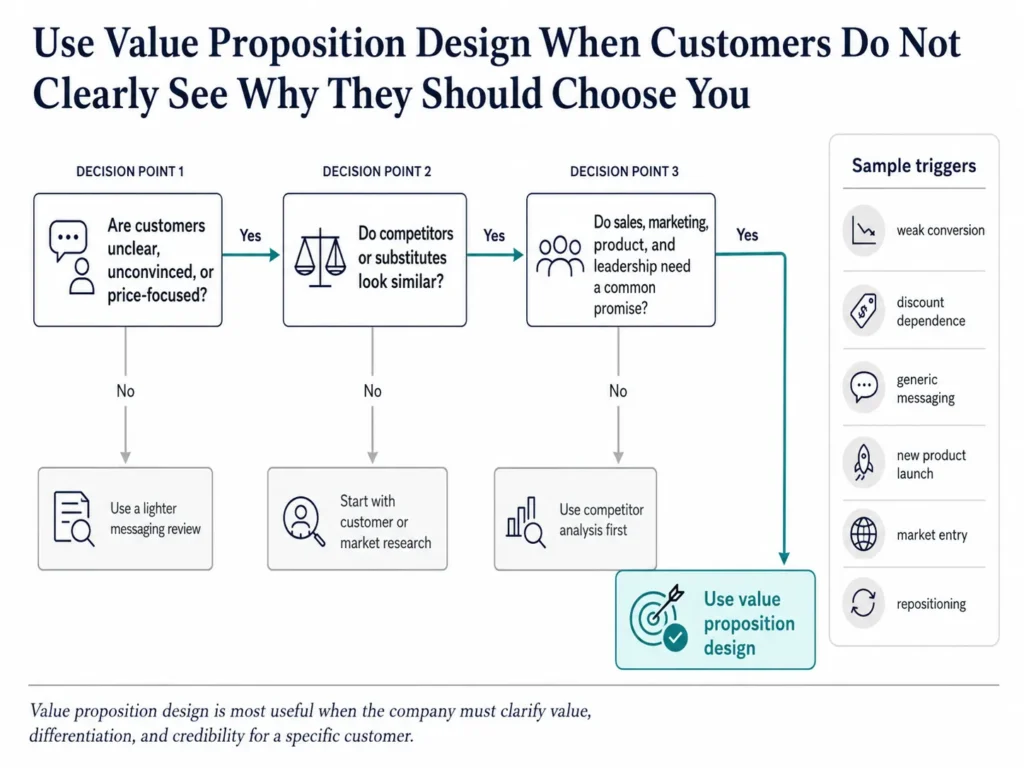
Figure 2: Value proposition design is most useful when the company must clarify value, differentiation, and credibility for a specific customer segment.
What Is a Value Proposition?
A value proposition is a clear, credible, and differentiated explanation of the value your company creates for a specific customer segment. It connects what customers need, what your company can deliver, and why your offer is better or more relevant than available alternatives.
A strong value proposition should answer five practical questions:
- Who is the target customer? The value proposition should be specific enough to address a defined segment, decision-maker, or use case.
- What problem, need, job, or aspiration does the customer have? Customers do not buy features in isolation; they buy help solving a problem, reducing risk, improving results, or achieving a desired outcome.
- What value does the company create? This may include revenue growth, cost reduction, operational efficiency, lower risk, better service, convenience, speed, compliance, status, or peace of mind.
- Why is the offer different or better? The proposition must clarify how your company stands apart from competitors, substitutes, or internal alternatives.
- Why should the customer believe it? Claims should be supported by evidence, capabilities, experience, proof points, customer results, or credible reasons to believe.
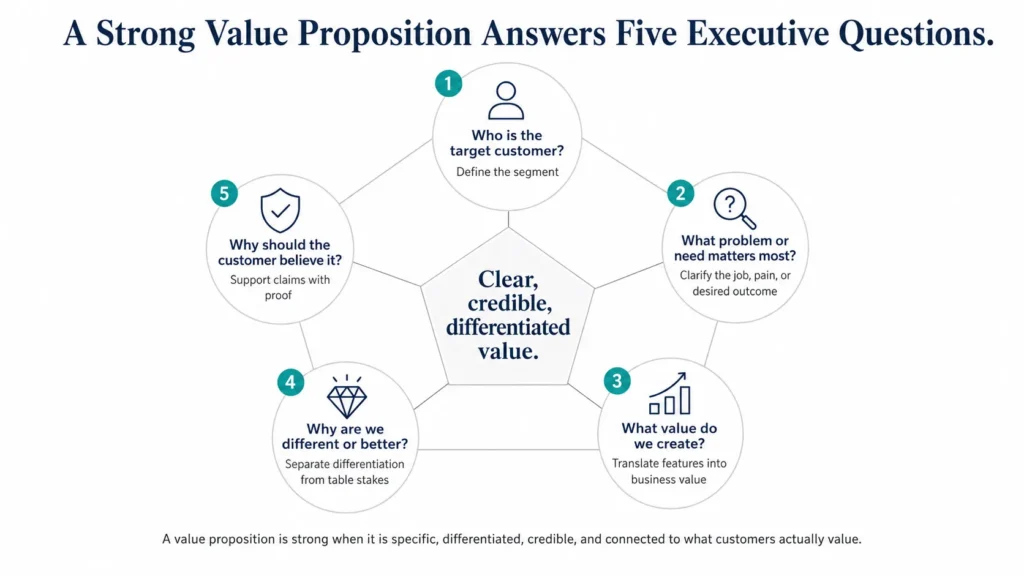
Figure 3: A value proposition is strong when it is specific, differentiated, credible, and connected to what customers actually value.
This is why value proposition design should be connected to customer insight, competitor analysis, product or service design, pricing, channel strategy, and execution. A value proposition is not just what you say. It is what your company must be able to deliver consistently.
Why Companies Lose Customers Without a Strong Value Proposition
Companies rarely lose customers only because the sales team needs better words. They lose customers because the customer does not see enough relevant, differentiated, and credible value.
When the value proposition is weak, several problems tend to appear:
- Customers compare you mainly on price. If the value is unclear, the safest comparison point becomes cost.
- Sales teams improvise the story. Different people explain the offer in different ways, which weakens consistency and credibility.
- Marketing messages become generic. Claims such as “quality,” “innovation,” “service,” or “experience” may sound positive but fail to explain why the company is the best choice.
- Competitors define the comparison. If your company does not clarify its value, customers may adopt the competitor’s frame of reference.
- The product or service may not fully match what customers value. Sometimes the problem is not only the message. The offer itself may need to be adjusted.
- Internal teams lose alignment. Product, sales, marketing, service, and leadership may all be working hard, but not around the same customer promise.
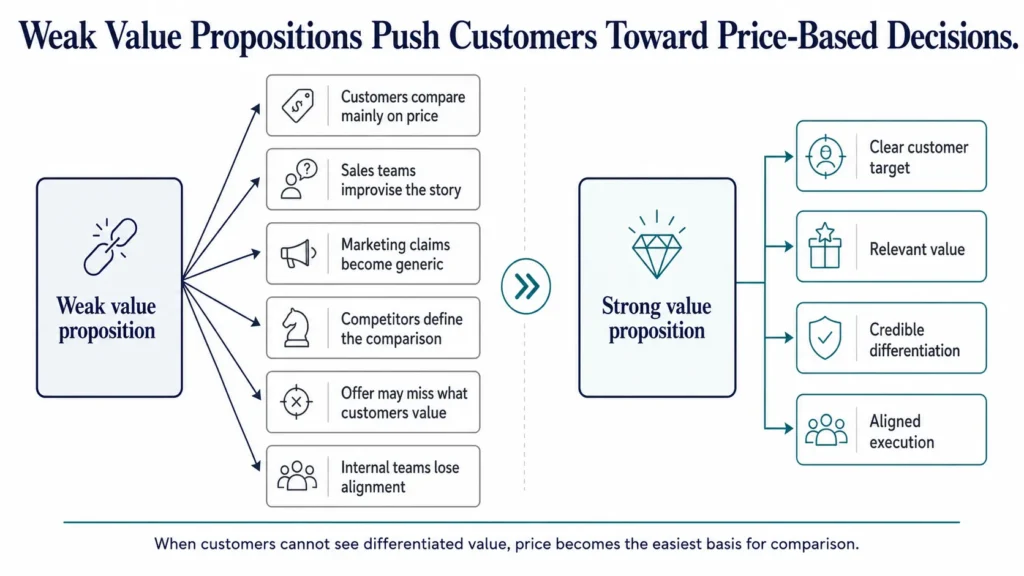
Figure 4: When customers cannot see differentiated value, price becomes the easiest basis for comparison.
A strong value proposition helps solve these problems by clarifying who the company serves, what value it creates, how it differs, and what must be delivered to make the promise credible.
Three Executive Benefits of a Strong Value Proposition
1. Stronger differentiation
A strong value proposition helps customers understand why your company is meaningfully different. It moves the conversation away from generic claims and toward the specific value your offer creates for a defined customer segment.
This is especially important in markets where competitors use similar language or where customers perceive alternatives as interchangeable. Differentiation is not only about being different. It is about being different in a way that matters to the customer.
2. Better sales and marketing effectiveness
A clear value proposition gives sales and marketing teams a common language. It helps them explain the offer consistently, focus on the right customer pains and gains, and support claims with stronger proof points.
This can improve campaigns, sales conversations, presentations, proposals, product launches, and customer retention efforts. It also reduces the risk that each team member invents a different version of the company’s value.
3. Less dependence on discounts
When customers do not understand value, they negotiate on price. A stronger value proposition helps customers see what they gain, what risks they reduce, and why the offer may be worth more than a cheaper alternative.
This does not mean price stops mattering. It means price becomes part of a broader value conversation instead of the only basis for comparison.
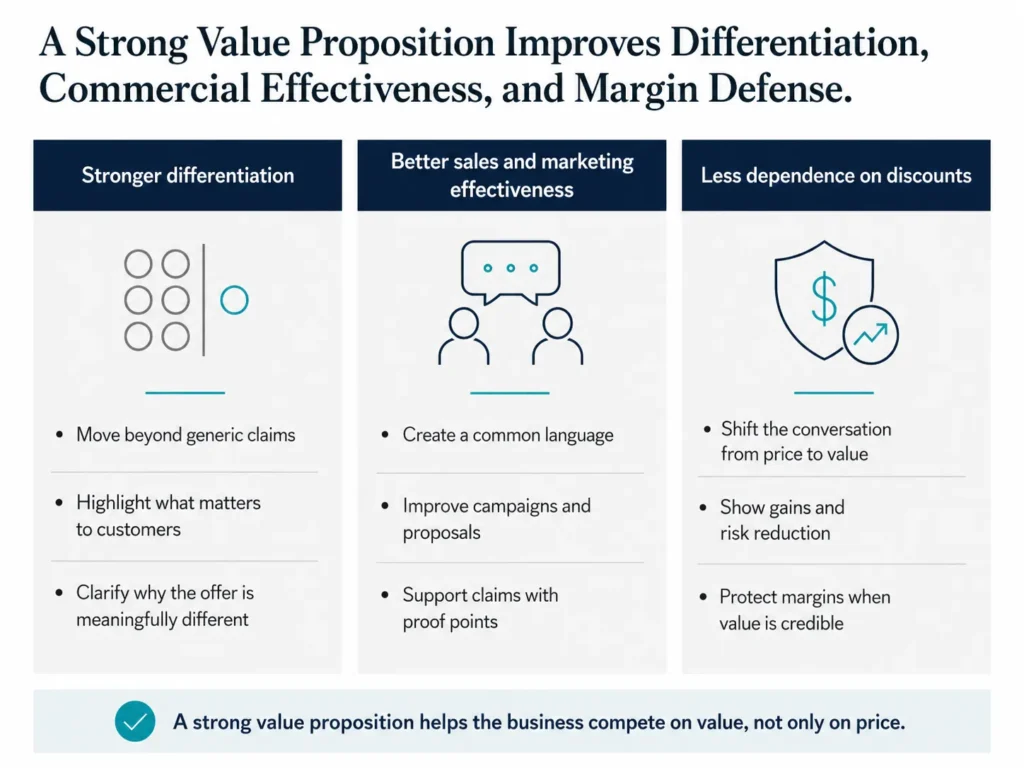
Figure 5: A strong value proposition helps the business compete on value, not only on price.
How to Build a Strong Value Proposition
A strong value proposition should be built through a structured process. The goal is not to create a slogan. The goal is to understand the customer, compare alternatives, identify real sources of value, and translate them into a proposition that the company can deliver.
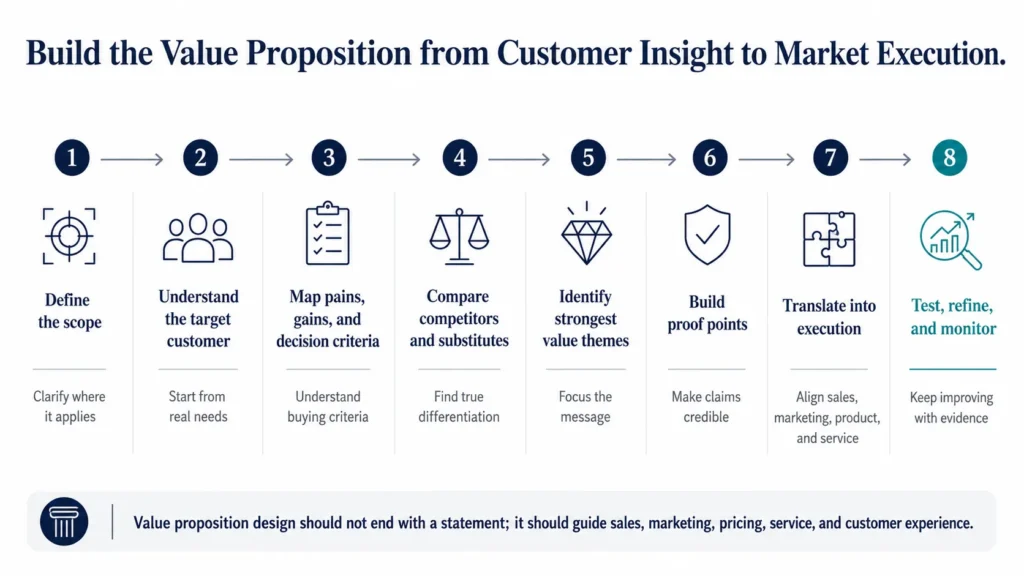
Figure 6: Value proposition design should not end with a statement; it should guide sales, marketing, pricing, service, and customer experience.
Step 1. Define the scope
Start by clarifying what the value proposition applies to. Is it for the whole company, a business unit, a brand, a product, a service, a customer segment, a country, or a specific use case?
This matters because a broad corporate value proposition may need to be different from a segment-specific or product-specific proposition.
Step 2. Understand the target customer
Identify who the customer is, what they need to accomplish, what problems they face, what risks they perceive, and what outcomes they value. Customer interviews, workshops, sales input, win-loss analysis, and market research can all contribute to this understanding.
The Jobs to Be Done approach is useful here because it focuses on why customers choose a product or service to make progress in a specific situation. Harvard Business School describes Jobs to Be Done as a framework for understanding customer needs and sparking innovation.
Step 3. Map pains, gains, and decision criteria
Clarify what creates pain for the customer, what gains they are seeking, and which criteria influence the buying decision. This may include economic value, convenience, reliability, speed, risk reduction, compliance, status, technical performance, implementation support, or service quality.
The Value Proposition Canvas is one useful tool for connecting customer jobs, pains, and gains with the products, services, pain relievers, and gain creators offered by the company.
Step 4. Compare against competitors and substitutes
A value proposition is only strong if it works in a competitive context. Compare your offer against direct competitors, indirect competitors, substitutes, internal alternatives, and the option of doing nothing.
This helps identify which claims are truly distinctive, which are only table stakes, and which competitors may already own in the customer’s mind.
Step 5. Identify the strongest value themes
Choose the value themes that are most relevant to the customer, most credible for your company, and most differentiated versus alternatives. Avoid trying to communicate every possible benefit.
In B2B markets, a focused value proposition is usually stronger than a long list of generic advantages.
Step 6. Build proof points and reasons to believe
Customers need evidence. Support the proposition with proof points such as case examples, performance data, customer results, technical capabilities, certifications, service coverage, delivery speed, cost savings, risk reduction, or experience in comparable situations.
The stronger the claim, the stronger the evidence should be.
Step 7. Translate the proposition into execution
A value proposition must be activated across sales, marketing, product, service, pricing, channels, and customer experience. If the company cannot deliver the promise consistently, the value proposition will lose credibility.
This is why value proposition design often leads to adjustments in the offer, sales tools, internal processes, channel support, service model, or customer journey.
Step 8. Test, refine, and monitor
Validate the value proposition with customers, prospects, sales teams, distributors, and market evidence. Then monitor whether it improves customer understanding, conversion, pricing power, retention, and competitive differentiation.
A value proposition should evolve as customers, competitors, technologies, and market conditions change.
Practical Example: From Generic Benefits to a Stronger Customer Reason to Buy
A company asked Midas Consulting to help improve the value proposition for one of its business units. The initial message emphasized quality, service, innovation, and experience. These were positive attributes, but customers heard similar claims from several competitors.
The first step was to understand what customers actually valued in the decision. Interviews and workshops showed that customers were not only looking for product quality. They were also concerned about implementation risk, responsiveness, technical support, delivery reliability, and the cost of operational disruption.
The competitor comparison revealed that some claims were not differentiating because most competitors could make them. However, the company had a stronger combination of technical expertise, local support, and ability to solve problems during implementation.
The final value proposition shifted the focus from generic quality to a more specific promise: helping customers reduce execution risk and achieve a smoother implementation. This also changed the sales conversation. Instead of only presenting product features, the sales team could explain how the company helped customers avoid delays, reduce uncertainty, and protect business continuity.
This is the value of a strong value proposition. It turns customer insight and competitive understanding into a clearer reason to buy.
Strengths and Limitations of Value Proposition Design
Value proposition design is powerful when it is based on real customer insight, competitive understanding, and operational credibility. But like any strategic tool, it also has limitations.
Strengths
- It clarifies customer value. It helps the company understand what customers actually care about and why they choose one option over another.
- It improves differentiation. It helps separate meaningful differences from generic claims that competitors can easily copy.
- It aligns internal teams. It gives leadership, sales, marketing, product, and service teams a shared understanding of the customer promise.
- It supports pricing and margin defense. It helps customers understand value beyond price, reducing the need to compete only through discounts.
- It improves execution. It connects strategy, messaging, product, service, channels, and customer experience around a clearer value promise.
Limitations
- A value proposition is not a slogan. Better wording cannot compensate for a weak offer, poor service, or lack of real differentiation.
- Customer insight is essential. Internal workshops alone may reinforce assumptions if they are not complemented by customer research, market analysis, or win-loss insight.
- Competitor context matters. A claim may sound strong internally but be weak if competitors already own the same territory in the customer’s mind.
- Execution must support the promise. If the organization cannot deliver consistently, the value proposition can damage credibility instead of strengthening it.
- Value changes over time. Customer needs, competitive alternatives, technologies, regulations, and economic conditions evolve, so the proposition must be reviewed periodically.
This is why value proposition design should be treated as part of a broader strategic process, not only as a communication exercise.
Conclusion: A Strong Value Proposition Should Make the Customer’s Choice Easier
A strong value proposition is not just about explaining who you are. It is about helping customers understand why your company is the right choice for their specific needs, priorities, risks, and desired outcomes.
When done well, value proposition design helps executives answer practical questions: Who are we serving? What do these customers really value? Why do they choose competitors? Which claims are truly differentiated? What proof points do we have? What must we change in the offer, sales process, service model, or customer experience to make the promise credible?
At Midas Consulting, we use value proposition design to help companies move from generic messaging to sharper strategic positioning. The goal is not to create a phrase that sounds good. The goal is to define a promise that customers value, competitors cannot easily copy, and the company can actually deliver.
In Latin America, this is especially important because customer priorities, competitive alternatives, channel influence, price sensitivity, regulatory conditions, and service expectations can vary significantly by country and segment. A value proposition that works in one market may need to be adapted before it works in another.
If your company is losing opportunities, depending too much on discounts, struggling to differentiate, or preparing a launch, repositioning, market entry, or go-to-market strategy, value proposition design can help clarify why customers should choose you.
As one CEO of a consumer goods company shared in a post-project conversation in 2025:
“We doubled our sales after designing our value proposition because customers now clearly understand our differentiators.”
About the Author
By Adrian Alvarez, PhD. Adrian Alvarez is Managing Partner at Midas Consulting, Wharton Alumnus, MBA Professor at Universidad Argentina de la Empresa (UADE), and Competitive Intelligence Fellow. He specializes in competitive strategy, value proposition design, strategic intelligence, market analysis, competitor analysis, business wargaming, and strategic decision-making under uncertainty in Latin America.
He has designed hundreds of value propositions for companies across B2B, B2C, technology, industrial, consumer goods, and pharmaceutical markets. His doctoral research focuses on value proposition design in specialty pharmaceutical markets, where customer value, access, differentiation, evidence, and stakeholder alignment are especially critical.
Adrian is the author of numerous works published in the US, Spain, and Germany. You can access his library of strategic insights and published research here
View professional profile on LinkedIn
Selected External Sources
This article is informed by Midas Consulting’s experience designing value propositions across B2B, B2C, technology, industrial, consumer goods, and pharmaceutical markets, as well as by respected sources on customer value, value proposition design, and customer needs.
- Harvard Business Review: Customer Value Propositions in Business Markets
- Strategyzer: Value Proposition Canvas
- Harvard Business School Online: 3 Keys to Understanding Jobs to Be Done
- Harvard Business Review: Know Your Customers’ Jobs to Be Done
Related Midas Insights
For executives who want to go deeper, these Midas articles provide additional context on how value proposition design connects with market analysis, competitor analysis, benchmarking, win-loss analysis, market entry, and strategic foresight:
- Market Analysis: The Key to Informed Strategic Decisions
- Competitor Analysis: Benefits and Step-by-Step Guide
- Benchmarking: Improve Your Competitive Position
- Win-Loss Analysis: Your Secret Weapon for Growth Beyond Sales
- Market Entry Analysis: How to Determine Which Markets to Enter
- Strategic Foresight and Competitive Response: Executive Insights
Related Midas Services
Value proposition design is often part of a broader strategic decision process. Depending on the question your company needs to answer, Midas Consulting can combine value proposition work with other strategy services:
- Value Proposition Consulting: When your company needs to clarify why customers should choose your offer and how to communicate that value more effectively.
- Market Analysis: When the company needs to understand customer needs, market attractiveness, segment differences, and demand conditions before defining the proposition.
- Competitor Analysis: When the company needs to understand how competitors position themselves and where there may be room to differentiate.
- Win-Loss Analysis: When the company needs to understand why customers buy, reject, switch from, or stay with specific offers.
- Benchmarking: When leadership teams need to compare capabilities, service levels, practices, or performance against competitors or reference companies.
- Brand Consulting: When the challenge is not only what value the company offers, but how customers perceive the brand, what drives preference, and how to build stronger differentiation in the market.
- Strategy Consulting: When your company needs to define where to compete, how to win, which priorities to pursue, and how to align leadership around a clear strategic direction.
Together, these services help executive teams move from customer understanding to sharper differentiation, stronger positioning, and better commercial execution.
If your company needs to strengthen its value proposition, reduce price-driven competition, or clarify why customers should choose your offer, contact Midas Consulting to discuss how value proposition design can support your next strategic decision.
At Midas Consulting, we’ve helped businesses to thrive by creating impactful value propositions. With our proprietary methodology and an impressive NPS of 82.2% between 2020 and 2025, we’re ready to help your business stand out and succeed.
Ready to Lead Your Market? Let’s Talk!
Some of our customers:






Next Steps:
Schedule a Call
We’ll discuss your goals and gather key insights to create a tailored proposal
Receive a Custom Plan
Select from three flexible approaches—from full-service support to collaborative workshops. We recommend the collaborative route for deeper insights that strengthen your team
Outshine Your Competitors
With your new proposition in place, you’ll stand out in the market, attract ideal clients, and achieve your goals
Ready to take your business to the next level? Let’s get started!
If you liked this blog post, please share it in your social networks:


