Win-Loss analysis in Colombia: Gain market share by learning precisely why you secure and miss sales opportunities, and then strategically responding to that information.
In Colombia, an enthusiastic meeting does not always mean the buyer is ready to choose you.
You may hear that the proposal was excellent, that management is still reviewing it, that the budget needs approval, or that another option fit the situation better. The buyer may remain warm, respectful, and open to future conversations—even after the decision has effectively gone elsewhere.
Those explanations may be accurate. They may also leave out the real issue: limited trust, weak local credibility, insufficient implementation confidence, a distributor that did not inspire confidence, missing Colombian references or certifications, slow support, internal politics, or a competitor whose local relationships made the decision feel safer.
Colombia’s business environment adds complexity. Relationships, reputation, local presence, distributor influence, institutional requirements, regional differences, and the buyer’s ability to defend the decision internally can all shape the outcome.
At Midas Consulting, we help you move beyond diplomatic feedback and broad CRM loss codes. We interview buyers who chose you, buyers who selected another option, and buyers who delayed or abandoned the decision. We reconstruct how the decision was made and translate the evidence into action across sales, value proposition, pricing, proof, service, channels, product, and strategy.
The result is not a set of interview notes. It is a Colombian buyer-intelligence system that helps leadership understand where your company creates confidence, where it creates doubt, and what must change to win more profitably.
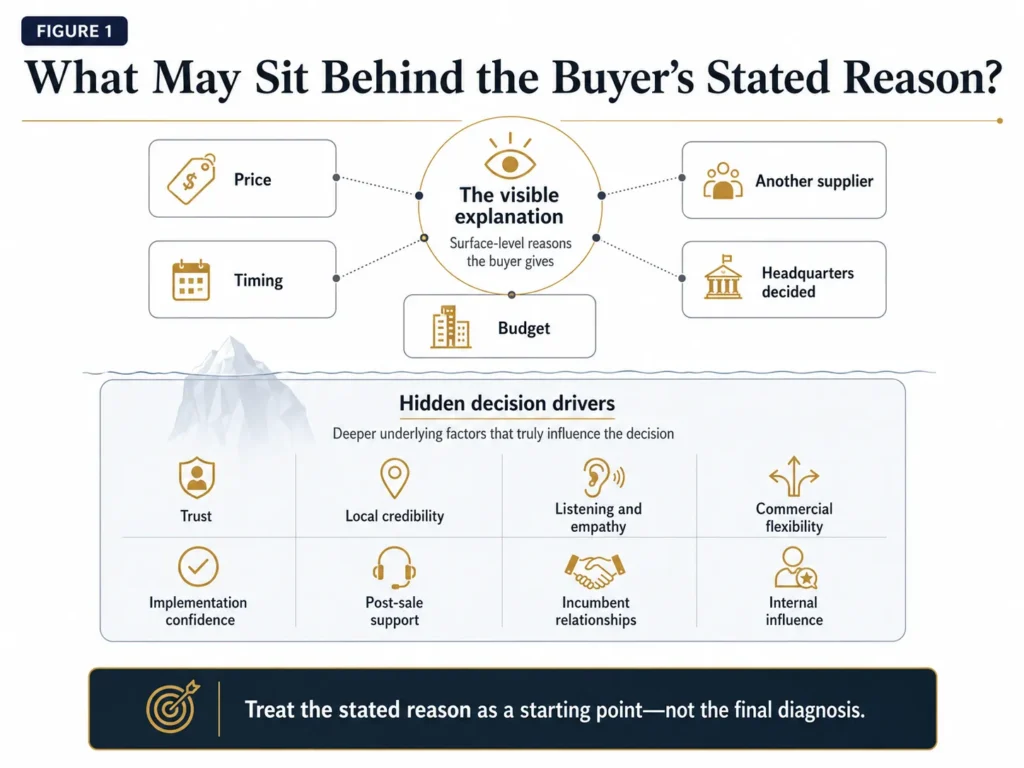
Figure 1. In Colombia, a warm or diplomatic response may conceal concerns about trust, local credibility, implementation, certifications, distributor capability, and internal alignment.
The Strategic Win-Loss Analysis Question In Colombia Is Not Simply “Why Did We Lose?”
The stronger executive question is:
What does the buyer’s decision reveal about how your company is perceived in Colombia, where customers see value or risk, how competitors create confidence, and what your organization must change?
A strong win-loss analysis should help your leadership team understand:
- Which customer outcomes and risks truly influence the decision.
- Who participates formally and informally.
- Who holds final authority and who shapes confidence behind the scenes.
- How buyers evaluate your trustworthiness, local commitment, and reputation.
- Whether certifications, references, and proof are strong enough.
- How distributors, partners, and service capabilities influence the choice.
- Whether price is the real issue or the easiest explanation.
- What should change across sales, value proposition, pricing, proof, product, service, channels, and account strategy.
The purpose is not to assign blame. It is to replace internal assumptions with buyer evidence and improve the system around future decisions.
Why Colombian Buyers May Not Give Your Sales Team the Full Answer
They want to preserve the relationship
Buyers may avoid direct criticism because they value the relationship, expect future contact, or do not want to create unnecessary tension.
Diplomacy can soften rejection
A positive tone may coexist with a negative decision. “We liked the proposal” may be true without meaning your company was close to winning.
The visible contact may not control the outcome
Senior management, procurement, finance, technical teams, institutional stakeholders, distributors, or informal advisers may influence the final decision.
The real objection may be difficult to express
Buyers may hesitate to say that the company did not feel sufficiently local, that the distributor lacked credibility, that the team did not understand the account, or that another supplier felt safer.
The buyer may not believe another commercial revision will solve the problem
When the concern is trust, implementation, service, or internal confidence, asking for a lower price may not address the real barrier.
An independent interviewer creates enough distance from the commercial relationship for the buyer to explain what actually shaped the decision.
Trust and Reputation Are Commercial Variables
Trust influences whether buyers share information, involve your team early, believe commitments, accept implementation risk, and defend the proposal internally.
In Colombia, trust may depend on:
- Relevant local references.
- Reputation in the industry.
- Management accessibility.
- Consistency between promises and actions.
- Transparent pricing and responsibilities.
- Responsiveness.
- Strong distributor or partner credentials.
- Local technical and service capability.
- Evidence that the company understands the customer’s environment.
- Confidence that the supplier will remain committed after the sale.
Win-loss interviews help distinguish whether your company lost because of the offer, the trust surrounding the offer, or the interaction between both.
Local Credibility Can Matter More Than Regional Scale
A regional company may have strong experience and still appear too distant from the Colombian buyer’s reality.
Customers may want to know:
- Who will support us in Colombia?
- Do you have relevant local customers?
- Can your team navigate our institutional or procurement requirements?
- Are the required certifications and approvals in place?
- Will service and implementation be handled locally?
- Does the distributor have the right technical and commercial capabilities?
- How quickly can issues be escalated?
- Will the company adapt—or impose a regional model?
A loss attributed to price or timing may therefore be a loss of local confidence.
Distributors and Partners Can Decide Whether the Proposition Feels Credible
In many Colombian markets, distributors provide more than access. They may carry inventory, offer credit, provide technical sales, support tenders, manage service, and create local trust.
Buyer interviews can reveal whether the partner:
- Understood the customer’s business.
- Explained the value clearly.
- Provided adequate technical support.
- Responded quickly.
- Inspired confidence in implementation.
- Handled pricing and terms effectively.
- Managed internal stakeholders well.
- Strengthened—or weakened—the brand.
A supplier may have a strong product and still lose because the route to market created uncertainty.
Price Matters, but “Lost on Price” Requires Deeper Diagnosis
Colombian buyers can be price-sensitive, and procurement may make commercial comparisons highly visible. Price can be decisive.
The stronger question is:
How did the buyer evaluate price relative to value, trust, certifications, implementation, service, credit, distributor capability, and the alternatives?
A deal recorded as “lost on price” may involve:
- Unclear differentiation.
- Weak economic proof.
- Stronger trust in a local competitor.
- Missing certifications or references.
- Concern about implementation.
- Weak distributor credibility.
- More attractive payment or credit terms.
- Better local service.
- A proposal that was difficult to defend internally.
- Discounting before value was established.
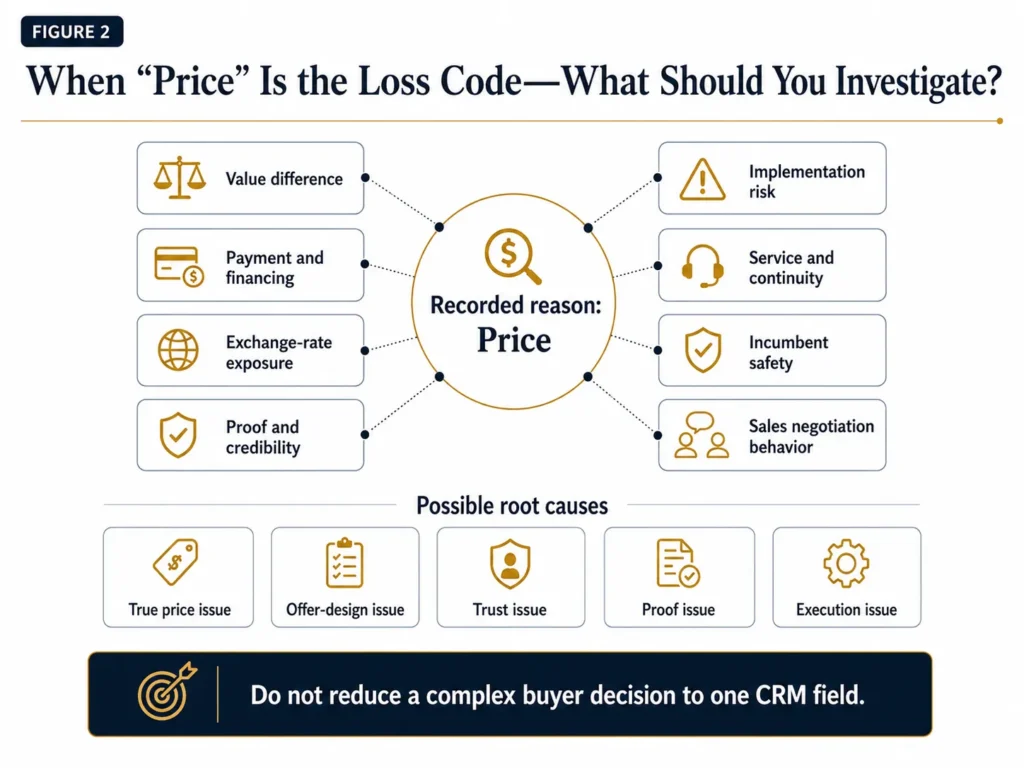
Figure 2. A price-related loss in Colombia should be decomposed into value, trust, local proof, certifications, implementation, distributor capability, service, credit, and internal alignment.
Certifications and Institutional Confidence Can Shape the Decision
In regulated, healthcare, technology, infrastructure, and institutional markets, a technically strong offer may still lose if the customer cannot approve or defend it.
Buyers may evaluate:
- Local certifications.
- Regulatory or institutional eligibility.
- Documentation.
- Relevant references.
- Implementation methodology.
- Service continuity.
- Data, quality, or compliance evidence.
- Accountability.
- Supplier stability.
- The ability to support audits or formal processes.
Win-loss interviews can reveal whether the barrier was the product itself or the customer’s confidence that the full decision could be approved and implemented safely.
The Decision Process May Extend Beyond the Formal Organization Chart
CRM records usually capture visible contacts. They may not capture the complete influence system.
Independent interviews can reveal:
- A senior executive who preferred a known supplier.
- A distributor relationship that shaped confidence.
- A technical adviser who influenced specifications.
- A procurement concern that appeared late.
- An institutional stakeholder who required additional proof.
- A user group that resisted implementation.
- An internal champion who lacked authority.
- A relationship or recommendation that changed the shortlist.
This insight can improve qualification, stakeholder mapping, account strategy, proof, and executive engagement.
Wins, Losses, and No-Decisions Reveal Different Strategic Lessons in Win-Loss Analysis in Colombia
Wins
Wins show which relationships, proof points, local capabilities, sales behaviors, and commercial arguments create preference.
Losses
Losses show where competitors, incumbents, distributors, or substitutes appear more credible, better connected, more locally prepared, or easier to implement.
No-decisions
No-decisions reveal weak urgency, internal disagreement, budget risk, institutional complexity, implementation concerns, or insufficient confidence in any option.
A balanced program avoids studying only failure or only the strengths customers already recognize.
What Win-Loss Analysis in Colombia Can Change Across Your Organization
Sales effectiveness
Improve qualification, discovery, stakeholder mapping, relationship development, account strategy, proposals, objection handling, and negotiation.
Value proposition
Learn whether buyers understand your difference, believe your proof, and see the value as relevant in Colombia.
Competitive strategy
Understand how buyers perceive local companies, multinationals, incumbents, distributor-owned alternatives, lower-cost suppliers, internal options, and doing nothing.
Pricing and commercial terms
Clarify the role of price, credit, payment terms, total value, risk, and internal justification.
Product and offer design
Separate decisive gaps from requested features that do not materially influence the final decision.
Service and customer experience
Identify whether onboarding, implementation, support, responsiveness, local presence, and continuity influence new-business decisions.
Channels and go-to-market
Understand whether distributors, representatives, integrators, and institutional partners strengthen or weaken confidence.
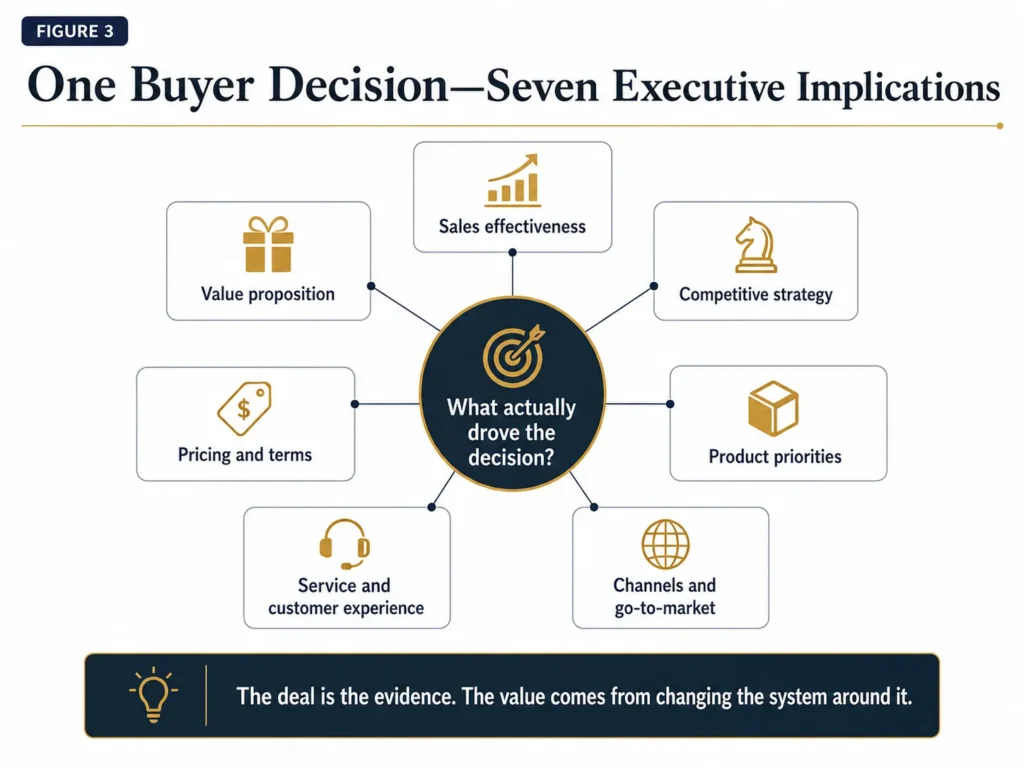
Figure 3. Colombian buyer feedback creates more value when it improves the complete commercial system—not only the salesperson’s next conversation.
How Midas Conducts Win-Loss Analysis in Colombia
1. Define the strategic learning question
We clarify whether leadership needs to improve win rates, test the value proposition, understand pricing, analyze competitors, strengthen trust, evaluate distributors, improve implementation confidence, or redesign the sales process.
2. Select a balanced sample
We choose wins, losses, and no-decisions across segments, regions, accounts, products, deal sizes, competitors, sales teams, channels, and outcomes.
3. Review the internal evidence
We examine CRM data, proposals, pricing, loss codes, account notes, stakeholder maps, partner information, product evidence, and internal explanations.
4. Conduct independent buyer interviews
We interview buyers and influencers without the salesperson or distributor present. This creates room for candid discussion of trust, local credibility, proof, implementation, competition, service, and the buying experience.
5. Reconstruct the decision journey
We examine the original need, stakeholders, alternatives, criteria, proof, meetings, proposals, pricing, channel involvement, service expectations, implementation concerns, and final trigger.
6. Identify root causes and recurring patterns
We distinguish isolated comments from repeatable themes and compare wins, losses, no-decisions, regions, segments, competitors, products, channels, and teams.
7. Translate evidence into action
We recommend changes in positioning, local proof, stakeholder strategy, proposals, pricing, terms, product, onboarding, service, distributors, and customer experience.
8. Align leadership and assign ownership
We help sales, marketing, product, service, finance, channel management, and leadership agree on priorities, owners, and indicators.
9. Track and repeat
For ongoing programs, we monitor whether the changes improve buyer perceptions and commercial outcomes.
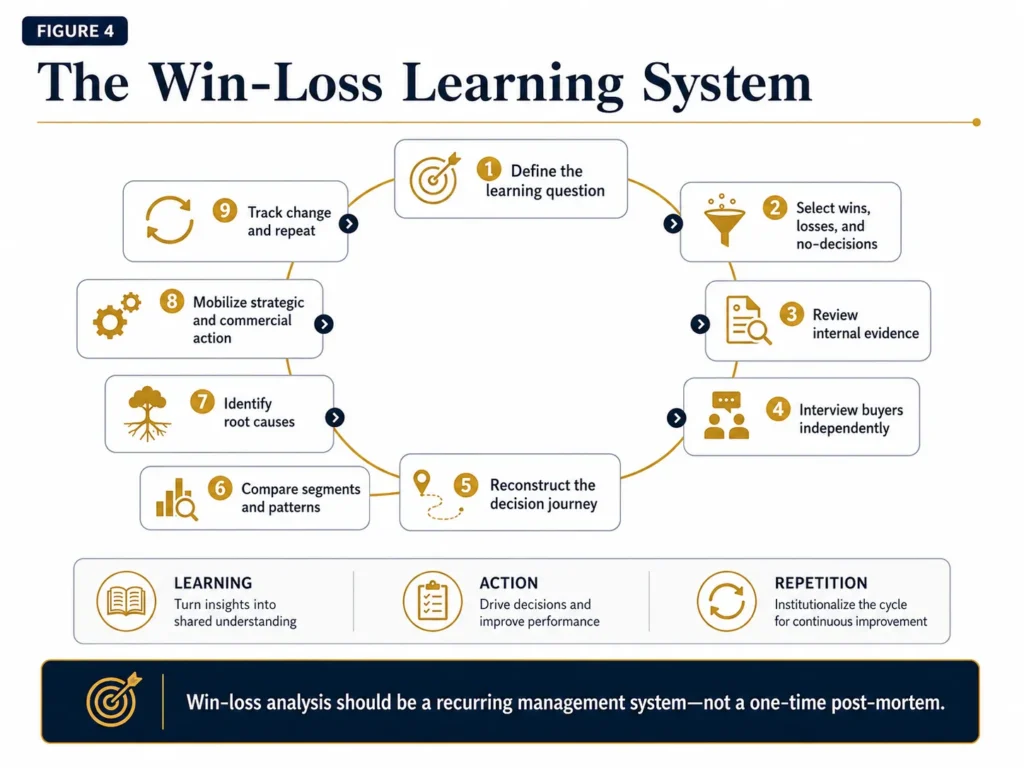
Figure 4. Win-loss analysis creates more value in Colombia when it becomes a recurring management system rather than an occasional review of lost deals.
What Leadership Should Receive
Depending on scope, a Colombian engagement may include:
- An executive summary of the real decision drivers.
- Win, loss, and no-decision comparisons.
- Buyer decision-process and stakeholder maps.
- Competitor and incumbent perception findings.
- Trust, reputation, and local-credibility gaps.
- Certification and proof implications.
- Distributor and channel findings.
- Pricing, credit, and commercial-term insights.
- Sales-process and account-strategy recommendations.
- Product, onboarding, service, and customer-experience priorities.
- A prioritized action plan with owners and indicators.
- An executive workshop to align the organization.
The deliverable should help your leadership team decide what to change, not merely summarize interview comments.
Case Example: Recovering Ground in Bogotá
The executive challenge
A regional IT services company had a competitive offer but struggled to grow in Colombia. The internal team assumed that price was the primary barrier.
What the win-loss analysis in Colombia revealed
Independent interviews showed that buyers questioned the company’s local execution. They were concerned about missing Colombian certifications, slow support, limited local references, and the perception that the company was too regional for their needs.
How the company responded
The company strengthened its local proof, improved response times, refined the value proposition, and added relevant Colombian references.
The reported result
The customer’s close rate increased by 31% within five months.
The lesson is not that price never matters in Colombia. The lesson is that leadership should verify whether the buyer is rejecting the economics, the credibility, the route to market, or the company’s ability to execute locally.
“We stopped guessing. Once we understood the real reasons behind our losses, we changed our pitch and won a key client within weeks.”
— Sales Vice President, B2B Services Company
“Midas helped us see that price was not the problem. Local credibility was. That changed everything.”
— Commercial Director
When Win-Loss Analysis Is Especially Valuable in Colombia
- Buyers praise the proposal but quietly disappear.
- Your CRM shows price, timing, or budget as the main loss reasons.
- Your regional offer has limited Colombian proof.
- Distributors or partners may be affecting customer confidence.
- Certifications or institutional requirements may be influencing decisions.
- Your team has limited access to the final decision-maker.
- A local incumbent keeps winning despite a stronger technical offer.
- You need to test your Colombian value proposition.
- Implementation or post-sale support may be affecting new-business decisions.
- Sales, channel, product, service, and management teams explain losses differently.
How This Page Fits the Midas Win-Loss Cluster
This page owns the Colombia-specific question: what sits behind diplomatic buyer feedback, how trust and reputation shape decisions, when price is only the visible explanation, how distributors and certifications affect confidence, and what leadership should change.
For the regional framework, visit Win-Loss Analysis in Latin America.
For the complete educational methodology and broader strategic uses, visit Win-Loss Analysis: Your Secret Weapon for Growth Beyond Sales.
For the consulting offer, visit Win-Loss Analysis Consulting.
Why Midas for Win-Loss Analysis in Colombia?
We understand Colombian buying dynamics
We understand how diplomacy, trust, reputation, relationships, local proof, certifications, distributors, service, and implementation confidence can shape decisions.
We conduct independent interviews
Buyers can speak more openly with someone who was not part of the sales process and will not manage the commercial relationship afterward.
We distinguish the stated reason from the root cause
We reconstruct the decision rather than accepting the first explanation or CRM field.
We connect buyer evidence with strategic action
Recommendations can address sales, value proposition, proof, pricing, product, service, channels, distributors, and account strategy.
We focus on patterns, not anecdotes
We compare buyer interviews with internal and market evidence and explain the confidence behind each conclusion.
We bring direct win-loss analysis in Colombia experience
We have conducted buyer research, win-loss analysis, competitor analysis, and strategic consulting projects in Colombia across technology, healthcare, pharmaceutical, industrial, automotive, consumer, B2B, and regulated markets.
Ethical, Independent, and Reliable Win-Loss Analysis Research
We comply with SCIP’s Code of Ethics, the profession’s gold standard. We comply with applicable laws, accurately disclose relevant identity and organizational information before interviews, avoid conflicts of interest, and provide honest recommendations.
We do not misrepresent who we are, seek trade secrets, request confidential documents, or encourage buyers to violate legal or contractual obligations.
We explain how feedback will be used, protect confidentiality according to the agreed research design, and distinguish individual comments from recurring evidence.
Review SCIP’s ethical intelligence guidance and Code of Ethics.
Frequently Asked Questions About Win-Loss Analysis in Colombia
Is win-loss analysis in Colombia only about lost deals?
No. Wins reveal what creates preference, losses show barriers and competitor advantages, and no-decisions explain why buyers chose not to act.
Why should interviews be conducted by a neutral third party for win-loss analysis in Colombia?
Buyers are often more candid with someone who was not involved in the sale and will not manage the relationship afterward.
Does positive feedback mean we were close to winning?
Not necessarily. A buyer may genuinely appreciate the proposal while still seeing stronger trust, proof, service, or implementation confidence elsewhere.
Does “lost on price” usually mean something else in win-loss analysis in Colombia?
Sometimes price is decisive. Sometimes it reflects weak differentiation, limited local proof, trust concerns, channel weakness, implementation risk, or better credit and terms.
Can you interview buyers who chose a local competitor for your win-loss analysis in Colombia?
Yes, when they agree to participate. Those interviews can reveal trust, relationship, speed, local knowledge, service, and commercial advantages.
Can you evaluate distributors through win-loss interviews in Colombia?
Yes. Buyer feedback can reveal whether a distributor strengthens technical credibility, access, service, trust, credit, and the overall customer experience.
Can you analyze stalled and no-decision opportunities in your win-loss analysis in Colombia?
Yes. They often reveal weak urgency, internal disagreement, institutional complexity, implementation concerns, budget uncertainty, or unclear value.
Can win-loss analysis improve our Colombian value proposition?
Yes. It shows which claims are relevant, which feel generic, what proof is missing, and whether your company appears sufficiently local and credible.
How many interviews are needed for your win-loss analysis in Colombia?
The number depends on the learning objective, regions, segments, deal sizes, channels, competitors, and desired confidence. A focused diagnostic can begin with a balanced sample.
Will the findings of the win-loss analysis in Colombia blame our sales team or distributor?
No. The purpose is to improve the complete system around the buyer decision, including offer, proof, pricing, product, service, channels, and management choices.
Can the win-loss analysis in Colombia be recurring?
Yes. A recurring program can monitor buyer perceptions, competitor behavior, channel performance, and whether management actions improve results.
About the Author
Adrian Alvarez, PhD is Managing Partner at Midas Consulting, Wharton Alumnus, MBA Professor at Universidad Argentina de la Empresa (UADE), and Competitive Intelligence Fellow. He specializes in competitive strategy, strategic intelligence, buyer research, win-loss analysis, value proposition design, and executive decision-making under uncertainty in Colombia and Latin America.
He has conducted dozens of win-loss analyses helping companies understand buyer decision drivers, competitive positioning, local-credibility gaps, channel friction, service expectations, and opportunities for growth.
His work has been published in the United States, Spain, and Germany. You can access his library of strategic insights and published research here
View professional profile on LinkedIn
Stop Guessing Why Colombian Buyers Quietly Walk Away
You may be trying to understand why positive meetings do not become contracts, why local competitors keep winning, whether your distributor creates enough confidence, or whether price is truly the problem.
You do not need another broad loss code or an internal debate. You need to hear how buyers experienced the decision, identify the recurring drivers, and translate the evidence into action.
In an initial conversation, we will discuss your regions, segments, channels, deal volume, sales process, loss reasons, competitors, current hypotheses, and the strategic questions the analysis must answer.
We can then propose a focused Colombia win-loss engagement with a clear sample, independent interview approach, analytical framework, collaboration model, deliverables, timing, and investment.