Drive Business Success with In-Depth Evaluations using Benchmarking in Colombia.
In Colombia, a competitor can appear more productive, profitable, or commercially effective because it serves a different mix of cities, channels, institutions, customer groups, and payment conditions.
A distributor-led business may report lower internal commercial cost because inventory, credit, delivery, technical support, and customer access sit elsewhere in the value chain. A company may appear to have stronger sales productivity because it is concentrated in Bogotá, Medellín, or a limited number of institutional accounts. Another may report lower prices because it competes through informal or parallel channels that do not carry the same service, compliance, tax, warranty, or financing obligations.
If those differences are not normalized, your leadership team may act on the wrong gap. You may cut resources that protect formal-channel value, copy a distributor model without understanding the economics, or compare national performance using data that exclude important regional or informal activity.
At Midas Consulting, we help you compare performance in Colombia with the context required to interpret it correctly. We reconstruct how competitors, internal units, distributors, institutions, and reference organizations operate; normalize material differences; explain the capabilities and choices behind stronger results; and identify what your company should match, adapt, redesign, leapfrog, or leave unchanged.
The result is not a ranking. It is a focused improvement agenda with realistic targets, channel and institutional implications, ownership, and a practical path from external evidence to measurable performance.
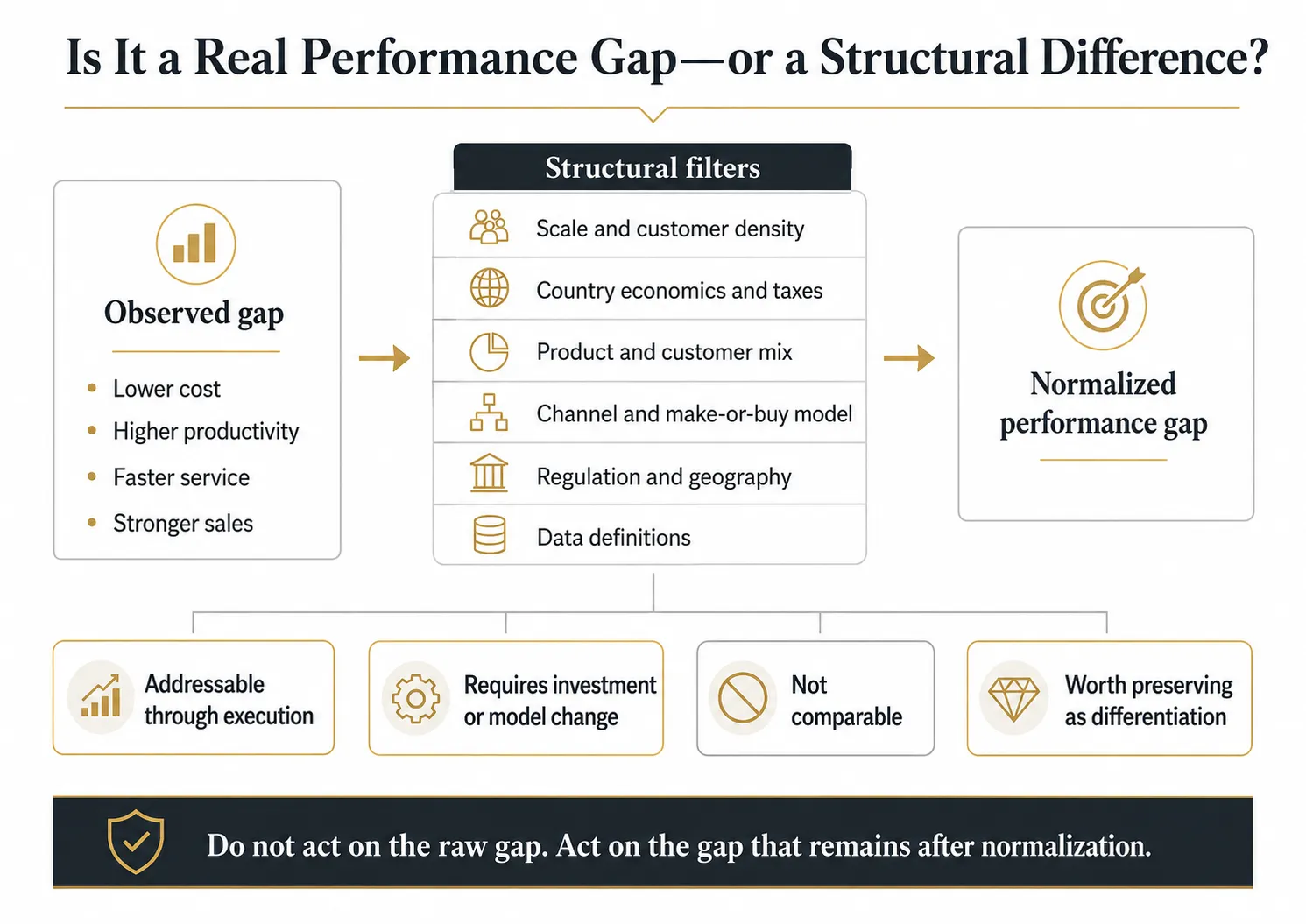
Figure 1. Benchmarking in Colombia should separate channel, affordability, and institutional differences from the performance gap your organization can realistically address.
The Strategic Benchmarking Question in Colombia Is Not “Who Has the Best Number?”
A lower cost-to-serve figure, higher distributor productivity, faster growth rate, or stronger institutional share can be useful evidence. It is not a complete explanation.
Your leadership team needs to understand:
- Whether the companies serve comparable cities, regions, customer groups, and institutions.
- How much formal, informal, direct, distributor-led, and institutional activity is included in the data.
- Whether one competitor transfers inventory, credit, logistics, service, or regulatory work to its channel.
- How customer affordability, financing, and payment terms affect volume and mix.
- Whether the result depends on a few strategic distributors, hospitals, retailers, institutions, or corporate accounts.
- How tender access, registrations, reimbursement, approvals, and stakeholder relationships affect performance.
- Whether pricing differences reflect product configuration, service, warranty, tax, channel, or authenticity.
- Which processes, systems, incentives, relationships, and capabilities explain the remaining gap.
- Which part of the gap is operationally addressable.
- Whether closing the gap would strengthen your strategy or erode customer value and compliance.
The objective is not to reproduce the benchmarked organization. It is to understand why it performs differently and which lessons can improve your own competitive position.
Why Raw Benchmarking Comparisons in Colombia Can Be Misleading
Regional fragmentation changes productivity
Performance in Bogotá may not be comparable with performance across Medellín, Cali, the Caribbean Coast, the Coffee Region, or secondary markets. Customer density, infrastructure, distributor coverage, affordability, competition, and service requirements differ.
Formal and informal channels carry different obligations
Formal channels may support registrations, invoicing, warranties, quality assurance, technical service, inventory, credit, and compliance. Informal or parallel channels may operate with a different cost structure and customer promise.
Distributor economics can hide the total cost
A manufacturer may show lower internal sales and logistics expense while the distributor absorbs inventory, financing, delivery, local selling, technical support, and collection. Those costs are still present, even when they appear inside channel margins rather than the supplier’s accounts.
Affordability changes volume and product mix
Companies serving customers with greater purchasing power may report stronger average prices and margins. Others may grow volume through smaller formats, lower specifications, financing, or more flexible terms.
Institutional access can create structural advantage
Registrations, tenders, stakeholder relationships, supplier qualification, reimbursement, and public or institutional purchasing experience can make one company appear commercially stronger before its product or sales process is compared.
Data definitions may exclude important activity
Market share, channel productivity, pricing, and coverage figures may use different definitions, periods, geographies, or degrees of formality. A precise number is not useful if it is not comparable.
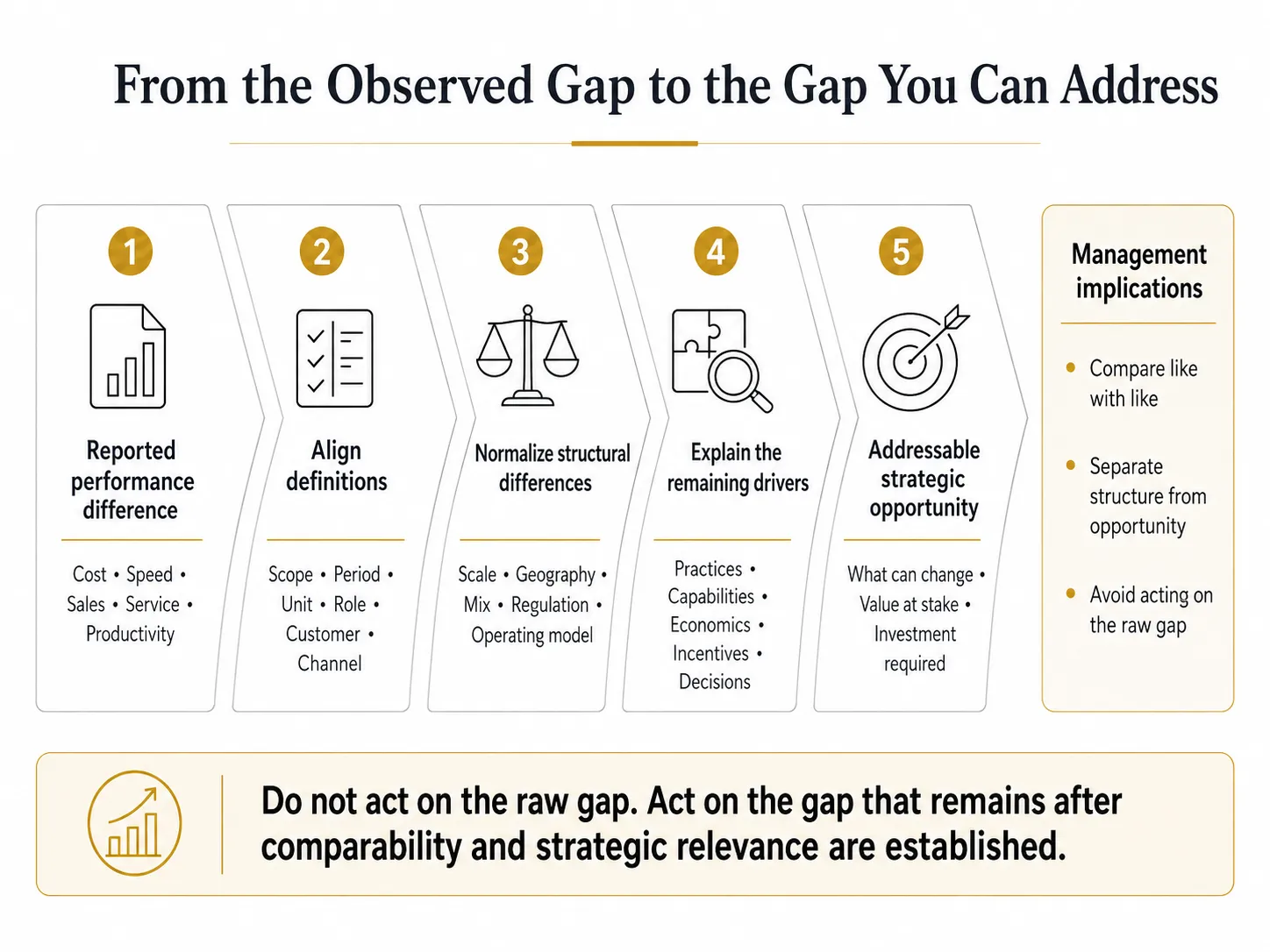
Figure 2. A useful benchmark adjusts reported performance for regional mix, channel formality, distributor responsibilities, affordability, service, and institutional access.
Benchmark the Route to Market, not Only the Sales Result
A competitor’s commercial performance may be supported by a broader system of distributors, inventory, credit, registrations, logistics, institutional relationships, and local service.
Depending on your decision, we may compare:
- Direct, distributor, wholesaler, reseller, retail, digital, and institutional channels.
- Geographic and customer coverage.
- Inventory ownership and replenishment.
- Credit, payment terms, collection, and working capital.
- Demand generation and account development.
- Technical sales, installation, service, and warranty.
- Regulatory and tender capability.
- Pricing authority and discount governance.
- Competing brands and channel conflicts.
- Customer ownership and access to market information.
- Channel margins, incentives, and commitment.
The purpose is to connect the observed result with the full route-to-market system that produces it.
Regional Benchmarking Inside Colombia Requires More Than One Average
A national average can conceal very different demand and execution systems.
Bogotá and the central market
Corporate headquarters, institutions, government purchasing, healthcare providers, distributors, and higher-value customers may create greater density and more visible formal activity.
Medellín and Antioquia
Industrial relationships, regional business groups, local networks, and different channel structures may shape productivity and access.
Cali and the Pacific region
Logistics, industry, healthcare, agriculture, ports, and regional distribution may create another operating model.
Caribbean Coast, Coffee Region, and secondary markets
Customer dispersion, local distributors, infrastructure, affordability, and service requirements may alter the economics of coverage.
The strongest national model may use common management principles with different regional channel, service, inventory, and account structures.
Choose the Benchmarking That Matches Your Decision
Internal leader
Which region, channel, team, institution, or business unit already performs well inside your organization?
Local competitor
Which Colombian company performs better in the exact market, channel, account group, or capability you need to improve?
Regional comparator
What can you learn from a similar Latin American operation after regional fragmentation, informality, channel responsibilities, and customer economics are normalized?
Global best-in-class organization
What is possible at a higher maturity level in distribution, institutional access, customer experience, credit, service, or data management?
Adjacent-industry leader
Which company outside your category has solved a similar channel, affordability, last-mile, institutional, or customer-access problem more effectively?
Future-state model
Which capabilities will your strategy require next, even if no current competitor represents the complete model?
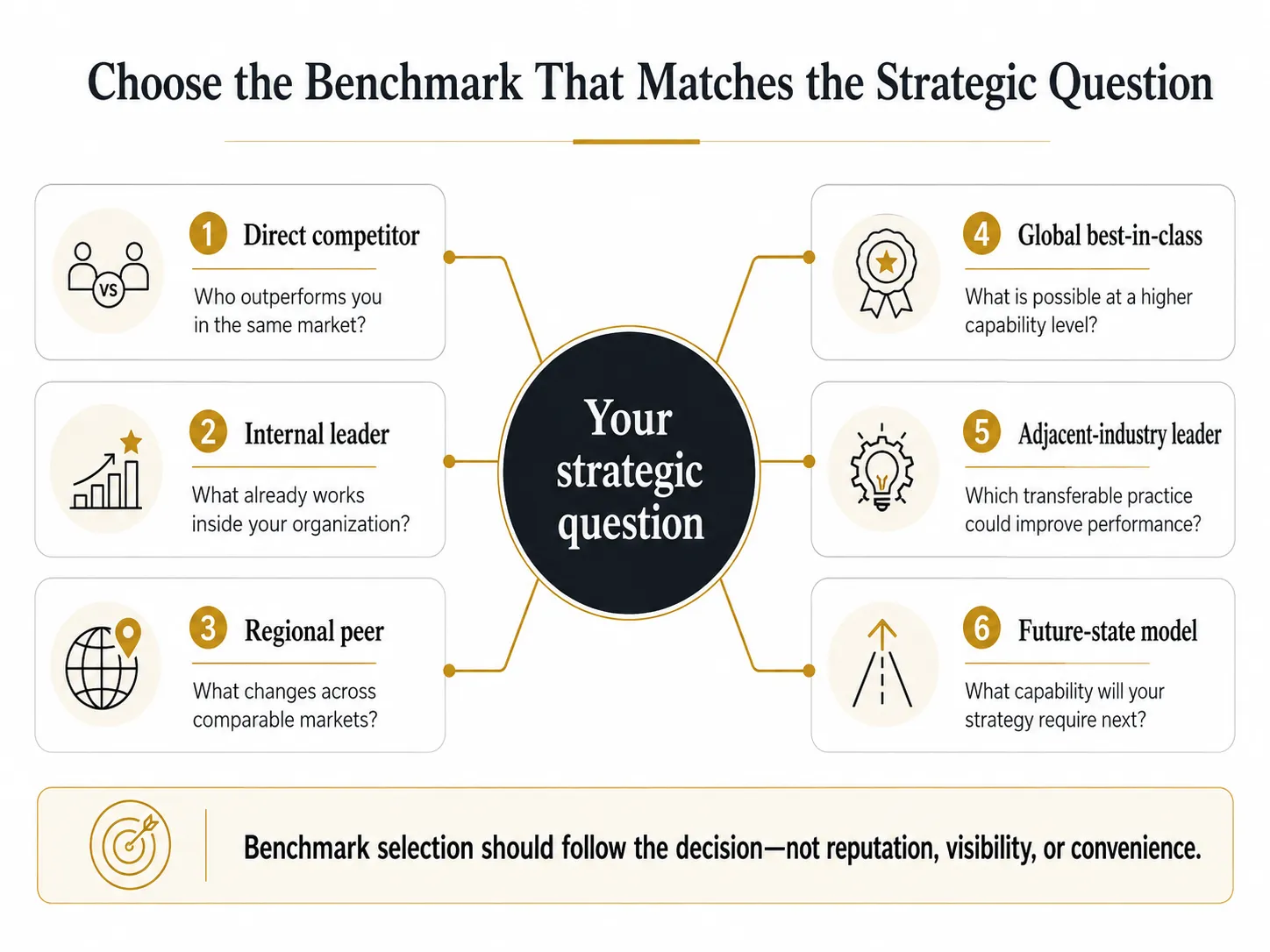
Figure 3. The right reference set may combine internal, Colombian, regional, global, adjacent-industry, and future-state benchmarks.
Distributor Benchmarking in Colombia Requires the Full Economic Model
A high-performing distributor should not be evaluated only by sales volume.
We may compare:
- Accessible customer base.
- Coverage by city, region, sector, and institution.
- Inventory depth and availability.
- Credit and collection capability.
- Gross margin and operating economics.
- Technical sales, service, and regulatory competence.
- Demand-generation capability.
- Competing brands and conflicts.
- Management quality and succession risk.
- Data transparency and forecast quality.
- Commitment to your category.
The right partner is not necessarily the distributor with the highest current sales. It is the one whose capabilities, incentives, customer access, and economics fit the growth strategy.
Institutional Benchmarking in Colombia Requires Process and Stakeholder Insight
In healthcare, infrastructure, education, technology, and other regulated or public-facing sectors, performance may depend on more than commercial execution.
A useful institutional benchmark may examine:
- Formal approval and registration pathways.
- Stakeholder roles and influence.
- Tender preparation and administrative capability.
- Evidence, technical specifications, and value arguments.
- Government and institutional priorities.
- Professional and patient support.
- Local references and credibility.
- Timing, sequencing, and communication.
The objective is to understand what successful cases did differently and which principles can be adapted ethically to your own situation.
Benchmarking Pricing in Colombia as a Complete Offer
Headline price comparisons can be especially misleading when products, channels, financing, and service differ.
We may normalize:
- Product configuration and quality.
- Formal versus parallel supply.
- Taxes and invoicing.
- Freight and delivery.
- Distributor and reseller margins.
- Credit, financing, and payment terms.
- Warranty and service.
- Training, installation, and technical support.
- Institutional discounts and tender conditions.
The relevant benchmark is the effective customer value and supplier economics, not one visible list price.
Decide Whether to Match, Adapt, Leapfrog, or Remain Different
Match and implement
Close a high-impact gap when the underlying practice fits your organization and the economics are attractive.
Stage, redesign, or leapfrog
Build capabilities in phases, redesign the channel, digitize selected activities, improve credit or inventory, or create a new institutional approach when the gap matters but cannot be closed by copying.
Adopt selectively
Take the components that improve customer access, affordability, service, or productivity without importing unnecessary cost, risk, or channel conflict.
Remain different, stop, or postpone
Do not close a gap that depends on unlawful practices, weak compliance, unattractive economics, or a business model that conflicts with your strategic position.
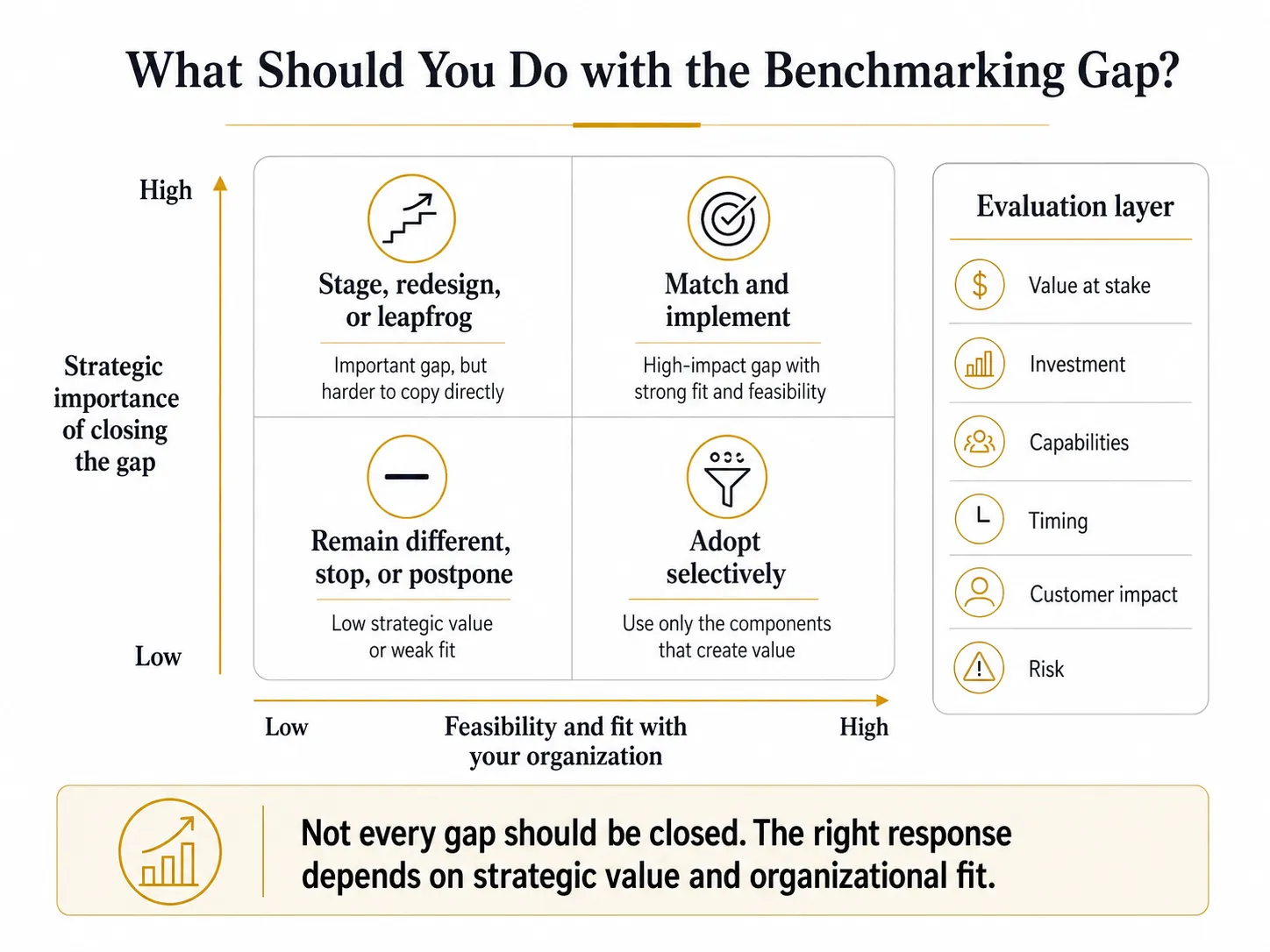
Figure 4. The correct response depends on the gap’s strategic importance, feasibility, customer value, compliance, and fit with your Colombian route to market.
How Midas Builds a Reliable Benchmarking in Colombia
Colombia offers useful official, corporate, and procurement information, but public sources often do not explain channel power, regional execution, informal activity, customer affordability, or institutional decision processes.
We may combine:
- Internal operating, commercial, financial, customer, channel, and institutional data.
- Company disclosures, products, pricing, channels, hiring, service, and investment signals.
- Official economic, demographic, trade, regulatory, procurement, and competition information.
- Interviews with customers, distributors, wholesalers, suppliers, specialists, former industry participants, institutions, and other knowledgeable sources.
- City, region, channel, account, and institutional validation.
- Economic and operational models that test the consistency of the evidence.
We align definitions, periods, geographies, channel coverage, and units before drawing conclusions. We distinguish verified findings from estimates, inferences, hypotheses, and unknowns.
For the complete benchmarking process, visit Benchmarking: How to Compare, Learn, and Improve Your Competitive Position.
How This Page Fits the Midas Benchmarking Cluster
This page owns the Colombia-specific strategic question: how to normalize regional fragmentation, formal and informal channels, distributor economics, affordability, institutional access, and inconsistent data before acting on a performance gap.
For regional comparison and cross-country implementation, visit Benchmarking in Latin America.
For a broader strategic explanation of why benchmarking should explain the gap rather than encourage copying, visit Benchmarking That Delivers Real Competitive Advantage.
For the complete commercial offer, engagement model, and deliverables, visit Benchmarking Consulting.
Case Example: Benchmarking Successful Vaccine Inclusion in Colombia
The executive challenge
A multinational pharmaceutical subsidiary needed to accelerate the inclusion of a new vaccine in Colombia’s National Immunization Program.
The company had no previous experience in the vaccine market and needed to understand how successful products had navigated the formal pathway, stakeholder environment, evidence requirements, communication, and institutional decision process.
How we approached the decision
We selected two successful vaccines as reference cases and reconstructed the factors that supported their inclusion.
The work included:
- Desk research on the formal approval pathway.
- Public information and media activity.
- Analysis of institutional and healthcare stakeholders.
- Interviews with vaccine launch teams.
- Interviews with key opinion leaders involved in the decision process.
- Comparison of timing, positioning, evidence, communication, and stakeholder engagement.
How the benchmarking findings in Colombia changed the strategy
We translated the benchmarking evidence into a structured roadmap for National Immunization Program inclusion, aligned with government expectations and stakeholder priorities.
The approach also strengthened the vaccine’s positioning with major Colombian health insurers and supported a more credible market-entry path.
The case demonstrates why benchmarking should reconstruct the system behind a successful result. The value did not come from copying one vaccine launch. It came from identifying transferable principles and adapting them to a different product and organization.
“We are extremely pleased with the benchmarking. It helped us reassess our priorities and redirect our resources.”
— Market Segment Leader
“They are responsive, professional, detail-oriented, and client-focused. I love that Midas prioritizes ‘co-success with the client’ and works hard to meet our needs and solve our problems.”
— Executive Chair
When You Need Benchmarking in Colombia
- A competitor appears to have lower cost or stronger channel productivity.
- Performance varies significantly across cities, regions, distributors, or institutions.
- You need to benchmark formal, informal, direct, and indirect routes to market.
- You are selecting, replacing, or developing distributors.
- You need to compare inventory, credit, pricing, service, or collection practices.
- You are benchmarking a public, institutional, healthcare, or tender process.
- Customer affordability and product mix are changing performance.
- You need realistic commercial, channel, or institutional targets.
- You want to scale an internal best practice.
- Your team disagrees about whether the gap is structural or operational.
Why Midas for Benchmarking in Colombia?
We normalize the comparison before recommending action
We adjust for regions, channel formality, distributor responsibilities, affordability, institutional mix, customer segments, and service obligations.
We explain the route to market behind the result
We connect KPIs with distributors, inventory, credit, customer access, relationships, regulation, service, and institutional processes.
We combine local depth with regional perspective
Colombia-specific evidence is interpreted within a consistent Latin American framework where regional comparison adds value.
We select benchmarks according to the strategic question
The reference set may include internal leaders, Colombian competitors, regional peers, global best-in-class organizations, and adjacent industries.
We help you adapt rather than copy
We identify transferable principles, enabling conditions, organizational requirements, compliance implications, and potential unintended consequences.
We translate findings into an improvement roadmap
The engagement ends with priorities, targets, options, owners, capabilities, investment implications, and next steps.
We bring direct Colombia experience
Adrian Alvarez and the Midas team have led benchmarking and competitive-intelligence projects in Colombia across B2B, B2C, technology, pharmaceutical, healthcare, automotive, consumer, and regulated markets.
Ethical, Comparable, and Reliable Intelligence
We comply with SCIP’s Code of Ethics, the profession’s gold standard. We comply with applicable laws, accurately disclose relevant identity and organizational information before interviews, avoid conflicts of interest, provide honest recommendations, and promote ethical conduct throughout the engagement.
We do not seek trade secrets, request confidential documents, misrepresent who we are, induce contractual breaches, or encourage sources to violate legal or contractual obligations.
We also protect analytical integrity by aligning definitions, normalizing structural differences, triangulating material findings, distinguishing facts from estimates and hypotheses, and explaining confidence levels and limitations.
Review SCIP’s ethical intelligence guidance and Code of Ethics.
Frequently Asked Questions About Benchmarking in Colombia
Can you benchmark private competitors in Colombia?
Yes. We combine lawful public sources, interviews, customer and channel evidence, supplier perspectives, operational signals, and economic logic. We clearly distinguish verified findings from estimates.
Can you benchmark distributors with your benchmarking in Colombia?
Yes. We can compare customer access, regional coverage, inventory, credit, collection, technical capability, service, competing brands, commitment, economics, and scalability.
Can you compare formal and informal channels with your benchmarking in Colombia?
We can assess their strategic effect on pricing, availability, coverage, customer value, compliance, and formal-channel economics using legal and ethical research methods.
How do you compare regions with different market density in your benchmarking in Colombia?
We normalize customer concentration, travel, channel support, affordability, service requirements, institution mix, and opportunity potential before interpreting productivity.
Can you benchmark institutional or government access?
Yes. We can compare processes, stakeholder roles, approvals, tender capabilities, evidence, positioning, timing, and implementation practices.
Can you benchmark pricing and commercial terms in your benchmarking in Colombia?
Yes. We can compare effective pricing, discounts, credit, financing, taxes, channel margins, service, warranty, delivery, and institutional conditions where ethically obtainable.
How do you manage unreliable or fragmented data in your benchmarking?
We define the market and channel coverage carefully, triangulate multiple sources, test internal consistency, use ranges, and distinguish facts from estimates and hypotheses.
Can benchmarking in Colombia support market-entry or distributor-selection decisions?
Yes. It can clarify capability requirements, partner quality, route-to-market economics, institutional barriers, and the practices required to compete effectively.
How do you protect confidentiality in benchmarking?
Your internal data, strategic priorities, and project objectives are treated as confidential. Where appropriate, the engagement can operate under a mutual nondisclosure agreement.
How long does a benchmarking project take in Colombia?
The timing depends on the functions, regions, channels, institutions, comparators, interviews, and strategic questions. We scope the work around your decision and can share preliminary findings in phases.
About the Author
Adrian Alvarez, PhD is Managing Partner at Midas Consulting, Wharton Alumnus, MBA Professor at Universidad Argentina de la Empresa (UADE), and Competitive Intelligence Fellow. He specializes in benchmarking, competitive strategy, competitor analysis, strategic intelligence, market analysis, and executive decision-making under uncertainty in Colombia and Latin America.
He has led benchmarking and competitive-intelligence projects in Colombia across B2B, B2C, technology, pharmaceutical, healthcare, automotive, consumer, and regulated markets. He also served as a Board Member of SCIP during the 2009–2011 period.
His work has been published in the United States, Spain, and Germany. You can access his library of strategic insights and published research here
View professional profile on LinkedIn
Selected Colombian Sources You May Need to Monitor
- DANE for official economic, demographic, labor, price, and sector information.
- Banco de la República for monetary, financial, exchange, and economic information.
- Superintendencia de Industria y Comercio for competition, consumer, corporate, and market information.
- Colombia Compra Eficiente where public procurement is relevant.
- INVIMA for healthcare, pharmaceutical, food, medical-device, and other regulated-product information.
- DIAN and trade sources, regional chambers, company disclosures, industry associations, channel evidence, institutional records, and primary interviews as appropriate.
Turn the Colombian Performance Gap into a Focused Improvement Decision
You may be trying to understand why a competitor has stronger distributor economics, why one region performs better, whether institutional access explains the gap, or which channel and affordability practices deserve investment.
You do not need another raw comparison that ignores regional fragmentation, formal and informal channels, distributor obligations, customer affordability, and institutional access. You need to understand which gap is real, why it exists, and what your organization should do differently.
In an initial conversation, we will discuss the performance question, regions, channels, institutions, comparators, internal data, and strategic decisions involved.
We can then propose a focused Colombia benchmarking engagement with a clear comparison architecture, normalization approach, research plan, collaboration model, timing, and deliverables.