
Know your competitors’ real strengths and weaknesses in Mexico through competitor analysis.
In Mexico, national presence does not mean equal competitive strength across the country.
A competitor may be deeply embedded in automotive and aerospace clusters in the north, strong among industrial customers in the Bajío, highly visible in Mexico City, and comparatively weak in the southeast. Another may appear smaller nationally but control a critical distributor, supplier relationship, public tender, manufacturing capability, or customer segment.
Mexico’s competitive landscape is shaped by its domestic market and by its integration with North American and global supply chains. Mexican companies compete alongside US, Asian, European, and other multinational players, each with different production footprints, cost structures, channels, decision rights, and strategic priorities.
That makes the executive question more precise than “Who are our largest competitors?” You need to understand where each competitor can win, which capabilities create that position, whether those advantages are local or transferable, and how the competitive balance may change as companies invest, relocate supply chains, expand production, change partners, or target new industrial ecosystems.
At Midas Consulting, we combine structured research, local market insight, and strategic interpretation so you can make stronger decisions about regions, clusters, pricing, channels, customers, public and private access, production, sourcing, market entry, and competitive response in Mexico.
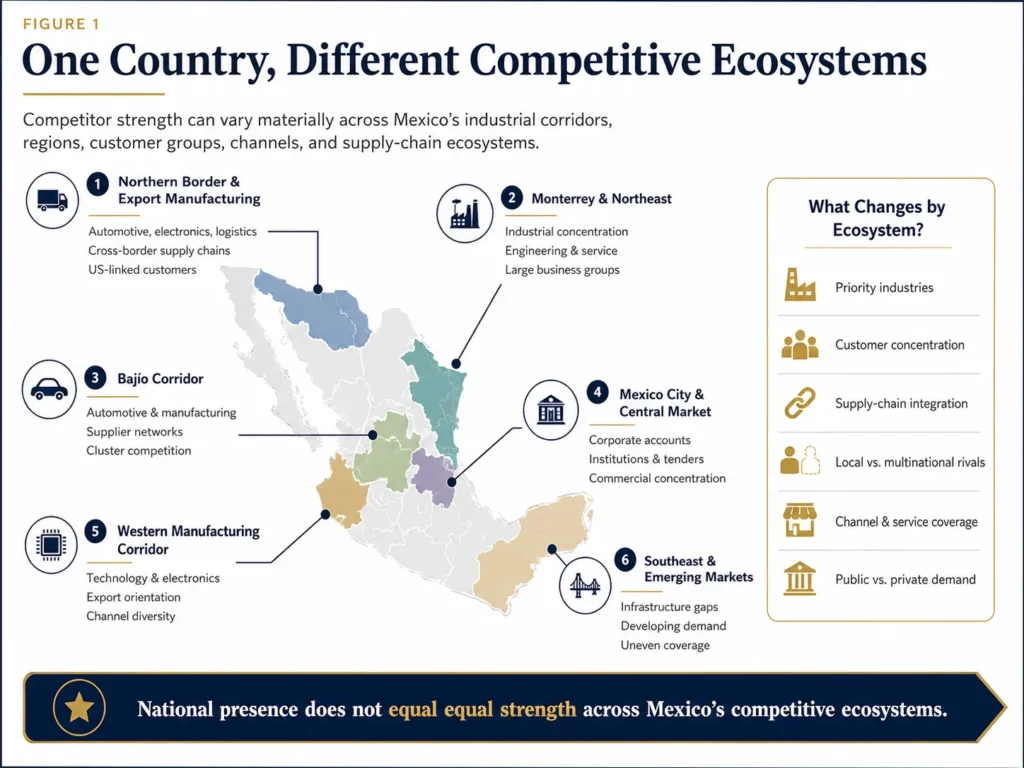
Figure 1. Competitor strength can vary materially across Mexico’s industrial corridors, regions, customer groups, channels, and supply-chain ecosystems.
Why Mexico Should Not Be Treated as One Competitive Market
Industrial clusters create different competitive systems
Mexico’s industries are not distributed evenly. Automotive, aerospace, electronics, appliances, medical devices, logistics, food processing, energy, mining, construction, and other sectors are concentrated in different states and corridors.
A competitor may be strong because its plant, sales team, engineering capability, distributor, or service network is located close to a specific cluster. That strength may not transfer automatically to another region or industry.
Your analysis should therefore connect competitor position with the industrial ecosystems that support it.
Cross-border integration changes competitor economics
Some competitors operate Mexico as part of a North American platform. They may share customers, suppliers, technology, inventory, logistics, management, or production with operations in the United States and Canada.
Others may rely more heavily on Asian or European supply chains, local manufacturing, importers, or domestic partners.
These models can create major differences in lead times, currency exposure, local content, technical support, customs risk, cost, responsiveness, and the ability to serve multinational customers consistently across borders.
Nearshoring can strengthen some competitors and expose others
Investment associated with supply-chain relocation can create demand, but it also changes the competitive landscape.
Companies may expand capacity, acquire suppliers, recruit specialized talent, establish service centers, enter new clusters, or form partnerships to capture the opportunity. Competitors that already serve global customers may gain an advantage, while companies without the required certifications, capacity, quality systems, or geographic reach may struggle.
The useful question is not whether nearshoring is important in general. It is which competitors are positioned to convert new investment into profitable customer relationships—and which capabilities they still lack.
National distribution may hide uneven local execution
A long distributor list does not necessarily mean strong coverage. Some partners may lack technical knowledge, inventory, credit, service, customer relationships, or commitment. Others may be highly influential within one state or industry.
Your analysis should determine where the competitor owns the relationship, where the partner owns it, and where reported coverage exists mostly on paper.
Public and private purchasing can follow different rules
In healthcare, infrastructure, education, energy, technology, security, transportation, and other sectors, public procurement may depend on tenders, registrations, specifications, local presence, compliance, and administrative capability.
Private customers may prioritize service, reliability, total cost, financing, technical support, and integration with their operations differently.
Combining both channels into one national estimate can hide where competitors are genuinely strong.
Local, US, Asian, and multinational competitors may play different games
A Mexican competitor may win through relationships, speed, adaptation, cost, and local knowledge. A US player may benefit from cross-border customer relationships and supply-chain integration. An Asian company may compete aggressively on cost, technology, capacity, or financing. A global multinational may offer brand, scale, installed base, and standardized support.
The analysis should explain which model fits each segment and what could make the balance change.
The Executive Questions You Need to Answer in Your Competitor Analysis in Mexico
- Which competitors are truly strong by region, industrial cluster, customer segment, channel, and application?
- How much of their advantage comes from local execution versus global or North American capabilities?
- Which competitors are best positioned to benefit from new manufacturing and supply-chain investment?
- Where do production footprint, local content, imports, logistics, and currency exposure affect delivered economics?
- Who owns the customer relationship—the manufacturer, distributor, integrator, dealer, representative, or service provider?
- Which clusters or states remain underserved despite apparent national coverage?
- How do competitors serve multinational accounts differently from local companies?
- How do public procurement and private purchasing alter access, pricing, and positioning?
- Which capabilities would a competitor need to build, acquire, or partner for in order to expand?
- How may competitors respond if you enter a cluster, appoint a new distributor, localize production, win a tender, or target their strategic accounts?
The objective is not to create one national ranking. It is to understand where competitors are relevant, why they win, and which strategic actions could change the position.
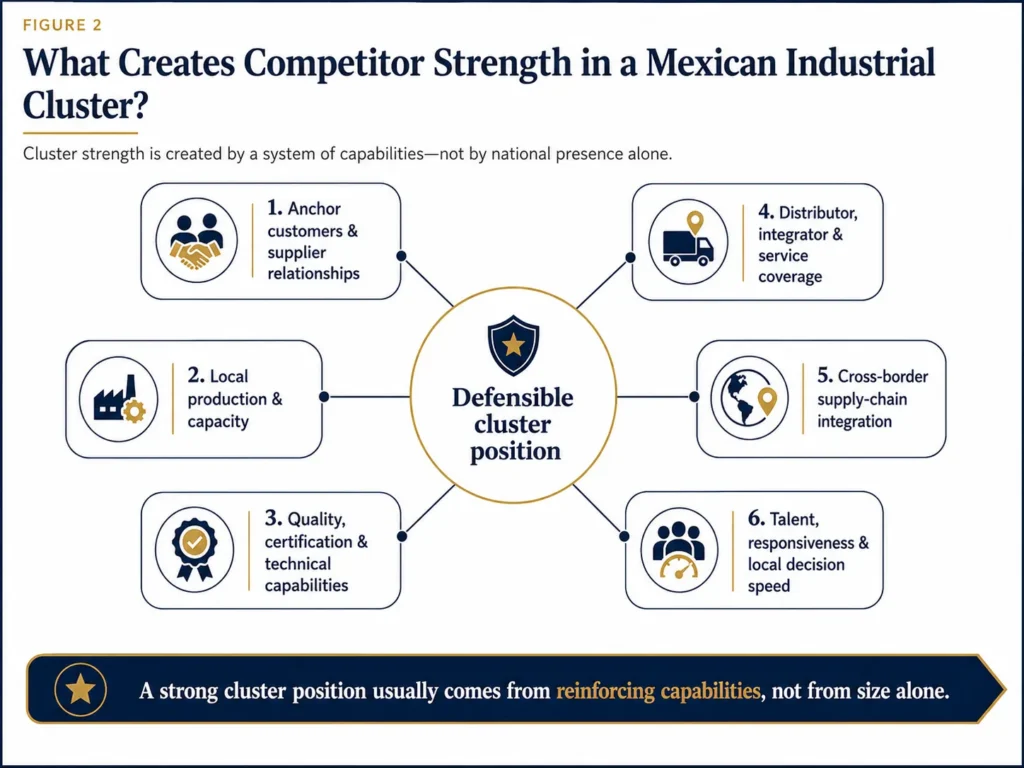
Figure 2. Competitor strength within a Mexican industrial cluster often comes from reinforcing customer, production, technical, channel, supply-chain, and execution capabilities.
What You Need to Understand Beyond National Presence in Competitor Analysis in Mexico
Regional and industrial-cluster position
We examine where competitors actually generate revenue, operate facilities, maintain inventory, deploy sales and technical teams, hold certifications, and serve strategic customers.
Depending on your decision, the analysis may compare:
- Northern border manufacturing centers.
- Monterrey and northeastern industrial markets.
- The Bajío automotive and manufacturing corridor.
- Mexico City and the central commercial market.
- Western technology, electronics, and manufacturing ecosystems.
- The southeast and other emerging markets.
- Specific industrial parks, OEM networks, institutions, or customer clusters.
North American and global supply-chain position
We assess how competitors connect Mexico with other markets and what that means for customer value.
Relevant questions may include:
- Which multinational customers are served across borders?
- Where are products and components sourced?
- How much production, engineering, inventory, and decision authority is located in Mexico?
- Can the competitor provide common specifications, service, and account management across North America?
- How exposed is it to customs, freight, currency, geopolitical, and supplier risks?
- Can it respond quickly when a customer relocates or expands production?
Local production, imports, and delivered economics
A competitor with local production may benefit from availability, adaptation, local content, lead times, customer confidence, and access to certain programs or tenders.
But local production also brings fixed cost, capacity, labor, quality, environmental, energy, and investment requirements. Imported offers may remain stronger in low-volume, specialized, or rapidly changing categories.
We examine the complete delivered-value system, including:
- Production location and capacity.
- Imported versus local products and inputs.
- Freight, customs, inventory, and warehousing.
- Currency exposure and payment terms.
- Distributor, dealer, and integrator margins.
- Installation, training, certification, technical support, and service.
- Customer-specific requirements and cost-to-serve.
Distributors, integrators, dealers, and representatives
Indirect channels may provide geographic reach, customer access, credit, inventory, technical integration, installation, service, regulatory support, and local relationships.
We assess:
- Which regions and industries the partner truly covers.
- Who owns the relationship with the end customer.
- Whether the partner can sell, integrate, install, and service the offer.
- How inventory, credit, pricing, and demand generation are divided.
- Whether the partner prioritizes the brand or carries competing alternatives.
- Where channel gaps create an opening for you.
Multinational accounts versus local customers
Multinational customers may value global agreements, common standards, supplier approvals, regional service, compliance, and integration with international operations.
Local companies may place greater weight on flexibility, relationships, financing, local service, price, customization, and speed.
A competitor can perform strongly in one customer group and poorly in the other. Your strategy should reflect the difference.
Public tenders and institutional access
Where public or institutional purchasing matters, competitor strength may depend on registrations, tender history, specifications, local partners, compliance, financing, administrative execution, and stakeholder knowledge.
We distinguish the position in public channels from private demand rather than treating them as one market.
Nearshoring: From Headline Trend to Competitor-Specific Analysis Implication
Nearshoring is strategically relevant only when it changes a customer, investment, capability, or competitive decision.
We examine questions such as:
- Which industries and clusters are receiving investment relevant to your offer?
- Which competitors already serve the incoming companies elsewhere?
- Who has the capacity, certifications, talent, service, and local relationships to win?
- Which suppliers may need to localize or expand?
- Where could capacity shortages, quality gaps, logistics, or infrastructure constrain growth?
- Which competitor may acquire or partner to accelerate access?
- Which accounts could become regional rather than purely Mexican opportunities?
This turns a broad macroeconomic narrative into a practical competitive map.
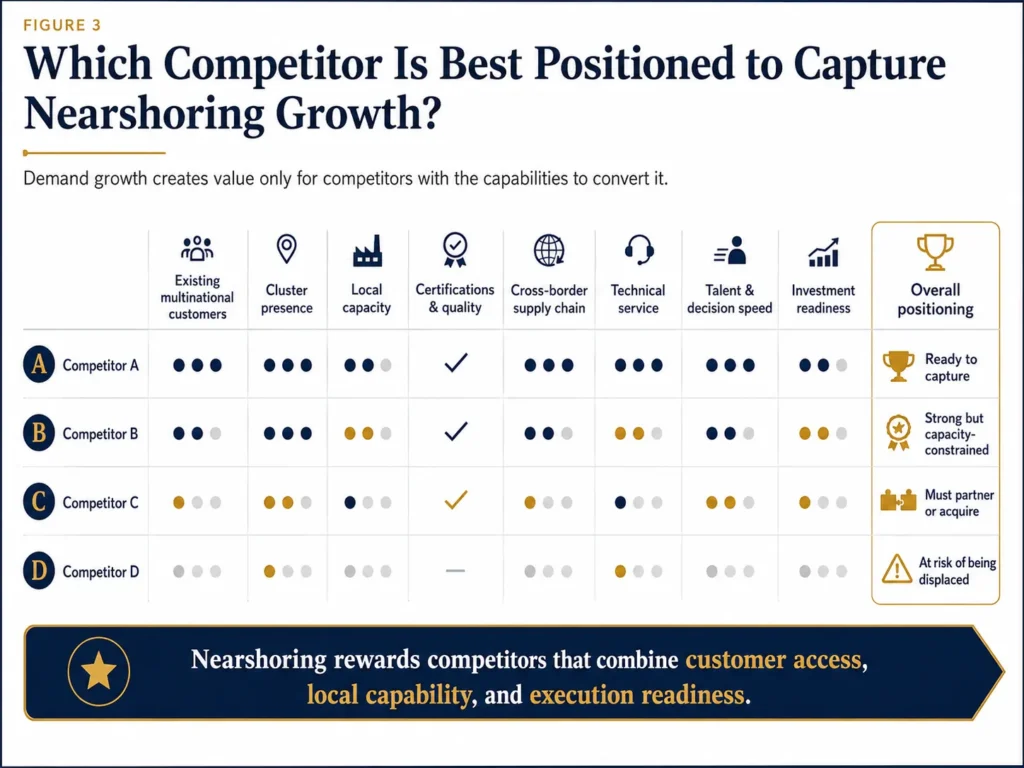
Figure 3. Nearshoring-related demand favors competitors that can combine customer access with local capacity, certifications, cross-border execution, service, and investment readiness.
How Midas Builds a Reliable Fact Base in Competitor Analysis in Mexico
Public information can reveal facilities, products, registrations, tenders, investments, and corporate announcements. It rarely explains the quality of execution, real customer access, regional strength, effective pricing, channel commitment, or competitor intent.
We therefore triangulate evidence from multiple sources.
Depending on the assignment, the fact base may include:
- Company, product, financial, regulatory, trade, investment, tender, and industry information where available.
- Facility, capacity, hiring, certification, partnership, pricing, portfolio, channel, and service signals.
- Interviews with customers, distributors, integrators, suppliers, specialists, former industry participants, institutional buyers, and other knowledgeable sources.
- Regional and industrial-cluster validation.
- Your team’s commercial, technical, operational, and strategic knowledge.
- Cross-border and regional evidence where it helps explain a Mexican competitor’s wider strategy.
We compare sources, test economic and operational consistency, distinguish facts from informed hypotheses, and make confidence levels explicit.
Ethical Intelligence Protects Your Decision
We comply with SCIP’s Code of Ethics, the profession’s gold standard. We comply with applicable laws, accurately disclose relevant identity and organizational information before interviews, avoid conflicts of interest, provide honest recommendations, and promote ethical conduct throughout the assignment.
We do not seek trade secrets, request confidential documents, misrepresent who we are, induce contractual breaches, or facilitate improper exchanges of competitively sensitive information.
This discipline is particularly important when the analysis involves concentrated industries, tenders, multinational accounts, distributors, cross-border relationships, or potential investment decisions.
You can review SCIP’s ethical intelligence guidance and Code of Ethics.
For the complete competitor-analysis process, see our competitor analysis step-by-step guide.
From Market Signals to Competitive Response and Competitor Analysis in Mexico
Competitor analysis should help you understand the current position and prepare for what may happen next.
Relevant signals in Mexico may include:
- New plants, expansions, industrial-park announcements, or equipment investments.
- Hiring in operations, engineering, quality, sales, regulatory, supply, or leadership roles.
- New certifications, registrations, supplier approvals, or tender activity.
- Distributor, integrator, dealer, or service-partner changes.
- Acquisitions, joint ventures, alliances, or cross-border partnerships.
- New warehouses, service centers, or regional offices.
- Pricing changes concentrated in one cluster, account, or channel.
- Portfolio localization or new lower-cost offers.
- Customer investment that may bring existing global suppliers into Mexico.
No single signal proves intent. The value comes from connecting signals with competitor objectives, capabilities, customers, and constraints.
For a deeper explanation of early-warning indicators and response choices, see Strategic Foresight and Competitive Response: Executive Insights.
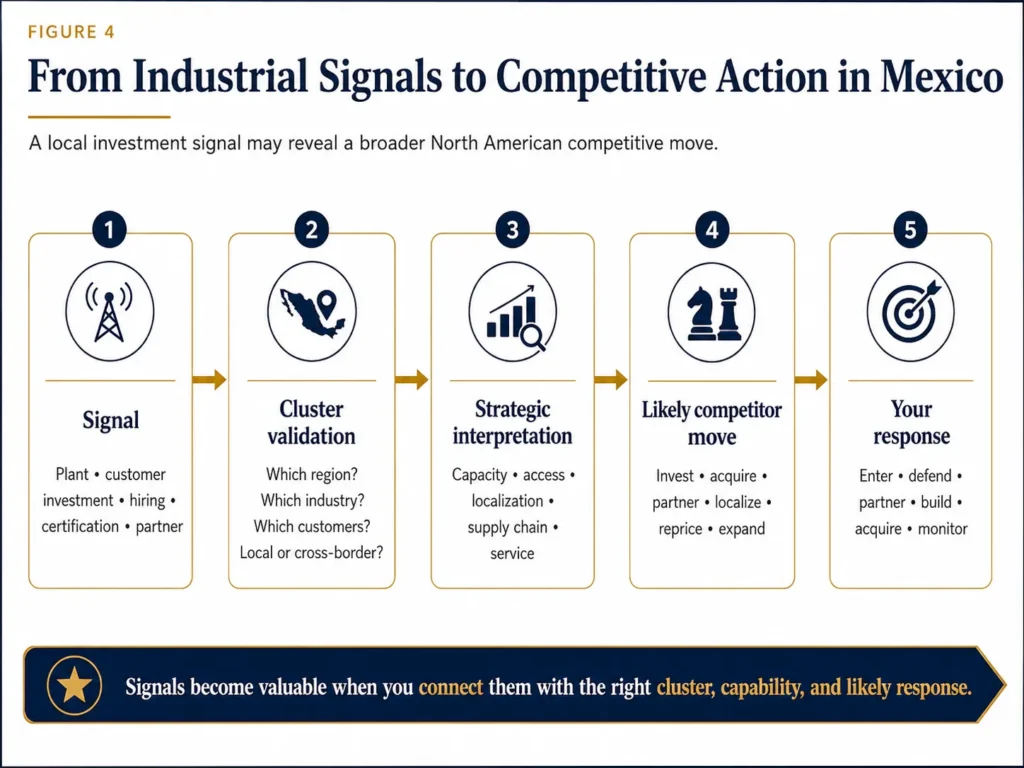
Figure 4. Industrial and customer signals become actionable when you connect them with the relevant cluster, supply chain, capability, and likely competitor move.
How Competitor Analysis in Mexico Changes Your Decision
Regional and cluster prioritization
You can identify which regions and industrial ecosystems offer the strongest combination of demand, customer access, competitor vulnerability, and economic potential.
Market-entry and expansion decisions
You can determine where to enter, which capabilities must be local, which can be shared across North America, and how to sequence investment.
Production and sourcing decisions
You can assess whether local manufacturing, assembly, inventory, imported supply, or a hybrid model provides the stronger competitive position.
Channel and partner decisions
You can identify where your route to market limits growth, which distributors or integrators truly influence customers, and whether you should appoint, replace, support, or complement a partner.
Pricing and value-proposition decisions
You can understand whether competitors win through price, local capacity, supply reliability, technical capability, global relationships, financing, or service, and build a response around the real source of advantage.
Public and institutional access decisions
You can compare tender, approval, registration, partner, and stakeholder requirements and identify where competitors are protected or exposed.
Competitive-response decisions
You can decide where to enter, attack, defend, partner, build, acquire, prepare, or monitor while anticipating how competitors may respond.
Case Spotlight: Defending Against Biosimilar Competition in Mexico
The decision
A pharmaceutical company needed to prepare for biosimilar competition as patents protecting three leading biologics approached expiration.
Mexico’s price-sensitive environment, government influence on procurement, public tenders, hospital purchasing, regulatory timelines, and differences between public and private channels made a generic regional response inadequate.
How we approached it
We researched COFEPRIS-related regulatory timelines, public health purchasing trends, tender processes, hospital buying behavior, competitor strategies, and potential commercialization models.
We also interviewed knowledgeable manufacturers, distributors, healthcare-market participants, and public-procurement stakeholders to assess likely entry timing, pricing, access, and demand shifts.
How the competitor analysis findings supported action
The company adjusted its pricing, tendering, market-education, and public/private positioning before biosimilar entry. According to the case results, it maintained a strong position and limited first-year revenue loss to less than 10%.
The Mexico analysis also formed part of a broader regional defense, allowing management to distinguish common Latin American threats from the responses required by Mexico’s institutional and purchasing environment.
For the full multi-country case, visit Competitor Analysis in Latin America.
“We’ve done competitor analysis before, but never have I been so clear on how and why competitors act the way they do.”
— Regional Leader
When You Need Competitor Analysis in Mexico
- Entering Mexico or prioritizing regions and industrial clusters.
- Evaluating a nearshoring-related growth opportunity.
- Comparing local, US, Asian, and other multinational competitors.
- Assessing production, localization, sourcing, or capacity options.
- Selecting, replacing, or evaluating distributors and integrators.
- Trying to explain why performance differs across states or industries.
- Preparing a product launch, tender, or account strategy.
- Reviewing public and private market access.
- Defending multinational or strategic local accounts.
- Anticipating how competitors may respond to your next move.
When your decision covers several countries, the Mexico analysis should fit into a consistent regional framework. See our Latin America competitor analysis hub.
Why Midas for Competitor Analysis in Mexico?
We analyze Mexico by ecosystem, not only nationally
We examine competitors by region, industrial cluster, customer type, channel, application, and source of advantage.
We connect local execution with North American strategy
We assess how customer relationships, supply chains, production, investment, and decision rights connect Mexico with the United States, Canada, and global operations.
We turn nearshoring into competitor-specific insight
We identify which companies have the customers, capacity, certifications, talent, channels, and investment readiness to capture emerging demand.
We use primary research where public information is insufficient
We complement secondary research with carefully designed interviews involving customers, channels, specialists, suppliers, institutional participants, and other knowledgeable sources.
We comply with SCIP’s Code of Ethics
We comply with SCIP’s Code of Ethics, the profession’s gold standard. Our methods are legal, transparent, discreet, and designed to protect your company, our sources, and the integrity of the engagement.
We bring direct experience in competitor analysis in Mexico
We have led dozens of competitive intelligence and competitor analysis projects in Mexico across pharmaceutical, automotive, household devices, industrial, technology, consumer, and other sectors.
For decisions that require a deeper understanding of individual competitors, not only the market around them, our competitor analysis consulting helps you uncover how competitors compete, what sustains their advantage, where their vulnerabilities lie, and how they may react to your next move.
“They are responsive, professional, detail-oriented, and client-focused. I love that Midas prioritizes ‘co-success with the client’ and works hard to meet our needs and solve our problems.”
— Executive Chair
Frequently Asked Questions About Competitor Analysis in Mexico
Can you compare competitors by state or industrial cluster in your competitor analysis in Mexico?
Yes. We can organize the analysis around states, border regions, industrial corridors, clusters, customer ecosystems, service territories, or other geographies that match your decision.
Can you evaluate which competitors will benefit most from nearshoring?
Yes. We can assess customer relationships, location, capacity, certifications, quality systems, supply-chain integration, talent, channels, service, investment readiness, and remaining constraints.
Can you compare Mexican, US, Asian, and European competitors in your competitor analysis in Mexico?
Yes. We compare the capabilities and business models that matter to the decision rather than assuming one origin or company type is inherently stronger.
Can you assess local production versus imported supply?
Yes. We can examine cost, capacity, lead time, local content, customs, currency, flexibility, quality, service, working capital, and customer requirements to compare different supply models.
Can you evaluate distributors and integrators in your competitor analysis in Mexico?
Yes. We assess geographic and industry coverage, customer access, technical capability, inventory, credit, service, competing brands, commitment, and execution quality.
Can you analyze public and private markets separately?
Yes. We can compare stakeholders, purchasing processes, registrations, tenders, prices, partners, access barriers, and competitor positions across public, institutional, and private demand.
How do you validate private-company or cluster-level information in your competitor analysis in Mexico?
We triangulate public sources, company and facility evidence, interviews, customer and channel perspectives, hiring and investment signals, and economic logic. We clearly distinguish facts, estimates, and remaining uncertainty.
How do you protect confidentiality and comply with ethical standards?
We comply with applicable laws and SCIP’s Code of Ethics. We disclose relevant identity before interviews, do not misrepresent ourselves, and never seek trade secrets or confidential documents.
Can you help us prepare a competitive response?
Yes. We can translate findings into regional, account, channel, pricing, production, sourcing, investment, partnership, and market-access options. Strategic foresight or a business wargame can be added when reactions and countermoves are central.
How long does a competitor analysis in Mexico take?
The timing depends on the number of competitors, regions, clusters, interviews, channels, and questions involved. We scope the work around your decision and can share preliminary findings in phases.
About the Author
Adrian Alvarez, PhD is Managing Partner at Midas Consulting, Wharton Alumnus, MBA Professor at Universidad Argentina de la Empresa (UADE), and Competitive Intelligence Fellow. He specializes in competitive strategy, competitor analysis, strategic intelligence, business wargaming, market entry, and decision-making under uncertainty in Mexico and Latin America.
He has led dozens of competitive intelligence and competitor analysis projects in Mexico and more than 100 across Latin America. His work has been published in the United States, Spain, and Germany. You can access his library of strategic insights and published research here
View professional profile on LinkedIn
Selected Mexican Sources You May Need to Monitor
- INEGI for official economic, industrial, demographic, and regional information.
- Banco de México for monetary, financial, exchange, and economic information.
- COFECE for competition and market-structure information.
- COFEPRIS for healthcare, pharmaceutical, medical-device, food, and other regulated-product information.
- Secretaría de Economía for trade, investment, industry, and business information.
- CompraNet and relevant procurement sources where public purchasing is material.
- State investment agencies, customs and trade information, industrial associations, cluster organizations, company disclosures, distributor information, and primary market interviews as appropriate.
Official sources are essential, but they rarely explain execution quality, channel influence, customer relationships, cluster strength, or competitor intent on their own. The value comes from connecting formal evidence with local and cross-border market behavior.
See the Competitive System Behind the National Market
You may be deciding where to enter, which cluster to prioritize, whether to localize production, which distributor to appoint, how to capture nearshoring demand, or why a competitor succeeds in one region but not another.
Before you act, you need to understand where competitors are truly strong, how local capabilities connect with North American supply chains, which customers and channels protect their position, and what move they are likely to make next.
In an initial conversation, we will discuss your decision, the competitors, clusters, regions, channels, and customers involved, what your team already knows, and which uncertainties could materially change the action. We can then propose a focused Mexico research and analysis plan designed around your decision, not a generic national report.