
Market analysis is often treated as a research exercise. At Midas Consulting, we see it differently: market analysis is a strategic decision tool that helps executives reduce uncertainty before committing resources.
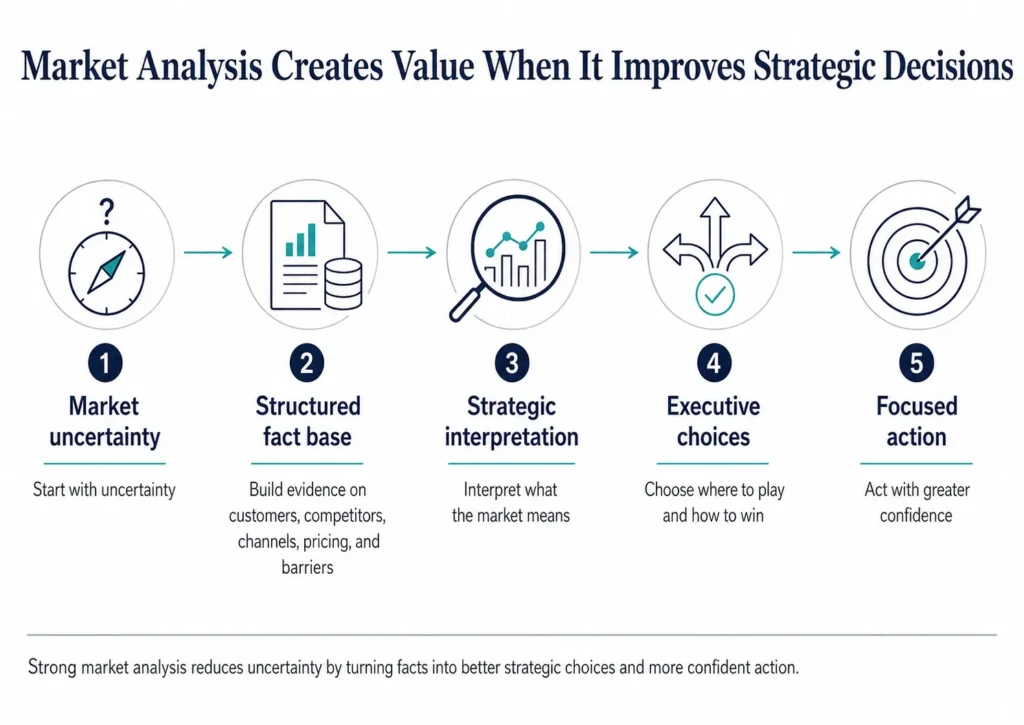
Figure 1: The goal of market analysis is not to collect more information. It is to improve the quality of strategic decisions.
Whether your company is evaluating a new country, defending its position in an existing market, launching a product, prioritizing segments, or reassessing growth opportunities, the central question is not only “What does the market look like?” It is “What does this market mean for our next strategic decision?”
A strong market analysis should connect market size, customer behavior, competitor dynamics, channel structure, pricing logic, regulatory barriers, and execution constraints. The objective is not to collect more information. The objective is to separate attractive opportunities from distracting ones, identify the risks that matter, and translate insight into action.
This is consistent with the broader role of market research and marketing analytics in improving customer understanding and business decision-making, as discussed by Harvard Business Review and Harvard Division of Continuing Education.
This is especially important in Latin America, where market averages can be misleading. Countries may look similar from a distance, but differ significantly in purchasing behavior, channel concentration, regulatory requirements, import barriers, inflation dynamics, distributor capabilities, and competitive intensity. For that reason, we often combine market analysis with market entry analysis, competitor analysis, benchmarking, value proposition, go-to-market strategy, and business wargaming.
Regional economic data from the World Bank also show why country-level differences matter when evaluating growth opportunities.
In this article, we explain when market analysis is most useful, what a strong process should include, why a wave-based approach improves decision quality, and how executives can use market analysis to make more confident strategic choices.
When Market Analysis Is the Right Tool
Market analysis is most valuable when the decision is important, the information is incomplete, and the cost of being wrong is significant. At Midas Consulting, we typically recommend market analysis when leadership teams need to:
- Evaluate whether a country, region, category, or segment is attractive enough to pursue.
- Understand why growth has slowed in an existing market.
- Identify where demand is concentrated and which customer segments are most promising.
- Assess competitor strength, pricing behavior, positioning, and likely strategic moves.
- Understand channel structure, distributor capabilities, purchasing criteria, and barriers to entry.
- Prioritize growth opportunities across countries, segments, products, or customer groups.
- Build a fact base before making a market entry, go-to-market, investment, or portfolio decision.
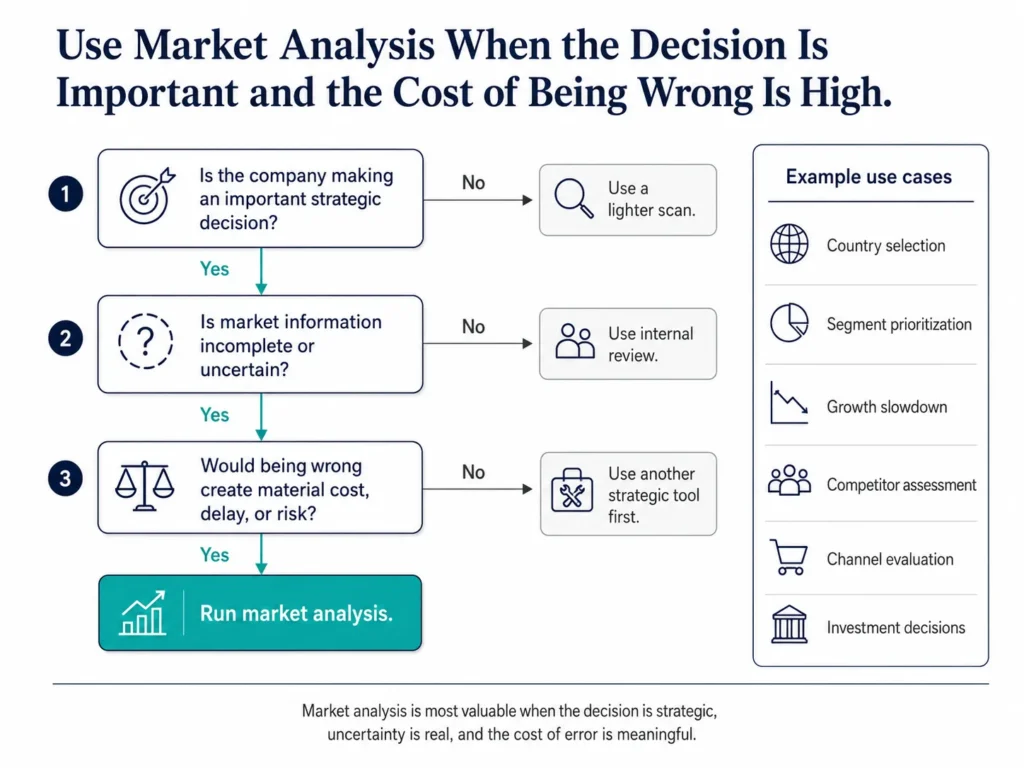
Figure 2: Market analysis is most useful when leadership needs a stronger fact base before making a consequential move.
The key point is that market analysis should not be done because “we need a report.” It should be done because an executive team needs to make a better decision.
Three Executive Benefits of Market Analysis
1. Better strategic decisions
Market analysis helps leadership teams move beyond intuition, internal assumptions, and anecdotal evidence. By combining primary interviews, secondary sources, competitor intelligence, and market data, executives can make decisions based on a clearer understanding of demand, profitability, barriers, risks, and execution requirements.
This is particularly useful when a company is comparing several possible paths: which country to enter, which segment to prioritize, which customer group to target, which channel to build, or which offer to adapt.
2. Sharper opportunity prioritization
Not every attractive market is a good market for your company. A market may be large but difficult to access. It may be growing but dominated by entrenched competitors. It may show demand but require certifications, local partners, pricing adaptation, or a sales model that the company is not ready to build.
A strong market analysis helps separate “interesting” opportunities from “actionable” opportunities. It should clarify not only where the opportunity is, but also what it would take to win.
3. Lower risk of costly surprises
Market analysis reduces the risk of entering a market with incomplete assumptions. It can reveal issues such as weak willingness to pay, fragmented channels, regulatory bottlenecks, aggressive competitors, limited distributor capabilities, low customer awareness, or unattractive unit economics.
The benefit is not certainty. No analysis can eliminate uncertainty. The benefit is better preparedness: executives can decide whether to proceed, adjust, stage the investment, change the entry model, or stop before committing unnecessary resources.
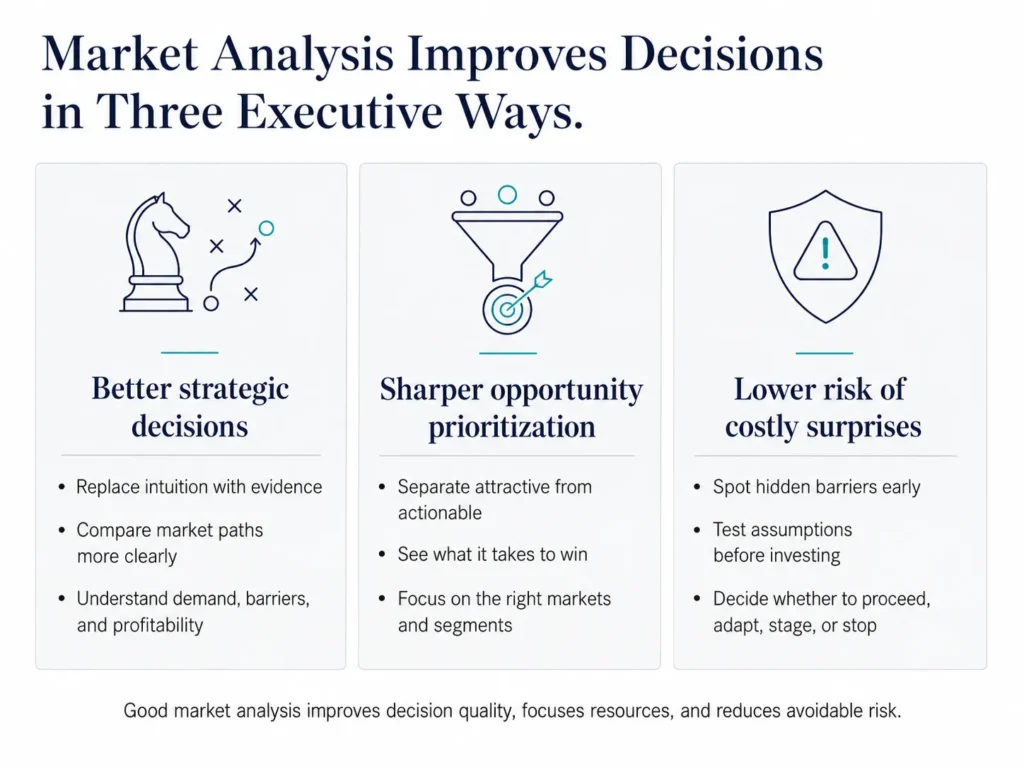
Figure 3: The strongest market analyses do three things well: improve decisions, sharpen prioritization, and reduce avoidable risk.
The Process of Conducting a Market Analysis
Conducting a comprehensive market analysis requires a systematic approach, ensuring that the findings are reliable and actionable. The following are key steps to follow during the process, but it’s important to note that this isn’t a one-time event. It should be iterative, allowing for refinement and focus as you learn more.
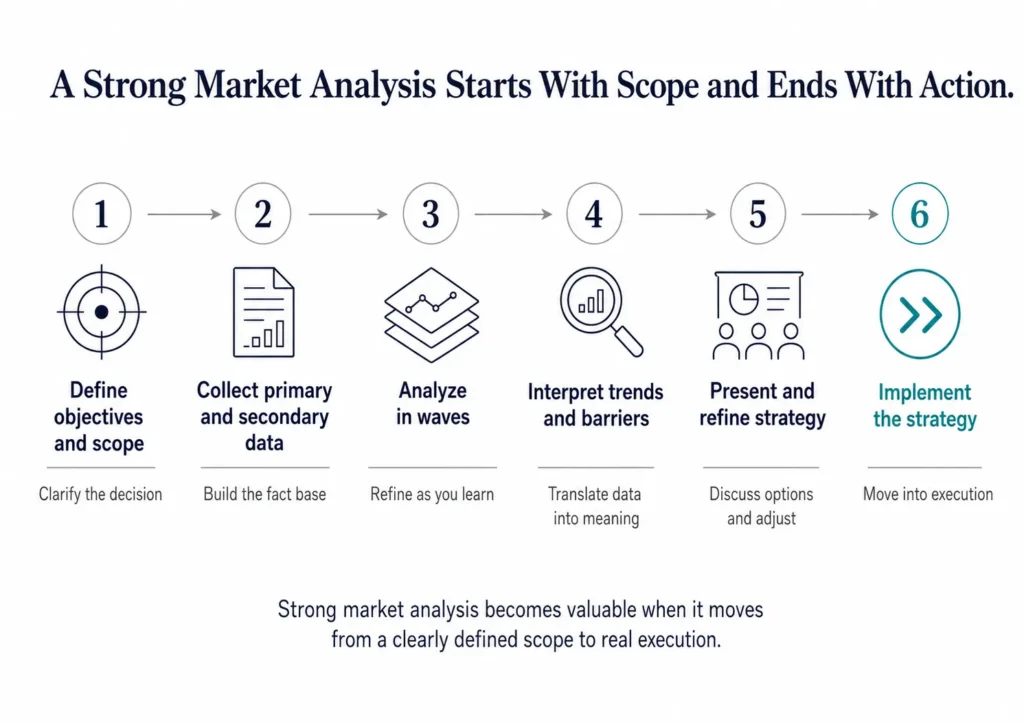
Figure 4: A useful market analysis is not a one-time report; it is a structured process that connects insight to execution.
Step 1. Define Your Market Analysis Objectives and Scope
Before diving into data collection, the first step is defining clear objectives. Are you looking to enter a new market, or are you evaluating your performance in a current one? For example, Midas conducted a market analysis for a customer, focusing on specific regions such as Brazil, Colombia, and Mexico, and specific products. By setting such objectives, you ensure that the analysis is targeted and relevant to your strategic goals.
Scope is equally important. Do you want to assess the entire market, or are you more interested in a specific segment? Defining the scope early helps to ensure that the data you collect is relevant.
Step 2. Data Collection: Primary and Secondary Sources
Once the objectives and scope are defined, the next step is gathering data. This involves using both primary sources, such as interviews with industry experts and potential customers, and secondary sources, like market reports, industry publications, and company websites.
For example, in Midas’ analysis, interviews with local suppliers, distributors, and industry insiders are always crucial in building a detailed understanding of the market. This is the point where broad data collection allows us to assess trends, understand the competitive landscape, and gather customer insights.
Step 3. The Importance of Wave-Based Market Analysis
One of the best practices in market analysis is conducting it in waves. Instead of completing the entire analysis in one go, breaking it into phases allows for results that are more tailored to your needs. Here’s why:
- First Wave: Preliminary Findings In the first wave, Midas presents preliminary results based on initial data collection. This may include broad market dynamics, general consumer behaviors, and competitor activity. While these insights are valuable, they are just the starting point.
- Refinement: Adjusting the Scope After the first wave of results, the analysis scope is refined based on your feedback. Perhaps you realize that certain market segments are more lucrative than you initially thought, or maybe the initial findings reveal that a competitor is more dominant in a region than anticipated. This allows you to adjust the focus of the subsequent analysis phases to better suit your needs.
- Second Wave: Focused Insights With a clearer understanding of what’s important to your business, the second wave dives deeper into the specifics. For instance, if you’re interested in launching new products, this wave may focus on identifying barriers to entry, pricing strategies, and potential partners or distributors. Conducting interviews with key stakeholders, such as distributors and government agencies, during this phase provides in-depth knowledge that supports more strategic decisions.
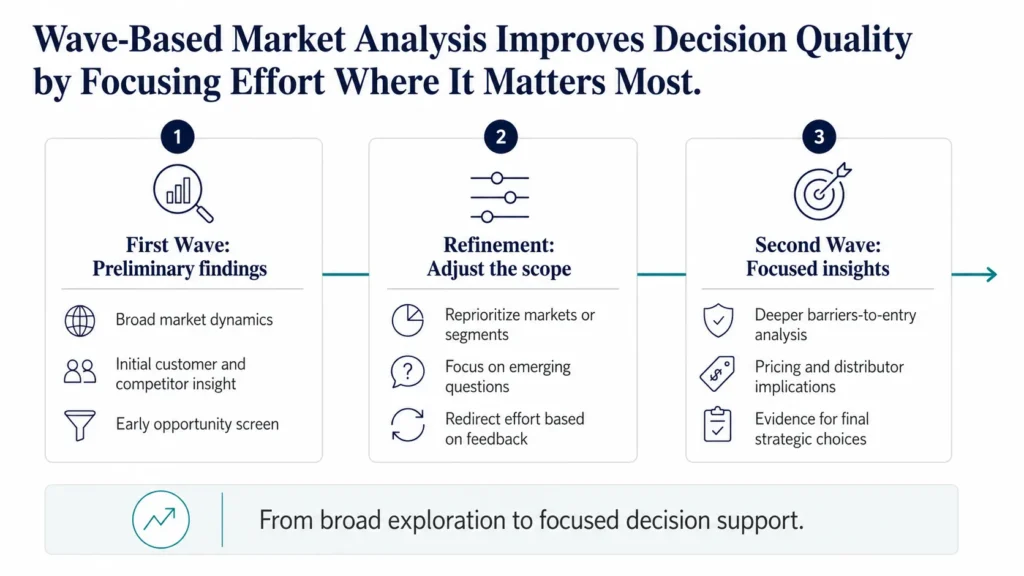
Figure 6: The wave-based approach avoids overanalyzing everything and directs deeper effort only where the decision requires more precision.
Step 4. Data Analysis: Identifying Trends and Insights
After collecting data, the next step is analyzing it to draw actionable insights. This is where we’ll identify trends, such as shifts in consumer preferences or technological developments that could impact demand. For example, understanding how demographic changes affect your product’s usage in Brazil could significantly impact your strategy.
The analysis should also uncover key success factors and barriers to entry. For example, certifications required to sell products in certain markets may pose a challenge, or perhaps there are opportunities in specific regions where competition is less intense. At this stage, the focus shifts from simply collecting data to interpreting what it means for your business.
Step 5. Presenting and Refining the Strategy
Once the analysis is complete, the findings are presented, usually in a comprehensive report that outlines the key insights and recommendations. Midas provides both a detailed report and a final presentation, where they summarize findings and discuss strategic options.
But it doesn’t stop there. Based on the report, you may decide to adjust your market strategy further, focusing on specific regions or market segments. This is why wave-based analysis is so critical: it allows for continuous refinement, ensuring that the strategy you end up with is tailored to your exact needs.
Step 6. Implementing the Strategy
Finally, armed with a clear understanding of the market, your competitors, and customer behavior, you can proceed with implementing your strategy. This could involve adjusting product offerings, altering your pricing strategy, or even acquiring a local competitor to strengthen your position. By following a structured process, your strategy will be grounded in solid data, reducing the risk of failure and increasing the chances of success.
Practical Example: From Broad Market Interest to Focused Strategic Action
A B2B company asked Midas Consulting to evaluate growth opportunities across several Latin American markets. At the beginning of the project, the opportunity looked attractive at a regional level: demand was growing, the product had clear technical advantages, and the company believed it could replicate its existing commercial model.
The first wave of market analysis showed a more nuanced picture. Some countries had stronger demand, but also higher regulatory barriers. Others had smaller markets, but better distributor fit and faster commercial access. Interviews with local market participants revealed that customer decision criteria varied significantly by country. In some markets, technical performance mattered most. In others, financing, service coverage, local references, or distributor credibility were decisive.
Based on the first wave, the scope was refined. Instead of treating Latin America as one market, the second wave focused on the countries and segments where the company had the best combination of market attractiveness and ability to win.
The final recommendation was not simply “enter Latin America.” It was a prioritized roadmap: which markets to approach first, which segments to target, which barriers to address, which partners to evaluate, and which assumptions to test before scaling.
This is the real value of market analysis. It helps executives move from a broad growth hypothesis to a focused, evidence-based strategic decision.
Strengths and Limitations of Market Analysis
Like any strategic tool, market analysis is powerful when used correctly and dangerous when overinterpreted. Understanding both its strengths and limitations helps executives use it in the right way.
Strengths
- Decision focus. A good market analysis clarifies what leaders need to decide, not just what they need to know.
- External perspective. It brings customer, competitor, channel, and market realities into strategic discussions that are often dominated by internal assumptions.
- Risk reduction. It identifies barriers, constraints, and weak assumptions before the company commits significant resources.
- Prioritization. It helps leadership teams compare opportunities and focus on the markets, segments, and actions with the highest strategic value.
- Alignment. It creates a shared fact base that allows executives, commercial teams, and regional leaders to discuss strategy more objectively.
Limitations
- Data availability varies by market. In many Latin American sectors, public data may be incomplete, outdated, or too aggregated to support a strategic decision on its own.
- Interviews require interpretation. Primary research is essential, but interview responses must be triangulated. Customers, distributors, competitors, and experts may have partial views or their own incentives.
- Market size does not equal market opportunity. A large market may be difficult to access, unattractive to serve, or poorly matched to the company’s capabilities.
- Competitor reactions still matter. Market analysis can show whether an opportunity is attractive, but it may not fully anticipate how competitors, distributors, customers, or substitute solutions will respond once your company moves. When the decision could trigger aggressive competitive reactions, market analysis should be complemented with competitor analysis, business wargaming, or value proposition design.
- Insight must be translated into action. A report is not the outcome. The outcome should be a decision, a roadmap, or a set of strategic options.
This is why market analysis should also consider competitive conditions and market structure, an approach aligned with the OECD’s work on competition and market studies in Latin America.
Conclusion: Market Analysis Should Lead to Better Decisions, Not Just Better Reports
Market analysis is not valuable because it produces more information. It is valuable because it helps executives make better strategic decisions under uncertainty.
When done well, market analysis answers practical questions: Which markets are worth pursuing? Which segments are most attractive? What do customers really value? How strong are competitors? What barriers could slow execution? Which assumptions need to be tested before investing? What should the company do next?
At Midas Consulting, we use a wave-based approach because the best questions often become clearer as the project progresses. The first wave builds the fact base and reveals what matters most. The next wave goes deeper where the decision requires more precision. This keeps the analysis focused, practical, and connected to the executive decision at hand.
For companies evaluating opportunities in Latin America, this discipline is especially important. The region cannot be treated as one homogeneous market. A country-by-country and segment-by-segment view is often the difference between an attractive presentation and a strategy that can actually be executed.
If your company is evaluating a new market, reassessing growth options, or trying to make sense of changing customer and competitor dynamics, Midas Consulting can help you turn market complexity into a clearer strategic path.
About the Author
By Adrian Alvarez, PhD. Adrian Alvarez is Managing Partner at Midas Consulting, Wharton Alumnus, MBA Professor at Universidad Argentina de la Empresa (UADE), and Competitive Intelligence Fellow. He specializes in competitive strategy and strategic decision-making under uncertainty in Latin America.
He has analyzed B2B, B2C, IT, and pharmaceutical markets across Latin America.
Adrian is the author of numerous works published in the US, Spain, and Germany. You can access his library of strategic insights and published research here
View professional profile on LinkedIn
Selected External Sources
This article is informed by Midas Consulting’s experience conducting market analysis, market entry, competitor analysis, and growth strategy projects across Latin America, as well as by respected sources on market research, customer insight, economic data, and strategic decision-making.
- Harvard Business Review: Market Research
- Harvard Division of Continuing Education: How to Leverage Marketing Analytics to Improve Customer Relationships and Business Decisions
- World Bank Data: Latin America & Caribbean
- OECD: Competition and Market Studies in Latin America
Related Midas Insights
For executives who want to go deeper, these Midas articles provide additional context on how market analysis connects with market entry, competitor analysis, benchmarking, strategic foresight, and execution:
- Market Entry Analysis: How to Determine Which Markets to Enter
- Competitor Analysis to Leapfrog your Competition
- Benchmarking: Improve Your Competitive Position
- Strategic Foresight and Competitive Response: Executive Insights
Related Midas Services
Market analysis is often the starting point for a broader strategic decision. Depending on the question your company needs to answer, Midas Consulting can combine market analysis with other strategy services:
- Market Entry Analysis: When your company needs to decide which countries, segments, or markets to prioritize before investing.
- Value Proposition Consulting: When your company needs to clarify why customers should choose your offer and how to communicate that value more effectively.
- Competitor Analysis: When understanding competitor positioning, capabilities, pricing, channels, and likely moves is essential to the decision.
- Benchmarking: When leadership teams need to compare performance, practices, capabilities, or strategic choices against relevant competitors or reference companies.
- Business Wargaming: When the decision could trigger competitor reactions and the team needs to test strategic moves before implementing them.
- Win-Loss Analysis: When you need to know why you win and lose deals to improve your offering, product, or service.
- Strategy Consulting: When your company needs to define where to compete, how to win, which priorities to pursue, and how to align leadership around a clear strategic direction.
Together, these services help executive teams move from market understanding to strategic choice, alignment, and execution.
At Midas, we help you navigate this process with ease, ensuring that each step is tailored to what you really need. So, if you’re ready to make smarter decisions and outpace your competitors, reach out to us today!
Knowing the benefits and process of market analysis is one thing, but doing it successfully is another. Don’t worry, we’re here to help every step of the way!
We are by your side tackling tough markets!
After conducting hundreds of market analysis projects, we’ve perfected our approach. We’re passionate about helping companies like yours identify, prioritize, and pursue the right market opportunities.
Some of our market analysis customers:






Here’s what some of our clients have to say about our work:



How to move forward:
Schedule a quick call
Receive your comprehensive market analysis
Ready to grow your market share?
In a brief call, we’ll gather the basic details needed to prepare a custom proposal. Once ready, we’ll send it for your review, and after your approval, we’ll kick off your market analysis consulting project
During the project, you’ll receive two key deliverables:
First, we’ll present preliminary results so we can fine-tune the project to fit your exact needs
Then, we’ll deliver our final, actionable recommendations
By implementing our recommendations, you’ll be positioned to stay ahead of the competition and grow your market share
We’re ready when you are! Let’s work together to achieve your goals!
If you liked this blog post, please share it in your networks: