Lead the Market through Insightful Competitor Analysis in Colombia
In Colombia, a competitor can appear strong nationally while its real advantage is concentrated in a few cities, distributors, institutions, customer groups, or channels.
A company may lead reported sales because it has stronger access to Bogotá or major institutional buyers. Another may be underestimated because much of its activity flows through regional distributors, private relationships, informal channels, or secondary cities that are poorly represented in national data.
That creates a difficult executive question: Are customers choosing the competitor because they prefer its value proposition, or because it is the supplier they can access, finance, approve, or obtain reliably?
At Midas Consulting, we help you separate those effects. We combine structured research, local market insight, and strategic interpretation so you can understand where competitors are truly strong, which channels and relationships create that strength, where the market remains underserved, and how your strategy should change by region, customer type, and route to market.
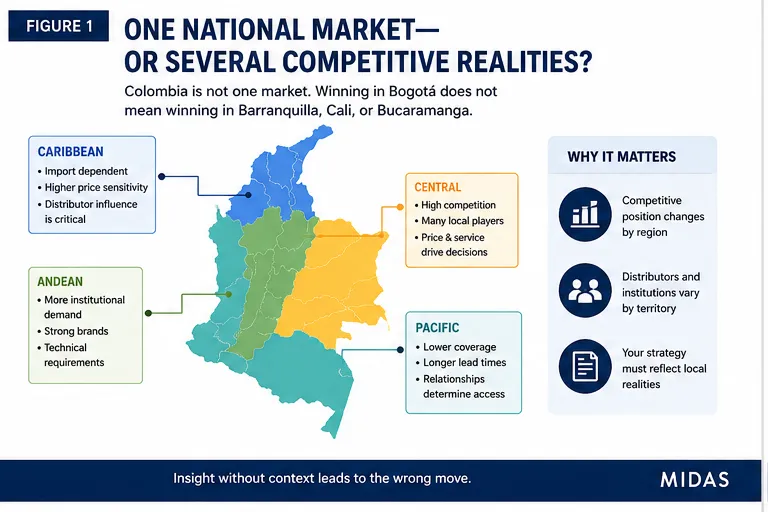
Figure 1. National averages can conceal major differences in customer concentration, channels, institutional access, availability, and competitor strength across Colombia.
Why Competitor Strength Is Easy to Misread in Colombia
National data may not represent regional execution
Colombia’s major cities and regions can differ significantly in industry concentration, purchasing behavior, infrastructure, channel structure, public-sector influence, and service requirements.
A competitor with national recognition may execute strongly only in selected territories. A smaller company may hold deep relationships or distribution advantages in one region that are invisible in aggregate data.
Formal sales may understate the full competitive market
Depending on the industry, products can move through formal distributors, regional wholesalers, independent resellers, informal retailers, direct relationships, online channels, parallel imports, or unregistered activity.
These channels may not appear consistently in official statistics or commercial databases. Yet they can affect price expectations, availability, customer access, brand perception, and the economics of formal competitors.
Distributor access can be mistaken for customer preference
A competitor may win because its distributor has inventory, credit, local salespeople, technical knowledge, transportation, institutional relationships, or stronger coverage, not necessarily because customers prefer the product.
Your analysis should determine whether the source of advantage belongs to the manufacturer, the distributor, or the combination, and how difficult it would be to replicate or challenge.
Public and private markets can follow different competitive rules
In healthcare, infrastructure, technology, education, industrial supply, and other sectors, public procurement and private purchasing may involve different specifications, decision makers, timelines, pricing structures, approvals, and access barriers.
A company that appears strong in one channel may be weak in the other. Combining both into one national estimate can obscure the competitive position that matters to your decision.
Availability can look like loyalty
When product supply, imports, credit, or distribution are inconsistent, customers may purchase what is available rather than what they prefer.
A competitor’s market share may therefore reflect operational access and inventory more than sustainable differentiation. That distinction changes whether you should improve your value proposition, strengthen supply, change channels, or target specific territories.
Fragmented information can create false precision
Different sources may produce very different estimates of market size, market share, pricing, or channel activity. The problem is not solved by selecting the most convenient number.
A reliable analysis must test definitions, time periods, geographic coverage, product scope, channel inclusion, and the incentives or limitations behind each source.
The Executive Questions You Need to Answer in Your Competitor Analysis in Colombia
- Which competitors are truly strong by city, region, customer type, channel, and application?
- How much of the market operates through formal, informal, direct, distributor, institutional, or digital channels?
- Who owns the customer relationship—the competitor, distributor, wholesaler, institution, or local reseller?
- Where is reported market share driven by preference, and where is it driven by availability or access?
- How do prices, discounts, terms, service, and credit differ by channel or region?
- Which competitors depend heavily on Bogotá, one distributor, public purchasing, or a limited number of accounts?
- Which secondary cities or regional markets are underserved?
- How do public and private customers evaluate suppliers differently?
- Which regulatory, approval, reimbursement, tender, or institutional conditions protect competitors?
- How may a competitor respond if you improve coverage, change partners, enter an institution, or challenge a priority account?
The goal is not to force one national answer. It is to understand where the competitive system changes and what those differences mean for your next decision.
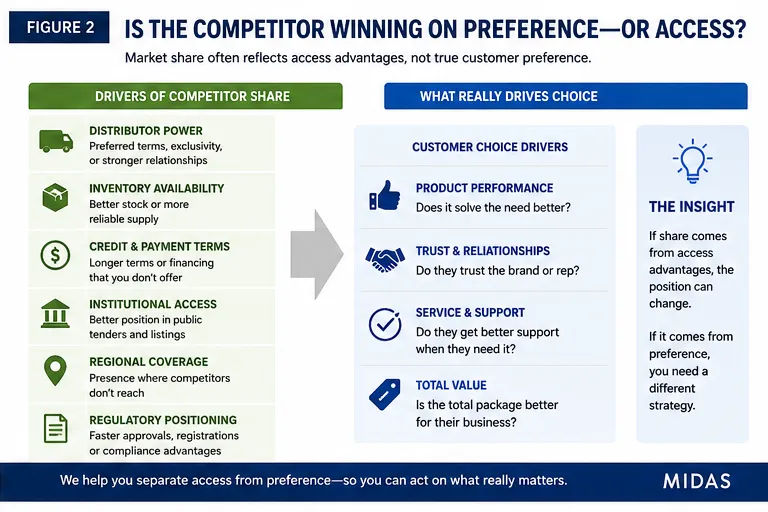
Figure 2. The same sales result can arise from genuine customer preference or superior market access—and each requires a different competitive response.
What You Need to Understand Beyond the National Estimate in Your Competitor Analysis in Colombia
Regional and city-level competitive position
We examine where competitors actually generate demand, hold relationships, maintain inventory, provide service, and depend on channel partners.
Depending on your industry, the analysis may compare:
- Bogotá and the central region.
- Medellín and Antioquia.
- Cali and the Pacific region.
- Barranquilla, Cartagena, and the Caribbean Coast.
- The Coffee Region.
- Secondary cities, rural areas, or industry-specific clusters.
The relevant geography should reflect how customers buy and how competitors execute—not simply administrative boundaries.
Formal and informal channel architecture
Informality is not one single channel. It can include unregistered sellers, parallel imports, cash-based transactions, independent resellers, product substitution, incomplete invoicing, or business practices that sit outside the formal route to market.
We assess how these activities affect:
- Effective market size.
- Price expectations and discounting.
- Product authenticity and quality perceptions.
- Availability and customer convenience.
- Formal distributor economics.
- Brand reputation and regulatory risk.
The objective is not to create false precision around informal activity. It is to understand its strategic relevance and the confidence range around the estimate.
Distributor and partner power
Distributors may provide access, inventory, credit, transportation, local relationships, technical support, demand generation, and regulatory knowledge.
We examine:
- Geographic and segment coverage.
- Customer ownership and influence.
- Inventory, financing, and credit capability.
- Technical, regulatory, and service competence.
- Competing brands and potential conflicts.
- Commitment to the principal and willingness to invest.
- Dependence on a small number of customers or employees.
Public, institutional, and private access
Where institutional or public purchasing matters, competitor strength may depend on registrations, tender experience, specifications, reimbursement, contracting relationships, stakeholder access, and the ability to meet administrative requirements.
Private customers may prioritize responsiveness, service, flexibility, credit, and commercial relationships differently. A useful competitor analysis should preserve those distinctions.
Pricing and effective commercial conditions
List prices rarely tell the whole story. Depending on your sector, we may examine:
- Discounts by channel, volume, account, and region.
- Payment terms, financing, and credit exposure.
- Distributor and reseller margins.
- Freight, delivery, installation, training, and service.
- Tender prices and institutional conditions.
- Bundles, rebates, promotions, and product substitution.
- The effective economics of formal and informal alternatives.
How Midas Validates Fragmented Market Information for Competitor Analysis in Colombia
A credible conclusion should not depend on one database, one interview, or one estimate.
We triangulate evidence by combining:
- Official, regulatory, trade, tender, company, product, and industry information where available.
- Interviews with customers, distributors, wholesalers, suppliers, specialists, former industry participants, and other knowledgeable sources.
- Regional comparisons and city-level validation.
- Price, availability, portfolio, service, hiring, partnership, and communication signals.
- Your team’s commercial, operational, technical, and strategic knowledge.
- Economic and operational tests that determine whether the reported behavior is plausible.
We define the market carefully before comparing estimates. We identify what each source includes and excludes, distinguish verified facts from informed hypotheses, and use ranges when the evidence does not support an exact number.
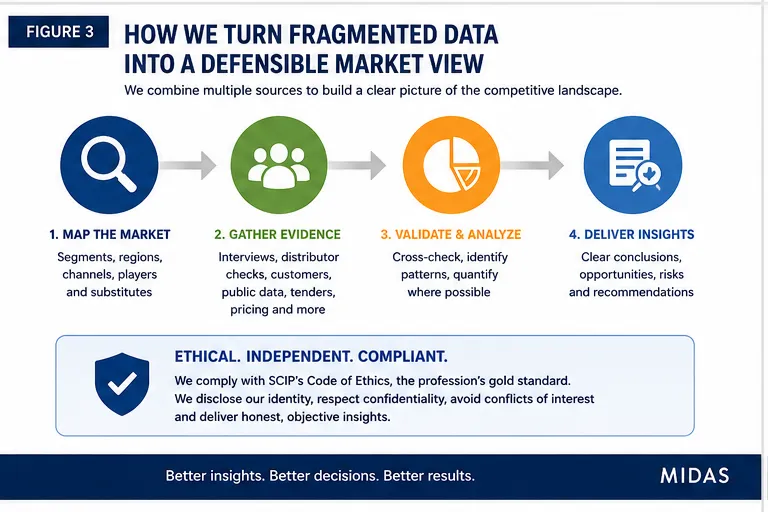
Figure 3. Reliable market intelligence is built by testing whether independent sources converge around the same explanation, not by searching for one supposedly perfect number.
Ethical Intelligence Is Essential for Competitor Analysis in Colombia
We comply with SCIP’s Code of Ethics, the profession’s gold standard. We comply with applicable laws, accurately disclose relevant identity and organizational information before interviews, avoid conflicts of interest, provide honest recommendations, and promote ethical conduct throughout the assignment.
We do not seek trade secrets, request confidential documents, misrepresent who we are, induce contractual breaches, or facilitate improper exchanges of competitively sensitive information.
This discipline is particularly important when markets are concentrated, relationships are close, or informal activity makes boundaries less visible. Ethical research protects your reputation and produces evidence your leadership team can use with confidence.
You can review SCIP’s ethical intelligence guidance and Code of Ethics.
From Market Signals to Competitive Analysis and Response
Competitor analysis should help you understand the current market, but it should also prepare you for what may happen next.
Relevant signals in Colombia may include:
- Appointment or loss of a distributor.
- Expansion into a secondary city or region.
- Changes in institutional registrations, tenders, or approvals.
- New inventory, credit, or financing arrangements.
- Hiring in sales, regulatory, medical, technical, or channel roles.
- Changes in price or availability within one channel.
- New product bundles, formats, or lower-price alternatives.
- Partnerships with institutions, wholesalers, platforms, or service providers.
- Service problems, product shortages, or channel conflict.
No single signal proves a strategy. The value comes from connecting signals with competitor objectives, capabilities, access, and vulnerabilities.
For a deeper explanation of early-warning indicators and competitive-response choices, see Strategic Foresight and Competitive Response: Executive Insights.
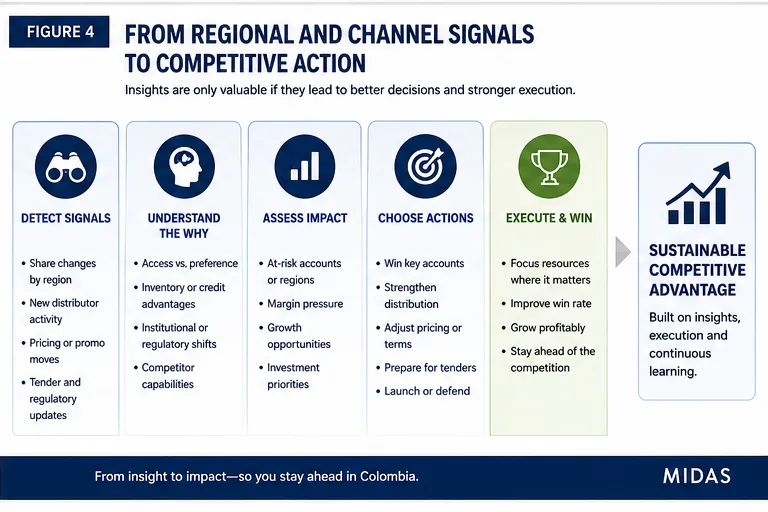
Figure 4. A market signal becomes actionable only after you understand the region, channel, customer type, and source of competitor advantage behind it.
How Competitor Analysis in Colombia Changes Your Decision
Regional prioritization
You can identify which cities and regions offer the strongest combination of demand, competitor vulnerability, channel access, and economic potential.
Channel and distributor decisions
You can determine where your current route to market limits growth, which distributors truly influence customers, and whether you should appoint, replace, support, or supplement a partner.
Pricing and commercial decisions
You can understand how prices and terms vary across formal, informal, private, and institutional channels and decide whether to adjust price, credit, bundles, service, or customer targeting.
Institutional and market-access decisions
You can identify which approvals, stakeholders, tender capabilities, and relationships are shaping access and where competitors remain exposed.
Customer and value-proposition decisions
You can distinguish genuine preference from constrained choice and build a response around the barrier that actually prevents customers from switching.
Competitive-response decisions
You can decide where to enter, defend, differentiate, partner, prepare, or monitor while anticipating how competitors and channels may react.
Case Spotlight: Preparing for Biosimilar Competition in Colombia
The decision
A pharmaceutical company needed to prepare for biosimilar competition as patents protecting major biologics approached expiration. The threat was regional, but the response in Colombia depended on local regulatory, institutional, payer, physician, pricing, and access conditions.
How we approached it
We combined secondary research with interviews involving knowledgeable regulatory, healthcare, and market participants. We assessed likely approval paths, timing, institutional purchasing, pricing and reimbursement dynamics, stakeholder influence, commercialization options, and potential local partners.
We also compared the Colombia evidence with other Latin American markets so the client could separate common regional threats from the actions that needed local adaptation.
How the competitor analysis findings supported action
The analysis helped the company refine its Colombia-specific market-access, stakeholder-engagement, pricing, and competitive-response priorities. Management could focus on the channels and institutional conditions most likely to shape biosimilar adoption rather than applying one uniform regional defense.
For the complete multi-country case, visit Competitor Analysis in Latin America.
“We’ve done competitor analysis before, but never have I been so clear on how and why competitors act the way they do.”
— Regional Leader, Pharmaceutical Company
When You Need Competitor Analysis in Colombia
- Entering Colombia or prioritizing regions and cities.
- Trying to reconcile conflicting market-size or share estimates.
- Assessing formal and informal competition.
- Selecting, replacing, or evaluating distributors and partners.
- Reviewing public, institutional, and private market access.
- Explaining why sales differ by region or channel.
- Responding to price pressure, parallel products, or availability gaps.
- Launching or repositioning a product.
- Protecting strategic institutions, accounts, or customer groups.
- Anticipating how competitors may respond to your next move.
When your decision covers several countries, the Colombia analysis should fit into a consistent regional framework. See our Latin America competitor analysis hub.
Why Midas for Competitor Analysis in Colombia?
We look below national averages
We analyze competitors by city, region, customer type, channel, institution, application, and source of advantage.
We distinguish preference from access
We investigate whether competitors are winning through superior value or through distribution, availability, credit, institutional relationships, and regulatory access.
We triangulate fragmented information
We compare multiple independent sources, test definitions and economic logic, and clearly communicate confidence ranges and remaining uncertainty.
We combine local depth with regional perspective
Colombia-specific evidence is central, but regional comparison can reveal whether a move is local or part of a broader Latin American strategy.
We use primary research where public data is insufficient
We complement secondary research with carefully designed interviews involving customers, channels, specialists, and other knowledgeable market participants.
We comply with SCIP’s Code of Ethics
We comply with SCIP’s Code of Ethics, the profession’s gold standard. Our methods are legal, transparent, discreet, and designed to protect your company, our sources, and the integrity of the engagement.
We bring direct experience in competitor analysis in Colombia
The Midas team has led dozens of competitive intelligence and competitor analysis projects in Colombia across pharmaceutical, healthcare, automotive, consumer, industrial, technology, and other sectors.
If you need to turn these market signals into a clearer competitive strategy, our competitor analysis consulting helps you identify the capabilities, relationships, economics, and vulnerabilities behind competitor performance, and translate them into practical strategic options.
“They are responsive, professional, detail-oriented, and client-focused. I love that Midas prioritizes ‘co-success with the client’ and works hard to meet our needs and solve our problems.”
— Executive Chair
Frequently Asked Questions
Can you estimate informal-market activity with your competitor analysis in Colombia?
We can develop evidence-based ranges and assess strategic relevance using interviews, channel checks, price differences, availability, trade patterns, customer behavior, and other lawful sources. We avoid false precision and clearly state assumptions and confidence levels.
Can you compare competitors by city or region?
Yes. We can organize the analysis around the cities, regions, industrial clusters, customer groups, or service territories that match your decision.
Can you assess public and private markets separately with your competitor analysis in Colombia?
Yes. We can compare stakeholders, purchasing processes, prices, access barriers, tenders, approvals, channel structures, and competitor positions across public, institutional, and private demand.
Can you evaluate distributors?
Yes. We can examine geographic coverage, customer access, inventory, credit, technical capabilities, competing brands, regulatory knowledge, commitment, and execution quality.
How do you reconcile conflicting market estimates in your competitor analysis in Colombia?
We test whether sources use the same market definition, geography, time period, products, channels, and units. We triangulate independent evidence and use ranges when the market does not support an exact figure.
Can you compare formal and informal prices?
When ethically and reliably obtainable, we can compare effective prices, terms, availability, quality, service, risk, and channel economics. The purpose is to understand customer alternatives, not to legitimize unlawful activity.
How do you protect confidentiality and comply with ethical standards in your competitor analysis in Colombia?
We comply with applicable laws and SCIP’s Code of Ethics. We disclose relevant identity before interviews, do not misrepresent ourselves, and never seek trade secrets or confidential documents.
Can you help us prepare a competitive response?
Yes. We can translate findings into regional, channel, pricing, institutional, account, portfolio, and market-access options. Strategic foresight or a business wargame can be added when reactions and countermoves are central.
How long does a competitor analysis in Colombia take?
The timing depends on the number of competitors, regions, channels, interviews, and questions involved. We scope the work around your decision and can share preliminary findings in phases.
About the Author
Adrian Alvarez, PhD is Managing Partner at Midas Consulting, Wharton Alumnus, MBA Professor at Universidad Argentina de la Empresa (UADE), and Competitive Intelligence Fellow. He specializes in competitive strategy, competitor analysis, strategic intelligence, business wargaming, market entry, and decision-making under uncertainty in Colombia and Latin America.
He has led dozens of competitive intelligence and competitor analysis projects in Colombia and more than 100 across Latin America. His work has been published in the United States, Spain, and Germany. You can access his library of strategic insights and published research here
View professional profile on LinkedIn
Selected Colombian Sources You May Need to Monitor
- DANE for official economic, demographic, and sector information.
- Banco de la República for monetary, financial, and economic information.
- Superintendencia de Industria y Comercio for competition, consumer, corporate, and intellectual-property information.
- Colombia Compra Eficiente for relevant public-procurement information.
- INVIMA for healthcare, pharmaceutical, food, medical-device, and regulated-product information.
- Sector regulators, trade and customs data, company disclosures, industry associations, regional chambers, distributor information, and primary market interviews as appropriate.
Official sources are essential, but they rarely explain channel influence, informal competition, customer relationships, or competitor intent on their own. The value comes from connecting formal evidence with local market behavior.
Understand Who Is Winning—and Why
You may be facing conflicting market estimates, uneven regional performance, an underperforming distributor, informal price pressure, institutional barriers, or a competitor whose apparent national strength is difficult to explain.
Before you react, you need to understand where the competitor is truly strong, whether customers prefer it or simply have better access to it, which channels and relationships create that position, and where the system remains vulnerable.
In an initial conversation, we will discuss your decision, the competitors, regions, channels, and customer groups involved, what your team already knows, and which uncertainties could materially change the action. We can then propose a focused Colombia research and analysis plan designed around your decision—not a generic country report.