


Benchmarking is often treated as a simple comparison exercise. At Midas Consulting, we see it differently: benchmarking is a structured learning process that helps companies understand performance gaps, identify better practices, and translate external insight into practical improvement actions.
The real value of benchmarking is not copying what other companies do. The real value is understanding why certain companies perform better, which practices explain the gap, and how those practices can be adapted to your organization’s strategy, capabilities, culture, and market context.
This page focuses on the practical question: how to run benchmarking in a way that improves competitive position. It complements our broader article on benchmarking that delivers real competitive advantage, which explains why benchmarking should go beyond comparison and support strategic advantage. Here, the focus is narrower and more operational: what to benchmark, who to compare against, how to collect information ethically, how to interpret gaps, and how to convert findings into action.
This distinction matters because many benchmarking projects fail in one of two ways. Some remain too descriptive: they compare companies but do not explain what should change. Others become too imitative: they copy visible practices without understanding whether those practices fit the organization’s context. Strong benchmarking avoids both problems.
For that reason, we often combine benchmarking with market analysis, competitor analysis, value proposition design, win-loss analysis, strategy workshops, business wargaming, and strategic foresight.
In this article, we explain what benchmarking is, when it is the right tool, which types of benchmarking are most useful, how to run a strong benchmarking process, where its limitations are, and how to turn benchmarking findings into better decisions and measurable improvement.
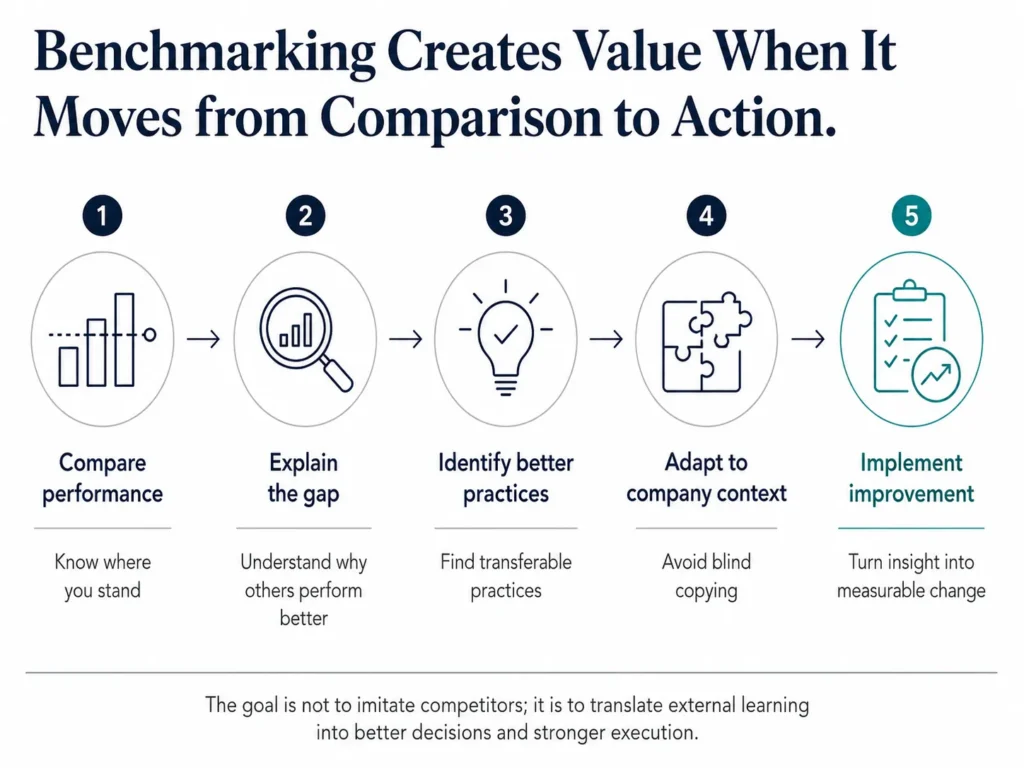
Figure 1: Benchmarking should not end with comparison; it should produce decisions, owners, and measurable improvement.
When Benchmarking Is the Right Tool
Benchmarking is most useful when your company needs to understand how its performance, practices, capabilities, or strategic choices compare with relevant reference points. It is especially valuable when leadership teams need to:
- Identify performance gaps in processes, costs, service levels, innovation, sales productivity, customer experience, or operational efficiency.
- Understand how competitors or reference companies achieve superior results.
- Set more realistic and evidence-based improvement targets.
- Learn from companies in other industries that have solved similar problems.
- Prioritize improvement initiatives based on impact, feasibility, and strategic relevance.
- Challenge internal assumptions about what is possible or acceptable performance.
- Support transformation, operational improvement, commercial effectiveness, innovation, or strategic repositioning.
The key point is that benchmarking should not begin with the question “Who should we copy?” It should begin with a more strategic question: What do we need to improve, and what can we learn from organizations that perform better?
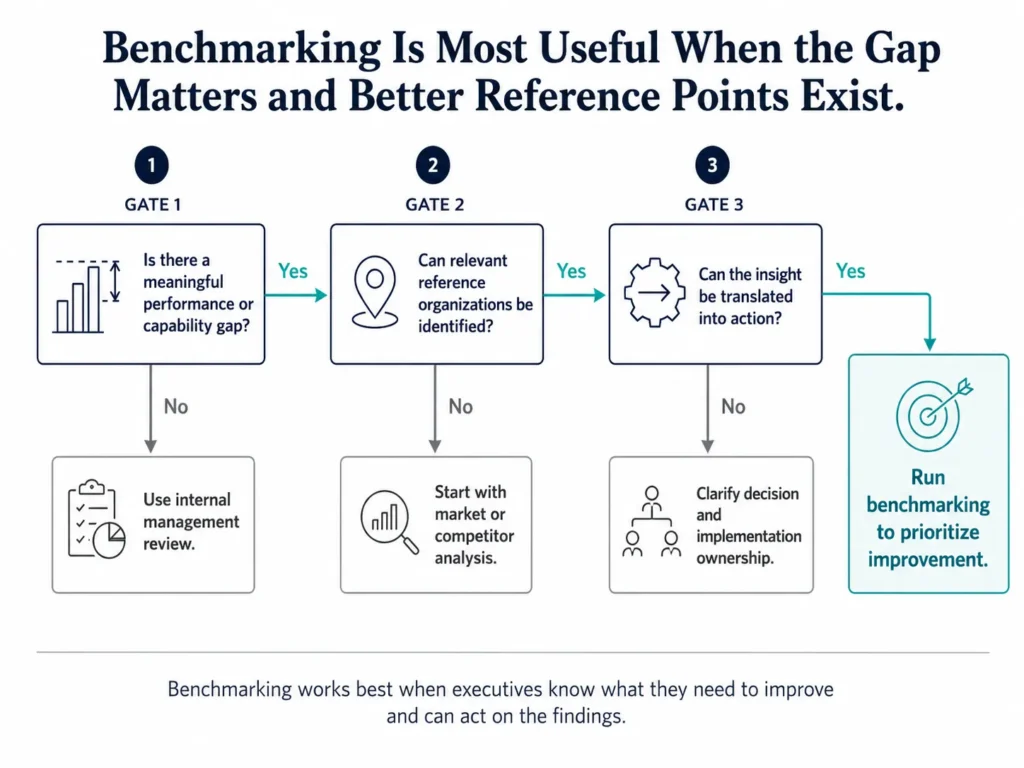
Figure 2: Benchmarking should begin with an improvement question, not with a list of companies to copy.
What Is Benchmarking?
Benchmarking is the structured process of comparing a company’s performance, practices, processes, capabilities, or strategic choices against relevant reference organizations in order to identify improvement opportunities.
At Midas Consulting, we define benchmarking as:
A decision-oriented learning process that helps companies understand performance gaps, identify better practices, and adapt those practices to improve competitive position.
This definition is important because benchmarking is not the same as copying. Copying focuses on imitation. Benchmarking focuses on understanding. A good benchmarking project asks: Why does another company perform better? Which practice, capability, process, incentive, resource, system, or decision explains the difference? Can we adapt that lesson to our own context?
A strong benchmarking analysis typically examines:
- Performance indicators: What results are being compared, such as cost, speed, productivity, quality, customer satisfaction, innovation output, sales effectiveness, or profitability.
- Practices and processes: How leading companies operate, organize work, make decisions, serve customers, or manage resources.
- Capabilities: What skills, systems, assets, relationships, or organizational routines enable stronger performance.
- Context: Whether the benchmarked practice works because of industry structure, company scale, culture, regulation, geography, technology, or customer behavior.
- Adaptation requirements: What would need to change before a practice could work in your organization.
- Implementation implications: Which actions, investments, owners, and milestones are needed to convert benchmarking insight into improvement.
The result should not be a list of interesting practices. The result should be a focused set of improvement priorities that are relevant, feasible, and connected to strategic objectives.
Three Executive Benefits of Benchmarking
1. Set better improvement targets
Benchmarking helps leadership teams set targets based on evidence rather than internal habit, negotiation, or aspiration. By comparing performance with relevant reference organizations, executives can see what is possible and where the company may be underperforming.
This does not mean every external target should be copied. A strong benchmarking process distinguishes between aspirational goals, realistic near-term targets, and long-term capability-building opportunities.
2. Reveal performance gaps and blind spots
Companies often normalize their own way of working. Processes, service levels, costs, cycle times, or customer experiences may seem acceptable internally because they have become familiar.
Benchmarking introduces an external reference point. It helps teams identify gaps they may not see from inside the organization and understand whether those gaps come from process design, capabilities, systems, incentives, organizational structure, or strategic choices.
3. Accelerate improvement without reinventing the wheel
Benchmarking can reduce the time and cost of improvement by learning from organizations that have already addressed similar challenges. This is especially useful when the company needs to improve quickly but does not want to rely only on trial and error.
The objective is not to copy blindly. The objective is to identify proven practices, understand why they work, and adapt them intelligently to your company’s context.
What Are the Main Types of Benchmarking?
Different benchmarking questions require different comparison sets. Choosing the right type of benchmarking is critical because the wrong comparison can produce misleading conclusions.
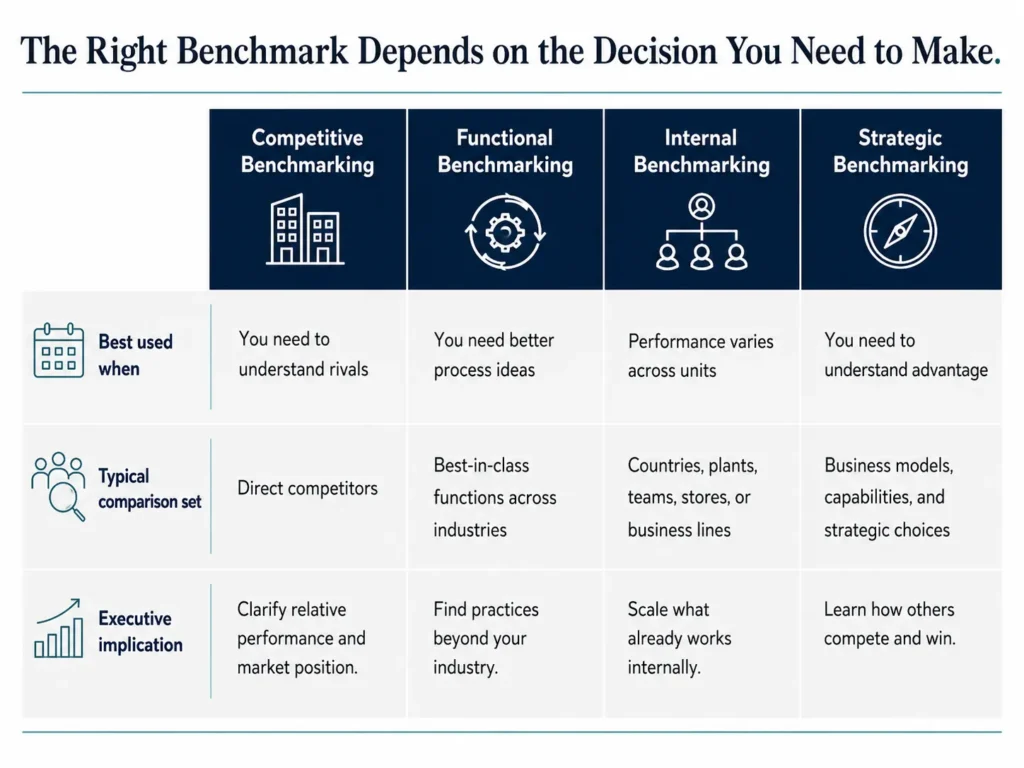
Figure 3: Choosing the wrong benchmark can lead to misleading conclusions; the comparison set must match the decision.
1. Competitive benchmarking
Competitive benchmarking compares your company with direct competitors or companies competing in the same market. It is useful when the leadership team needs to understand relative performance, commercial practices, customer experience, service levels, innovation, pricing, distribution, or go-to-market execution.
This type of benchmarking is powerful, but it requires care. Competitor information must be collected legally and ethically, using credible sources and avoiding confidential or improperly obtained information.
2. Functional or generic benchmarking
Functional benchmarking compares a specific process, function, or capability with organizations that may operate in different industries but excel in the area being studied.
For example, a manufacturing company may learn from a logistics leader, a healthcare company may learn from hospitality customer experience, or a B2B company may learn from technology firms’ onboarding practices. This type of benchmarking can generate more innovative ideas because it looks beyond direct competitors.
3. Internal benchmarking
Internal benchmarking compares units, countries, teams, plants, stores, regions, or business lines within the same organization. It is useful when a company wants to identify internal best practices and scale them across the organization.
This approach is often easier to execute because data access is better. However, it may be less innovative if the best internal practice is still below external standards.
4. Strategic benchmarking
Strategic benchmarking compares business models, strategic choices, capabilities, or competitive positioning. It is useful when leadership teams want to understand how other companies create advantage, allocate resources, design operating models, or respond to market change.
This type of benchmarking connects more directly with strategy because it focuses not only on process improvement, but also on how companies compete and win.
The best benchmarking projects often combine several types. For example, a company may start with competitive benchmarking to understand direct rivals, use functional benchmarking to identify innovative practices, and use internal benchmarking to scale what already works inside the organization.
How to Run a Strong Benchmarking Process
A strong benchmarking process should be designed around the improvement decision the company needs to make. The process should not start with a list of companies to compare. It should start with the performance gap or strategic question.
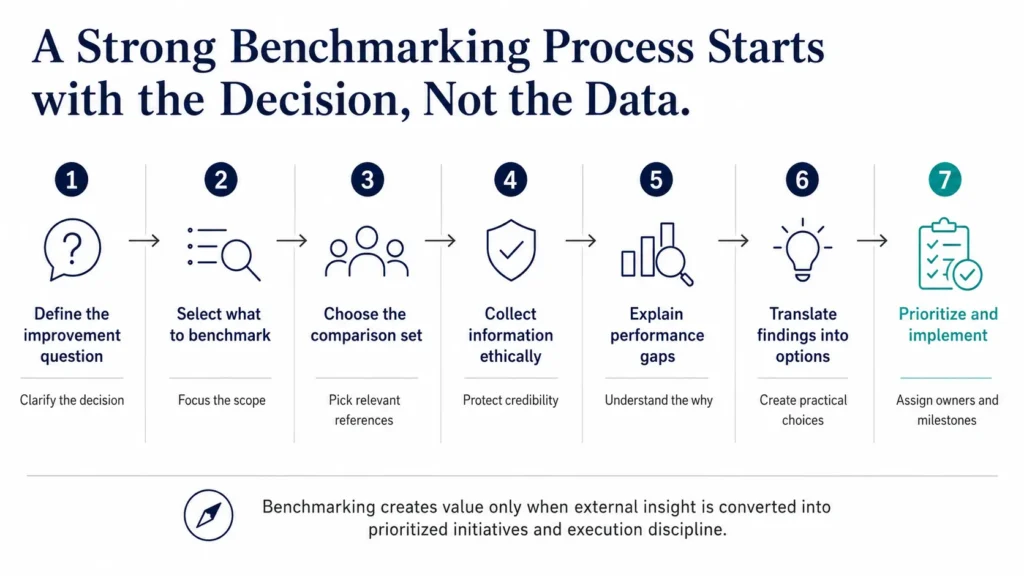
Figure 4: The process should be designed around the improvement decision the company needs to make.
Step 1. Define the improvement question
Clarify what the benchmarking project needs to improve or decide. Are you trying to reduce cost? Improve service? Accelerate innovation? Increase sales productivity? Strengthen customer experience? Redesign a process? Compare go-to-market models? Learn from leading competitors?
The improvement question determines what to benchmark, which organizations matter, which data is needed, and how findings will be used.
Step 2. Select what to benchmark
Define the specific performance indicators, practices, processes, capabilities, or strategic choices to compare. Avoid benchmarking everything. A focused scope produces more useful insights.
Examples include cost-to-serve, delivery time, customer onboarding, innovation cycle time, sales conversion, service levels, digital experience, channel coverage, pricing processes, operating model design, or product development practices.
Step 3. Choose the right comparison set
Select organizations that can provide useful learning. These may include direct competitors, regional leaders, global leaders, companies in adjacent sectors, internal business units, or organizations known for excellence in a specific capability.
The best comparison set is not always the most obvious one. Sometimes the strongest lessons come from companies outside the industry that have solved a similar operational or customer problem.
Step 4. Collect information legally and ethically
Benchmarking should rely on credible, legal, and ethical sources. These may include public information, expert interviews, customer interviews, distributor or supplier perspectives, industry reports, site visits where appropriate, digital analysis, financial information where available, and internal performance data.
Competitive benchmarking requires particular care because competitor information may be difficult to obtain. The goal is to understand practices and performance without violating confidentiality, encouraging improper disclosure, or using deceptive methods.
Step 5. Analyze gaps and explain why they exist
The most important question in benchmarking is not “Who performs better?” It is “Why do they perform better?”
Gap analysis should identify the drivers behind performance differences. These may include process design, technology, capabilities, incentives, decision rights, scale, culture, supplier relationships, customer mix, geographic footprint, leadership focus, or investment levels.
Step 6. Translate findings into improvement options
Benchmarking should lead to practical options, not just observations. The team should identify which practices can be adapted, which require capability building, which are not relevant, and which initiatives should be prioritized.
Useful outputs may include opportunity maps, gap analysis, improvement initiatives, implementation roadmaps, capability requirements, investment implications, and performance targets.
Step 7. Prioritize and implement
Not every benchmarked practice should be adopted. Prioritize improvement actions based on expected impact, feasibility, strategic relevance, investment required, time to implement, and organizational readiness.
Then assign owners, define milestones, track progress, and review whether the changes are improving performance. Benchmarking creates value only when the organization acts on the findings.
How to Avoid Benchmarking That Becomes Copying
One of the biggest risks in benchmarking is confusing learning with imitation. A practice that works well in one organization may fail in another if the context, capabilities, incentives, resources, culture, or customer expectations are different.
To avoid this problem, benchmarking should include an adaptation step. Before adopting a practice, leadership teams should ask:
- What problem does this practice solve? The same practice may not solve the same problem in your organization.
- Why does it work in the benchmarked company? The visible practice may depend on invisible capabilities, systems, culture, or scale.
- What would need to change for it to work here? Implementation may require new processes, skills, technology, incentives, or leadership commitment.
- What should we adapt rather than copy? The principle may be transferable even if the exact practice is not.
- What risks could appear during implementation? A practice can create unintended consequences if it conflicts with the company’s operating model.
The best benchmarking projects do not ask “How can we become like them?” They ask “What can we learn from them, and how should we adapt that learning to become stronger in our own context?”
A Practical Benchmarking Prioritization Matrix
Once benchmarking findings are developed, leadership teams need to decide which improvement opportunities deserve action. One useful way to prioritize is to compare two dimensions: performance impact and implementation feasibility.
- High impact / high feasibility: Prioritize. These opportunities should become near-term initiatives with owners and milestones.
- High impact / low feasibility: Stage or redesign. These may be strategically important, but they require capability building, investment, or further validation before implementation.
- Low impact / high feasibility: Consider selectively. These may be quick wins, but they should not distract from higher-impact initiatives.
- Low impact / low feasibility: Stop or postpone. These opportunities are unlikely to justify management attention or resources.
This matrix helps teams avoid two common benchmarking mistakes: pursuing easy improvements that do not matter much, and recommending ambitious changes without understanding what implementation would require.
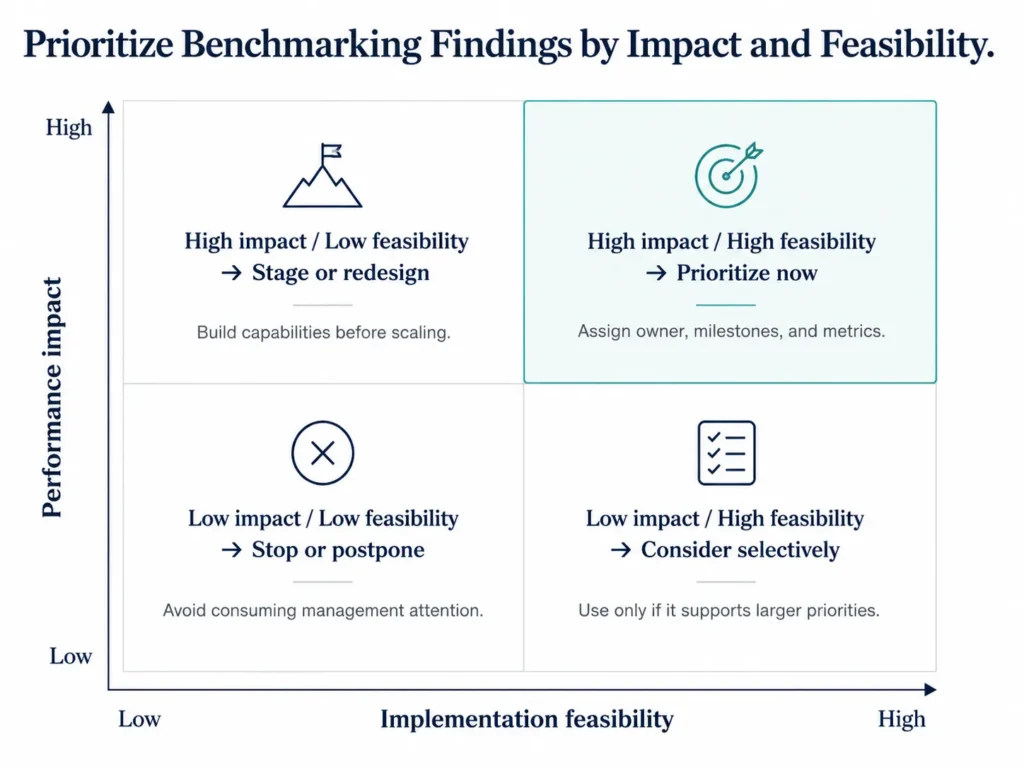
Figure 5: A disciplined prioritization matrix prevents teams from chasing easy improvements that do not materially change performance.
The goal is not to create a long list of best practices. The goal is to identify the few improvement actions that can materially strengthen performance and competitive position.
Practical Example: From Innovation Benchmarking to Process Redesign
A company asked Midas Consulting to understand why a regional competitor was launching new products faster and with stronger market acceptance. Internally, the initial assumption was that the competitor had a larger innovation budget.
The benchmarking analysis showed a different explanation. Interviews with distributors, retailers, suppliers, customers, and industry participants revealed that the competitor’s advantage came less from budget size and more from process design. The competitor had decentralized parts of the innovation process, empowered local teams to identify customer needs, and created faster feedback loops between market signals and product decisions.
The analysis did not lead to a recommendation to copy the competitor exactly. The client had a different organization, culture, and decision structure. Instead, the benchmarking translated the competitor’s practices into adaptable principles: faster customer feedback, clearer decision rights, more local market input, and shorter validation cycles.
The final recommendation was a redesigned innovation process with clearer roles, faster testing, better market input, and a more disciplined prioritization of product opportunities.
This is the value of benchmarking when it is done well. It helps companies understand why others perform better and adapt the relevant lessons into practical improvements.
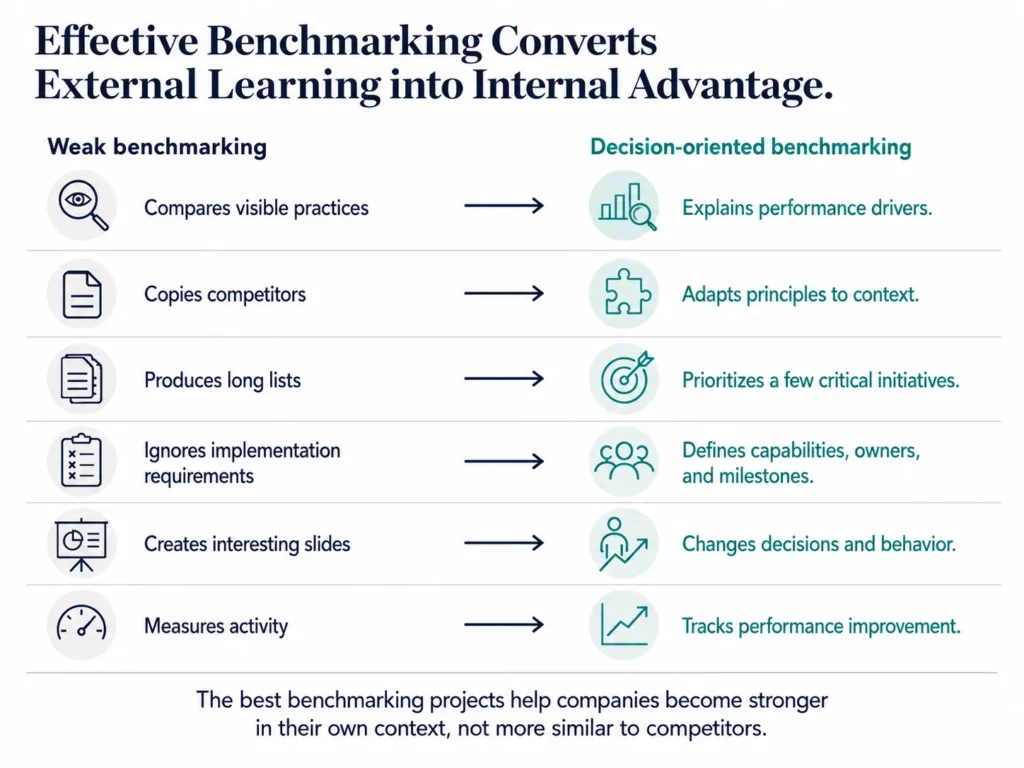
Figure 6: Benchmarking should help executives learn from better performers while protecting strategic fit and implementation realism.
Strengths and Limitations of Benchmarking
Benchmarking is powerful when it is focused, ethical, and connected to implementation. But like any strategic tool, it also has limitations.
Strengths
- It creates an external reference point. Benchmarking helps teams see whether current performance is strong, average, or weak compared with relevant organizations.
- It reveals improvement opportunities. Comparing practices and performance can uncover gaps that may not be visible from inside the organization.
- It supports better targets. Benchmarking helps set goals that are ambitious but grounded in evidence.
- It accelerates learning. Companies can learn from practices that have already been tested elsewhere instead of relying only on internal trial and error.
- It can stimulate innovation. Looking outside the industry can help teams discover new ways to solve familiar problems.
Limitations
- Information may be incomplete. Competitive benchmarking can be difficult because relevant data may not be public, comparable, or easy to verify.
- Context matters. What works in one company may not work in another because of differences in scale, culture, systems, customers, regulation, or capabilities.
- Benchmarking can lead to imitation. If teams copy visible practices without understanding why they work, benchmarking can produce weak or superficial change.
- Best practice can become average practice. Reaching competitor standards may not be enough if the goal is to create new advantage.
- Implementation still determines value. Benchmarking insight creates value only when it is translated into decisions, owners, resources, and measurable improvement.
For that reason, benchmarking should be treated as a structured learning and improvement process, not as a mechanical comparison exercise.
Conclusion: Benchmarking Should Lead to Better Improvement Decisions
Benchmarking is not valuable because it shows what other companies do. It is valuable because it helps leadership teams understand performance gaps, learn from better practices, and decide which improvements are worth pursuing.
When done well, benchmarking helps executives answer practical questions: Where are we underperforming? Who performs better and why? Which practices explain the gap? What can we adapt to our context? Which improvements should we prioritize? What capabilities do we need to build? How will we know whether performance is improving?
At Midas Consulting, we use benchmarking to help companies move from comparison to action. The goal is not to imitate competitors. The goal is to understand what drives superior performance and translate those lessons into practical, feasible, and strategically relevant improvements.
This page has focused on how to run benchmarking effectively. For a broader discussion of how benchmarking can create real competitive advantage, see our article on benchmarking that delivers real competitive advantage.
If your company needs to improve performance, compare practices, identify gaps, or learn from competitors and reference companies, benchmarking can help turn external insight into better decisions and stronger execution.
About the Author
By: Adrian Alvarez, PhD. Adrian Alvarez is Managing Partner at Midas Consulting, Wharton Alumnus, MBA Professor at Universidad Argentina de la Empresa (UADE), and Competitive Intelligence Fellow. He specializes in competitive strategy, benchmarking, competitor analysis, strategic intelligence, market analysis, business wargaming, and strategic decision-making under uncertainty in Latin America.
He has led benchmarking and competitive intelligence projects across Latin America, helping companies compare practices, identify performance gaps, understand competitor capabilities, prioritize improvement opportunities, and translate external insight into practical strategic action.
He also served as a Board Member of SCIP, the global association for strategic and competitive intelligence professionals, during the 2009–2011 period, and has trained executives and practitioners on competitive intelligence practices and ethics in Latin America.
Adrian is the author of numerous works published in the United States, Spain, and Germany, you can consult his body of strategic thought leadership and published research here.
View professional profile on LinkedIn
Selected External Sources
This article is informed by Midas Consulting’s experience conducting benchmarking, competitor analysis, market analysis, and strategic intelligence projects across Latin America, as well as by respected sources on benchmarking, performance improvement, and ethical competitive intelligence.
- ASQ: What Is Benchmarking?
- Harvard Business Review: How to Measure Yourself Agains the Best
- Harvard Business School Working Knowledge: When Benchmarks Don’t Work
- Strategic and Competitive Intelligence Professionals: Competitive & Market Intelligence Ethics
Related Midas Insights
For executives who want to go deeper, these Midas articles provide additional context on how benchmarking connects with competitive advantage, market analysis, competitor analysis, value proposition design, win-loss analysis, strategy workshops, and strategic foresight:
- Benchmarking That Delivers Real Competitive Advantage
- Market Analysis: The Key to Informed Strategic Decisions
- Competitor Analysis: Benefits and Step-by-Step Guide
- Value Proposition: Are You Losing Customers Because You Don’t Have a Strong Value Proposition?
- Win-Loss Analysis: Your Secret Weapon for Growth Beyond Sales
- Strategy Workshops: How to Align Teams and Turn Decisions into Action
- Strategic Foresight and Competitive Response: Executive Insights
Related Midas Services
Benchmarking is often part of a broader strategic improvement process. Depending on the question your company needs to answer, Midas Consulting can combine benchmarking with other strategy services:
- Benchmarking Consulting: When your company needs to compare practices, capabilities, performance, or strategic choices against competitors or reference organizations.
- Market Analysis: When benchmarking findings need to be understood in the context of market size, demand, customer needs, barriers, and opportunity attractiveness.
- Competitor Analysis: When the company needs to understand competitor strategies, positioning, capabilities, pricing, channels, and likely moves.
- Value Proposition Design: When benchmarking reveals that competitors communicate value more clearly, credibly, or effectively.
- Win-Loss Analysis: When the company needs buyer feedback to understand how customers compare its offer against competitors in real decisions.
- Strategy Workshops: When leadership teams need to convert benchmarking findings into priorities, decisions, ownership, and implementation roadmaps.
- Business Wargaming: When benchmarking insights need to be tested against possible competitor reactions and market countermoves.
- Strategy Consulting: When leadership teams need to make broader strategic choices about growth, competitive positioning, market priorities, resource allocation, and execution.
Together, these services help executive teams move from external comparison to prioritized improvement, stronger differentiation, and better execution.
If your company needs to compare performance, identify improvement opportunities, or learn from competitors and reference organizations, contact Midas Consulting to discuss how benchmarking can support your next strategic decision.
Some of Our Customers:






What Our Customers Say About Our Work:



How to move forward:
Schedule a quick call
In a brief call, we’ll ask for some basic information to create a custom proposal for you. Once it’s ready, we’ll send it your way for review. Once approved, we’ll get started on your project
Receive your benchmarking
During the project, you’ll receive at least two key deliverables:
First, we’ll share preliminary findings and adjust the project based on your actual needs
Then, we’ll deliver our final recommendations
Outperform your competitors
By following our recommendations, you’ll be able to leapfrog your competition!
We’re ready when you are! Let’s work together to achieve your goals!
If you liked this blog post, please share it in your networks:


