
Stay Ahead in Chile with Our Comprehensive Competitor Analysis in Chile
In Chile, a competitor’s strength may depend less on broad national scale than on a small number of relationships, accounts, channels, and capabilities that protect its position.
A company may appear dominant because it has a recognized brand or strong national share. But the real source of its advantage may be concentrated among a few strategic customers, powerful dealers, long-standing distributors, an installed base, technical service, financing, certifications, or trusted relationships with decision makers.
Those strengths are not always visible in public data. Nor do they affect every region, product category, or customer in the same way.
For you, the critical question is not simply, “Who leads the market?” It is, “What keeps customers from moving, where is that protection strongest, and what would have to change for you to win?”
At Midas Consulting, we help you answer those questions through ethical, decision-oriented competitor analysis. We combine structured research, local market insight, and strategic interpretation so you can make better decisions about pricing, positioning, channels, service, key accounts, market entry, and competitive response in Chile.
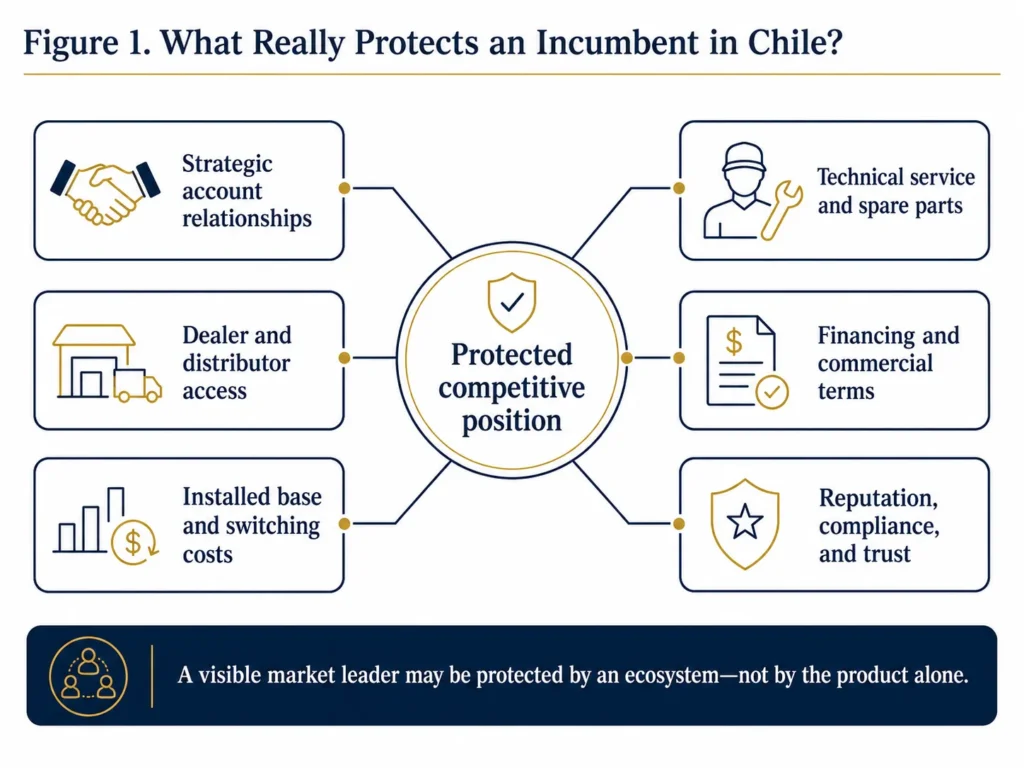
Figure 1. A strong incumbent position in Chile may be reinforced by relationships, channel access, installed base, service, financing, and trust—not only by product performance.
Why Competitor Strength in Chile Can Be Easy to Misread
Chile is often perceived as transparent, institutionally stable, and commercially accessible. Yet those qualities do not mean that the information required for a strategic decision is readily available.
In concentrated sectors, a relatively small number of companies, customers, dealers, distributors, institutions, or tenders can shape the market. Public information may show who participates, but it may not explain why one competitor consistently wins, how offers are negotiated, or which relationships make an account difficult to displace.
National market share may hide account concentration
A competitor can appear broadly strong while depending heavily on a small number of large accounts, mining operations, industrial customers, institutions, retailers, distributors, or public contracts.
That concentration can create strength and vulnerability at the same time. Losing one relationship may materially affect performance, while winning one strategic account may create a platform for broader growth.
Product comparisons may overlook the real source of value
Customers may evaluate uptime, maintenance, spare parts, delivery, financing, technical support, training, warranty, safety, compliance, and the supplier’s ability to solve problems, not only product specifications.
A competitor with a technically similar product may win because it reduces operating risk or because the customer trusts its service organization.
Dealer and distributor strength may be mistaken for brand preference
A competitor may reach customers through a dealer or distributor that controls relationships, inventory, financing, technical support, and local coverage. The brand may benefit from that access without owning it directly.
Your analysis should determine whether the competitive advantage belongs to the manufacturer, the partner, or the combination—and how vulnerable that relationship may be.
Visible prices may not reflect the full commercial offer
A quoted price can be influenced by configuration, accessories, warranty, trade-ins, financing, freight, maintenance, service commitments, spare-parts packages, delivery timing, and account-specific negotiation.
Comparing headline prices without normalizing the offer can lead you to respond to a difference that is not economically comparable.
Compliance affects how intelligence must be collected
Chile’s legal and institutional environment makes professional discipline essential. Useful competitor analysis must be conducted without seeking confidential information, misrepresenting identity, inducing improper disclosure, or creating antitrust risk.
Ethical rigor does not reduce the value of the analysis. It improves the quality and credibility of the evidence by focusing the research on lawful market behavior, informed perspectives, and transparent interpretation.
The Executive Questions You Need to Answer in Your Competitor Analysis in Chile
Your analysis should begin with the decision you need to make. In Chile, the most valuable questions often focus on what protects the competitor’s position and what could realistically cause customers or channels to change.
- Which competitors are genuinely strong by account, region, channel, application, and product category?
- How concentrated is each competitor’s position among a few customers, dealers, distributors, tenders, or industries?
- Who owns the end-customer relationship—the manufacturer, dealer, distributor, integrator, or service organization?
- What role do installed base, service, spare parts, training, warranties, and switching costs play?
- How do prices change by configuration, region, customer, financing package, and commercial relationship?
- Which accounts are loyal because of superior value, and which remain because switching feels risky or difficult?
- Where are competitors overdependent on one partner, region, customer, or product line?
- What would make a strategic account reconsider its current supplier?
- How could a new offer, stronger service model, financing option, or channel partnership change the competitive balance?
- How is a competitor likely to respond if you challenge an account, change price, appoint a new partner, or expand service coverage?
The objective is not to collect every visible competitor fact. It is to understand the commercial system well enough to identify where the position is protected, where it is exposed, and which action gives you a credible chance to win.
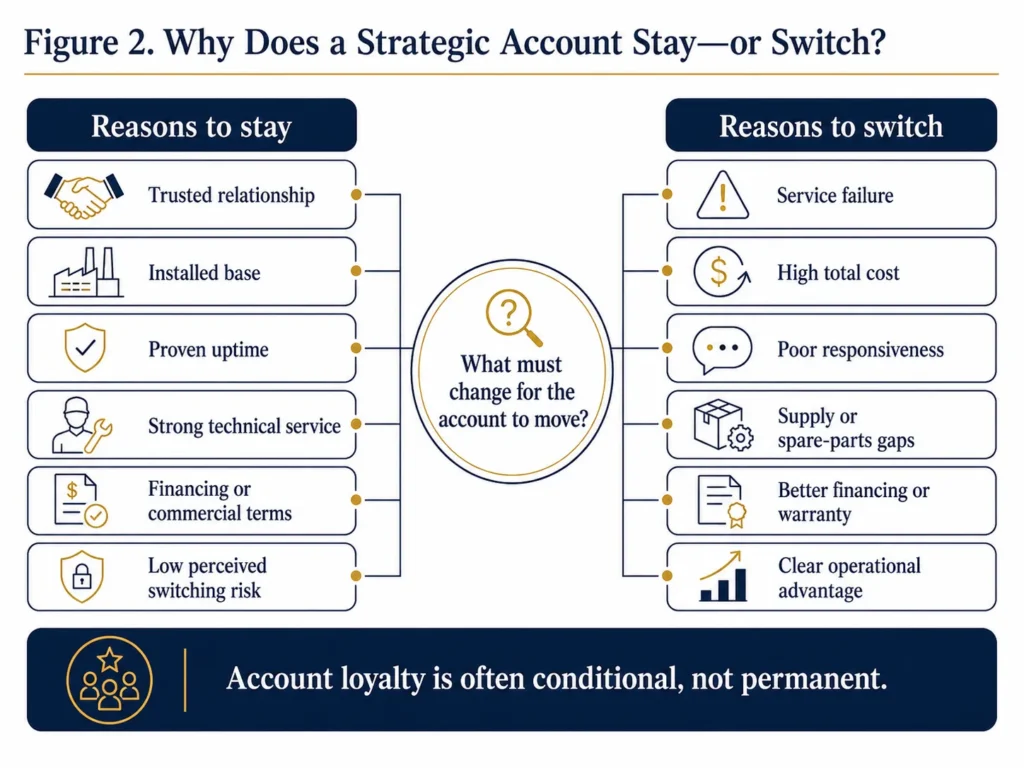
Figure 2. Strategic accounts usually move when the perceived operational and commercial value of switching becomes greater than the relationship and execution risk of changing suppliers.
What You Need to Understand Beyond the Product in Your Competitor Analysis in Chile
Key-account concentration and customer influence
In concentrated markets, a limited number of customers can shape demand, specifications, service expectations, tender conditions, and supplier economics.
We examine which accounts drive market volume, margin, reputation, or installed base; how each competitor’s position varies among those accounts; who influences the decision; and which unmet needs could make an account open to change.
Dealer, distributor, and channel power
A channel partner may control much more than physical distribution. It may manage customer relationships, technical support, local inventory, credit, installation, maintenance, spare parts, and market intelligence.
We assess where the partner has real customer access, which products receive priority, how incentives and responsibilities are structured, whether the partner is committed or balancing competing brands, and where channel performance creates an opening for you.
Configuration, pricing, and total commercial value
In complex products and services, two offers that appear similar may include different configurations, accessories, warranties, financing, delivery terms, maintenance, training, and service commitments.
A useful comparison normalizes the complete offer: product configuration, optional features, warranty, financing, freight, installation, maintenance, spare parts, service coverage, and negotiation patterns by account and region.
Installed base, service, and switching costs
An installed base can protect a competitor through technical familiarity, standardized processes, existing spare parts, trained personnel, service routines, data, and perceived operational safety.
However, installed base can also create vulnerability when customers experience recurring downtime, slow service, high maintenance cost, parts shortages, or inflexible contracts.
Regional differences within Chile
Chile’s geography can materially affect coverage, logistics, service response, inventory, account density, and partner economics. A competitor may be strong in Santiago and weaker in mining regions, industrial corridors, southern markets, or remote locations where service and availability become more important.
How Ethical Competitor Analysis Protects Your Decision in Chile
Competitive intelligence should strengthen your decision without creating legal, ethical, or reputational exposure.
We comply with SCIP’s Code of Ethics, the profession’s gold standard. This means we comply with applicable laws, disclose relevant identity and organizational information before interviews, avoid conflicts of interest, provide honest and realistic recommendations, and promote ethical conduct throughout the research process.
We do not seek trade secrets, request confidential documents, induce sources to violate obligations, or misrepresent who we are. We focus on lawful market evidence, observable behavior, professional interviews, public sources, customer and channel perspectives, and disciplined inference.
This is especially important in concentrated markets, where information may involve a small number of identifiable companies and relationships. We design the research so that the insight is useful to you while protecting the integrity of the assignment.
You can review SCIP’s ethical intelligence guidance and Code of Ethics.
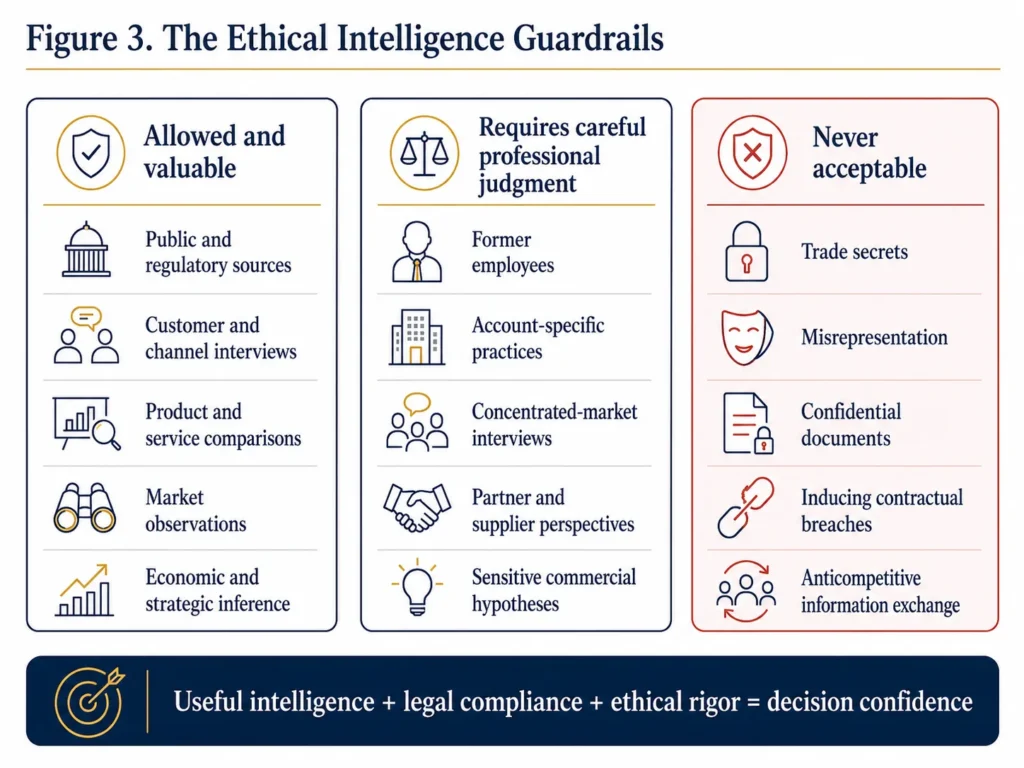
Figure 3. High-quality competitor analysis creates decision value through lawful evidence and disciplined interpretation—not through confidential or improperly obtained information.
How Competitor Signals Can Reveal What May Happen Next in Chile
Current market position is only part of the decision. Your leadership team also needs to understand what competitors may do next and which signals would indicate that a move is becoming more likely.
- Dealer or distributor appointments and terminations.
- New service facilities, spare-parts capacity, or regional coverage.
- Hiring in sales, technical, regulatory, financing, or leadership roles.
- Changes in product configurations, warranties, or commercial packages.
- New certifications, registrations, tenders, or supplier approvals.
- Pricing changes concentrated in specific accounts or regions.
- Financing partnerships or changes in credit conditions.
- Messages that target a new industry, customer group, or application.
- Account-level service problems or changes in customer satisfaction.
No individual signal proves intent. The value comes from connecting signals with competitor objectives, capabilities, constraints, and account priorities.
For a deeper explanation of early-warning signals, plausible moves, and management responses, see Strategic Foresight and Competitive Response: Executive Insights.
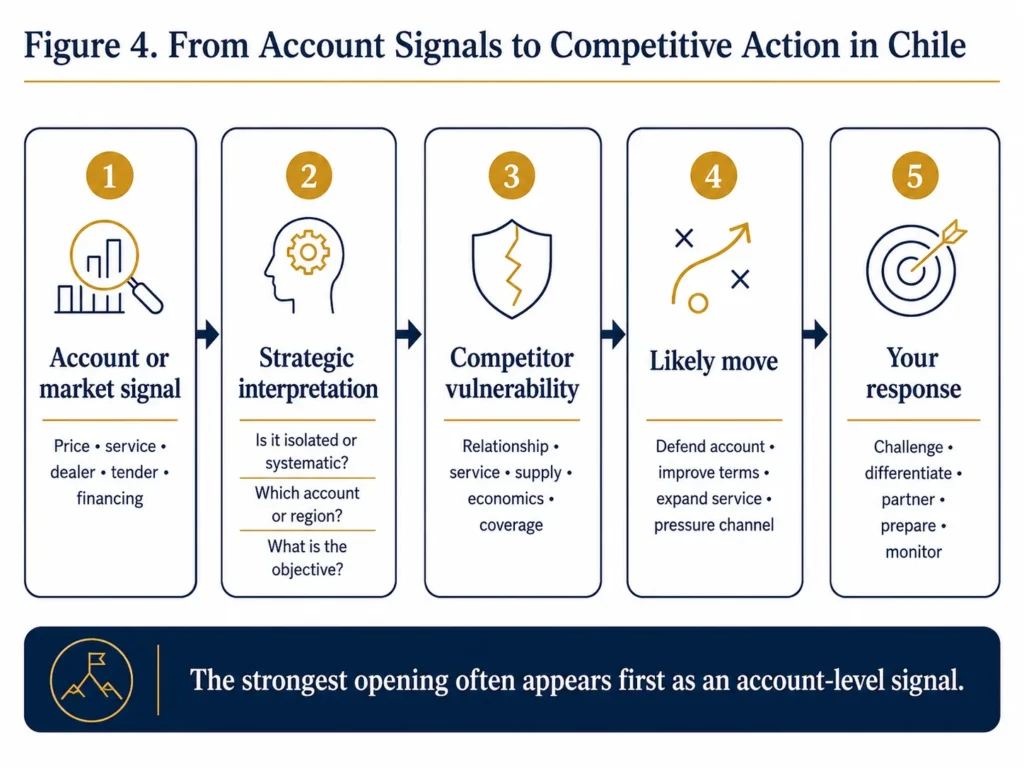
Figure 4. Account-level signals can reveal broader competitor vulnerabilities when they are interpreted in the context of relationships, service, channels, and economics.
How Midas Builds a Reliable Fact Base in Competitor Analysis in Chile
Public information is a necessary starting point, but it rarely explains account-level pricing, negotiation, service performance, dealer influence, customer perceptions, or competitor intent.
We triangulate evidence from company, product, financial, regulatory, tender, trade, and industry information; pricing and channel signals; interviews with customers, dealers, distributors, suppliers, and specialists; regional validation; your team’s knowledge; and cross-country evidence when useful.
We compare sources, test the commercial and operational logic, distinguish facts from hypotheses, and clearly communicate confidence levels. When the evidence does not support certainty, we do not manufacture it.
For the complete analytical process, visit our competitor analysis step-by-step guide.
How the Competitor Analysis Changes Your Decision in Chile
Key-account strategy
You can identify which accounts are genuinely locked in, which are dissatisfied, who influences the decision, and what value proposition could create a credible reason to change.
Pricing and commercial-package decisions
You can compare normalized offers, identify where competitors discount selectively, and determine whether you should change price, configuration, financing, warranty, or service rather than respond across the entire market.
Dealer and distributor decisions
You can assess partner strength, customer ownership, geographic coverage, technical capability, commitment, and vulnerability, and decide whether to appoint, replace, support, or challenge a channel partner.
Service and installed-base strategy
You can identify where service gaps, parts availability, uptime, maintenance cost, or slow response create an opening, and where you need stronger capability before attacking the incumbent.
Regional coverage decisions
You can determine whether your commercial and service model should differ between Santiago, mining regions, industrial areas, southern markets, and other priority locations.
Case Example: Uncovering Pricing and Distribution Strategies in Chile
The executive challenge
A multinational bulldozer manufacturer needed to understand a competitor’s product configurations, pricing, warranty terms, financing, and distribution strategy in Chile and Brazil.
Public information was not sufficient. Prices varied by configuration, region, negotiation, and commercial package. The client also needed to understand how dealerships influenced the offer and how customers evaluated value beyond the equipment itself.
How we approached the decision
We conducted in-depth interviews with dealerships, final customers, and knowledgeable market participants. The research examined regional price differences, configurations, warranties, financing, negotiation, bundling, dealer influence, customer perceptions, and differences between Chile and Brazil.
We normalized the offers so the client could compare like with like rather than treating every quoted price as equivalent.
How the findings changed the strategy
The analysis revealed significant differences in pricing, configurations, warranties, and distribution practices between countries and across regions.
The client used those insights to refine its distribution strategy in Chile, improve pricing structures, adjust warranty offerings, and tailor regional sales approaches.
“Just to reiterate, this is fantastic. I’m really excited to see such valuable insights and information! Thank you again!”
— Vice President
When You Need Competitor Analysis in Chile
- Trying to win or defend strategic accounts.
- Reviewing prices, configurations, warranties, financing, or service packages.
- Assessing why an incumbent remains difficult to displace.
- Selecting, replacing, or evaluating a dealer or distributor.
- Entering Chile or expanding into a new region or industry.
- Challenging an installed base or recurring service ecosystem.
- Preparing a product launch or repositioning an offer.
- Investigating regional differences in customer and channel behavior.
- Responding to a tender, new competitor, or commercial move.
When your decision covers several countries, the Chile analysis should fit into a consistent regional framework. See our Latin America competitor analysis hub.
Why Midas for Competitor Analysis in Chile?
We look behind visible market leadership
We investigate which accounts, relationships, channels, service capabilities, and switching barriers actually protect the competitor’s position.
We compare the complete commercial offer
We examine product configuration, price, financing, warranty, delivery, maintenance, spare parts, and service, not only headline prices.
We combine local insight with regional perspective
Chile-specific evidence is central, but regional comparison can reveal whether a move is local or part of a wider Latin American strategy.
We operate under clear ethical guardrails
We comply with SCIP’s Code of Ethics, the profession’s gold standard. Our work is legal, transparent, discreet, and designed to protect your company, our sources, and the integrity of the engagement.
We bring direct experience in competitor analysis in Chile
We have led dozens of competitive intelligence and competitor analysis assignments in Chile across pharmaceutical, automotive, industrial, consumer, household-device, and other markets.
Understanding an incumbent is only valuable if it changes your decisions. Our broader competitor analysis consulting helps you connect competitor intelligence with concrete choices about pricing, positioning, channels, key accounts, market entry, and competitive response.
“They are responsive, professional, detail-oriented, and client-focused. I love that Midas prioritizes ‘co-success with the client’ and works hard to meet our needs and solve our problems.”
— Executive Chair
Frequently Asked Questions
Can you analyze competitors at the key-account level in Chile?
Yes. When appropriate and ethically obtainable, we can assess competitor position, stakeholder influence, service, switching barriers, commercial practices, unmet needs, and likely response at priority accounts.
Can you compare dealer and distributor performance in your competitor analysis in Chile?
Yes. We can examine customer access, regional coverage, technical capability, inventory, credit, service, competing brands, commitment, incentives, and customer ownership.
How do you compare prices when product configurations differ?
We normalize the offer by examining specifications, options, warranties, freight, financing, service, maintenance, spare parts, delivery, and other inclusions.
Can you assess installed-base and switching barriers in your competitor analysis in Chile?
Yes. We examine technical familiarity, service routines, spare parts, training, contracts, approvals, data, operating risk, and customer experience.
What does compliance with SCIP’s Code of Ethics mean in practice?
It means complying with applicable laws, accurately disclosing relevant identity and organizational information before interviews, avoiding conflicts of interest, providing honest recommendations, and promoting ethical conduct throughout the assignment.
How do you validate information in your competitor analysis in Chile when only a few market participants know the answer?
We triangulate independent sources, compare stakeholder perspectives, test the commercial and operational logic, and clearly distinguish verified evidence from informed hypotheses.
Can you help us prepare a response to an incumbent?
Yes. We can translate the findings into account, pricing, channel, service, financing, warranty, portfolio, and regional options.
How long does a competitor analysis in Chile take?
The timing depends on the number of competitors, accounts, regions, interviews, channels, and strategic questions involved.
Will our identity remain confidential?
We design the research to protect your interests and conduct the assignment discreetly. We never use deception or seek confidential competitor information.
About the Author
Adrian Alvarez, PhD is Managing Partner at Midas Consulting, Wharton Alumnus, MBA Professor at Universidad Argentina de la Empresa (UADE), and Competitive Intelligence Fellow. He specializes in competitive strategy, competitor analysis, strategic intelligence, acquisitions, business wargaming, market entry, and decision-makinHe specializes in competitive strategy, competitor analysis, strategic intelligence, business wargaming, market entry, and decision-making under uncertainty in Chile and Latin America.
He has led dozens of competitive intelligence and competitor analysis projects in Chile and more than 100 across Latin America. His work has been published in the United States, Spain, and Germany. You can access his library of strategic insights and published research here
View professional profile on LinkedIn
Selected Chilean Sources You May Need to Monitor
- Instituto Nacional de Estadísticas
- Banco Central de Chile
- Fiscalía Nacional Económica
- Mercado Público
- SERNAC
Official sources are essential, but they rarely explain competitor intent, relationship strength, negotiation practices, or service performance on their own. The value comes from connecting formal evidence with customer, channel, and operational insight.
Understand What Keeps the Customer, and What Could Make the Customer Move
You may be facing a protected incumbent, a strategic-account loss, a dealer or distributor question, a pricing gap, a service disadvantage, a product launch, or a competitor whose position appears stronger than its product alone would justify.
Before you react, you need to understand what actually protects that position, which elements are vulnerable, what the customer values, how the channel influences the decision, and how the competitor is likely to respond.
In an initial conversation, we will discuss your decision, the competitors and accounts involved, what your team already knows, and which uncertainties could materially change the action.