
Unlock Market Potential with Strategic Competitor Analysis in Latin America
Your competitors may present one regional strategy to investors, but they rarely compete in exactly the same way across Latin America.
A multinational may defend margins in Brazil, pursue volume in Mexico, rely on distributors in Peru, protect strategic accounts in Chile, and respond to inflation or import constraints differently in Argentina. A local competitor that looks small in regional data may be exceptionally strong in one country because of its customer relationships, service network, regulatory knowledge, access to supply, or channel influence.
That is why a regional competitor analysis in Latin America cannot be built by combining six country reports and calculating an average. You need a consistent framework that allows you to compare markets, but you also need country-specific evidence to understand what is really driving competitor behavior.
At Midas Consulting, we help you connect those two levels. We investigate how competitors operate locally, compare their strategies and capabilities across countries, and translate the differences into decisions your regional and local teams can act on.
You gain a clearer answer to the questions that matter most: Where is a competitor genuinely strong? Which advantages are transferable across countries? Where is it vulnerable? What could it do next? And how should your strategy change from one market to another?
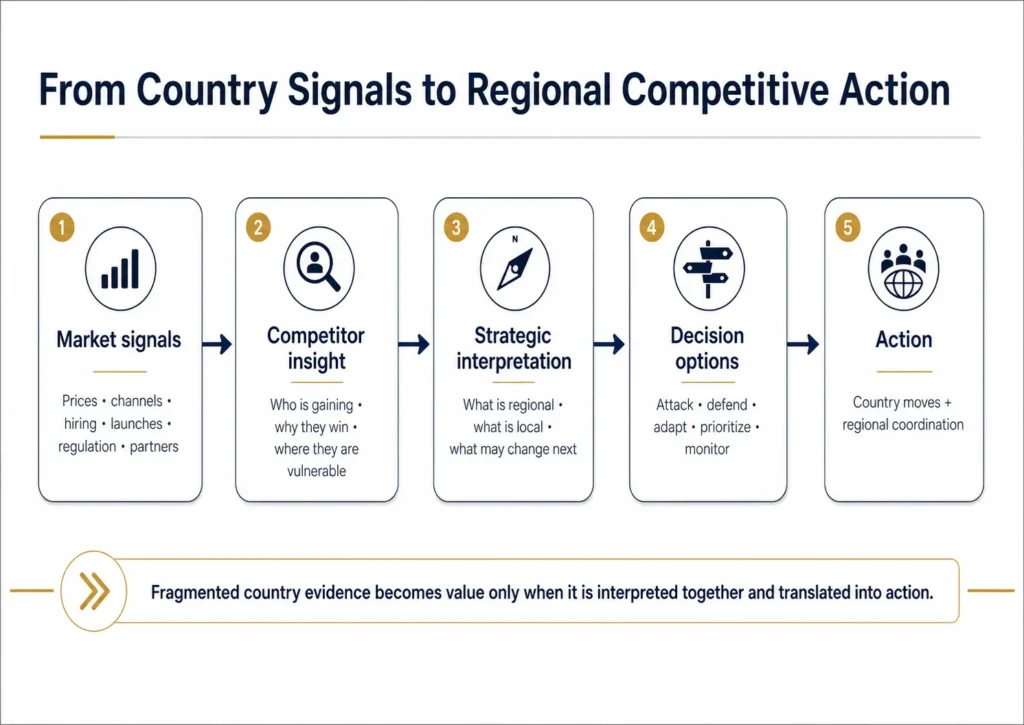
Figure 1. Regional competitor analysis in Latin America creates value when fragmented country signals are interpreted together and converted into strategic choices.
Why a Regional View Can Create Dangerous Blind Spots
A regional market-share estimate can tell you who appears to be large. It cannot tell you why that company wins, whether its position is defensible, or whether the same strengths apply in every country.
The same visible result can come from very different causes. A competitor’s low price may reflect a structural cost advantage, but it may also result from old inventory, exchange-rate exposure, local production, temporary discounting, a distributor absorbing margin, or an attempt to protect a strategic account. A broad distribution footprint may indicate strong demand, or it may hide weak sell-through and channel conflict.
If your leadership team treats Latin America as one market, you may:
- Overestimate a competitor because its strength is concentrated in only one or two countries.
- Underestimate a local challenger that is not visible in regional databases.
- Assume that a pricing, portfolio, or channel strategy can be transferred unchanged from one market to another.
- Misread distributor relationships as evidence of end-customer preference.
- Prepare one regional response when competitors have different incentives and capabilities by country.
- Allocate resources according to market size rather than the quality and defensibility of the opportunity.
A stronger regional analysis separates what is truly regional from what is local. It helps you identify common patterns without forcing artificial consistency onto markets that work differently.
The Questions a Regional Competitor Analysis in Latin America Should Answer
Your analysis should begin with the strategic decision—not with a long list of competitors or data fields.
Depending on your situation, you may need to understand:
- Which competitors deserve regional attention and which are important only in specific countries.
- Why the same competitor gains share in one market but struggles in another.
- Whether a competitor’s advantage comes from its brand, pricing, product, service, supply, relationships, regulatory access, or route to market.
- Which local capabilities could be replicated across the region and which depend on country-specific conditions.
- Where competitors are investing, changing partners, modifying portfolios, or targeting new customer groups.
- How a price change, product launch, acquisition, market entry, or distributor decision could trigger different responses by country.
- Which countries deserve immediate action, which require preparation, and which should be monitored.
The objective is not to know everything about every competitor. It is to understand the competitive system well enough to make a better regional decision.
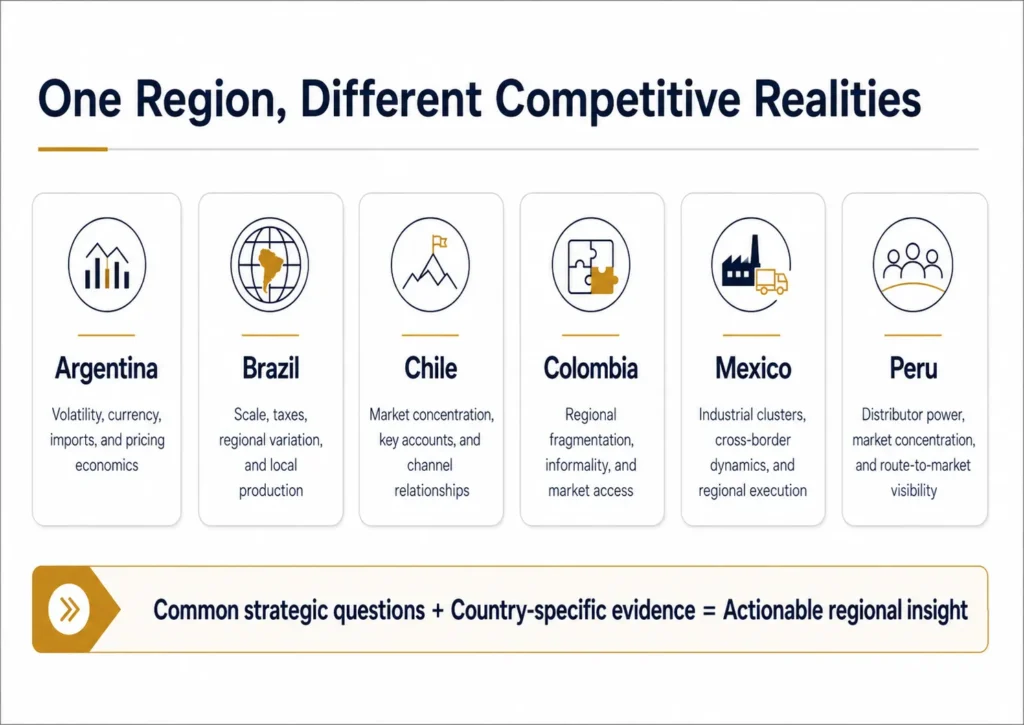
Figure 2. A common analytical framework must be adapted to the competitive reality of each Latin American market.
How Competitive Reality Changes from Country to Country in Competitor Analysis in Latin America
The issues below are not intended to describe every industry in each market. They highlight the types of questions that frequently need to be tested before regional executives compare countries or transfer a strategy from one market to another.
Argentina: Is the advantage structural, or a consequence of volatility?
In Argentina, apparent competitive strength can be affected by inflation, exchange rates, inventory timing, import access, payment conditions, and replacement costs. A competitor that appears to have superior pricing may be benefiting from stock purchased under different economic conditions. Another may protect availability through local production or privileged access to imports.
Your analysis should separate temporary advantages from capabilities that are likely to endure. It should also examine how competitors protect margin, manage working capital, adjust commercial terms, and decide which customers or products to prioritize when conditions change.
Brazil: Does national scale hide different competitive positions?
Brazil’s size can make national averages especially misleading. A competitor may have strong overall market share but uneven performance by state, customer segment, channel, application, or product line. Taxes, logistics, local production, service coverage, and regional relationships can materially alter the economics of competition.
Your analysis may need to distinguish between a competitor’s corporate strategy and its operational strength in the locations that matter to you. It should also examine whether acquisitions, manufacturing assets, distributors, or local capabilities allow a competitor to move faster or compete differently.
Chile: How much of the market is protected by concentration and relationships?
In concentrated sectors, a small number of customers, distributors, dealers, or incumbent suppliers can shape market access. Visible product and price comparisons may not explain the influence of installed base, technical service, account relationships, reputation, financing, or long-standing channel agreements.
Your analysis should identify what makes key accounts move—or remain loyal. It should also test whether competitor strength is broad or concentrated among specific customers, regions, product categories, or relationships.
Colombia: What remains hidden by fragmented and informal channels?
National data may not fully represent competition across Colombia’s cities, regions, customer types, and formal or informal channels. A company with modest reported sales may have strong regional access, while a recognized national player may be weaker outside its priority territories.
Your analysis should triangulate public information with customer, distributor, supplier, and expert perspectives. It should examine where competitors are actually present, which channels influence purchases, and whether regulatory or institutional access changes the competitive landscape.
Mexico: Is national presence translating into strength across industrial ecosystems?
Mexico combines a large domestic market with diverse regional economies, industrial clusters, cross-border supply chains, and competitors from several countries. A national footprint does not necessarily mean equal strength in the north, center, Bajío, or other priority regions.
Your analysis should compare how competitors serve specific industries, clusters, accounts, and channels. It may also need to assess how nearshoring, local manufacturing, US relationships, Asian supply, public procurement, or distributor networks influence competitive moves.
Peru: Is market performance being driven by demand, or by access?
In Peru, route-to-market structure can have a major influence on visible competitive performance. Distributor relationships, Lima concentration, provincial coverage, imports, major industrial accounts, and access to decision makers may determine which offers reach the customer and under what conditions.
Your analysis should separate underlying customer preference from the effects of distribution and access. It should also examine where competitors depend heavily on partners, where their coverage is limited, and whether a different route to market could create an opening.
What Should Be Standardized, and What Should Remain Local in Competitor Analysis in Latin America?
A well-designed regional project uses the same strategic questions across countries so that your leadership team can make meaningful comparisons. However, it does not force every local investigation into an identical template.
Standardize the decision framework
Across countries, you can consistently examine:
- Competitor objectives and strategic priorities.
- Target customers, segments, applications, and accounts.
- Positioning and customer value proposition.
- Products, services, innovation, and portfolio direction.
- Pricing logic, discounts, financing, and commercial conditions.
- Channels, partners, distribution, and market access.
- Capabilities, constraints, and sources of advantage.
- Visible moves, weak signals, and likely responses.
Adapt the evidence to local market conditions
The sources required to answer those questions may differ significantly. In one country, regulatory filings or public tenders may provide useful evidence. In another, the fact base may depend more heavily on interviews with customers, distributors, suppliers, former industry participants, specialists, or local market observers.
The relevant competitive set may also change. A multinational rival may matter throughout the region, while local manufacturers, importers, distributors, private labels, substitutes, or informal competitors may be decisive in only one market.
Compare implications, not just data points
A regional dashboard can create false precision when it reduces complex market behavior to a single score. Your comparison should preserve the explanation behind the number.
For example, two competitors may receive the same channel-strength rating while relying on completely different models. One may own the customer relationship directly. The other may depend on a powerful distributor. Those positions may look similar today but create very different vulnerabilities and strategic responses.
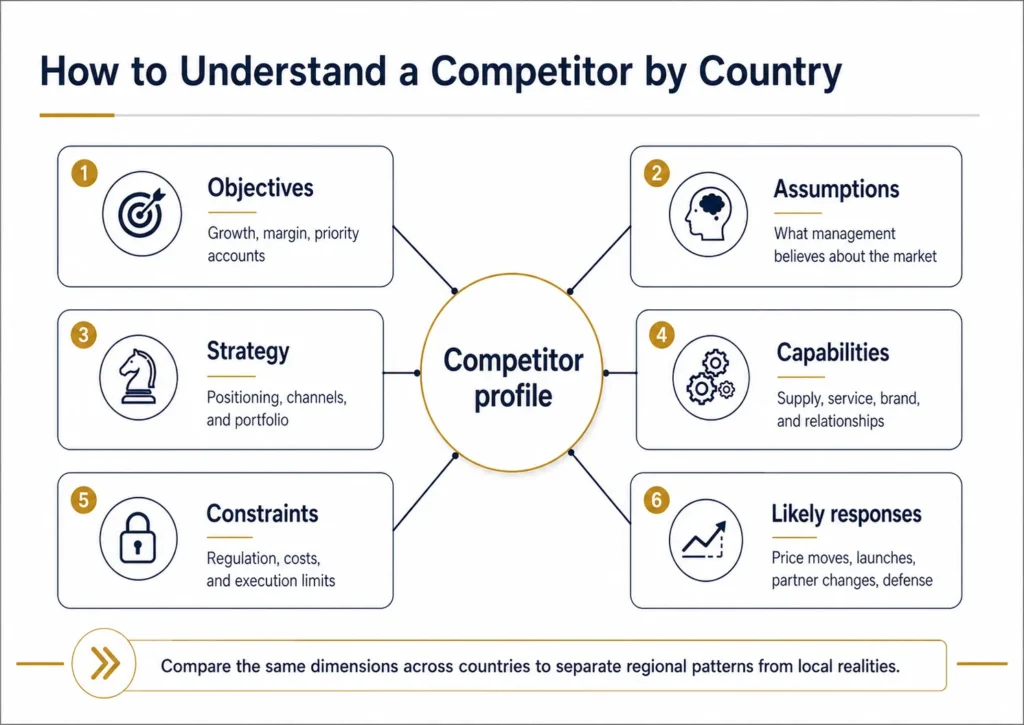
Figure 3. Regional comparison becomes useful when you understand not only what competitors do, but also how their objectives, assumptions, capabilities, and constraints change by country.
From Country Findings to Regional Strategic Choices in Competitor Analysis in Latin America
The most important part of a regional competitor analysis in Latin America is not the country reports. It is the synthesis.
Your leadership team needs to understand which findings should change regional priorities, where local teams require different responses, and which actions could create unintended consequences elsewhere.
A useful synthesis should help you decide:
- Where to attack, defend, invest, partner, or wait.
- Which competitor deserves the greatest regional attention.
- Which markets are attractive because competitors are vulnerable—not merely because demand is large.
- Which customer segments or accounts offer the most credible opening.
- Which capabilities should be built regionally and which require local adaptation.
- Whether one regional value proposition is sufficient or different messages are needed.
- How pricing, distributor, portfolio, and service decisions should vary by country.
- Which competitive signals should trigger management action.
This is also where competitor analysis connects with strategic foresight. Current evidence may indicate where a competitor is heading, but it cannot guarantee one future. Your team should identify plausible moves, define observable indicators, and prepare actions before the situation becomes urgent.
For a deeper explanation of early-warning signals, plausible competitor moves, and management responses, see Strategic Foresight and Competitive Response: Executive Insights.
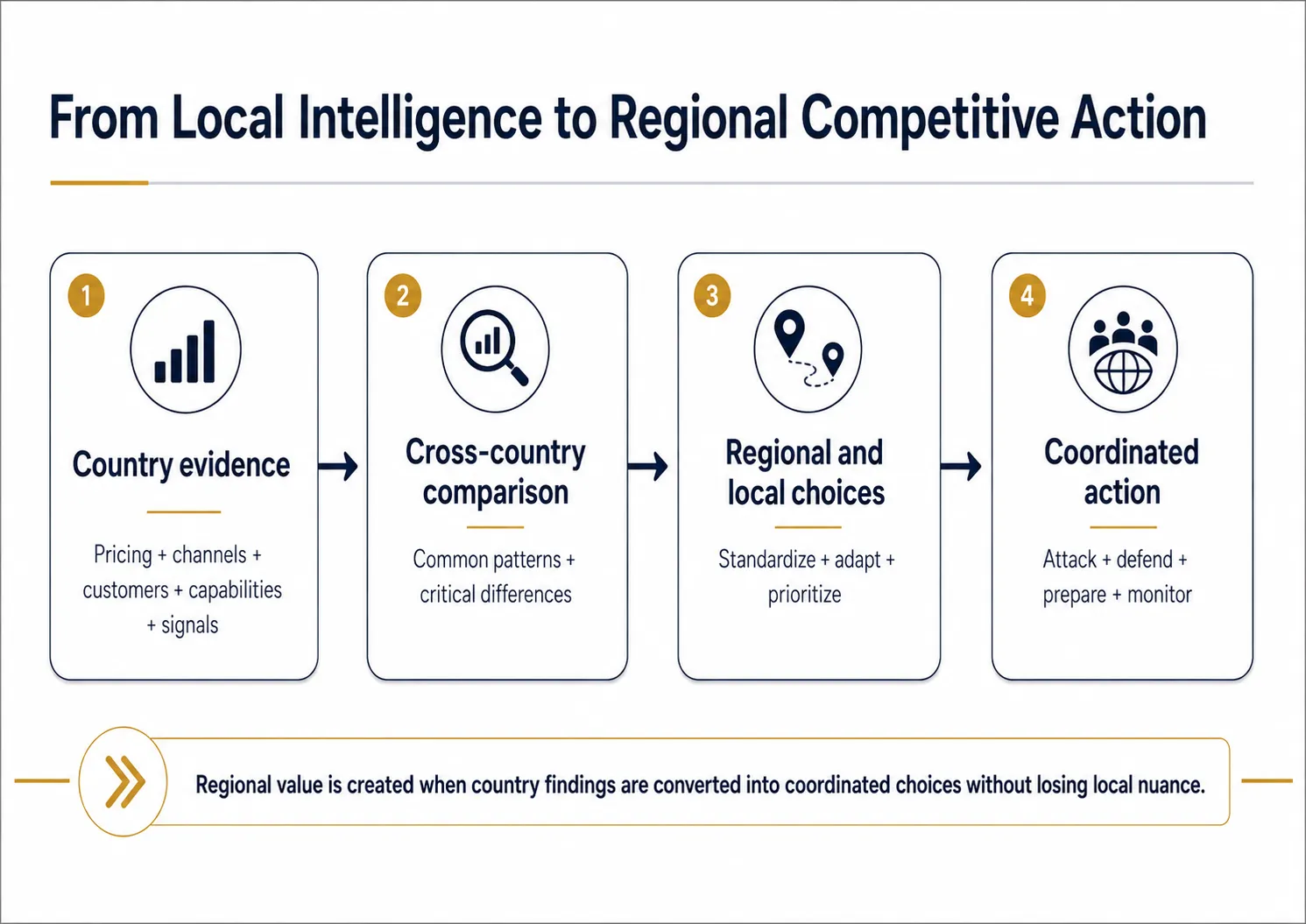
Figure 4. Regional value is created when country findings are converted into coordinated choices without losing local nuance.
When You Need a Regional Competitor Analysis in Latin America
A multi-country approach is particularly valuable when you are:
- Entering several Latin American markets or deciding which country to prioritize.
- Reviewing why regional performance differs despite a common strategy.
- Preparing a product launch, price change, or portfolio decision across countries.
- Selecting, replacing, or evaluating distributors and commercial partners.
- Responding to a multinational competitor’s regional initiative.
- Assessing a regional acquisition, partnership, or investment.
- Defending market share or strategic accounts from local and international challengers.
- Trying to distinguish local problems from regional strategic weaknesses.
- Building an early-warning system for competitive moves.
When your decision concerns only one country, a focused local analysis may be more efficient. When actions in one market may affect competitors, partners, or customers elsewhere, a regional design is usually more valuable.
How Midas Structures the Regional Work in Competitor Analysis in Latin America
We tailor the project to your decision, countries, industry, and existing knowledge. A typical regional engagement follows five broad stages:
- Define the executive decision. We clarify what you need to decide, which assumptions concern your team, and how competitor behavior could affect the outcome.
- Set the comparison framework. We identify the competitors, strategic questions, and common dimensions required for cross-country comparison.
- Build country-level evidence. We combine secondary research with primary market insight from relevant customers, distributors, suppliers, specialists, former industry participants, regulators, or other knowledgeable sources.
- Interpret differences and likely behavior. We distinguish facts from hypotheses, triangulate conflicting evidence, and assess how objectives, capabilities, incentives, and constraints vary by market.
- Convert findings into choices. We define regional priorities, country adaptations, likely competitive responses, early-warning indicators, and practical next steps.
We share preliminary findings during the project so your team can challenge assumptions, refine priorities, and direct additional research toward the issues that matter most.
Competitor analysis must also be ethical. We rely on legal, transparent, and professional research methods. We do not seek trade secrets, misrepresent our identity, or request confidential competitor information.
For the complete methodology, analytical dimensions, strengths, limitations, and practical examples, see our competitor analysis step-by-step guide.
For the full consulting offer, engagement process, and service benefits, visit our competitor analysis consulting service page.
Case Example: One Regional Threat, Different Country Responses
The executive challenge
A pharmaceutical company needed to prepare for biosimilar competition as three major biologics approached patent expiration. The potential threat covered Argentina, Brazil, Colombia, Cuba, Mexico, and Venezuela.
A single regional defense would have been inadequate. Approval pathways, reimbursement conditions, institutional purchasing, pricing, physician influence, commercialization models, and competitor readiness differed substantially by country.
How we approached the decision
We conducted country-level secondary research and direct interviews with knowledgeable regulatory and healthcare market participants. We assessed likely approval bottlenecks, pricing and reimbursement dynamics, partnership and distribution models, and the strategies potential competitors could use to enter each market.
We then compared the timing and severity of the threat across countries. This allowed the leadership team to distinguish common regional issues from the local conditions that required a different response.
How the findings changed the strategy
The resulting defense strategy adapted pricing, distribution, and physician engagement by country. The company could prioritize markets according to competitive risk, prepare responses before biosimilar entry, and avoid treating Latin America as one homogeneous battlefield.
The value did not come from producing more country reports. It came from showing where the threat was similar, where it was different, and how those differences should change management action.
“We’ve done competitor analysis before, but never have I been so clear on how and why competitors act the way they do.”
— Regional Leader, Pharmaceutical Company
Why Midas for Competitor Analysis in Latin America?
Regional perspective with country-level depth
We do not assume that findings from one Latin American country can be transferred automatically to another. We use a common strategic framework while adapting the evidence and interpretation to each local market.
Primary insight where public data is incomplete
In many Latin American industries, public information is fragmented, delayed, inconsistent, or insufficient for a strategic decision. We complement secondary research with carefully designed interviews and market validation.
Executive interpretation, not a data dump
Your team does not need more competitor facts without context. We connect evidence with strategic implications, trade-offs, possible responses, priorities, and action.
Experience across industries and strategic decisions
Midas team has led more than 100 competitive intelligence and competitor analysis projects across Latin America. These assignments have supported decisions involving market entry, pricing, product launches, distributors, acquisitions, value propositions, strategic accounts, growth, and competitive response.
Ethical and discreet research
We use professional intelligence practices designed to protect your reputation, our sources, and the integrity of the decision-making process. We comply with SCIP’s code of ethics, the profession’s gold standard.
“They are responsive, professional, detail-oriented, and client-focused. I love that Midas prioritizes ‘co-success with the client’ and works hard to meet our needs and solve our problems.”
— Executive Chair, FMCG Company
Frequently Asked Questions
Can you compare the same competitors across several Latin American countries?
Yes. We establish common analytical dimensions so you can compare competitors across markets, while adapting the research to local conditions. This helps you see which advantages are regional, which are country-specific, and where apparent similarities hide different competitive realities.
Do you analyze local competitors as well as multinationals?
Yes. The relevant competitive set may include multinational companies, regional groups, local manufacturers, importers, distributors, private labels, substitutes, digital platforms, or emerging players. We define the set according to your decision rather than company size alone.
Can you investigate pricing across countries in your competitor analysis in Latin America?
Yes, when pricing is relevant to the decision and reliable evidence can be obtained ethically. Depending on the market, we may examine list prices, discounts, bundles, payment terms, financing, distributor margins, service inclusions, tender prices, or customer-specific practices. We also interpret the economic conditions behind visible prices.
How do you work when reliable public information is limited?
We triangulate multiple sources. These may include public information, financial and regulatory data where available, customer interviews, distributor and supplier perspectives, expert interviews, product comparisons, market observation, digital signals, and your team’s internal knowledge. We clearly distinguish verified facts, informed assessments, and remaining uncertainties.
Do you provide separate recommendations for each country with your competitor analysis in Latin America?
Yes, when the evidence supports different actions. We also identify regional actions that should be coordinated across markets. The objective is not to force one answer or produce six disconnected strategies. It is to show what should be standardized, what should be adapted, and where each country fits within the regional priority.
Can competitor analysis in Latin America help us anticipate future moves?
It can improve your preparedness, but it cannot predict the future with certainty. We can identify plausible moves, competitor incentives and capabilities, observable signals, response scenarios, and management triggers. For decisions with several plausible competitive outcomes, we may combine the analysis with strategic foresight or a business wargame.
How long does a regional competitor analysis in Latin America take?
The timing depends on the number of countries, competitors, interviews, and strategic questions involved. We define the scope around the decision and can structure the work in phases when your team needs early findings for an upcoming milestone.
Will our identity remain confidential?
We design the research to protect your interests and conduct every assignment with discretion. The precise disclosure approach depends on the research method, legal requirements, and what is appropriate for each conversation. We never use deception or seek confidential competitor information.
About the Author
Adrian Alvarez, PhD is Managing Partner at Midas Consulting, Wharton Alumnus, MBA Professor at Universidad Argentina de la Empresa (UADE), and Competitive Intelligence Fellow. He specializes in competitive strategy, competitor analysis, strategic intelligence, business wargaming, market entry, and strategic decision-making under uncertainty in Latin America.
He has led more than 100 competitive intelligence and competitor analysis projects across Latin America and has published works in the United States, Spain, and Germany. You can access his library of strategic insights and published research here
View professional profile on LinkedIn
Turn Regional Complexity into a Clearer Competitive Choice
You may be deciding where to enter, how to respond to a competitor, which countries deserve investment, whether to change distributors, how to protect margins, or why one regional strategy is producing different results across markets.
A useful regional competitor analysis should help you see more than market size and reported share. It should explain how competitors actually win, where their position depends on local conditions, how they may react, and what those differences mean for your next move.
In an initial conversation, we will discuss the decision you are facing, the countries and competitors involved, what your team already knows, and which uncertainties could materially change the strategy. We can then propose a focused research and analysis plan built around the decision, not a generic regional report.