
Brand Consulting in Brazil: Understand your brand’s true value from your customer’s perspective
In Brazil, scale can create the illusion that one brand strategy is working everywhere, even when customer preference is fragmenting underneath it.
A brand may be strong in São Paulo and much weaker in the Northeast. It may connect with older customers but feel outdated to younger buyers. It may be trusted in traditional retail but invisible in digital channels. It may lead in awareness and still lose preference to a more local, more relevant, or faster-moving competitor.
The strategic risk is assuming that visibility, sales volume, or campaign reach automatically prove brand strength.
Brazil’s size, cultural diversity, regional differences, channel complexity, digital behavior, and competitive intensity make that assumption dangerous. Competitors copy quickly. Local brands can create stronger emotional relevance. Global brands may bring scale but fail to translate their promise into Brazilian customer reality.
At Midas Consulting, we help you move from scattered metrics and internal assumptions to a clear diagnosis. We combine brand research, competitive benchmarking, customer insight, perceived-value analysis, and strategic foresight to show what customers truly value, where your brand is losing relevance, and what leadership should change.
The result is not another tracking report. It is a brand decision system that connects evidence with positioning, pricing, portfolio, channels, communication, customer experience, and growth.
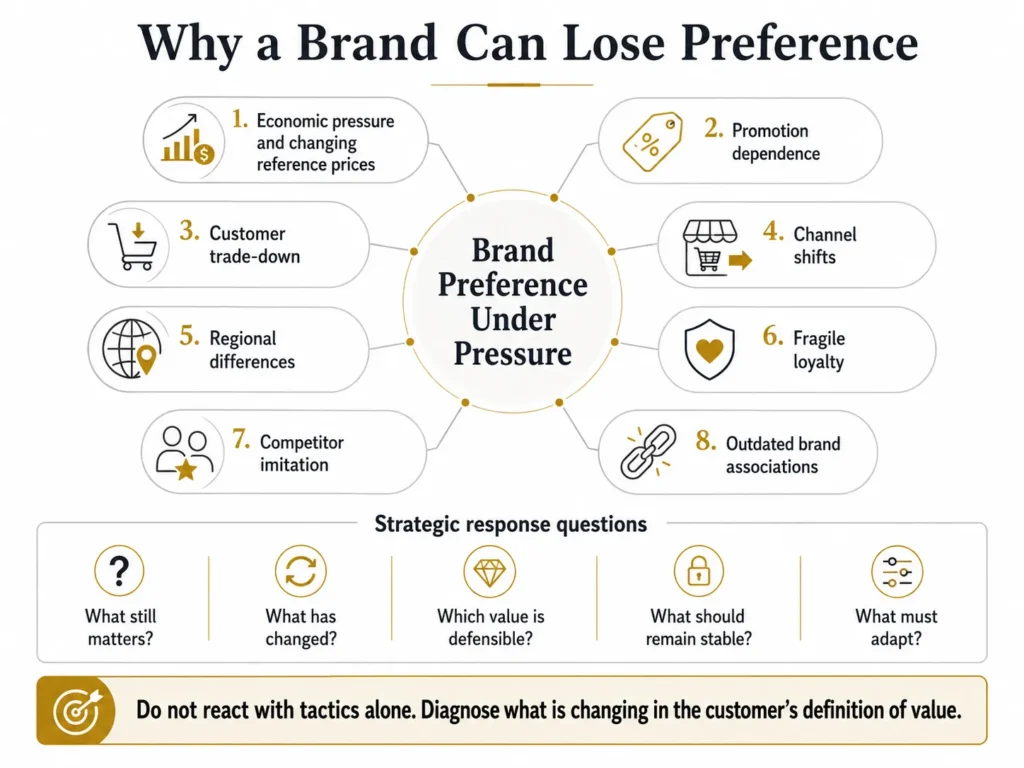
Figure 1. In Brazil, brand preference can weaken when regional differences, channel fragmentation, rapid imitation, outdated associations, and stronger local relevance change how customers interpret value.
The Strategic Question Is Not “Do People Know the Brand?”
The stronger executive question is:
Where does your brand create real preference in Brazil, where is it becoming interchangeable, and which strategic territory can you credibly own across regions, segments, and channels?
A strong brand strategy should help your leadership team decide:
- Which customer needs and tensions matter most.
- How those needs vary by region, segment, generation, and channel.
- Whether the brand is genuinely differentiated or simply visible.
- Which local and international competitors define the comparison.
- Which brand associations are becoming outdated.
- How Portuguese-language expression affects relevance and credibility.
- Where the customer experience supports, or contradicts, the promise.
- Which parts of the brand should remain consistent and which should adapt.
- How positioning should influence pricing, portfolio, channels, sales, and service.
Brazil Is Too Large to Treat as One Brand Market
National averages can hide the decisions leadership most needs to understand.
Differences may appear across:
- São Paulo and the Southeast.
- The South.
- The Northeast.
- The Center-West.
- Large metropolitan areas and secondary cities.
- Modern retail, traditional trade, marketplaces, direct sales, and distributors.
- Higher-income, value-oriented, and emerging segments.
- B2C, B2B, institutional, and professional audiences.
The objective is not to create a separate brand for every state. It is to understand which strategic meaning should remain stable and which proof, tone, message emphasis, channel, or experience must adapt.
Awareness Can Hide Weak Differentiation
A well-known brand may still be:
- Seen as generic.
- Associated with yesterday’s benefit.
- Trusted but not exciting.
- Strong in one region and weak in another.
- Recognized but easy to substitute.
- Considered only when discounted.
- Respected by decision-makers but irrelevant to users.
- Visible online but disconnected from actual customer experience.
Leadership therefore needs to understand the full progression from awareness to relevance, consideration, preference, purchase, loyalty, and recommendation.
Competitors Copy Fast, So the Brand Needs a Deeper Advantage
In a dynamic market, product features, campaign formats, promotions, and service claims can be copied quickly.
A more defensible brand advantage may come from:
- A distinctive customer tension.
- A credible emotional territory.
- Superior service experience.
- Strong local community or professional relationships.
- Proprietary proof.
- A better ecosystem of channels and partners.
- Consistent delivery across touchpoints.
- A reputation competitors cannot reproduce quickly.
The strategic question is not simply what makes the brand different today. It is what difference can remain credible after competitors respond.
Portuguese-Language Relevance Is Strategic, not Cosmetic
Translation is not the same as local resonance.
The way a brand sounds in Portuguese can affect:
- Emotional connection.
- Clarity.
- Perceived distance from the customer.
- Trust.
- Humor and cultural nuance.
- Professional credibility.
- Internal adoption by sales and service teams.
- How customers describe and recommend the brand.
A regional message can be technically correct and still feel imported, formal, or disconnected.
Digital Scale Can Mask Brand Fragmentation
Large digital reach does not guarantee one coherent brand experience.
Customers may encounter the brand through:
- Retail websites.
- Marketplaces.
- Social platforms.
- Influencers.
- WhatsApp.
- Distributors.
- Direct sales teams.
- Service centers.
- Apps and self-service channels.
- Physical stores.
If positioning, proof, pricing, service, and tone vary too much across those touchpoints, awareness may grow while trust and distinctiveness weaken.
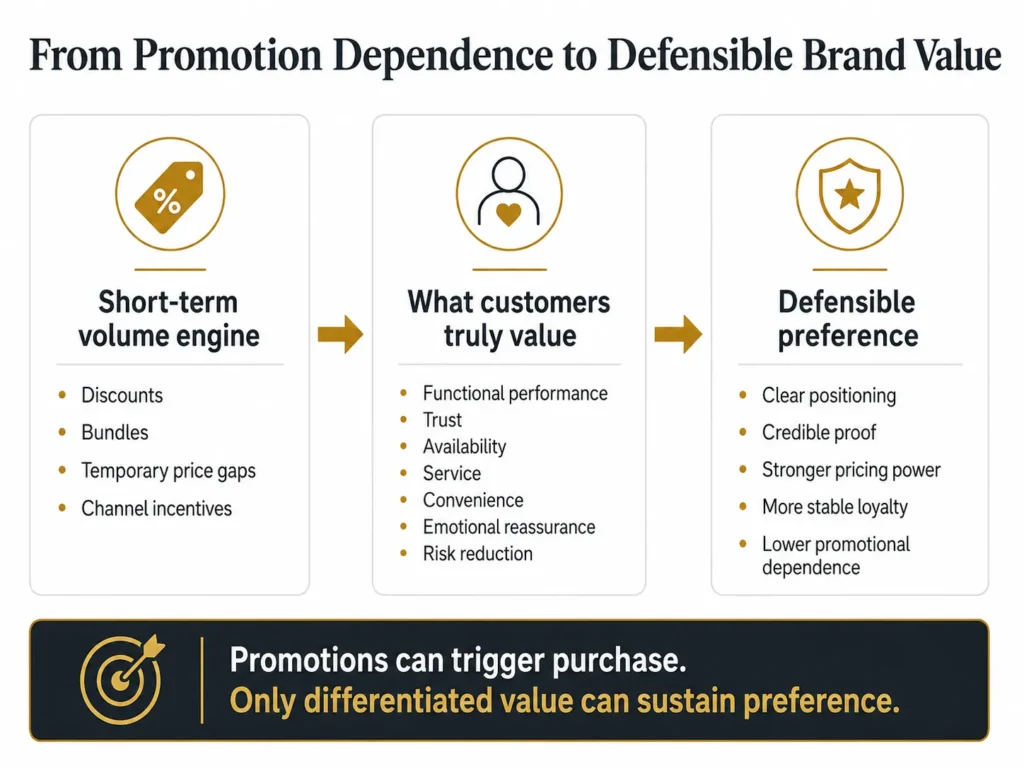
Figure 2. National reach creates visibility, but preference depends on how positioning, proof, cultural relevance, and experience perform across Brazilian regions, segments, generations, and channels.
Local Competitors Can Win Through Relevance
A multinational may have more resources, broader awareness, and stronger systems. A local competitor may still win because it appears closer, faster, more flexible, or more culturally relevant.
Brand research should test:
- Which competitors customers truly consider.
- Which attributes each competitor appears to own.
- Which local brands create emotional affinity.
- Where global brands feel more credible.
- Where local brands feel easier to trust.
- Which competitor proof is most persuasive.
- Which customer experience differences shape preference.
- How competitors may respond if you reposition.
Generational Change Can Make a Successful Brand Feel Old
A brand can remain commercially strong while becoming less relevant to younger customers.
Warning signs may include:
- High awareness but declining consideration among younger segments.
- Associations tied to parents or previous generations.
- Weak cultural participation.
- Low digital advocacy.
- Communication that feels institutional rather than human.
- Values that are credible historically but less motivating today.
- A product experience that has not evolved with expectations.
The answer is not automatically a younger visual identity. Leadership needs to identify which underlying meaning has lost relevance and which new territory the brand can credibly earn.
Brand Strategy Consulting in Brazil Requires Foresight
Current brand research explains the present. Strategic foresight helps leadership prepare for how the basis of preference may change.
We examine:
- Emerging customer expectations.
- Weak signals in consumption and channel behavior.
- New competitor positioning.
- Changes in digital discovery and recommendation.
- Social, environmental, and reputational expectations.
- Regulatory and technological shifts.
- Potential moves by local and multinational competitors.
- Which brand assets may become more or less valuable under alternative futures.
The Six Tests of a Strong Brand in Brazil
1. Relevance
Does the brand address a customer need, tension, aspiration, or risk that matters in the target region and segment?
2. Differentiation
Can customers explain why they should choose it instead of a local, global, lower-cost, digital, or familiar alternative?
3. Credibility
Do product performance, proof, service, language, and behavior support the promise?
4. Coherence
Do communication, channels, pricing, sales, service, and customer experience reinforce the same strategic meaning?
5. Local adaptability
Can the brand remain relevant across Brazil’s regions, segments, and channels without fragmenting?
6. Future resilience
Can the positioning withstand changes in customer expectations, digital behavior, competition, technology, and regulation?
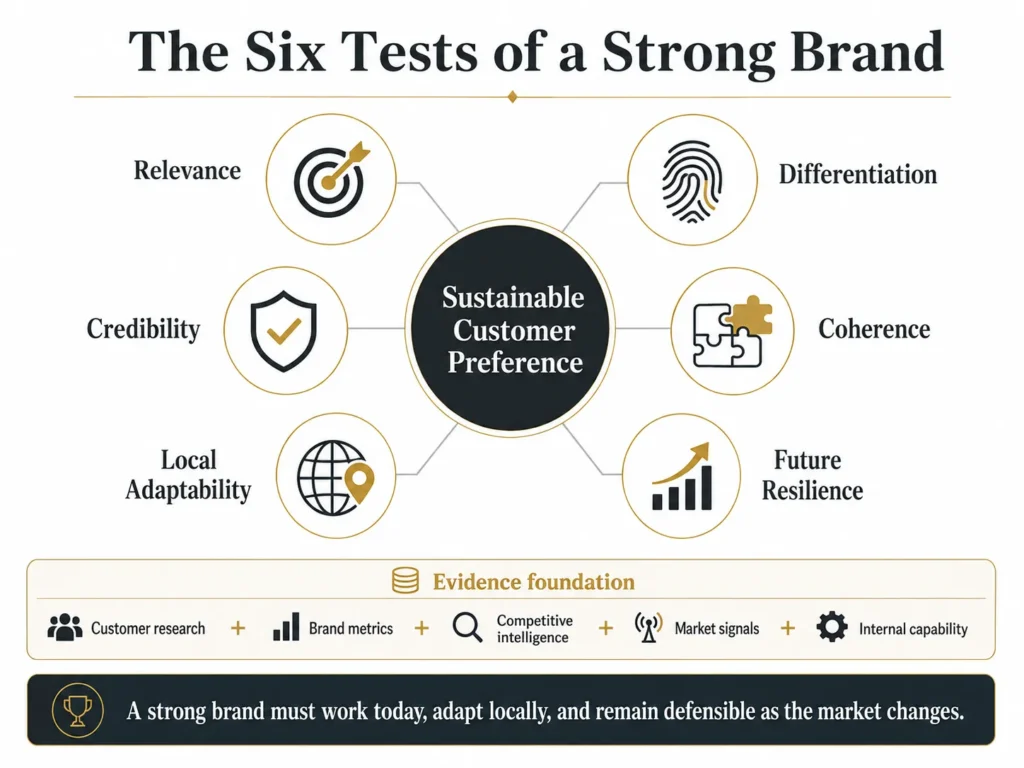
Figure 3. A resilient Brazilian brand must remain relevant, differentiated, credible, coherent, locally adaptable, and prepared for future market change.
How Midas Consulting Builds a Stronger Brand Strategy in Brazil
1. Define the executive decision
We clarify whether leadership needs to strengthen preference, reposition the brand, improve relevance among younger customers, adapt by region, respond to competitors, simplify the portfolio, or prepare for changing expectations.
2. Build the fact base
We combine existing brand metrics, customer research, commercial information, digital evidence, competitor intelligence, channel input, and internal perspectives.
3. Listen to customers and stakeholders
Depending on the decision, we may use qualitative interviews, focus groups, quantitative surveys, social listening, distributor research, win-loss analysis, expert interviews, or other methods.
4. Diagnose the brand by market and segment
We examine awareness, relevance, differentiation, credibility, perceived value, consideration, preference, loyalty, advocacy, and experience across regions, segments, generations, and channels.
5. Map the competitive brand landscape
We compare local and multinational competitors, their positioning territories, proof, experience, language, channel strengths, and emotional spaces.
6. Identify strategic brand territories
We evaluate potential territories against customer relevance, competitive whitespace, credibility, profitability, organizational fit, and future resilience.
7. Define the strategic core and adaptation rules
We specify what must remain consistent and where regional, segment, channel, or language adaptation is required.
8. Translate strategy into the commercial system
We connect positioning with communication, portfolio, innovation, pricing, channels, sales enablement, service, and customer experience.
9. Mobilize and measure
We define priorities, ownership, indicators, governance, and a learning cycle to track whether the brand is becoming more relevant, preferred, and valuable.
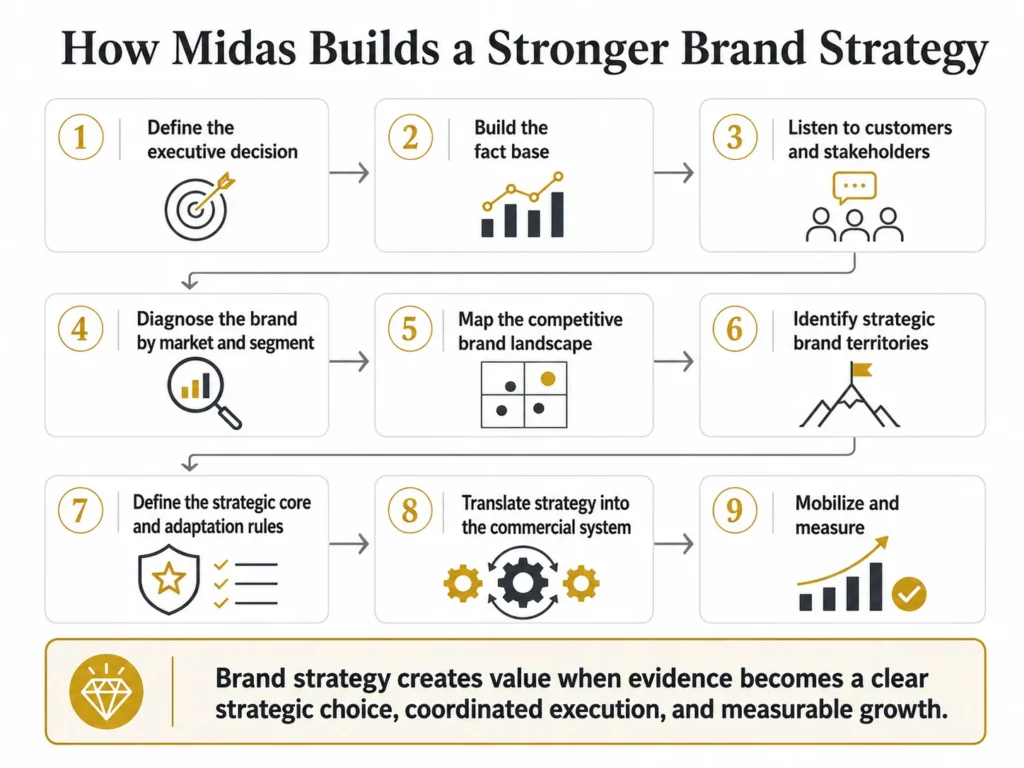
Figure 4. Midas’s nine-stage process turns customer, market, and competitive evidence into a clear strategic choice, coordinated commercial execution, and measurable brand growth.
What Leadership Should Receive from a Brand Consulting Project in Brazil
Depending on scope, a Brazilian engagement may include:
- An executive diagnosis of the brand’s current position.
- Regional, segment, generational, and channel comparisons.
- Awareness, relevance, differentiation, credibility, preference, and loyalty findings.
- Competitive brand and territory maps.
- Portuguese-language and cultural-resonance implications.
- Perceived-value and pricing implications.
- Brand architecture and portfolio recommendations.
- Regional and channel adaptation guidelines.
- Customer-experience and digital-touchpoint implications.
- Future signals and competitive-response scenarios.
- A prioritized roadmap with owners and indicators.
- An executive workshop to align leadership.
Selected Applications of Our Brand Consulting Work in Brazil
Beverage brand
A high-awareness FMCG brand was losing preference among younger adults. The diagnosis showed that the brand felt outdated despite strong recognition. A repositioning built around new emotional drivers increased penetration by 18% in the target segment.
B2B hygiene company
The company delivered strong technical performance but was perceived as a commodity. IDB360 identified undervalued strengths in sustainability and training, creating a stronger basis for differentiation and retention.
Pharmaceutical brand
The brand lacked credibility among frequent prescribers and communicated inconsistently across touchpoints. After restructuring the message and evidence system, trust and recommendations improved over three sales cycles.
When Brand Consulting Is Especially Valuable in Brazil
- Your brand is well known but not clearly differentiated.
- Preference differs materially by region or segment.
- You are losing younger customers.
- A local competitor is gaining through relevance or speed.
- Your regional message does not resonate naturally in Portuguese.
- Digital reach is increasing but loyalty is not.
- Campaign, channel, and service experiences feel fragmented.
- Your brand KPIs do not lead to clear action.
- Competitors copy your visible advantages quickly.
- You need a positioning that can scale without becoming generic.
How This Page Fits the Midas Branding Consulting Cluster
This page owns the Brazil-specific question: how scale, regional and cultural diversity, Portuguese-language resonance, digital fragmentation, rapid imitation, generational change, and strong local competitors affect brand preference and strategic action.
For the regional framework, visit Brand Consulting in Latin America.
For the full consulting offer, visit Brand Consulting for a Stronger Market Position.
For Midas’s broader perspective on foresight and competitive response, visit Strategic Foresight and Execution: Insights for the Global Executive.
Why Midas for Brand Consulting in Brazil?
We connect brand strategy with business performance
We examine how brand perception affects preference, pricing power, channel strength, loyalty, innovation, and growth.
We understand Brazilian complexity
We compare regions, segments, generations, channels, and local versus multinational competitors rather than relying only on national averages.
We work with Portuguese-language evidence
We interpret how customers express value, trust, relevance, and differentiation in their own language and business context.
We combine research with strategic judgment
We use qualitative and quantitative evidence, benchmarking, digital and competitive intelligence, and executive interpretation.
We incorporate foresight
We examine emerging customer expectations and competitor moves so the positioning is not designed only for today’s market.
We focus on action
We translate findings into choices about positioning, portfolio, communication, pricing, channels, service, and customer experience.
We bring extensive brand consulting experience in Brazil
Midas has conducted more than 200 brand studies across Latin America, including dozens in Brazil.
Frequently Asked Questions About Brand Consulting in Brazil
Can a high-awareness brand still be weak?
Yes. Awareness does not guarantee relevance, differentiation, credibility, preference, loyalty, or pricing power.
Should Brazil be treated as one market?
No. The strategic core may be national, but customer needs, competition, channel behavior, proof, and experience can vary significantly by region and segment.
Can a regional campaign simply be translated into Portuguese?
Sometimes translation is sufficient for functional clarity, but positioning and emotional meaning often require deeper adaptation to sound natural and relevant.
Can branding help us compete with strong local Brazilian brands?
Yes. Research can show where local brands win through trust, relevance, speed, relationships, or cultural meaning, and where your company can respond credibly.
Can brand consulting help B2B companies in Brazil?
Yes. In B2B markets, brand perception influences shortlisting, risk, trust, proof requirements, distributor support, and willingness to pay.
Can you analyze generational differences in your brand consulting in Brazil?
Yes. We can compare associations, needs, channels, relevance, consideration, and preference across age groups.
Can you evaluate digital brand fragmentation with your brand consulting in Brazil?
Yes. We can examine how the promise appears across marketplaces, social platforms, direct channels, distributors, sales, service, and physical experiences.
Can brand research in Brazil support pricing decisions?
Yes. Research can show whether the brand creates enough relevance, differentiation, trust, and perceived value to support a premium.
How do you convert brand consulting research into action in Brazil?
We connect findings with specific choices, priorities, owners, indicators, governance, and an implementation roadmap.
Can the brand consulting work in Brazil include strategic foresight?
Yes. We can examine weak signals, changing customer expectations, competitor moves, and alternative scenarios that could affect future positioning.
About the Author
Víctor Sales Navas, COO, leads Midas Consulting’s Branding Practice and brings more than 34 years of experience across Latin America.
A graduate in Accounting from the Universidad de Buenos Aires, Víctor built his career at leading advertising agencies including Young & Rubicam, ADD, and Gowland. He developed deep expertise in brand strategy, market research, benchmarking, competitive intelligence, and mergers and acquisitions.
He also heads Midas’s Services Practice, advising clients in logistics, ports, consumer goods, and industrial products. Víctor has directed projects throughout the region and successfully led multiple start-ups in Latin America.
He speaks English, Portuguese, and Spanish and is recognized for translating market insight into actionable brand and business strategy.
Build a Brand That Can Scale Across Brazil Without Becoming Generic
You may be trying to understand why awareness is not becoming preference, why performance differs by region, why younger customers are drifting, or how to respond to faster local competitors.
You do not need more disconnected metrics. You need a clear view of where the brand creates value, where it loses relevance, which strategic territory you can credibly own, and how your organization should act.
In an initial conversation, we will discuss your market position, regions, segments, portfolio, current research, competitors, channels, customer experience, and the executive decisions the engagement must support.
We can then propose a focused diagnosis, positioning project, regional study, or continuous brand-intelligence program tailored to your needs.