
Gain an Edge with Our Competitor Analysis in Brazil
In Brazil, a competitor can look powerful at the national level and still be vulnerable in the specific states, channels, applications, or customer groups that matter to your strategy.
Brazil’s size creates an analytical trap. Regional headquarters may compare companies using national revenue, reported market share, plant count, or distributor coverage. Those indicators are useful, but they can conceal very different competitive positions across the Southeast, South, Northeast, Center-West, and North, or even between neighboring states.
A competitor may have a strong brand but weak service coverage outside its core region. Another may have modest national share but dominate a profitable industrial cluster. A local manufacturer may outperform a multinational because its production footprint, tax position, logistics, relationships, or decision speed fit the market more effectively.
That is why competitor analysis in Brazil should not answer only, “Who is the largest?” It should help you understand where each competitor can actually win, what makes that position defensible, which advantages travel across regions, and how the competitive balance could change through investment, partnerships, or acquisition.
At Midas Consulting, we combine structured research, local market insight, and strategic interpretation so you can make stronger decisions about growth, pricing, channels, production, service coverage, market entry, acquisition targets, and competitive response in Brazil.
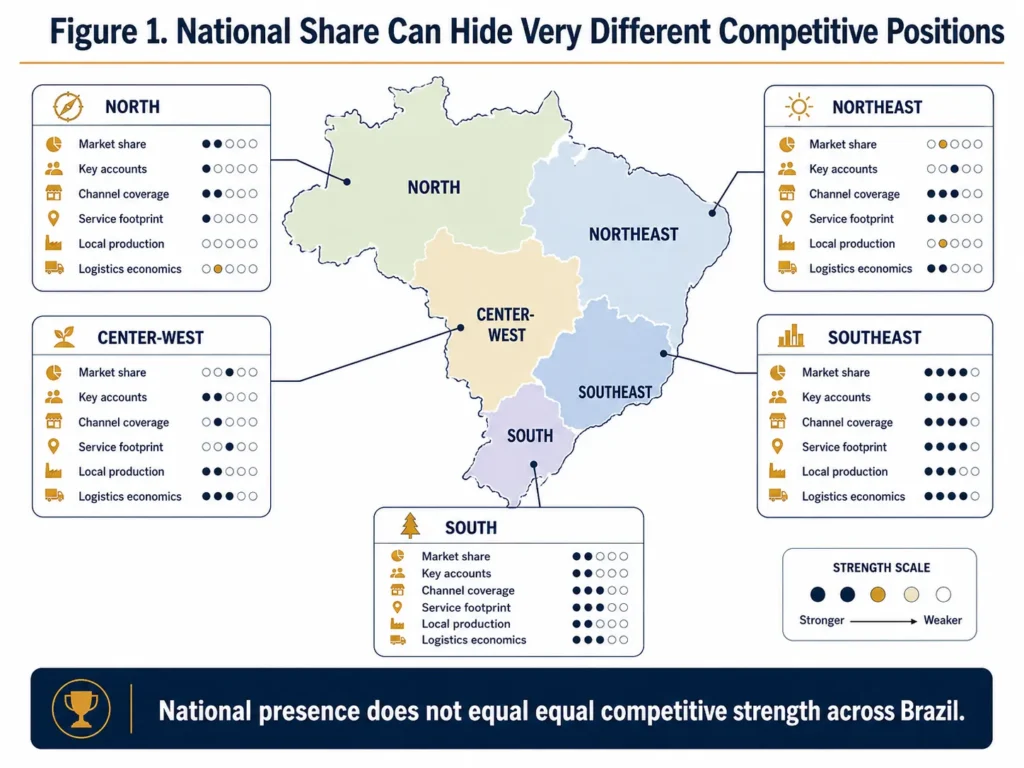
Figure 1. National market share can conceal major differences in competitor strength by region, state, channel, customer group, and operating capability.
Why Brazil Should Not Be Analyzed as One Competitive Market
Brazil offers scale, but scale does not create uniformity. Demand, regulation, taxes, infrastructure, industrial concentration, customer requirements, channels, and service expectations can vary significantly by state and region.
These differences can change who wins and why.
National scale can mask regional concentration in competitor analysis in Brazil
A competitor may report strong national performance while generating most of its revenue in a limited number of states, accounts, or product lines. Another may appear smaller overall but hold a highly defensible position in a profitable cluster or application.
Your analysis should therefore connect national indicators with the geographic and commercial concentration behind them. The key question is not only how large the competitor is, but where its position is deep, where it is shallow, and how dependent it is on specific sources of strength.
Tax and logistics economics can change the ranking of competitors
The same product can have different delivered economics depending on production location, state taxes, inventory model, freight, distribution structure, customer concentration, and service requirements.
A company with a higher factory cost may still deliver a more attractive offer because its plant, warehouse, distributor, or service network is closer to the customer. A competitor with national scale may struggle in regions where logistics complexity or tax exposure erodes its advantage.
Local production can be an advantage, but not automatically
Manufacturing in Brazil may improve availability, local adaptation, lead times, customer confidence, or access to certain accounts. It may also create fixed-cost, labor, environmental, tax, capacity-utilization, and portfolio constraints.
The analysis should identify when local production provides a durable advantage, when imported supply remains more competitive, and how each competitor balances cost, flexibility, risk, and customer responsiveness.
Service and relationships may matter more than visible product differences
In many B2B and industrial sectors, customers evaluate technical support, maintenance, application expertise, spare parts, installation, uptime, financing, and response speed alongside the product itself.
A competitor’s strength may therefore depend on local teams, dealers, distributors, installed base, or long-standing account relationships that are difficult to see in national data.
Growth may come through acquisition rather than organic expansion
Brazil’s scale and local competitive depth make acquisitions, partnerships, joint ventures, and distributor investments important strategic options. A competitor may acquire production capacity, customer access, regional coverage, technology, or regulatory capabilities rather than build them from scratch.
Understanding likely targets, strategic fit, owner willingness, operational risks, and post-acquisition potential can be as important as analyzing current market behavior.
The Executive Questions You Need to Answer in Your Competitor Analysis in Brazil
A Brazil competitor analysis should start with the decision you need to make—not with a generic list of companies.
Depending on your situation, you may need to understand:
- Where is each competitor genuinely strong by state, region, segment, channel, application, and product line?
- How concentrated is its national position among a few customers, industries, distributors, or locations?
- Which taxes, logistics, sourcing, production, and service factors explain its delivered economics?
- Does the competitor own the customer relationship, or depend on distributors, dealers, representatives, integrators, or service partners?
- Where does its local production create an advantage—and where does it create rigidity or cost?
- Which regions or accounts can it serve profitably and reliably?
- What capabilities allow local competitors to outperform larger multinationals?
- Which weaknesses could be corrected through acquisition, partnership, or investment?
- Which competitors or targets are financially attractive, strategically relevant, and realistically available?
- How is a competitor likely to respond if you change price, enter a region, expand service, acquire a local player, or challenge a strategic account?
The objective is to explain how competitive strength is created and sustained—not merely to rank companies by size.
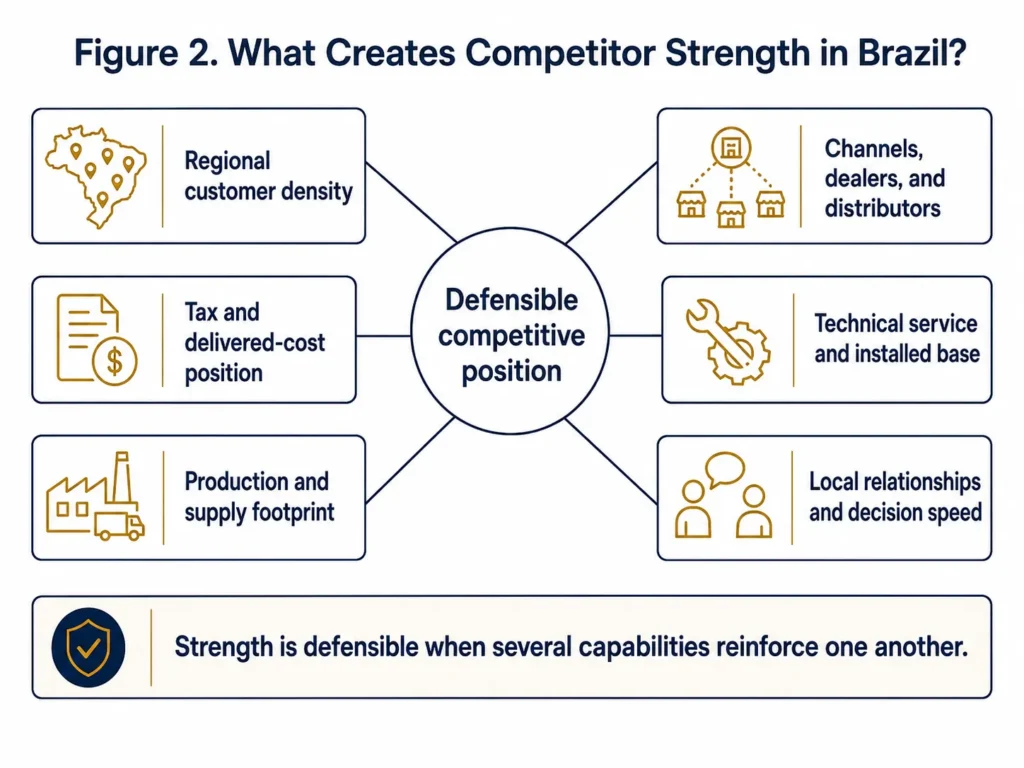
Figure 2. Competitor strength in Brazil often comes from a reinforcing system of regional access, delivered economics, production, channels, service, and relationships.
What You Need to Understand Beyond National Market Share About Competitor Analysis in Brazil
Regional and state-level position
We examine where competitors actually generate revenue, hold strategic accounts, maintain inventory, operate facilities, deploy sales and service teams, and depend on channel partners.
Depending on the industry, the relevant view may be organized by:
- State or macro-region.
- Industrial cluster or economic corridor.
- Customer segment or end-use industry.
- Application or product category.
- Direct, distributor, dealer, integrator, retail, or digital channel.
- Public versus private demand.
- Installed base, service territory, or tender coverage.
This helps you avoid interpreting a national average as evidence of uniform execution.
Delivered economics, not just factory price
Price comparisons become useful only when you understand what produces the final customer economics.
We may examine:
- Production location and capacity utilization.
- Imported versus local inputs or finished products.
- Freight, warehousing, inventory, and service costs.
- State-level tax effects and commercial structures.
- Distributor, dealer, and representative margins.
- Payment terms, financing, rebates, and bundled services.
- Customer-specific requirements that change cost-to-serve.
The goal is not to reproduce a competitor’s confidential cost accounting. It is to build and test an economically credible explanation for the prices and behaviors you observe.
Production footprint and operational flexibility
A plant provides more than capacity. It can influence lead times, product adaptation, local credibility, regulatory access, logistics, working capital, and the ability to respond to customer needs.
However, the strategic value of production depends on:
- Location relative to customers and suppliers.
- Capacity, utilization, and expansion potential.
- Product mix and changeover flexibility.
- Dependence on imported raw materials or components.
- Labor, tax, environmental, and compliance exposure.
- Quality, technology, maintenance, and investment needs.
- The cost and complexity of serving distant regions.
A competitor with local production may be stronger in one product family and less competitive in another. The analysis should preserve that distinction.
Channels, dealers, distributors, and customer ownership
Brazil’s scale often makes indirect routes to market essential. Yet a broad partner list does not necessarily mean strong coverage or customer control.
We assess:
- Who owns the relationship with the end customer.
- Where partners have real technical and commercial capability.
- Which states, sectors, or accounts remain underserved.
- How inventory, credit, service, and demand generation are divided.
- Whether partners are committed, opportunistic, or managing competing brands.
- How easily a competitor could replace or lose a critical partner.
This helps you distinguish true route-to-market capability from nominal geographic presence.
Technical service, installed base, and switching barriers
In equipment, industrial, healthcare, technology, construction, automotive, agricultural, and other complex markets, the installed base can create recurring demand, technical familiarity, spare-parts dependence, data advantages, and switching costs.
We examine whether the competitor’s service system protects the installed base, generates loyalty, creates profitable recurring revenue, or exposes customers to gaps you can address.
Management speed and local autonomy
Competitors with similar assets can behave differently because their Brazilian teams have different authority, incentives, information, and access to capital.
A local company may decide quickly but lack resources. A multinational may have superior capabilities but require regional or global approval. Understanding that decision architecture improves your ability to anticipate response timing and intensity.
How Acquisitions Can Reshape the Competitive Landscape and Analysis in Brazil
In Brazil, an acquisition can change the market more quickly than an organic expansion. It can provide immediate access to customers, plants, licenses, products, people, distribution, service capacity, or regional relationships.
But a target that appears attractive from the outside may carry hidden risks.
A competitor or acquisition candidate should be assessed across several dimensions:
- Strategic fit with your priority markets, products, and capabilities.
- Sales quality and dependence on a limited number of customers.
- Segment-level growth and profitability.
- Production capacity, utilization, technology, and investment needs.
- Tax, labor, environmental, regulatory, and legal exposure.
- Channel relationships and customer ownership.
- Management depth and dependence on founders or key individuals.
- Availability for acquisition and likely owner expectations.
- Integration complexity and value-creation potential.
- How competitors, distributors, employees, and customers may respond.
The strongest target is not always the largest company. It is the company that gives you the most attractive combination of strategic position, economic potential, realistic availability, manageable risk, and integration feasibility.
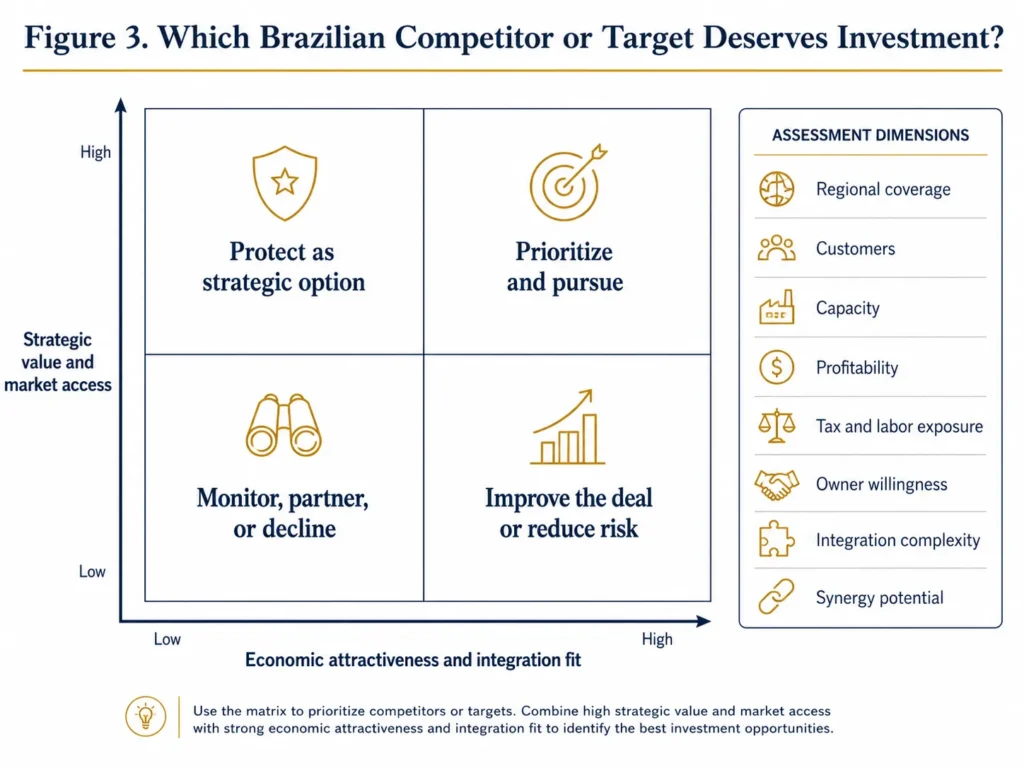
Figure 3. Acquisition prioritization should connect strategic value and market access with economics, risk, owner willingness, and integration fit.
How Market Changes Can Trigger Different Competitor Responses and Analysis in Brazil
Competitors do not react to the same market change in the same way. Their response depends on their exposure, economics, local authority, capabilities, and strategic priorities.
Relevant signals may include:
- Plant investments, capacity changes, or facility closures.
- Acquisitions, partnerships, joint ventures, or distributor changes.
- New product registrations, certifications, or portfolio adjustments.
- Hiring in sales, technical, regulatory, supply, or leadership roles.
- Changes in state or regional commercial coverage.
- Pricing, financing, or service changes in selected accounts.
- New warehouses, service centers, or logistics arrangements.
- Messages that indicate a shift toward new segments or applications.
- Changes in local decision rights, management, or investment priorities.
No individual signal proves intent. The value comes from connecting signals, testing alternative explanations, and defining which developments should trigger management action.
For a deeper explanation of early-warning signals, plausible competitor moves, and management responses, see Strategic Foresight and Competitive Response: Executive Insights.
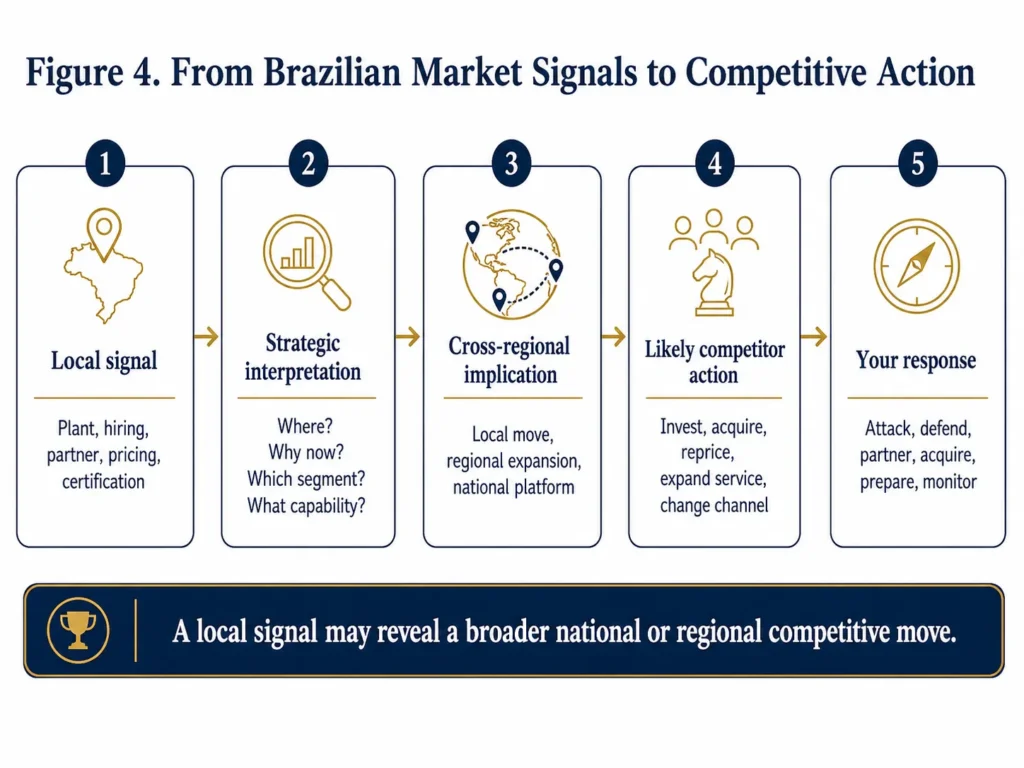
Figure 4. Local developments can signal a broader national or regional move when they are interpreted in the context of competitor objectives and capabilities.
How Midas Builds a Reliable Fact Base in Competitor Analysis in Brazil
Brazil offers more public information than some Latin American markets, but the evidence is still fragmented across companies, states, sectors, regulatory bodies, channels, and private relationships. Public data may also be too aggregated or delayed to answer a specific strategic question.
We therefore combine several types of evidence.
Depending on the assignment, the fact base may include:
- Company, financial, corporate, regulatory, tax, tender, trade, and industry information where legally available.
- Product, price, channel, service, hiring, investment, facility, partnership, and communication signals.
- Interviews with customers, distributors, dealers, suppliers, specialists, former industry participants, associations, and other knowledgeable market sources.
- Regional and state-level market validation.
- Your team’s commercial, technical, operational, and strategic knowledge.
- Cross-country evidence when it helps distinguish a Brazil-specific move from a regional strategy.
We triangulate claims, test their economic and operational logic, and separate verified evidence from informed hypotheses. When uncertainty remains, we make it visible rather than converting a weak estimate into false precision.
We also conduct the work ethically. We do not seek trade secrets, misrepresent our identity, or request confidential competitor information. Our research is designed to protect your reputation, our sources, and the integrity of the engagement.
For the complete analytical process, see our competitor analysis step-by-step guide.
How the Competitor Analysis in Brazil Changes Your Decision
Regional growth and prioritization
You can identify which states, clusters, industries, applications, and customer groups offer the strongest combination of demand, competitor vulnerability, access, and economics.
Pricing and delivered-value decisions
You can determine whether a competitor’s advantage comes from price, tax position, logistics, service, financing, local production, or customer-specific economics, and choose a response that addresses the true source of strength.
Production and supply decisions
You can assess whether local production, new capacity, inventory, alternative sourcing, or a regional distribution model would materially improve your position.
Channel and service decisions
You can identify where your coverage is weaker, where competitors depend on vulnerable partners, and which service capabilities or customer relationships could create differentiation.
Acquisition and partnership decisions
You can prioritize targets, test strategic fit, understand hidden risks, assess owner willingness, and determine whether acquisition, partnership, or organic expansion offers the stronger route to growth.
Competitive response decisions
You can define where to attack, defend, partner, acquire, prepare, or monitor—while considering how the competitor may respond in different regions and segments.
Case Example: From Five Potential Targets to One Strategic Acquisition
The executive challenge
A multinational company was evaluating the acquisition of local competitors in Brazil. Secondary information was extremely limited, and the client needed to compare five potential targets before deciding where to invest management attention and due-diligence resources.
The decision required more than estimated sales. The client needed to understand each company’s segment position, production capacity, growth, profitability, operational constraints, strategic fit, and realistic availability for acquisition.
How we approached the decision
We conducted in-depth research and interviews with market participants, including competitors and distributors, to develop a comparable view of the five targets.
The assessment covered:
- Segment-level sales and production capacity.
- Customer and channel position.
- Strengths, weaknesses, and growth trends.
- Profitability and the quality of reported or estimated sales.
- Tax, labor, and environmental exposure.
- Owner willingness and likely availability for acquisition.
- Strategic fit and the ability to improve the client’s market position.
Where formal data was incomplete, we triangulated operational evidence, market interviews, and economic logic rather than relying on one estimate.
How the competitor analysis findings changed the strategy
The analysis allowed the client to distinguish attractive companies from attractive acquisitions. It clarified which target offered the strongest combination of competitive position, economic potential, strategic fit, manageable risk, and realistic availability.
The client ultimately acquired one of the five companies, materially improving its position in Brazil.
The case illustrates why competitor analysis and acquisition intelligence should be connected. A target must be understood not only as a company, but as a competitive platform that can change your access, capabilities, economics, and strategic options.
“Just to reiterate, this is fantastic. I’m really excited to see such valuable insights and information! Thank you again!”
— Vice President
When You Need Competitor Analysis in Brazil
A focused Brazil assignment can be particularly valuable when you are:
- Trying to explain why performance differs by state, region, segment, or channel.
- Entering Brazil or prioritizing where to expand.
- Reviewing national prices that may hide different delivered economics.
- Evaluating local production, capacity, sourcing, or logistics options.
- Selecting, replacing, or assessing distributors, dealers, or service partners.
- Defending strategic accounts or challenging an incumbent’s installed base.
- Comparing local and multinational competitors.
- Assessing acquisition targets, partnerships, or joint ventures.
- Preparing a launch, portfolio change, or investment.
- Anticipating how competitors may respond to your next move.
When the decision covers several markets, the Brazil analysis should fit into a consistent regional framework. See how we compare country evidence and coordinate responses on our Latin America competitor analysis hub.
Why Midas for Competitor Analysis in Brazil?
We look below the national average
We investigate where competitors are strong by state, region, customer, channel, application, product line, and capability, not only how large they appear nationally.
We connect market position with operating economics
We examine how taxes, logistics, production, sourcing, service, inventory, channels, and customer requirements influence competitive performance.
We combine local insight with regional context
Brazil-specific evidence is central, but regional comparison can reveal whether a move is local or part of a broader Latin American strategy.
We can support organic and acquisition-led growth
Our work can assess current competitors, acquisition targets, partnerships, distribution options, and the strategic implications of different growth paths.
We use primary research where public information is insufficient
We complement secondary research with carefully designed interviews and market validation around the decision you need to make.
We bring direct experience in competitor analysis in Brazil
We have led dozens of competitive intelligence and competitor analysis projects in Brazil across B2B, B2C, industrial, automotive, pharmaceutical, healthcare, consumer, and other sectors.
We conduct the work ethically and discreetly
Our methods follow legal and professional competitive-intelligence practices designed to protect your company and the integrity of the engagement. We comply with SCIP’s code of ethics, the profession’s gold standard.
When you need to move from understanding Brazil’s competitive landscape to deciding what to do about it, our competitor analysis consulting combines market evidence, primary research, and strategic interpretation to help you identify where competitors are strong, where they are exposed, and how you can respond.
“They are responsive, professional, detail-oriented, and client-focused. I love that Midas prioritizes ‘co-success with the client’ and works hard to meet our needs and solve our problems.”
— Executive Chair
Frequently Asked Questions
Can you compare competitors by state or region in your competitor analysis in Brazil?
Yes. We can structure the analysis by state, macro-region, industrial cluster, channel, segment, application, customer type, or another geography that matches your decision. The right level of granularity depends on how demand, logistics, taxes, and competitive execution vary in your industry.
How do you analyze taxes without turning the project into a tax audit?
We focus on the strategic and commercial implications of observable tax structures, production locations, routes to market, and delivered economics. Specialist tax advice may be required for legal conclusions, but competitor analysis can identify where tax position appears to influence price, footprint, or market behavior.
Can you estimate competitor production capacity and utilization with your competitor analysis in Brazil?
We can develop evidence-based estimates using facilities, equipment, shifts, product mix, sourcing, supply-chain signals, interviews, industry data, and observable market activity. We clearly distinguish verified capacity, estimated utilization, and remaining uncertainty.
Can you assess distributor and dealer strength?
Yes. We can examine geographic coverage, customer access, technical capability, inventory, credit, service, competing brands, commitment, incentives, and the degree to which the partner or manufacturer owns the customer relationship.
Can you evaluate acquisition targets before formal due diligence in your competitor analysis in Brazil?
Yes. Strategic acquisition intelligence can help you screen and prioritize targets before committing to full due diligence. It can assess market position, sales quality, capacity, profitability, owner willingness, risk, fit, and likely value creation using ethical and legally available sources.
Can you determine whether a local competitor is available for acquisition?
We can assess indications of owner openness, succession issues, investment needs, strategic pressure, partnership interest, and transaction feasibility. Availability is rarely binary, so we present evidence, likely conditions, and confidence levels rather than claiming certainty without direct confirmation.
How do you validate information when private-company data is limited in your competitor analysis in Brazil?
We triangulate multiple independent sources, test operational and economic consistency, compare statements with observable market behavior, and distinguish verified facts from informed estimates. We avoid relying on one interview or database entry.
Can you help us anticipate competitor reactions to an acquisition or expansion?
Yes. We can identify likely responses by competitors, distributors, customers, employees, suppliers, and other stakeholders. For high-stakes moves, the analysis can be complemented by strategic foresight or a business wargame.
How long does a competitor analysis in Brazil take?
The timing depends on the number of competitors, regions, interviews, facilities, channels, and strategic questions involved. We define the scope around your decision and can provide preliminary findings in phases when you face a time-sensitive milestone.
Will our identity remain confidential?
We design the research to protect your interests and conduct the assignment discreetly. The disclosure approach depends on what is legal, ethical, and appropriate for each research method. We do not use deception or seek confidential competitor information.
About the Author
Adrian Alvarez, PhD is Managing Partner at Midas Consulting, Wharton Alumnus, MBA Professor at Universidad Argentina de la Empresa (UADE), and Competitive Intelligence Fellow. He specializes in competitive strategy, competitor analysis, strategic intelligence, acquisitions, business wargaming, market entry, and decision-making under uncertainty in Brazil and Latin America.
He has led dozens of competitive intelligence and competitor analysis projects in Brazil and more than 100 across Latin America. His work has been published in the United States, Brazil, Spain, and Germany. You can access his library of strategic insights and published research here
View professional profile on LinkedIn
Selected Brazilian Sources You May Need to Monitor
The relevant sources depend on your industry and decision. A Brazil fact base may include official and market information from institutions such as:
- IBGE for official economic, demographic, industrial, and regional information.
- Banco Central do Brasil for monetary, financial, credit, and economic information.
- CADE for competition, merger, and market-structure information.
- ANVISA for healthcare, pharmaceutical, medical-device, food, and other regulated-product information.
- Receita Federal and relevant state authorities for legally available corporate, tax, customs, and trade context.
- Sector regulators, public procurement portals, environmental bodies, state agencies, industry associations, company records, and primary market interviews as appropriate.
Official information is necessary, but it rarely explains competitor intent, customer relationships, operating quality, or transaction availability on its own. The value comes from connecting formal evidence with market behavior and local insight.
See the Competitive Position Behind the National Number
You may be deciding where to expand, whether to build or acquire, how to improve regional coverage, which distributor to trust, where a competitor is vulnerable, or why a company with lower national share keeps winning the accounts that matter.
Before you act, you need to understand where competitors are truly strong, what makes that strength defensible, how economics change across Brazil, which capabilities could be acquired or replicated, and how competitors are likely to respond.
In an initial conversation, we will discuss your decision, the competitors and regions involved, what your team already knows, and which uncertainties could materially change the action. We can then propose a focused Brazil research and analysis plan built around your decision, not a generic national report.