
Differentiate from the Crowd with a Tailor Made Value Proposition in Brazil
Brazil is too large, diverse, and competitive for a generic value proposition.
The same offer may be evaluated differently by a multinational manufacturer in São Paulo, a distributor serving the Northeast, a hospital group, an agribusiness customer in the Center-West, a technology buyer, a retailer, or an industrial account operating across several states.
Customer priorities, decision-makers, channel influence, service expectations, local-content requirements, financing, taxes, regional logistics, technical proof, and willingness to pay can vary materially. A message that resonates with one segment may sound irrelevant, or unbelievable, to another.
This creates a strategic challenge. If your proposition is too broad, it becomes indistinguishable from claims about quality, innovation, service, and partnership that nearly every serious competitor already makes. If it is over-adapted by region or sales team, your organization loses strategic coherence and customers receive inconsistent reasons to choose you.
At Midas Consulting, we help you identify the value your company can credibly own in Brazil, determine where the proposition must adapt, build the proof that customers require, and align pricing, channels, service, sales, product, and operations with the promise.
The result is not a translated slogan. It is a customer-choice system that clarifies whom you will serve, what outcome you will create, why your offer is better than the relevant alternatives, why the customer should believe you, and what your organization must do to deliver consistently at scale.
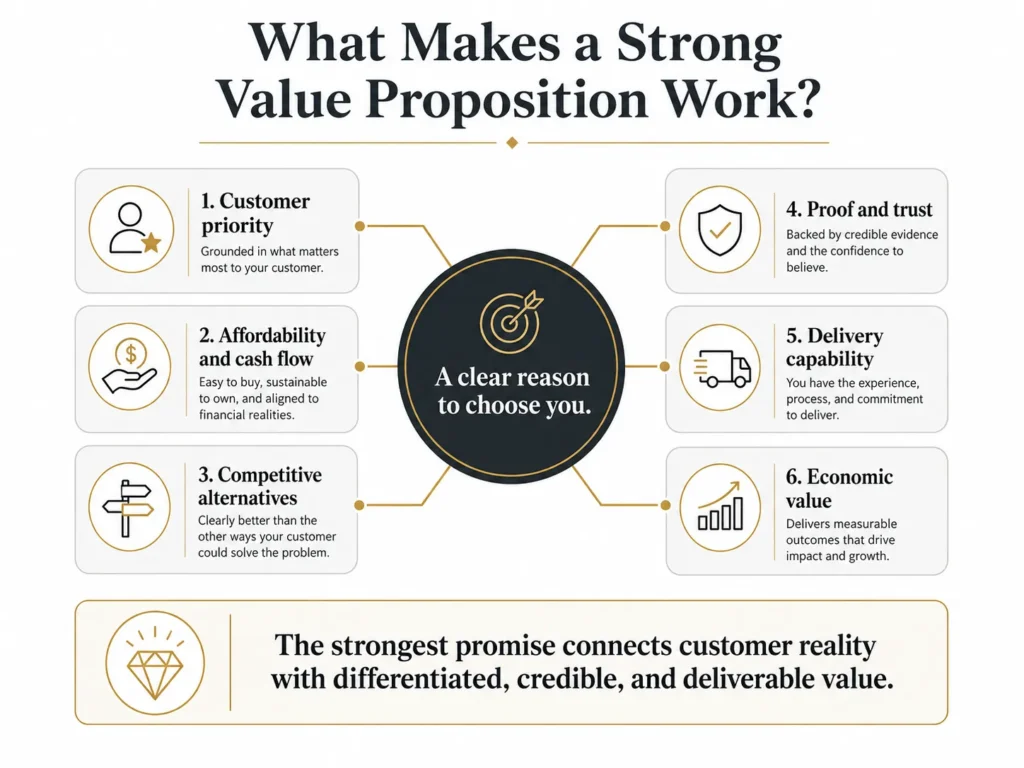
Figure 1. A strong value proposition in Brazil connects customer priorities with differentiation, proof, economic value, and the ability to deliver across the relevant market.
The Strategic Question Is Not “How Should We Translate Our Global Message?”
The stronger question is:
What outcome matters to a specific Brazilian customer, why is your approach more valuable than the available alternatives, what proof will make the promise credible, and what must your organization deliver in that customer’s region and channel?
Your leadership team should be able to answer:
- Which customer, segment, application, region, and stakeholder the proposition is designed for.
- What operational, commercial, financial, technical, or personal outcome matters most.
- How the customer currently solves the problem.
- Which local, regional, multinational, distributor-owned, lower-cost, internal, or substitute solutions are considered.
- Which benefits are truly differentiated and which are category expectations.
- What economic value the customer can understand.
- Which local evidence, references, certifications, demonstrations, or performance data create trust.
- Which sales, channel, service, logistics, inventory, product, and technical capabilities are required.
- What should remain consistent nationally and what should adapt by region, segment, or account.
- How competitors and customer priorities may change after you reposition.
The objective is not a message that sounds good in Portuguese. It is a proposition that changes the basis on which Brazilian customers compare, believe, and choose.
Why Generic Value Proposition Claims Lose Power in Brazil
“Quality” rarely explains the business impact
Quality may matter, but the customer needs to understand what it changes: yield, uptime, safety, consistency, regulatory confidence, useful life, customer satisfaction, or operating risk.
“Innovation” can feel disconnected from execution
Customers may value new technology, but they also ask whether it works in their environment, integrates with existing systems, has local support, and produces a measurable return.
“Service” means different things to different customers
Service may mean technical application support, installation, rapid response, spare parts, training, account attention, remote diagnostics, financing assistance, or national coverage.
“Partnership” requires visible commitment
A partnership claim becomes credible when the customer sees shared planning, local investment, responsiveness, senior management involvement, co-development, risk sharing, or long-term support.
“Global expertise” needs local translation
Global capabilities can create confidence, but customers also need to see how those capabilities fit Brazilian regulation, taxes, infrastructure, applications, language, channels, and operating realities.
The stronger proposition translates broad strengths into outcomes that matter to a defined customer and are supported by market-specific evidence.
Brazil Is One Country, but Not One Customer Reality
A national proposition may require disciplined variation across regions, sectors, and customer types.
São Paulo and the Southeast
Large corporate accounts, sophisticated procurement, industrial density, strong competitors, technical buyers, and demanding service expectations may place greater emphasis on performance, integration, proof, and total economics.
South
Industrial ecosystems, agribusiness, regional companies, engineering capabilities, and established relationships may create another combination of customer priorities and competitive alternatives.
Center-West
Agribusiness, logistics, equipment, infrastructure, and geographically dispersed operations may increase the value of reliability, uptime, field service, availability, and practical support.
Northeast
Regional distribution, infrastructure, consumer markets, industrial investment, affordability, financing, and service reach may influence how value must be framed and delivered.
North and remote operations
Logistics, access, environmental conditions, technical coverage, inventory, and continuity can become central to the customer’s value equation.
The strongest national strategy often combines one coherent value territory with region-specific proof, offers, channels, and delivery models.
Separate the National Core from Segment and Regional Adaptation
The Brazilian strategic core may include:
- The customer outcome your company consistently creates.
- The strategic problem you solve better than alternatives.
- The capabilities that support your advantage.
- The experience principles customers should receive.
- The long-term position you want to own.
Adaptation may include:
- The priority segment or account.
- The dominant customer pain or opportunity.
- The competitive comparison.
- The economic value argument.
- The required local proof.
- The product or service configuration.
- The channel, coverage, and support model.
- The pricing, financing, and commercial terms.
Consistency should protect strategic meaning. It should not force identical execution across customers whose economics, risks, and buying systems are materially different.
Economic Value Must Be Relevant to the Customer’s Operating Model
A strong value proposition helps customers connect your offer with measurable outcomes.
Depending on the category, relevant value may include:
- Greater production or sales capacity.
- Higher yield or conversion.
- Lower total cost of ownership.
- Reduced energy, material, labor, or logistics cost.
- Lower inventory or working capital.
- Faster implementation or time to market.
- Less downtime and operational risk.
- Improved quality, compliance, or traceability.
- Greater customer satisfaction or retention.
- Lower complexity across several locations.
The value argument should fit the stakeholder. Operations may value uptime. Finance may value cash flow and return. Procurement may require comparable economics. Technical teams may require performance evidence. Senior leadership may value resilience, growth, scalability, or strategic flexibility.
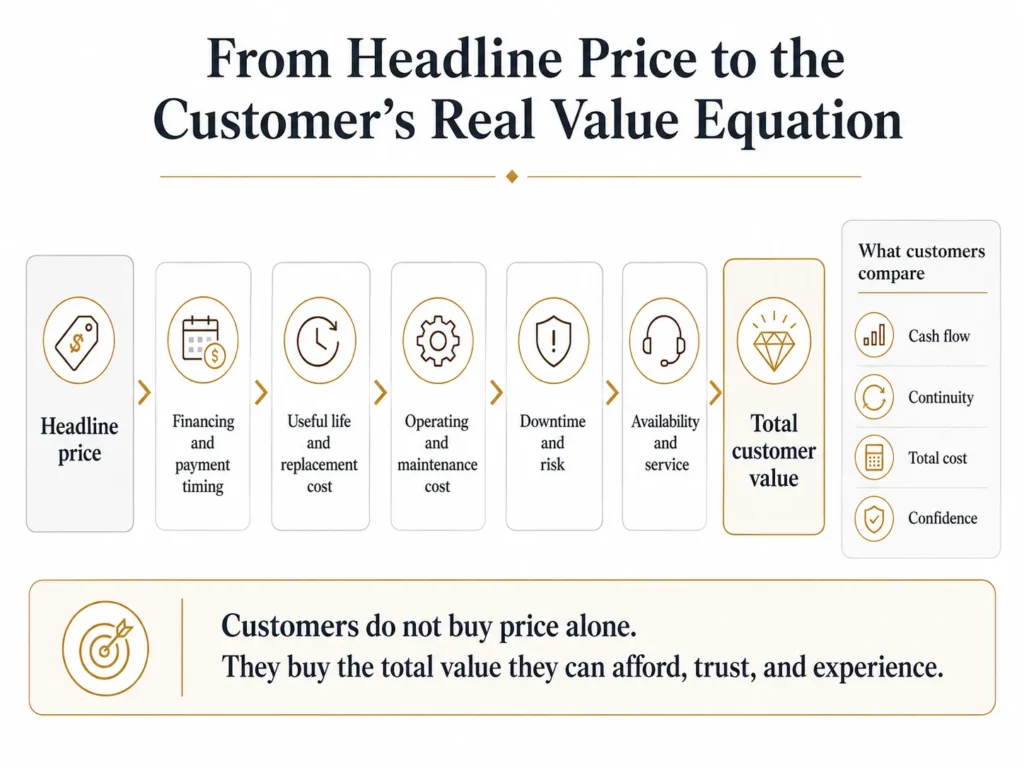
Figure 2. A credible value proposition helps Brazilian customers evaluate total economic and operational value rather than one visible price.
Price, Financing, and Commercial Terms Are Part of the Proposition
Customers may believe in the value and still reject the offer because the commercial model does not fit their cash flow, investment process, budget cycle, or risk tolerance.
The value architecture may need to consider:
- Purchase, lease, subscription, usage-based, or service models.
- Financing and payment timing.
- Local-currency versus foreign-currency exposure.
- Minimum quantities or contract commitments.
- Bundling, modularity, and optional services.
- Performance guarantees.
- Implementation phases.
- Working-capital impact.
- Channel margins and customer terms.
This does not mean changing the price whenever a customer pushes back. It means designing an offer whose economics reinforce the value proposition.
Customers Need Proof That Matches Their Perceived Risk
Brazilian customers may require several forms of evidence before changing suppliers, adopting a new technology, or paying a premium.
Relevant proof may include:
- Brazilian customer references.
- Industry-specific case studies.
- Performance benchmarks.
- Certifications and approvals.
- Pilots, trials, and demonstrations.
- Installed base.
- Service capacity and response commitments.
- Local inventory and spare parts.
- Technical specialists and application support.
- Global results translated into local relevance.
- Financial strength and continuity.
The most persuasive proof addresses the customer’s main source of uncertainty. A large account may require evidence of scale. A technical buyer may need tests and specifications. A distributor may need demand and support. A CFO may need payback and downside protection.
Complex Buying Organizations Need a Stakeholder Value Architecture
Many Brazilian B2B, industrial, healthcare, technology, and regulated purchases involve several stakeholders.
They may value different outcomes:
- Users: simplicity, reliability, speed, or convenience.
- Operations: uptime, productivity, quality, and continuity.
- Technical teams: performance, compatibility, integration, and support.
- Finance: total cost, payback, cash flow, and risk.
- Procurement: price, terms, compliance, supply, and comparability.
- Senior leadership: growth, resilience, scalability, and strategic impact.
- Channels: margin, demand, inventory risk, support, and ease of sale.
One coherent proposition should translate into stakeholder-specific outcomes and reasons to believe. The arguments may differ, but they should reinforce the same strategic promise.
The Competitive Frame Can Change by Segment
Your most visible national competitor may not be the alternative that matters most in every customer decision.
Customers may compare your offer with:
- Global multinational companies.
- Large Brazilian groups.
- Regional specialists.
- Local manufacturers.
- Distributor-owned or private-label brands.
- Lower-cost imports.
- Internal development.
- Outsourcing.
- Used or refurbished assets.
- Delaying the decision.
Your value proposition must be built against the alternatives customers actually consider—not only the competitors your company watches most closely.
Choose the Value Territory You Can Credibly Own with Your Value Proposition in Brazil
Several value territories may look attractive. Few are equally relevant, defensible, and profitable for your company.
Potential territories include:
- Best immediate price.
- Best total economics.
- Highest performance.
- Lowest operational risk.
- Strongest local support.
- Fastest implementation.
- Greatest flexibility or customization.
- Most integrated regional solution.
- Strongest sustainability or compliance outcome.
Your leadership team should test each territory according to:
- Customer importance.
- Competitive ownership.
- Proof strength.
- Economic attractiveness.
- Channel fit.
- Delivery capability.
- Scalability.
- Future relevance.
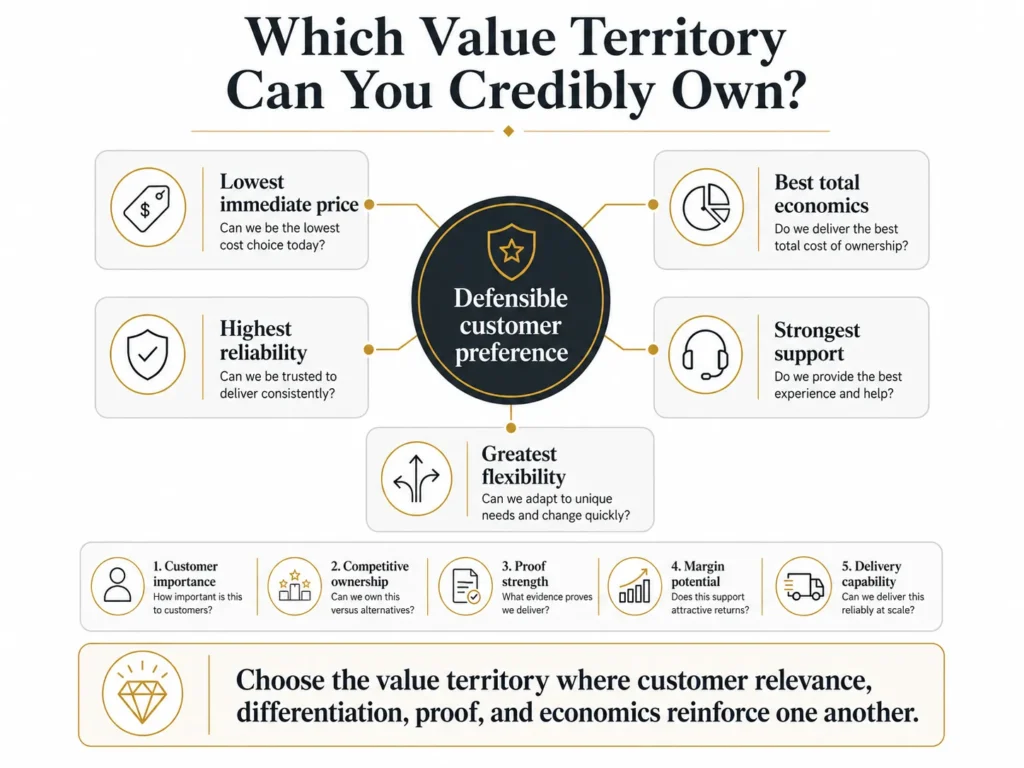
Figure 3. A defensible value position in Brazil sits where customer relevance, competitive differentiation, proof, economics, and delivery capability reinforce one another.
Channels Can Strengthen, or Dilute, the Value Proposition in Brazil
Distributors, dealers, integrators, representatives, retailers, marketplaces, service partners, and local sales teams shape the customer’s experience of your promise.
A channel can weaken the proposition when it:
- Sells only on price.
- Cannot identify the right customer or stakeholder.
- Lacks technical confidence.
- Does not use the available proof.
- Prioritizes competing brands.
- Cannot finance, stock, install, or service the offer.
- Receives incentives that conflict with your position.
- Does not share customer insight.
Activation may require:
- Segment and account priorities.
- Stakeholder-specific sales narratives.
- Economic-value tools.
- Proof libraries and case studies.
- Demonstrations and technical materials.
- Pricing and discount governance.
- Partner training and certification.
- Inventory and service standards.
- Lead-sharing and feedback mechanisms.
- Performance indicators.
The channel is not simply where the proposition is communicated. It is part of how the proposition is delivered.
The Promise Must Fit Your Delivery Footprint
A national service promise may be credible in one region and difficult to sustain in another.
Before claiming superior availability, speed, customization, technical support, or customer intimacy, your team should assess:
- Sales and service coverage.
- Partner capability.
- Inventory and spare-parts location.
- Logistics and response time.
- Technical talent.
- Decision authority.
- Digital and remote support.
- Implementation capacity.
- Customer escalation processes.
- Consistency across states and accounts.
A narrower promise that is consistently delivered creates more trust than a broad promise the organization cannot support everywhere.
How Midas Develops a Value Proposition in Brazil
1. Define the strategic scope
We clarify the customer, segment, region, application, product, service, channel, and decision the proposition must support.
2. Understand customer outcomes and buying systems
We examine jobs, pains, gains, risks, stakeholders, decision criteria, alternatives, affordability, and willingness to pay.
3. Map regional and segment differences
We identify where customer priorities, competition, channels, proof, service, and economics differ enough to require adaptation.
4. Compare competitors and substitutes
We assess claims, customer associations, proof, price logic, strengths, vulnerabilities, channel positions, and likely responses.
5. Select the value territory
We prioritize the customer value your company can own credibly, profitably, and consistently.
6. Build the economic logic and proof
We connect the promise with measurable outcomes, relevant evidence, cases, capabilities, demonstrations, references, and reasons to believe.
7. Translate the proposition into offers and execution
We help align product, service, pricing, financing, sales, channels, marketing, customer experience, and operations.
8. Test, activate, and refine
We validate customer understanding, relevance, differentiation, credibility, willingness to pay, channel usability, and delivery feasibility.
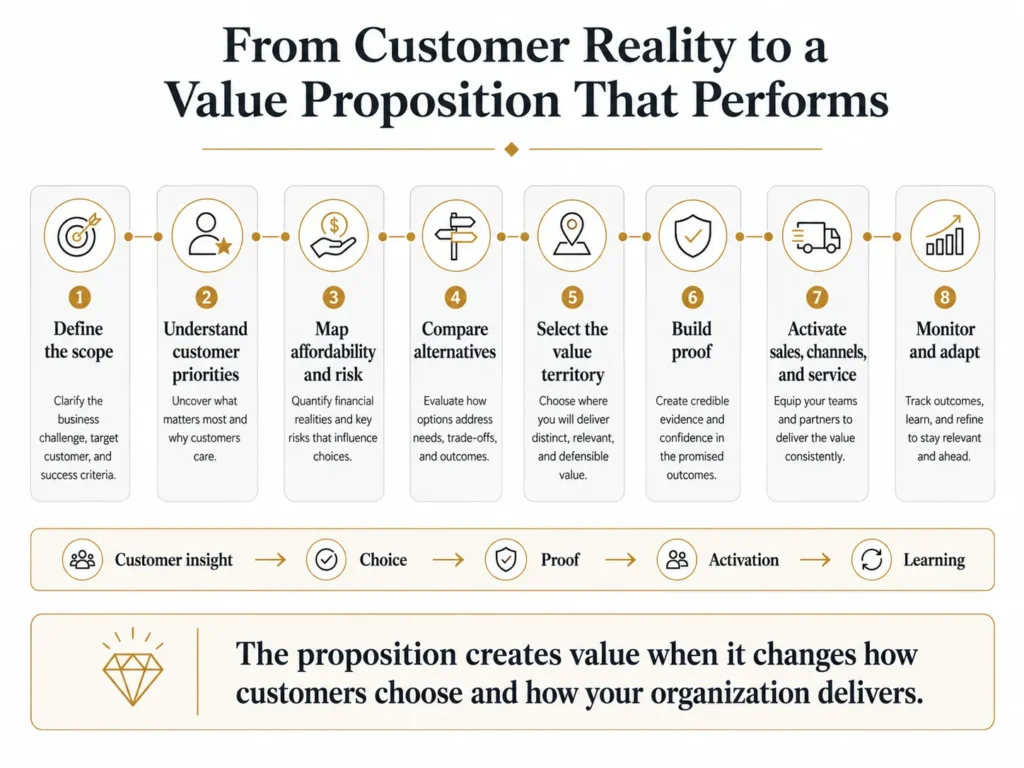
Figure 4. Value proposition design in Brazil should connect customer evidence, regional differences, competitive choice, proof, activation, and continuous refinement.
How Strategic Foresight Protects the Value Proposition in Brazil
Customer value can change as technology, regulation, taxes, channels, financing, sustainability requirements, supply chains, and competitors evolve.
Strategic foresight can help your team identify:
- Which customer priorities are becoming more important.
- Which current claims may become table stakes.
- Which new substitutes or business models could emerge.
- How competitors may respond to your position.
- Which proof points will matter in future decisions.
- Which capabilities your company will need next.
- Which indicators should trigger a proposition review.
For the broader executive framework, visit Strategic Foresight and Competitive Response: Executive Insights.
How This Page Fits the Midas Value Proposition Cluster
This page owns the Brazil-specific strategic question: how to connect one coherent customer promise with regional diversity, sophisticated buying systems, local and global competition, economic value, channels, proof, service, and execution at scale.
For the regional question—what should remain consistent and what should adapt across countries—visit Value Proposition in Latin America.
For the complete educational methodology, visit Are You Losing Customers Because You Don’t Have a Strong Value Proposition?.
For the commercial offer, engagement model, proof points, and next steps, visit Value Proposition Consulting.
Case Example: Reframing Value Around Performance and Local Execution
The executive challenge
A multinational company entered a Brazilian segment with strong technology and global references. Its sales teams emphasized innovation and product quality, but customers continued to favor established suppliers.
Interviews showed that customers did not doubt the technology. They doubted whether the company could deliver the required support, integration, response time, and continuity in Brazil.
How we approached the decision
We examined customer priorities, stakeholder roles, competitive alternatives, implementation risk, service expectations, proof requirements, channel capabilities, and economic value.
The strongest opportunity was not to claim greater innovation. It was to connect performance with reliable local execution.
How the value proposition changed in Brazil
The revised proposition combined measurable performance improvement with local technical support, implementation discipline, and evidence from comparable customer environments.
Sales tools, account plans, partner roles, proof points, and service commitments were aligned around the new value architecture.
The case illustrates a central principle: in Brazil, a differentiated product promise becomes compelling only when the customer believes the local operating system can deliver it.
“We doubled our sales after designing our value proposition because customers now clearly understand our differentiators.”
— CEO, Consumer Goods Company
“Now that we sell value, we rely on far fewer discounts.”
— Marketing Vice President
When You Need a Stronger Value Proposition in Brazil
- Your global message feels generic in Brazil.
- Different regions or sales teams tell different stories.
- Customers compare your offer mainly on price.
- Your company relies too heavily on discounts.
- Customers value the product but question local execution.
- Channels cannot explain or deliver the proposition consistently.
- Local and multinational competitors create different comparisons.
- You are entering a new segment, region, or channel.
- You are repositioning a product, service, or company.
- Your proposition has not evolved with customer and market changes.
Why Midas for Value Proposition Strategy in Brazil?
We begin with Brazilian customer evidence
We use interviews, win-loss insight, market analysis, competitor analysis, channel evidence, and commercial data to challenge internal assumptions.
We connect national strategy with regional reality
We help you preserve one value territory while adapting proof, offer, channels, service, and activation where needed.
We connect differentiation with measurable value
We translate product and company strengths into outcomes customers can understand and evaluate.
We connect global credibility with local proof
We identify what Brazilian customers need to believe that your company can deliver in their environment.
We connect the proposition with channels and operations
The work can influence pricing, financing, product configuration, inventory, service, partner roles, and customer experience.
We test future resilience
We consider how technology, regulation, channels, customer priorities, and competitors may change the proposition’s relevance.
We bring direct value proposition in Brazil experience
We have designed value propositions and growth strategies in Brazil across industrial, automotive, technology, consumer, healthcare, pharmaceutical, agricultural, and regulated markets.
Ethical and Reliable Customer Intelligence
We comply with SCIP’s Code of Ethics, the profession’s gold standard. We comply with applicable laws, accurately disclose relevant identity and organizational information before interviews, avoid conflicts of interest, and provide honest recommendations.
We do not seek trade secrets, request confidential documents, misrepresent who we are, or encourage sources to violate legal or contractual obligations.
We distinguish customer evidence, competitor claims, internal assumptions, estimates, hypotheses, and unknowns so your leadership team understands the strength of the recommendation.
Review SCIP’s ethical intelligence guidance and Code of Ethics.
Frequently Asked Questions About Value Propositions in Brazil
Should our global value proposition be changed for Brazil?
The strategic core may remain consistent, but customer emphasis, proof, pricing, channels, service, and delivery may need adaptation by segment, region, and account type.
Do we need different propositions for different Brazilian regions?
Not necessarily different strategic propositions. You may need different expressions, proof points, commercial offers, channel models, or service commitments around one coherent value territory.
Can you interview Brazilian customers in your value proposition consulting in Brazil?
Yes. Customer, prospect, distributor, channel, expert, and win-loss interviews are often essential for understanding the real decision criteria.
Can you compare local and multinational competitors in your value proposition consulting in Brazil?
Yes. We can compare customer associations, claims, economic value, proof, channels, service, local presence, strengths, vulnerabilities, and likely responses.
Can you quantify customer value in your value proposition consulting in Brazil?
Where evidence allows, we can estimate productivity, cost, yield, downtime, working capital, service, risk, revenue, or payback effects.
Can you help us defend a premium with your value proposition consulting in Brazil?
Yes. We can help connect the premium with relevant customer outcomes and credible proof. The value must still justify the difference for the target customer.
Can you develop stakeholder-specific value arguments in your value proposition consulting in Brazil?
Yes. We can translate one coherent proposition into relevant outcomes and evidence for users, operations, technical teams, finance, procurement, channels, and management.
Can you activate the value proposition through distributors in Brazil?
Yes. We can develop partner tools, training, economic arguments, proof libraries, pricing guidance, service standards, and performance indicators.
Can this support market entry or repositioning?
Yes. It can clarify the target customer, value territory, competitive frame, proof, offer, pricing, channels, and activation priorities.
How often should the value proposition in Brazil be reviewed?
It should be reviewed when customer priorities, regulation, technology, competitors, channels, supply, pricing, or the offer change materially.
About the Author
Adrian Alvarez, PhD is Managing Partner at Midas Consulting, Wharton Alumnus, MBA Professor at Universidad Argentina de la Empresa (UADE), and Competitive Intelligence Fellow. He specializes in value proposition design, competitive strategy, strategic intelligence, market analysis, competitor analysis, and executive decision-making under uncertainty in Brazil and Latin America.
He has designed hundreds of value propositions across B2B, B2C, industrial, technology, consumer, and pharmaceutical markets. His doctoral research focuses on value proposition design in specialty pharmaceutical markets, where customer value, evidence, access, and stakeholder alignment are especially important.
His work has been published in the United States, Spain, and Germany. You can access his library of strategic insights and published research here
View professional profile on LinkedIn
Selected Brazilian Sources You May Need to Monitor
- IBGE for official demographic, economic, regional, price, and sector information.
- Banco Central do Brasil for monetary, credit, financial, and exchange information.
- Ministry of Development, Industry, Trade and Services for trade, industry, investment, and business context.
- CADE for competition and market-structure information.
- Company disclosures, industry associations, state agencies, customer research, channel evidence, pricing observations, and primary interviews as appropriate.
Turn Brazil’s Complexity into a Clearer Reason to Choose You
You may be trying to adapt a global proposition, reduce discounting, align regions and channels, defend a premium, enter a new segment, or show customers that your local operating model is as strong as your product.
You do not need another broad statement about quality, innovation, service, or partnership. You need to understand which customer outcome matters, how the competitive frame changes, what economic value you create, what proof the customer requires, and what your organization must deliver in Brazil.
In an initial conversation, we will discuss your customers, regions, segments, products, channels, competitors, proof, pricing challenges, and the commercial decision the proposition must support.
We can then propose a focused Brazil value proposition engagement with a clear research plan, collaboration model, deliverables, timing, and investment.