
Competitor analysis is often misunderstood as simply collecting information about rivals. At Midas Consulting, we see it differently: competitor analysis is a strategic decision tool that helps executives understand how competitors think, where they are strong, where they are vulnerable, and how they may respond to your company’s next move.
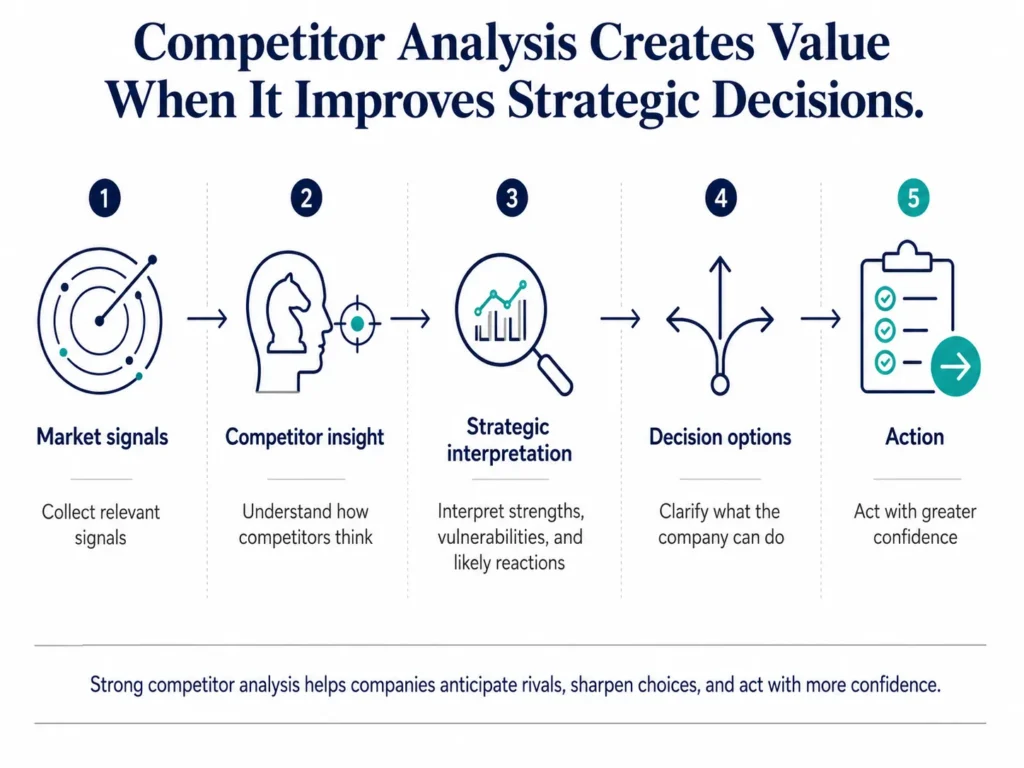
Figure 1: The goal is not to know more about competitors. The goal is to make better strategic choices.
The real value of competitor analysis is not knowing more about competitors. The real value is making better strategic decisions because you understand the competitive system around you.
This matters because competition rarely comes only from obvious direct rivals. As Michael Porter’s work on competitive forces shows, companies must also consider customers, suppliers, potential entrants, substitutes, and the broader structure of competition. That is why strong competitor analysis should look beyond visible moves and ask deeper questions: What are competitors trying to achieve? What assumptions guide their decisions? What capabilities do they have? Where are they constrained? How could they react if we change pricing, launch a product, enter a market, or target one of their key customers?
In Latin America, this discipline is especially important. Competitor behavior can vary significantly by country because of differences in inflation, regulation, channel concentration, distributor power, informality, import restrictions, local relationships, and access to reliable market information. A competitor that behaves aggressively in one market may act defensively in another. A distributor that appears neutral may actually shape competitive dynamics. A local player that looks small in public data may have strong relationships, service coverage, or pricing flexibility.
For that reason, we often combine competitor analysis with market analysis, benchmarking, business wargaming, win-loss analysis, strategy workshops, and value proposition design.
In this article, we explain what competitor analysis is, when it is most useful, what benefits it can create, how to apply it, where its limitations are, and how it connects with other strategy tools that help executives anticipate competitive moves before they happen.
When Competitor Analysis Is the Right Tool
Competitor analysis is most valuable when your company needs to make a decision that competitors can influence, imitate, block, or exploit. It is especially useful when leadership teams need to:
- Understand why a competitor is gaining share, improving margins, winning accounts, or entering new segments.
- Evaluate how competitors position their products, brands, prices, channels, and value propositions.
- Identify strategic gaps where your company can differentiate or capture underserved demand.
- Anticipate how competitors may react to a price change, product launch, market entry, channel move, acquisition, or commercial campaign.
- Compare capabilities, commercial models, service levels, innovation pipelines, and execution practices.
- Understand how customers perceive competitors and why they choose one supplier over another.
- Build a stronger fact base before defining strategy, allocating resources, or aligning the leadership team.
The key point is that competitor analysis should not be done to “monitor the market” in a general way. It should be designed around a specific strategic question: What do we need to understand about competitors to make a better decision?
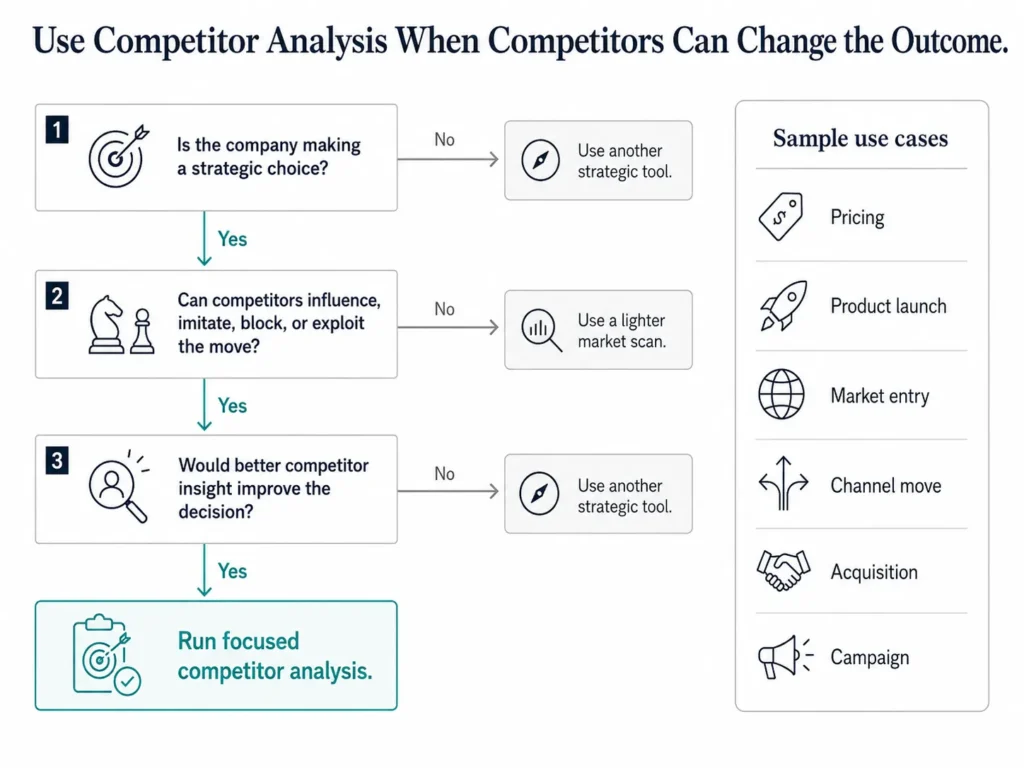
Figure 2: Competitor analysis is most valuable when competitor behavior can shape the success of your next move.
What Is Competitor Analysis?
Competitor analysis is the structured process of collecting, interpreting, and applying information about competitors to support strategic decisions. It goes beyond describing what competitors do. It seeks to explain why they act the way they do, what they are likely to do next, and how their behavior may affect your company’s options.
A strong competitor analysis typically examines several dimensions:
- Strategy and objectives: What competitors appear to be trying to achieve, which markets or segments they prioritize, and where they may be investing.
- Positioning and value proposition: How competitors communicate value, differentiate themselves, and influence customer perception.
- Products and services: What they offer, how their portfolio is evolving, and where their offer is stronger or weaker than yours.
- Pricing and commercial model: How they price, discount, bundle, finance, negotiate, and defend margins.
- Channels and go-to-market model: How they reach customers, which distributors or partners they use, and where they have coverage advantages.
- Capabilities and constraints: What they can do well, where they may be limited, and what resources or relationships give them an advantage.
- Likely reactions: How they may respond if your company changes strategy, enters a market, launches a product, adjusts pricing, or targets their accounts.
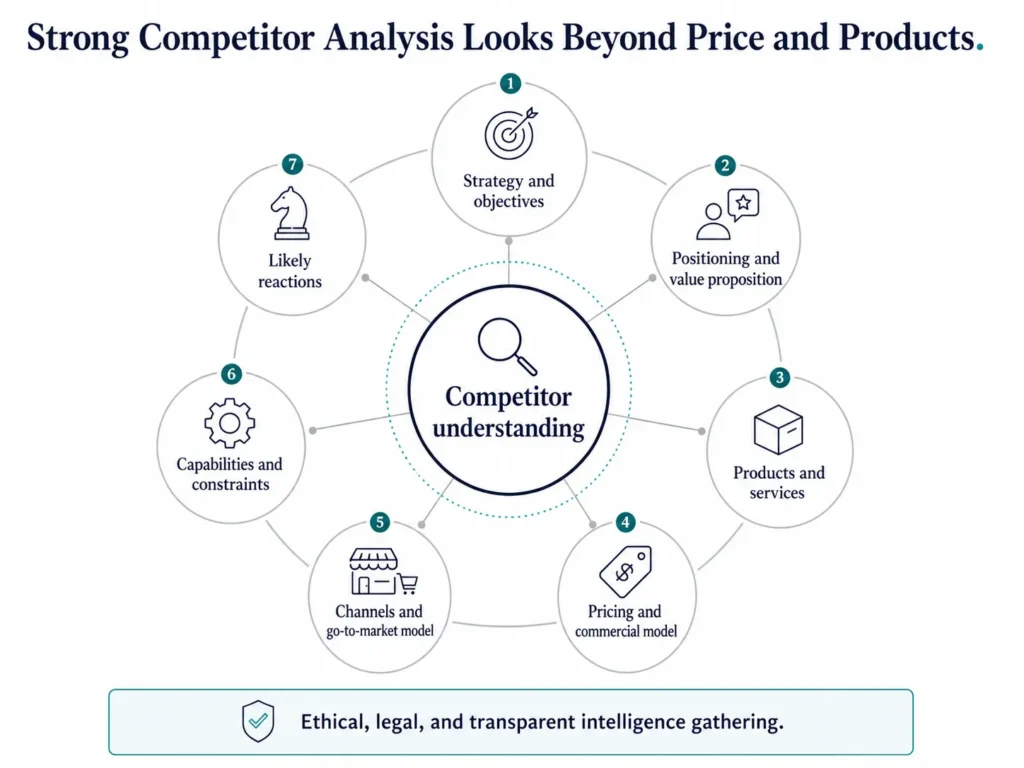
Figure 3: A useful competitor view explains how rivals think, where they are strong, and how they may respond.
Looking at real competitive responses helps you build better hypotheses about how competitors may behave. In the Midas Import Competition Monitor 2026, we analyzed 151 business decisions made as companies responded to increased import competition in Argentina and found very different strategies under similar competitive pressure. Forbes Argentina used the Midas Consulting Monitor to examine these different competitive responses. The evidence reinforces a core idea in competitor analysis: understanding each player’s capabilities, constraints, and incentives is more useful than assuming everyone will react the same way.
Ethics are essential. Competitor analysis should rely on legal, transparent, and professional intelligence-gathering methods. This includes public sources, expert interviews, customer and channel insights, market observation, financial information where available, and structured analysis. It should not rely on deception, confidential information, or improper access to competitor data. This ethical approach is consistent with the principles promoted by Strategic and Competitive Intelligence Professionals.
Three Executive Benefits of Competitor Analysis
1. Identify strategic opportunities and gaps
Competitor analysis helps executives identify where competitors are strong, where they are vulnerable, and where the market may be underserved. This is not only about finding weaknesses. It is about understanding how the competitive landscape creates openings for your company.
For example, a competitor may have strong brand awareness but weak service coverage. Another may have an attractive product but limited channel reach. A third may dominate a segment but be exposed on price, delivery, customer support, innovation, or local adaptation.
When these insights are connected to your company’s capabilities, competitor analysis can help answer practical strategic questions: Where can we differentiate? Which segment should we prioritize? Which competitor is most exposed? Which capabilities do we need to strengthen? Which market position is defensible?
2. Reduce strategic risk and avoid avoidable mistakes
Competitor analysis helps leadership teams avoid decisions based on incomplete assumptions. A strategy may look attractive internally but become weaker once competitor capabilities, incentives, relationships, and likely reactions are considered.
For example, a price reduction may trigger retaliation. A market entry may provoke a local incumbent. A new product launch may be copied quickly. A channel move may upset distributors. A campaign may fail because competitors already own the most credible claims in the customer’s mind.
By studying competitor behavior before acting, executives can adjust the strategy, stage the investment, prepare countermoves, or decide that the risk is not worth taking.
3. Anticipate competitive moves before they become visible
Competitor analysis is not only retrospective. It should help companies detect signals that competitors may be preparing a strategic move: hiring patterns, distributor changes, new partnerships, product modifications, regulatory filings, pricing shifts, messaging changes, customer targeting, or investment in new capabilities.
These signals are rarely conclusive on their own. But when they are interpreted together, they can reveal a competitor’s direction of travel before the move becomes obvious.
This is especially useful in markets where public data is limited or delayed. In those situations, competitor analysis helps executives move from reactive competition to anticipatory competition.
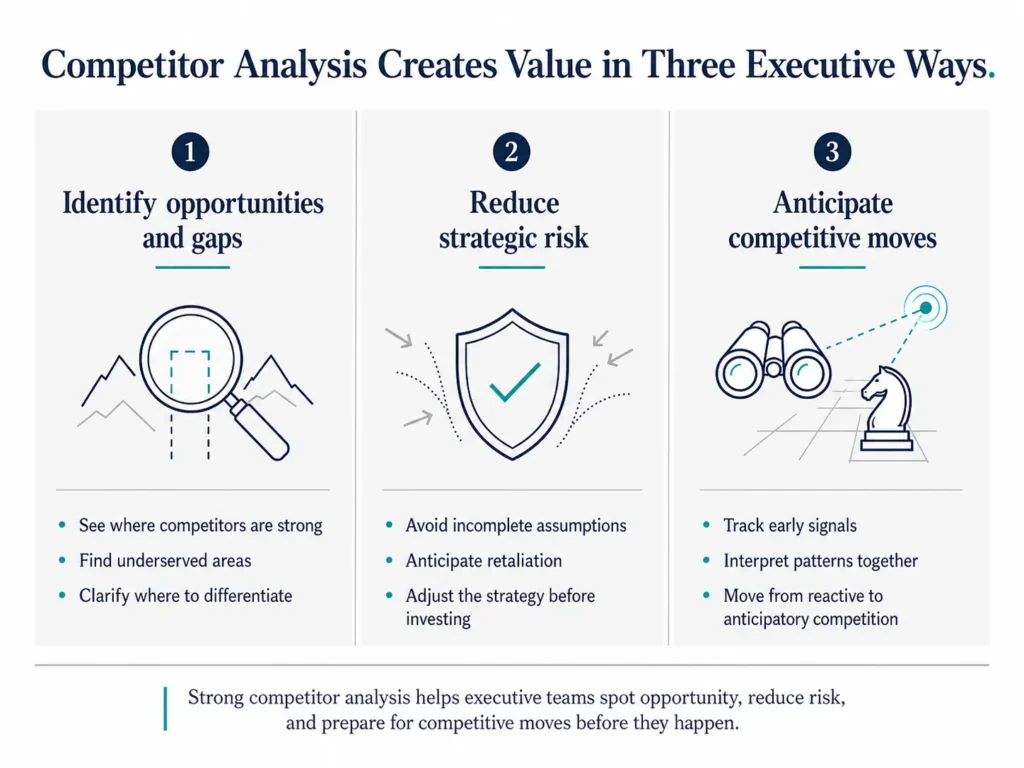
Figure 4: The best competitor analysis helps executives find opportunity, reduce avoidable risk, and anticipate what comes next.
How to Apply Competitor Analysis to Your Business
A useful competitor analysis should be designed around the decision your company needs to make. The process should not start with a list of competitors. It should start with the strategic question.
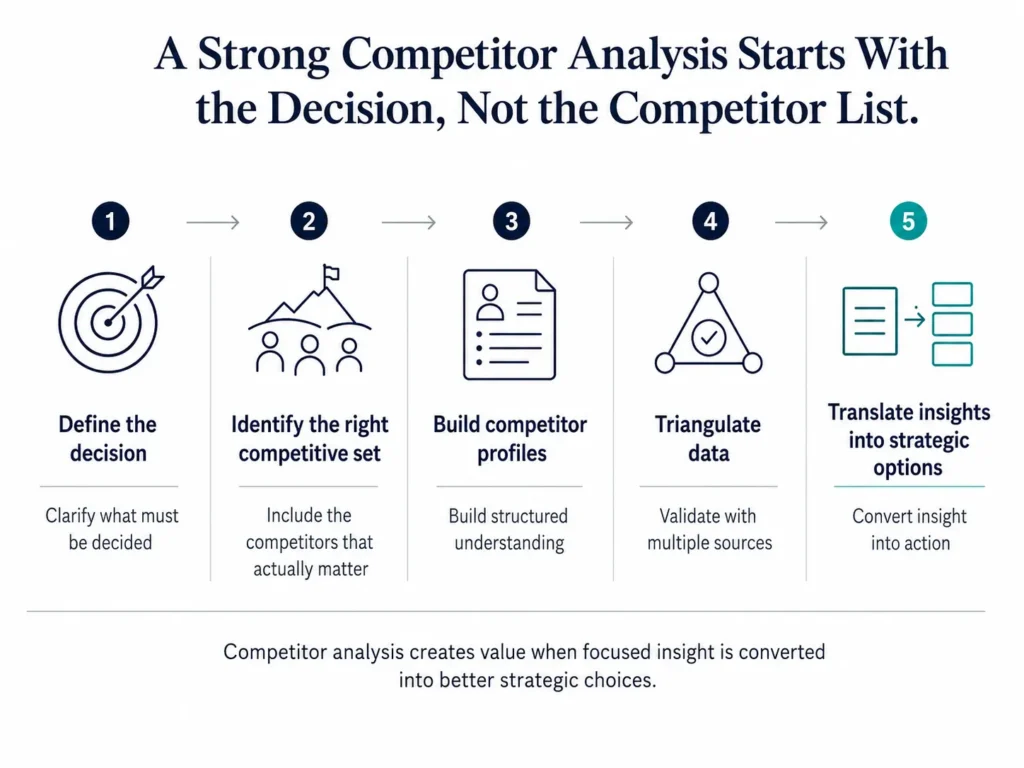
Figure 5: The output should not be a long report. It should be a better decision.
Step 1. Define the decision
Clarify what the analysis needs to support. Are you deciding whether to enter a market? Adjust pricing? Launch a product? Improve your value proposition? Defend share? Expand through distributors? Respond to a competitor’s move?
The decision determines which competitors matter, what data is relevant, and what level of depth is required.
Step 2. Identify the right competitive set
Do not limit the analysis to obvious direct rivals. Depending on the decision, the relevant competitive set may include local incumbents, regional players, private-label alternatives, substitutes, distributors, new entrants, digital platforms, low-cost challengers, or companies from adjacent categories.
This broader view is aligned with the logic behind competitive forces analysis: competition can come from several directions, not only from companies that look like yours.
Step 3. Build competitor profiles
For each priority competitor, develop a structured profile that includes strategy, positioning, target segments, offer, pricing logic, channel model, capabilities, constraints, visible moves, and likely objectives.
The goal is not to create a descriptive file. The goal is to understand what each competitor can do, what they are likely to do, and where your company may have room to act.
Step 4. Triangulate data
Competitor analysis should combine multiple sources: public information, customer interviews, distributor or channel insights, expert interviews, field observation, product comparisons, digital signals, financial information where available, and internal sales knowledge.
Because each source has limitations, triangulation is essential. A single interview, public claim, or sales anecdote should not drive strategy on its own.
Step 5. Translate insights into strategic options
The final output should not be a long competitor report. It should help executives decide what to do. That may include priority opportunities, defensive actions, pricing implications, positioning changes, channel moves, early warning indicators, competitor response scenarios, or a roadmap for action.
In complex decisions, competitor analysis can be combined with business wargaming to test how competitors may respond before the company commits resources.
Practical Example: From Competitor Data to Strategic Action
A B2B company asked Midas Consulting to understand why a competitor was gaining share in a regional market. Internally, the initial assumption was that the competitor was winning mainly because of lower prices.
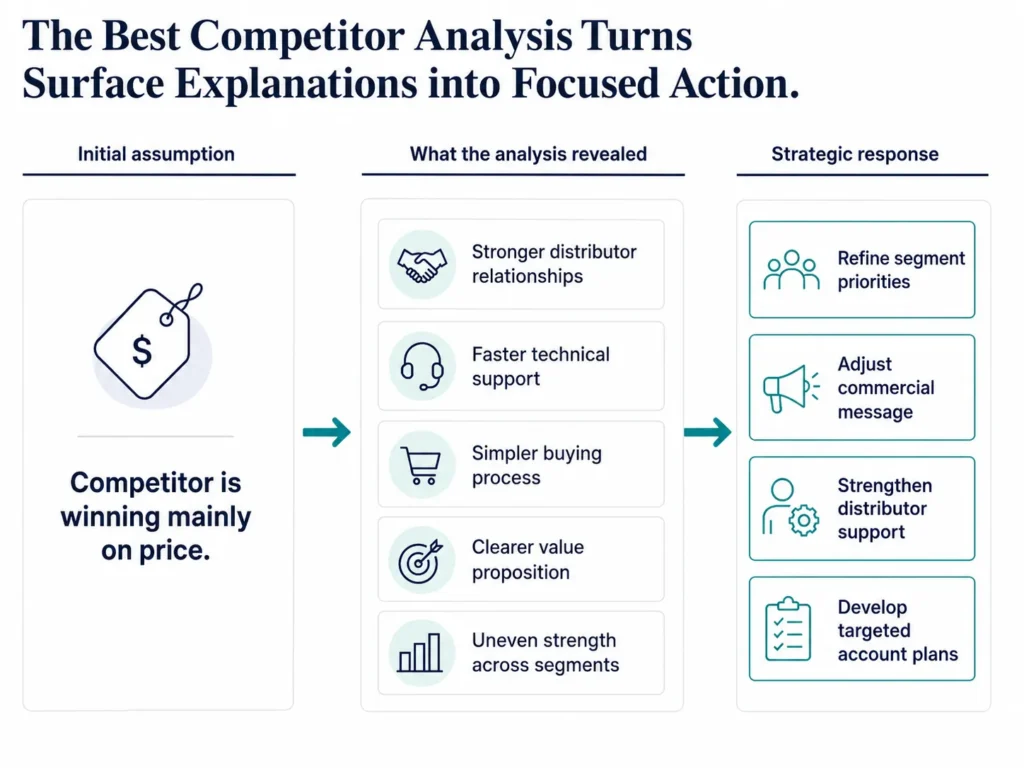
Figure 6: Competitor analysis adds value when it replaces simplistic explanations with targeted strategic action.
The competitor analysis showed a more nuanced picture. Price mattered, but it was not the only driver. Customer and channel interviews revealed that the competitor had built stronger distributor relationships, offered faster technical support, simplified the buying process, and communicated a clearer value proposition for a specific customer segment.
The analysis also showed that the competitor was not equally strong across all segments. In some accounts, it had high credibility. In others, customers were dissatisfied with service consistency and wanted a more reliable alternative.
The recommendation was not simply “lower prices.” Instead, the company refined its segment priorities, adjusted its commercial message, strengthened distributor support, and developed a targeted account plan for the segments where the competitor was more vulnerable.
This is the value of competitor analysis. It helps companies move beyond surface-level explanations and understand the real sources of competitive advantage.
Strengths and Limitations of Competitor Analysis
Competitor analysis is powerful when it is focused, ethical, and connected to decision-making. But like any strategic tool, it also has limitations.
Strengths
- It improves external perspective. It helps leadership teams avoid strategies based only on internal assumptions.
- It reveals competitive openings. It identifies gaps in positioning, service, pricing, channel coverage, portfolio, or customer experience.
- It supports better resource allocation. It helps executives decide where to invest, where to defend, and where not to compete.
- It improves anticipation. It helps detect competitor signals before they become obvious market moves.
- It strengthens alignment. It creates a shared fact base for strategic discussions across leadership, commercial, marketing, and regional teams.
Limitations
- Competitor information is often incomplete. Public data may be limited, outdated, or misleading, especially in privately held companies or fragmented markets.
- Signals require interpretation. A new hire, price move, distributor change, or product launch may have several possible explanations.
- Competitor analysis does not predict the future with certainty. It improves preparedness, but competitors may still act irrationally, defensively, or unexpectedly.
- It can become too competitor-centered. Companies should not copy rivals blindly. Competitor analysis must be combined with customer insight, market analysis, and internal capability assessment.
- Competitor reactions may need simulation. When a strategic move could trigger retaliation, escalation, or disruption, competitor analysis should be complemented with business wargaming or strategy workshops.
For decisions affected by regulation or market structure, competitor analysis should also consider broader competitive conditions, consistent with the OECD’s work on competition assessment.
This is why competitor analysis should be treated as part of a broader strategic intelligence system, not as a one-time research report.
Conclusion: Competitor Analysis Should Lead to Better Strategic Choices
Competitor analysis is not valuable because it helps you collect more information about rivals. It is valuable because it helps you make better decisions in competitive situations.
When done well, competitor analysis helps executives answer practical questions: Which competitors matter most? Where are they strong? Where are they exposed? What do customers value about them? What are they likely to do next? How could they respond to our move? Where can we win in a way that is difficult to copy?
At Midas Consulting, we use competitor analysis to help companies move from scattered observations to structured competitive insight. The goal is not to imitate competitors. The goal is to understand the competitive landscape well enough to define a sharper, more defensible strategy.
In Latin America, this is especially important because competitor behavior often depends on country-specific conditions: regulation, inflation, channel structure, distributor relationships, local brands, informality, pricing flexibility, and access to reliable information. A strategy that works in one country may not work in another if competitor dynamics are different.
If your company is evaluating a strategic move, defending share, entering a market, launching a product, adjusting pricing, or trying to understand why competitors are winning, competitor analysis can help you make the decision with greater clarity and confidence.
About the Author
By Adrian Alvarez, PhD. Adrian Alvarez is Managing Partner at Midas Consulting, Wharton Alumnus, MBA Professor at Universidad Argentina de la Empresa (UADE), and Competitive Intelligence Fellow. He specializes in competitive strategy, competitor analysis, strategic intelligence, business wargaming, market entry, benchmarking, and strategic decision-making under uncertainty in Latin America.
He has led more than 100 competitive intelligence and competitor analysis projects across Latin America, helping companies understand competitor behavior, anticipate strategic moves, evaluate market opportunities, and make better decisions in complex competitive environments. He also served as a Board Member of SCIP, the global association for strategic and competitive intelligence professionals, during the 2009–2011 period, and has trained executives and practitioners on competitive intelligence practices and ethics in Latin America.
Adrian is the author of numerous works published in the US, Spain, and Germany. You can access his library of strategic insights and published research here
View professional profile on LinkedIn
Selected External Sources
This article is informed by Midas Consulting’s experience conducting competitor analysis and competitive intelligence projects across Latin America, as well as by respected sources on competitive strategy, ethical intelligence gathering, and competition assessment.
- Harvard Business Review: The Five Competitive Forces That Shape Strategy
- Strategic and Competitive Intelligence Professionals: Competitive & Market Intelligence Ethics
- OECD: Competition Assessment
Related Midas Insights
For executives who want to go deeper, these Midas articles provide additional context on how competitor analysis connects with market analysis, benchmarking, wargaming, win-loss analysis, and strategic foresight:
- Market Analysis: The Key to Informed Strategic Decisions
- Benchmarking: Improve Your Competitive Position
- How to Design and Implement a Wargame
- Win-Loss Analysis: Your Secret Weapon for Growth Beyond Sales
- Strategic Foresight and Competitive Response: Executive Insights
Related Midas Services
Competitor analysis is often part of a broader strategic decision process. Depending on the question your company needs to answer, Midas Consulting can combine competitor analysis with other strategy services:
- Competitor Analysis Consulting: When your company needs to understand competitor goals, strategies, assumptions, capabilities, and likely moves.
- Market Analysis: When the question is not only how competitors behave, but whether the market, segment, or opportunity is attractive enough to pursue.
- Benchmarking: When leadership teams need to compare capabilities, practices, performance, or execution against competitors or reference companies.
- Business Wargaming: When the decision could trigger competitor reactions and the team needs to test moves, countermoves, and escalation scenarios before acting.
- Win-Loss Analysis: When the company needs to understand why customers choose, reject, switch from, or stay with specific competitors.
- Value Proposition Consulting: When your company needs to clarify why customers should choose your offer and how to communicate that value more effectively.
- Strategy Consulting: When your company needs to define where to compete, how to win, which priorities to pursue, and how to align leadership around a clear strategic direction.
Together, these services help executive teams move from competitor understanding to strategic choice, alignment, and action.
If your company needs to understand competitor behavior, anticipate market moves, or make a strategic decision with greater confidence, contact Midas Consulting to discuss how competitor analysis can support your next decision.
Knowing the benefits and process of competitor analysis is one thing, but doing it successfully is another. Don’t worry, we’re here to help every step of the way!
We are by your side tackling tough competition!
After conducting hundreds of competitor analysis projects, we’ve perfected our approach. We’re passionate about helping companies like yours leapfrog the competition!

Some of our competitor analysis clients:






Here’s what some of our clients have to say about our work:
“We’ve done competitor analysis before, but never have I been so clear on how and why competitors act the way they do.”


How to move forward:
Schedule a Quick Call
Receive Your Competitor Analysis
Leapfrog your competition
In a brief call, we’ll ask for a few details to create a custom proposal for you. Once it’s ready, we’ll send it over for your review, and once approved, we’ll get started on your competitor analysis project
During the project, you’ll receive at least two deliverables:
First, we’ll share preliminary results so we can fine-tune the project to your specific needs
Then, we’ll provide our final recommendations
By implementing our recommendations, you’ll always stay ahead of the competition
We’re ready when you are! Let’s work together to achieve your goals!
If you liked this blog post, please share it in your networks: