
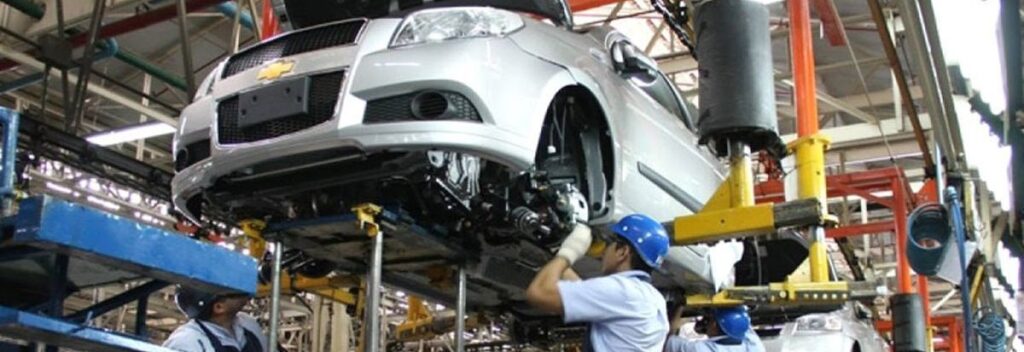
Automotive products consulting designed to accelerate strategic, profitable growth.
Automotive markets are changing in more than one direction at the same time.
Electrification is advancing, but not uniformly. Connected technologies and software are reshaping vehicle economics. New OEMs and parts suppliers are entering Latin America. Procurement teams continue to demand cost reductions. The aftermarket remains fragmented. Tariffs, currencies, financing, local-content rules, infrastructure, and regulation can change the attractiveness of an opportunity quickly.
You therefore need more than a view of where the industry is going. You need to decide where your company should place its resources, and where it should not.
That is where Automotive Products Consulting should create value.
Midas Consulting helps you connect vehicle-parc dynamics, technology transitions, customer economics, OEM and aftermarket structures, channel realities, competitor behavior, and uncertainty so you can make stronger strategic choices before capital and management attention are committed.
For more than 25 years, we have supported automotive and auto-parts companies across Latin America with market strategy, competitive intelligence, market entry, benchmarking, value propositions, channel decisions, and growth strategy.
Our objective is not another industry forecast. It is a clearer answer to four questions: Where should you play? How should you win? How will customers, OEMs, distributors, competitors, and new entrants react? And what must be true for your strategy to create profitable growth?
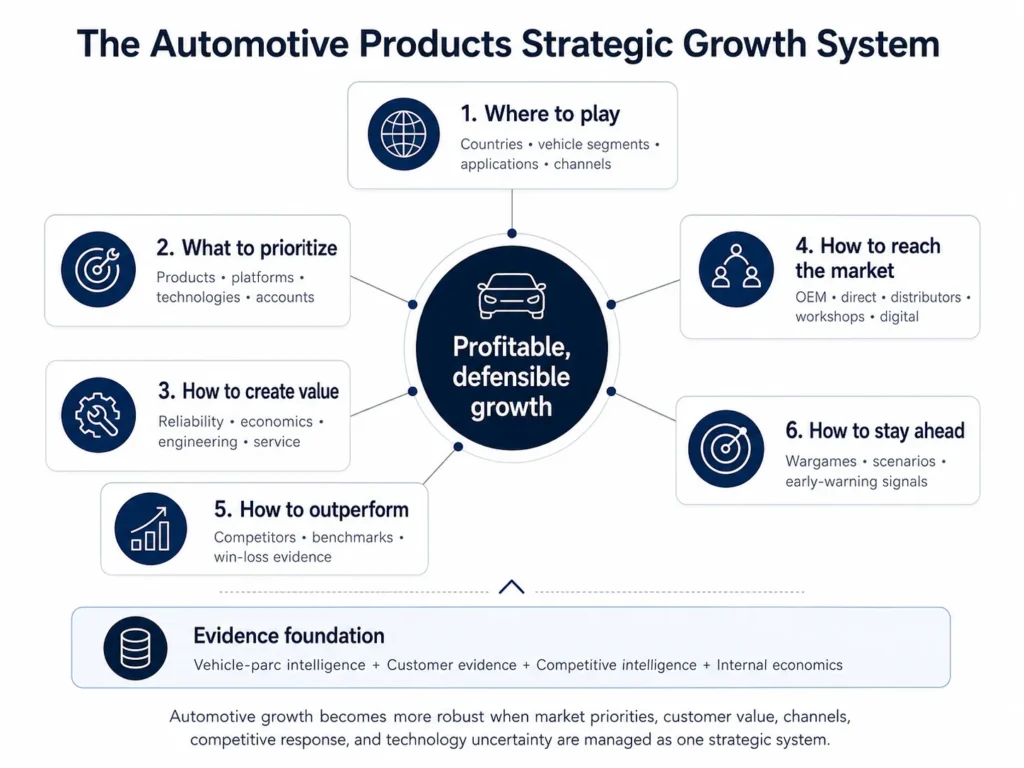
Figure 1: Automotive growth becomes more robust when market priorities, customer value, channels, competitive response, and technology uncertainty are managed as one strategic system.
Start With the Strategic Decision
Automotive companies are surrounded by information: vehicle registrations, parc data, OEM production, model launches, parts consumption, workshop activity, distributor sales, bid histories, platform data, technology roadmaps, competitor pricing, and economic forecasts.
The strategic problem is deciding which information should change what you do.
We begin Automotive Products Consulting engagements by defining the management decision clearly.
- Which countries, vehicle segments, applications, customer groups, or channels deserve incremental investment.
- How much capital should remain behind internal-combustion portfolios while electric, hybrid, connected, and software-enabled segments develop.
- Which products are structurally attractive in the installed vehicle parc and which face long-term decline.
- How to defend a price premium when procurement compares products primarily on unit cost.
- Which OEM, fleet, distributor, workshop, retailer, or digital-channel opportunities deserve priority.
- Whether to enter directly, through distributors, through OEM relationships, through workshops, or through a hybrid model.
- Why bids, programs, or aftermarket opportunities are being won, lost, delayed, or commoditized.
- How to respond to aggressive entrants with lower prices, improving quality, or different cost structures.
- Whether local inventory, engineering support, assembly, manufacturing, or service capabilities justify investment.
- Which assumptions could fail if EV adoption, tariffs, regulation, currencies, financing, or customer economics move differently from your base plan.
Once the decision is explicit, we build the fact base around it. That keeps the work focused on choices, trade-offs, and execution.
Where Should You Place the Next Automotive Growth Bet?
The largest automotive market is not automatically the best one for your company.
A country may have large vehicle sales but limited relevance to your product. A fast-growing EV segment may be strategically important but still too small to justify immediate local investment. A mature combustion-engine parc may look less exciting but generate attractive, recurring aftermarket demand for years.
We help you compare opportunities using criteria that reflect your economics and strategic position.
- Vehicle parc size and age
- New-vehicle sales
- Powertrain mix
- Vehicle-segment mix
- Installed component base
- Replacement cycles
- Failure or wear rates
- Annual mileage
- Application intensity
- OEM platform relevance
- Aftermarket accessibility
- Fleet concentration
- Workshop structure
- Distributor reach
- Competitive intensity
- Price and margin potential
- Warranty and quality exposure
- Logistics and inventory requirements
- Localization requirements
- Technology risk
- Strategic fit
- Execution feasibility
- Uncertainty
The objective is not to follow the most visible technology trend. It is to identify where demand, strategic fit, access, economics, and timing align.
Our market analysis consulting helps you build the vehicle-parc, demand, customer, channel, pricing, and competitive fact base behind those choices.
When geographic expansion is the decision, our market entry consulting helps you compare countries, barriers, entry models, partners, economics, and implementation priorities.
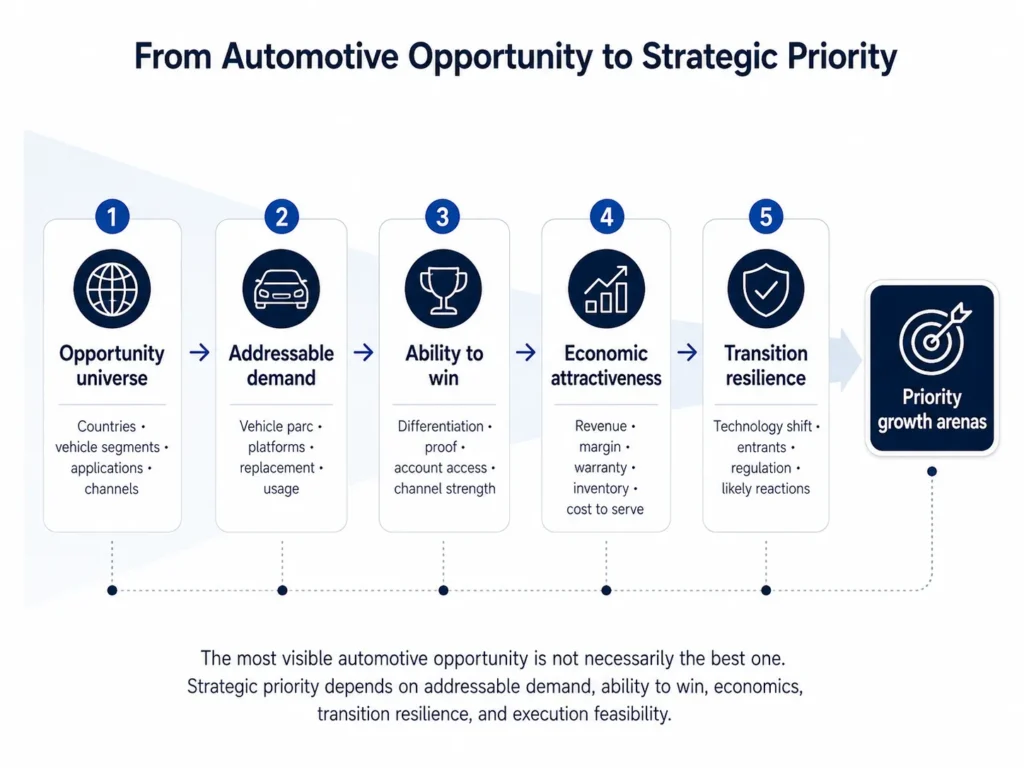
Figure 2: The most visible automotive opportunity is not necessarily the best one. Strategic priority depends on addressable demand, ability to win, economics, transition resilience, and execution feasibility.
Manage the Transition Without Abandoning Today’s Profit Pool with Our Automotive Products Consulting
The automotive transition is not a simple switch from one technology to another.
Internal-combustion, hybrid, battery-electric, connected, software-enabled, and increasingly automated vehicle technologies can coexist for long periods, with adoption varying by country, vehicle segment, infrastructure, incentives, income, fleet economics, and regulation.
That creates a capital-allocation problem. Move too early and you may build capacity ahead of demand. Move too late and you may lose relevance, engineering relationships, distribution access, or the capabilities required for the next platform cycle.
- Which legacy products still have attractive cash-generation potential
- Which applications decline quickly and which remain resilient
- Which new technologies are commercially relevant now
- Which markets are likely to adopt later
- Which capabilities can be shared across technologies
- Where existing manufacturing or distribution assets remain valuable
- Which investments create option value without requiring a full commitment
- Which early-warning signals should trigger acceleration or withdrawal
The purpose is not to predict one exact mobility future. It is to build a portfolio strategy that can perform across plausible transition paths.
Use Vehicle-Parc Economics to See the Aftermarket More Clearly
New-vehicle sales attract attention, but many automotive-products businesses make money from the installed parc.
Aftermarket demand can depend on the number of vehicles in operation, vehicle age, annual mileage, maintenance practices, failure rates, replacement cycles, climatic conditions, road quality, model mix, workshop behavior, and channel availability.
A large parc does not always equal an attractive aftermarket.
- Total parc versus relevant parc
- Relevant parc versus serviceable parc
- Serviceable parc versus reachable demand
- OEM-installed components versus replacement opportunities
- Nominal replacement cycles versus real replacement behavior
- High-volume SKUs versus high-value SKUs
- Demand potential versus profitable demand
That logic can support decisions around product range, stocking, channel coverage, pricing, sales territories, and market entry.
Defend Value Before Procurement Reduces the Decision to Unit Price with Midas’ Our Automotive Products Consulting
Automotive customers are under constant cost pressure. A technically superior component can still lose if the customer sees alternatives as interchangeable or if your sales argument remains focused on product specifications rather than business outcomes.
The strongest value propositions connect product performance to economics.
- Lower warranty claims
- Lower failure rates
- Longer service life
- Reduced downtime
- Lower total installed cost
- Faster assembly
- Lower scrap
- Fewer line disruptions
- Lower inventory requirements
- Supply reliability
- Engineering support
- Faster validation
- Reduced field-service cost
- Better fuel or energy efficiency
- Lower lifecycle cost
For OEM and industrial customers, the economic consequence of failure, disruption, or engineering complexity can be much larger than the unit-price difference between suppliers.
Our value proposition consulting helps you translate technical advantages into a credible reason to choose and pay for your offer.
Our brand consulting can help strengthen the broader credibility, trust, relevance, and differentiation surrounding that promise.
Choose the Right Route to Market
Automotive routes to market can vary dramatically between OEM, fleet, and aftermarket businesses.
A direct model may be necessary for large OEM or fleet accounts. A distributor may be essential for breadth. Retail and e-commerce can create availability. Workshops may determine brand preference in repair-driven categories. Some products require training, fitment support, diagnostics, or technical service.
- Direct OEM sales
- Tier relationships
- Fleet accounts
- National distributors
- Regional distributors
- Parts wholesalers
- Retail chains
- Independent workshops
- Dealer networks
- Specialist installers
- Digital marketplaces
- Hybrid models
The right structure should connect customer access, technical capability, inventory, fill rate, credit, logistics, incentives, margin, service, and ownership of the customer relationship.
A distributor should not be selected only because it has coverage. It should be able and motivated to support the strategic role your brand and product require.
Understand Competitors Before They Reset the Reference Price thanks to Our Automotive Products Consulting
Automotive competitors can change the basis of competition quickly.
A new entrant may arrive with a lower manufacturing cost. An established player may use platform scale to cut price. An importer may expand rapidly through distributors. A competitor may increase local stock, extend payment terms, bundle products, recruit engineers, or use a broader portfolio to defend a strategic account.
Our competitor analysis consulting helps you examine competitor objectives, portfolios, pricing, channel economics, account relationships, cost advantages, capabilities, vulnerabilities, and likely responses.
The strategic question is not only how competitors compare today. It is how they are likely to behave when your strategy threatens an important platform, account, distributor, or profit pool.
Benchmark the Capabilities Behind Automotive Performance
A competitor may have stronger margins, better OEM penetration, faster validation, broader aftermarket coverage, higher distributor productivity, lower warranty exposure, or stronger pricing discipline.
The visible outcome tells you what happened. Benchmarking helps you understand what produced it.
- Account segmentation
- OEM and key-account coverage
- Sales-force deployment
- Application engineering
- Validation support
- Distributor economics
- Workshop programs
- Aftermarket assortment
- Pricing architecture
- Discount governance
- Inventory practices
- Warranty management
- Launch processes
- Product lifecycle management
- Decision rights and organization
Our benchmarking consulting focuses on the capabilities and practices behind performance so you can identify what is transferable to your own business.
Learn Why You Win, and Why You Lose
The reason entered in a CRM or bid review is not always the real reason an automotive opportunity was won or lost.
A bid may be recorded as lost on price when the real issue was validation confidence, payment terms, localization, warranty risk, supply reliability, platform relationships, technical support, or incumbent familiarity.
Our win-loss analysis consulting brings the customer and channel perspective into the strategy.
- Which decision criteria carried the most weight
- Whether price was truly decisive
- Where technical differentiation was credible
- Which competitor strengths influenced the choice
- How much switching risk mattered
- Where the commercial process helped or hurt
- Whether channel execution constrained the offer
- Which changes could improve future conversion
Turn Automotive Market Intelligence Into Strategic Choices thanks to Midas’ Automotive Products Consulting
Good Automotive Products Consulting should change what you do.
The answer may be to concentrate on fewer markets, defend a legacy product longer, accelerate investment in one new technology, change a distributor, reduce SKU complexity, build local engineering support, reprice low-value accounts, or stop pursuing platforms where the economics are structurally unattractive.
Our strategy consulting helps you bring market, vehicle-parc, customer, competitor, channel, technology, and internal evidence together so your team can compare alternatives, make trade-offs explicit, and translate the decision into an execution roadmap.
Stress-Test the Strategy Before the Market Does
Automotive strategies often look compelling when assumptions are examined one at a time. The real risk appears when several assumptions move together.
What happens if EV adoption is slower than expected while a Chinese OEM expands aggressively? What if tariffs change while currencies weaken? What if a major customer accelerates localization while a competitor cuts price? What if a platform delay keeps legacy demand alive longer than expected?
Midas Consulting’s work on strategic foresight, competitive response, and early-warning systems provides an additional foundation for testing those interactions.
The objective is not to predict one exact future. It is to identify which uncertainties could materially change the strategy, what signals would indicate that change is occurring, and which response options should be prepared.
Use Wargames to Anticipate Competitive and Customer Reactions with Midas’ Automotive Products Consulting
A business wargame allows your team to simulate how competitors, OEMs, distributors, customers, regulators, or new entrants may respond to a strategic move.
- A country entry
- A major product launch
- A pricing move
- An OEM account strategy
- A distributor change
- A localization decision
- An EV-transition investment
- A new aftermarket proposition
- A defensive response
- A portfolio transition
Our wargame consulting helps expose fragile assumptions, plausible countermoves, second-order effects, and actions you may want to prepare before execution.
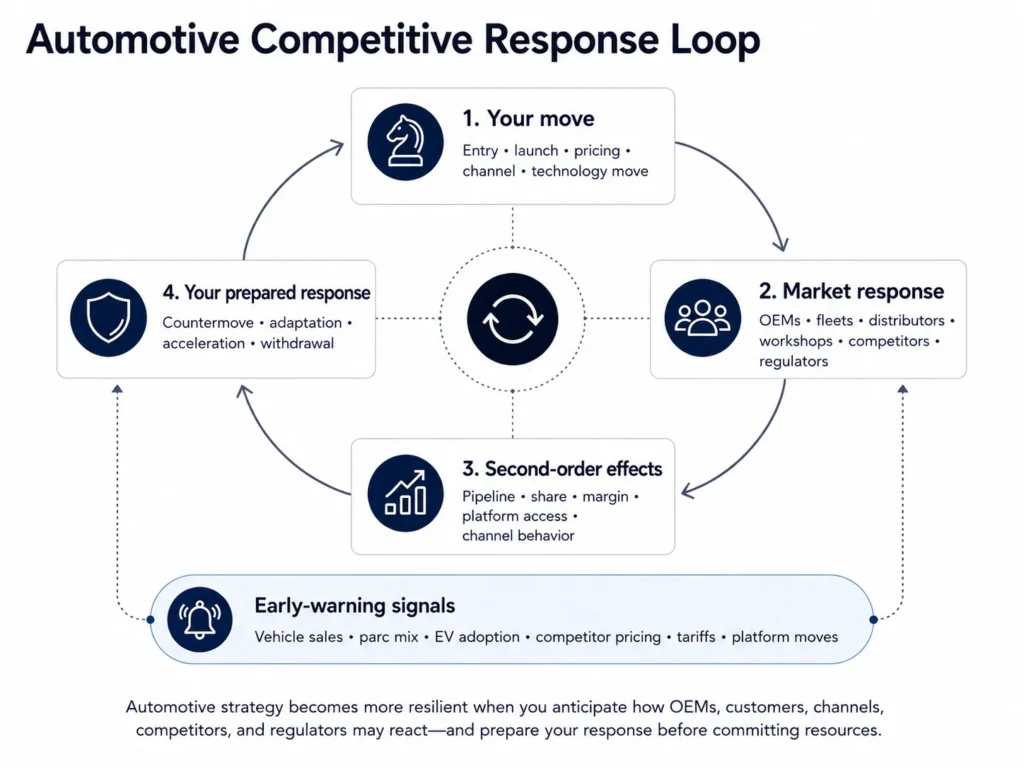
Figure 3: Automotive strategy becomes more resilient when you anticipate how OEMs, customers, channels, competitors, and regulators may react—and prepare your response before committing resources.
Automotive Products Consulting Can Combine Several Strategic Workstreams
Our market entry consulting helps compare countries, vehicle segments, applications, entry models, partners, economics, and implementation priorities.
Our strategy consulting turns market, parc, customer, competitor, channel, and technology evidence into choices and an execution roadmap.
Our wargame consulting helps anticipate OEM, customer, competitor, distributor, technology, and regulatory reactions.
Our benchmarking consulting helps identify the practices behind stronger margins, account penetration, channel productivity, engineering support, and commercial performance.
Our competitor analysis consulting builds a deeper view of rival products, pricing, channels, costs, account positions, strengths, vulnerabilities, and likely actions.
Our market analysis consulting sizes opportunities, analyzes vehicle-parc and replacement demand, and builds the market fact base.
Our value proposition consulting translates technical performance, reliability, engineering support, and lifecycle economics into a stronger reason to choose you.
Our win-loss analysis consulting helps explain why OEMs, distributors, fleets, workshops, or other customers chose you—or chose an alternative.
Our brand consulting strengthens credibility, relevance, trust, and differentiation in categories that can otherwise become price comparisons.
The advantage of combining these capabilities is that your automotive strategy is built as one coherent decision system rather than as disconnected analyses.
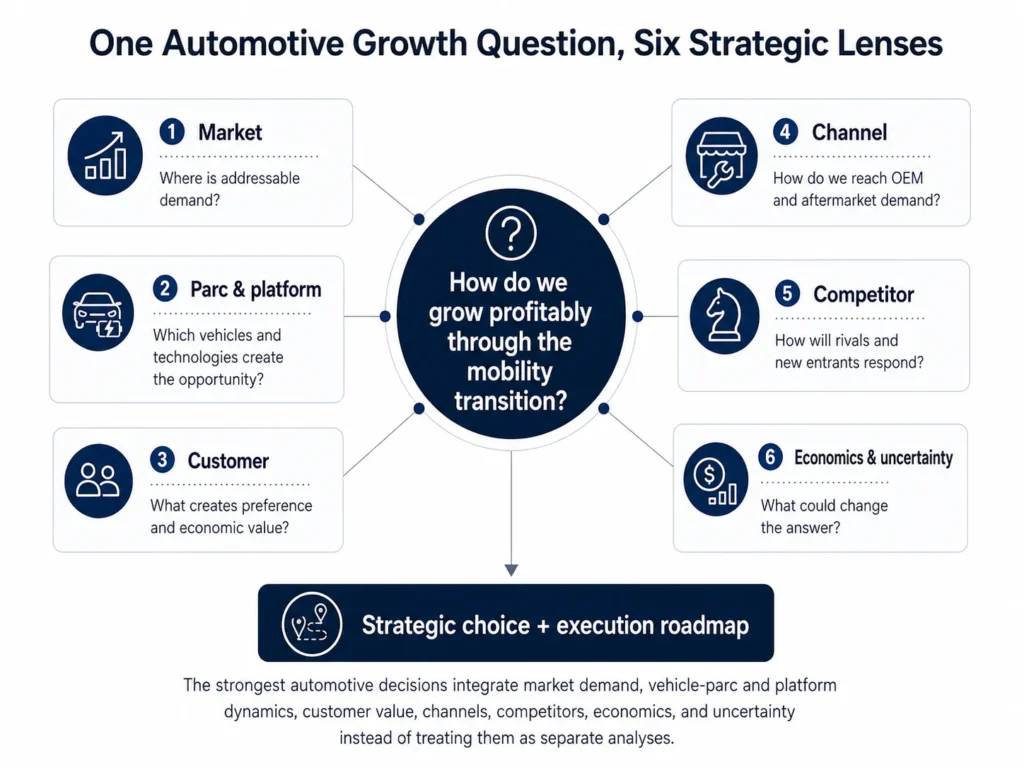
Figure 4: The strongest automotive decisions integrate market demand, vehicle-parc and platform dynamics, customer value, channels, competitors, economics, and uncertainty instead of treating them as separate analyses.
Case Example: Using Competitive Intelligence to Support an Acquisition Decision in Brazil
A multinational company wanted to strengthen its position in Brazil and was evaluating the acquisition of local competitors.
Reliable secondary information on the target companies was limited, so management needed a clearer picture of five competitors before deciding where deeper transaction work should focus.
Midas Consulting combined market intelligence and primary research to assess segment sales, production capacity, competitive strengths and weaknesses, growth and profitability trends, and potential availability for acquisition.
The work helped management compare the targets on strategic attractiveness rather than relying only on incomplete public information.
According to the published Midas case, the client ultimately acquired one of the companies, strengthening its market position in Brazil.
The broader lesson extends beyond acquisitions: when automotive markets are opaque, strategically important decisions may require triangulating public data, channel evidence, competitive intelligence, and management hypotheses before significant capital is committed.
For transactions, strategic and commercial market work should complement, not replace, financial, legal, tax, accounting, environmental, labor, technical, and other specialist due diligence.
Client identity and commercially sensitive details are withheld. This example reflects the circumstances of one engagement and should not be interpreted as a guarantee of equivalent outcomes.
Build the Evidence Around the Decision
Automotive markets are data-rich, but the data can answer the wrong question if it is not connected to your product and business model.
- Vehicle registrations
- Vehicle-parc data
- Vehicle age and powertrain mix
- OEM and model information
- Production data
- Import and trade data
- Parts and replacement assumptions
- Workshop interviews
- Distributor interviews
- Fleet interviews
- OEM and industry interviews where feasible
- Former industry executives
- Pricing and channel checks
- Competitive intelligence
- Company sales and margin data
Important conclusions are triangulated whenever feasible. We distinguish facts, estimates, hypotheses, assumptions, and unknowns. When the evidence does not support one precise number, we prefer a defensible range or scenario to false precision.
Use Credible External Sources to Strengthen the Context
Depending on the engagement, useful sources may include the International Organization of Motor Vehicle Manufacturers (OICA), the International Energy Agency’s Global EV Outlook, and the UNECE World Forum for Harmonization of Vehicle Regulations (WP.29), alongside relevant national automotive associations, transport authorities, customs data, regulators, and statistical agencies.
These sources provide context. They do not replace primary research with customers, OEM-related stakeholders, distributors, workshops, fleets, competitors, and other market participants when the strategic question requires direct evidence.
Why Companies Choose Midas for Automotive Products Consulting
More Than 25 Years of Automotive Experience
Midas Consulting has supported automotive and auto-parts companies since 2000 across components, aftermarket products, vehicle-related solutions, and adjacent automotive categories.
Hundreds of Automotive and Auto-Parts Assignments
Midas reports having completed hundreds of projects across automotive and auto-parts segments, giving the team exposure to a wide range of product, market, channel, and strategic questions.
Regional Experience Across Latin America
Vehicle parc, OEM presence, powertrain adoption, tariffs, import economics, distributor structures, workshop behavior, financing, and regulation can differ materially across countries. We avoid treating Latin America as one homogeneous automotive market.
Senior Involvement
Senior professionals remain involved in problem definition, research design, strategic interpretation, and management discussions.
Primary Market Intelligence
When public information is not enough, we can develop evidence through customers, distributors, workshops, fleets, former executives, industry participants, and other informed sources, subject to access and participant willingness.
Transparent Limitations
Technology transitions and automotive forecasts are inherently uncertain. We make evidence gaps, assumptions, ranges, and uncertainty visible rather than presenting artificial precision.
Confidentiality
Automotive projects can involve sensitive information about OEM programs, pricing, products, distributors, validation, customers, investments, competitors, and future technology plans. We can work under confidentiality agreements and anonymize public examples when disclosure has not been authorized.
What Automotive Products Consulting Clients Have Said About Working With Midas
“Midas delivered practical, high-impact ideas that helped us expand market share in a competitive environment.”
Marketing Manager, Automotive Company — identity withheld due to confidentiality
“Midas was highly effective, giving us the insights and tools we needed to co-create a robust strategy for complex markets.”
Finance Executive, Automotive Company — identity withheld due to confidentiality
“Midas helped us reassess priorities and focus our efforts where they truly mattered.”
Global Market Segment Leader, Automotive Company — identity withheld due to confidentiality
“For more than a decade, Midas has been our trusted partner in Latin America. Every project has been a success.”
President, Automotive Company — identity withheld due to confidentiality
Midas reports a Net Promoter Score of 82.2% for client feedback. As with any client metric, it should be interpreted in the context of the respondent base and measurement period.
Frequently Asked Questions About Automotive Products Consulting
What is Automotive Products Consulting?
Automotive Products Consulting is decision-oriented strategic consulting for companies that sell automotive components, parts, products, systems, technologies, services, or related solutions. It can combine market analysis, vehicle-parc research, market entry, channel strategy, competitive intelligence, benchmarking, value proposition design, win-loss analysis, strategic foresight, and strategy development around a specific growth or competitive decision.
Can you estimate the aftermarket size for an automotive product with your automotive products consulting?
Yes, when sufficient evidence is available. Depending on the product, we may combine vehicle parc, vehicle age, model mix, installed component base, annual mileage, replacement cycles, failure rates, workshop behavior, import information, distributor evidence, pricing, and competitor intelligence.
Can you analyze the transition from internal-combustion to electric vehicles?
Yes. We can examine adoption scenarios, vehicle-parc evolution, powertrain mix, infrastructure, customer economics, policy, competitor moves, and implications for your product portfolio. Because adoption can vary materially by country and segment, we prefer scenarios and triggers over assuming one regional transition curve.
Can you analyze OEM and aftermarket opportunities separately?
Yes. OEM and aftermarket businesses have different economics, buying criteria, qualification processes, customer concentration, channel structures, and risks. The analysis can separate them and then examine where shared capabilities or investments create synergies.
Can you evaluate automotive distributors?
Yes. We can assess coverage, customer access, workshops, inventory, fill rate, credit, competing brands, technical capabilities, sales resources, management commitment, economics, and strategic fit.
Can you help us defend a price premium?
Yes. Premium defense may require understanding whether customers value lower warranty exposure, better reliability, engineering support, supply continuity, service life, ease of installation, lower total cost, or another measurable benefit.
Can you analyze competitors beyond public information?
Yes, subject to legal and ethical research practices. We can combine public information, customer and channel interviews, former-executive input, benchmarking, commercial observations, and other legitimate competitive-intelligence sources. We do not seek confidential competitor information through deception or improper means.
Can Automotive Products Consulting include strategic foresight?
Yes. Foresight can be particularly useful when your decision depends on EV adoption, new entrants, technology substitution, tariffs, localization, supply-chain shifts, or regulatory change. The purpose is not to predict one future; it is to build decision rules and prepared responses across plausible futures.
How do you protect confidential information?
We treat client information as confidential and can work under a nondisclosure agreement. Sensitive information about customers, OEM programs, distributors, pricing, products, competitors, investments, and future technology plans can be anonymized in public examples when disclosure has not been authorized.
Do you guarantee a specific commercial result?
No responsible strategy advisor should guarantee a specific sales, margin, market-share, OEM program, distributor, launch, acquisition, or market-entry result. Our role is to strengthen the evidence, choices, preparation, and execution behind your decisions.
Ready to Make the Next Automotive Growth Decision With Greater Confidence?
You may be deciding where to invest, which technologies to back, which markets or accounts to prioritize, how to defend a premium, how to improve distribution, or how to prepare for the next mobility shift.
You do not need to have the entire problem defined before contacting us.
Tell us the decision you are facing, what you already know, and what remains uncertain. We will help you determine which evidence is worth gathering, which assumptions deserve to be challenged, and which strategic choices require management attention.