

We’re here to help you get ahead of your competitors with our benchmarking consulting!
A competitor can operate at a lower cost, move faster, reach customers more effectively, or generate stronger returns. The strategic question is not simply how large the gap is. It is why the gap exists, and which part of it your company can realistically close.
A lower cost may reflect greater scale, a different plant configuration, outsourcing, a narrower portfolio, lower service obligations, or a more efficient process. Higher sales productivity may reflect customer concentration, stronger distributors, better account access, a larger installed base, or incentives that direct effort toward the right activities.
If those differences are not understood, benchmarking can produce the wrong action. Your leadership team may copy a visible practice without the capabilities that make it work, pursue a target that depends on structural advantages you do not have, or eliminate resources that protect customer value and competitive differentiation.
At Midas Consulting, we help you move beyond rankings, industry averages, and superficial comparisons. We reconstruct how selected competitors, internal leaders, regional peers, or best-in-class organizations operate; normalize the differences that can distort the comparison; explain the performance drivers behind the gap; and determine which lessons are relevant to your strategy.
We then translate that insight into focused choices about costs, pricing, salesforce design, channels, service, operations, organization, innovation, footprint, investment, capabilities, and resource allocation.
The result is not simply a benchmark report. It is a strategic improvement agenda that shows what to match, what to adapt, where to leapfrog, what to stage, and where remaining different may create more value.
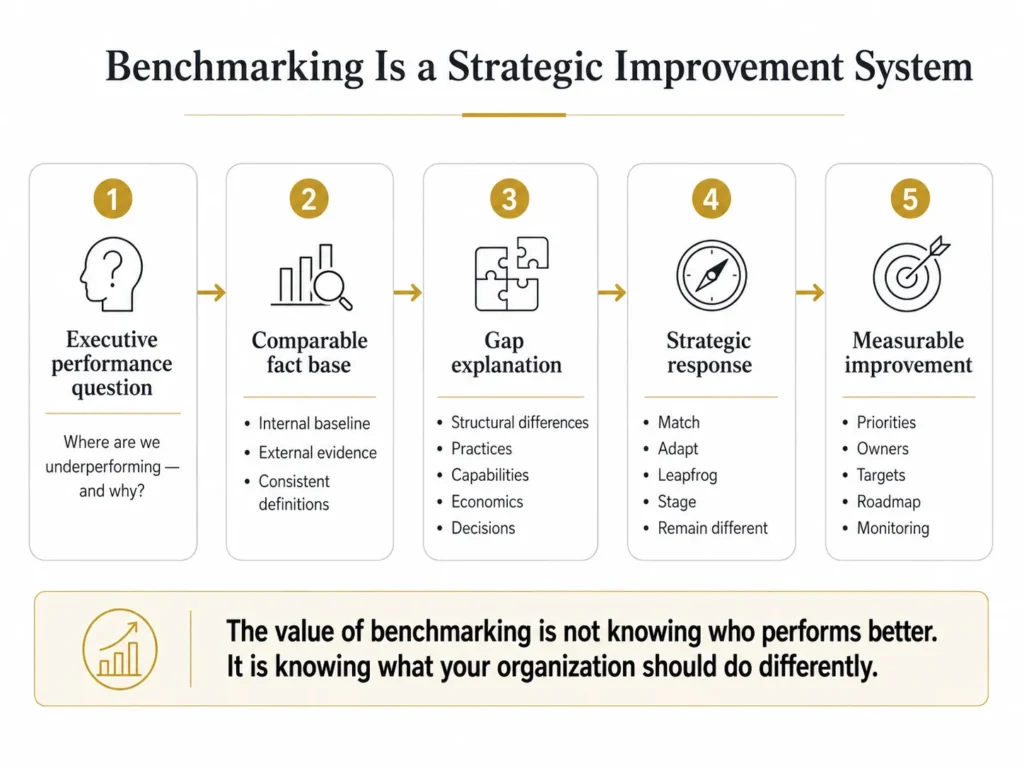
Figure 1. Benchmarking creates strategic value when comparable evidence explains the gap and leads to a focused improvement decision.
Which Strategic Performance Decision Will the Benchmarking Consulting Support?
A useful benchmarking engagement begins with your decision, not with a list of companies or KPIs.
We typically support leadership teams facing questions such as:
Why does a competitor operate at a lower cost?
You may need to understand whether the difference comes from scale, sourcing, labor, plant configuration, product mix, logistics, outsourcing, channels, technology, or operating discipline.
Why does another company grow faster?
The cause may be better account selection, stronger channels, superior customer access, pricing, value proposition, service, product availability, incentives, sales coverage, or execution speed.
Why are competitors faster or more agile?
You may need to compare decision rights, organizational layers, workflows, technology, customer feedback, governance, portfolio complexity, and tolerance for experimentation.
Which internal business unit should become the reference model?
One country, plant, service team, channel, store, or commercial unit may already outperform the rest of the organization. We help you determine what is transferable and what depends on local conditions.
Which operational gaps deserve investment?
Not every gap matters equally. We help your team distinguish high-impact improvement opportunities from differences that are structural, low value, or strategically irrelevant.
Should you redesign the operating model?
A gap may be too large to close through incremental improvement. Your organization may need a different channel, footprint, technology, service model, organizational design, partnership, acquisition, or capability platform.
Should you catch up, or leapfrog?
Matching a competitor may restore parity. A different process, digital model, customer experience, sourcing strategy, or route to market may create a stronger advantage.
Where should you deliberately remain different?
Copying the benchmark can weaken differentiation, customer value, flexibility, resilience, or margins. We help you identify where a different model is strategically preferable.
A Performance Gap Does Not Automatically Mean Underperformance
An observed difference can result from several causes.
Structural differences
Scale, geography, regulation, customer density, product mix, asset configuration, local production, taxes, labor models, or channel structures may explain part of the result.
Strategic choices
A company may intentionally invest more in service, innovation, customization, inventory, customer experience, or resilience. That can increase cost while strengthening its value proposition.
Operating practices
Processes, roles, systems, incentives, routines, technology, management cadence, and decision rights may explain addressable performance differences.
Capability differences
Talent, customer relationships, supplier networks, data, installed base, brand, certifications, scale, and organizational learning may create an advantage that requires time or investment to reproduce.
Measurement differences
Different definitions, time periods, allocations, units, and reporting practices can create an apparent gap that disappears when the comparison is normalized.
Strong benchmarking separates these explanations before management commits resources.
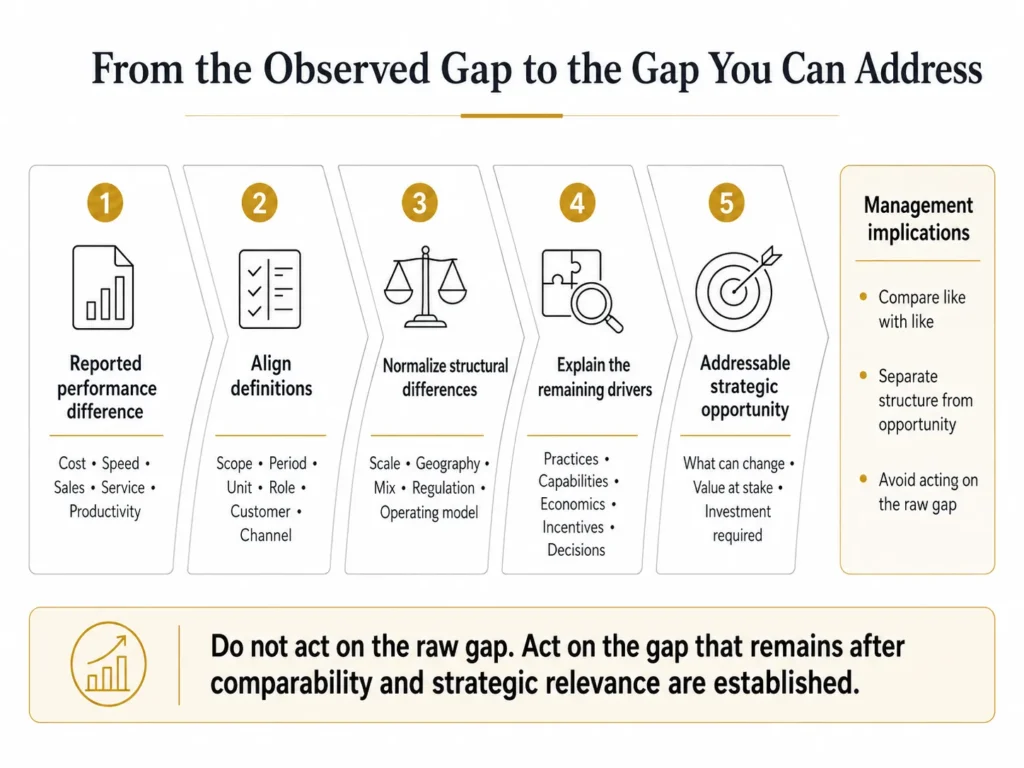
Figure 2. Strategic benchmarking separates measurement and structural differences from the performance opportunity your organization can realistically address.
What Can You Use Benchmarking Consulting For?
The right scope depends on the strategic decision. We do not force your company into one standard template.
Competitive cost and economic benchmarking
Understand why a competitor can price lower, sustain higher margins, win tenders, or operate with a different cost base.
The analysis may include:
- Plant scale and configuration.
- Capacity utilization.
- Labor model and productivity.
- Supplier strategy and sourcing.
- Raw materials and imported inputs.
- Freight, warehousing, and inventory.
- Product mix and complexity.
- Channel margins and customer terms.
- Service, warranty, and technical support.
- Fixed-cost allocation and outsourcing choices.
Commercial and go-to-market benchmarking
Compare how companies select customers, structure sales coverage, use distributors, manage accounts, price, incentivize teams, and create demand.
The analysis may include:
- Salesforce structure and productivity.
- Account segmentation and coverage.
- Territory design.
- Distributor and channel models.
- Pricing and discount governance.
- Sales incentives and compensation.
- Customer acquisition and retention.
- Commercial routines and pipeline management.
- Value proposition and service model.
Process and operational benchmarking
Identify why another organization performs an activity faster, more consistently, or with fewer resources.
The analysis may include:
- Workflow and handoffs.
- Roles and decision rights.
- Cycle time and productivity.
- Technology and automation.
- Quality, scrap, and rework.
- Inventory and working capital.
- Service response and resolution.
- Performance-management routines.
- Outsourcing and make-or-buy choices.
Organizational benchmarking
Compare structures, spans, layers, centralization, local autonomy, governance, specialist roles, management cadence, and decision speed.
Innovation and product-development benchmarking
Understand how reference companies identify opportunities, prioritize concepts, engage customers, allocate resources, develop products, test assumptions, and launch faster.
Customer-experience and service benchmarking
Compare onboarding, response, support, digital channels, field service, spare parts, warranties, retention, renewal, and total customer effort.
Pricing and revenue-management benchmarking
Assess price architecture, discounts, approval levels, segmentation, bundles, terms, channel economics, value communication, and governance.
Internal benchmarking
Identify which business unit, country, plant, store, sales team, channel, or service operation already performs better—and what should be scaled.
Functional and adjacent-industry benchmarking
Look beyond direct competitors when another industry has solved a similar logistics, customer-experience, innovation, digital, service, or organizational challenge more effectively.
The Most Visible Competitor Is Not Always the Right Benchmark
The reference set should be selected according to the question.
Direct competitor
Useful when you need to understand a specific competitive disadvantage in the same market.
Internal leader
Useful when a strong practice already exists inside your organization and the challenge is transfer and adoption.
Regional peer
Useful when you need to understand how similar companies perform under comparable market conditions.
Global best-in-class organization
Useful when you need to understand what is possible at a higher level of capability or maturity.
Adjacent-industry leader
Useful when established industry practices are no longer enough and a different model could create innovation.
Future-state benchmark
Useful when your strategy requires capabilities that no single current competitor fully represents.
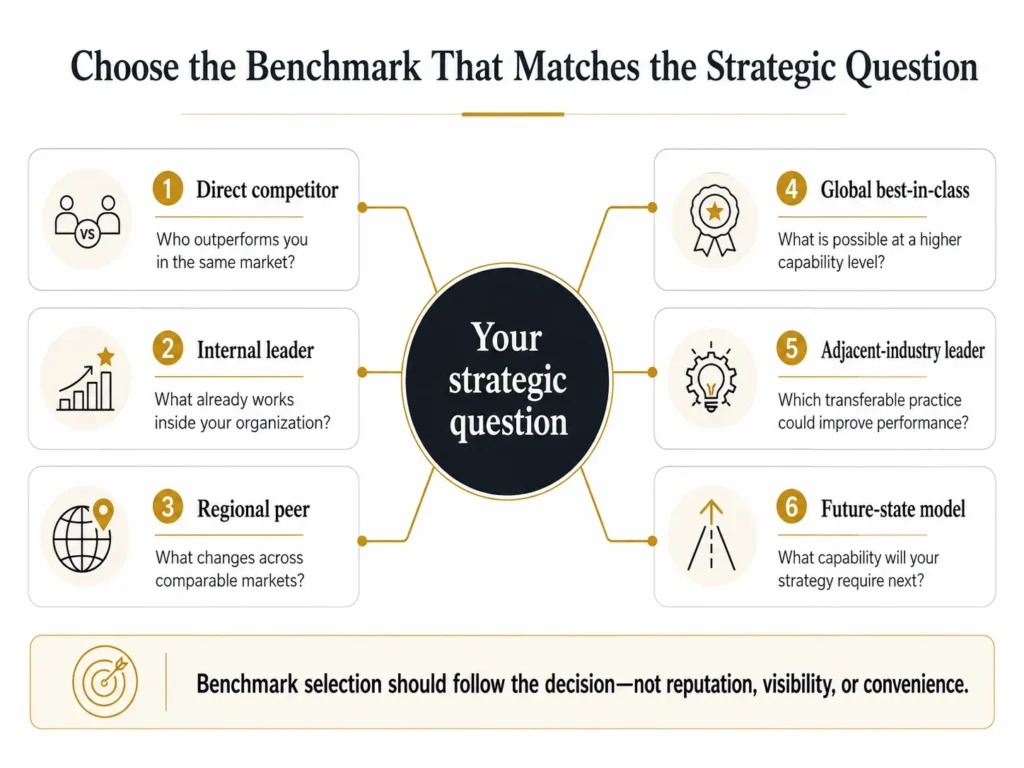
Figure 3. The most useful reference organization is the one that can explain the capability or performance question your leadership team needs to resolve.
How We Turn Benchmarking Consulting Evidence into a Strategic Choice
Once the gap is explained, your leadership team still needs to decide what to do with it.
Match and implement
Close the gap when the practice creates meaningful customer, cost, quality, service, speed, or productivity advantage and fits your organization.
Adapt selectively
Transfer the principle or selected components without importing the full operating model or unnecessary complexity.
Stage the change
Sequence improvement when the gap matters but requires capability building, systems, investment, talent, or organizational readiness.
Redesign or leapfrog
Create a different model when catching up would take too long, reproduce an outdated practice, or fail to create sufficient advantage.
Remain different
Protect your current model when the difference supports customer value, positioning, flexibility, resilience, or stronger economics.
Stop or postpone
Do not invest in closing a gap with low strategic impact, weak feasibility, limited value, or poor fit.
The strongest recommendation is not always “copy the leader.” It is the response that creates the greatest value for your company.
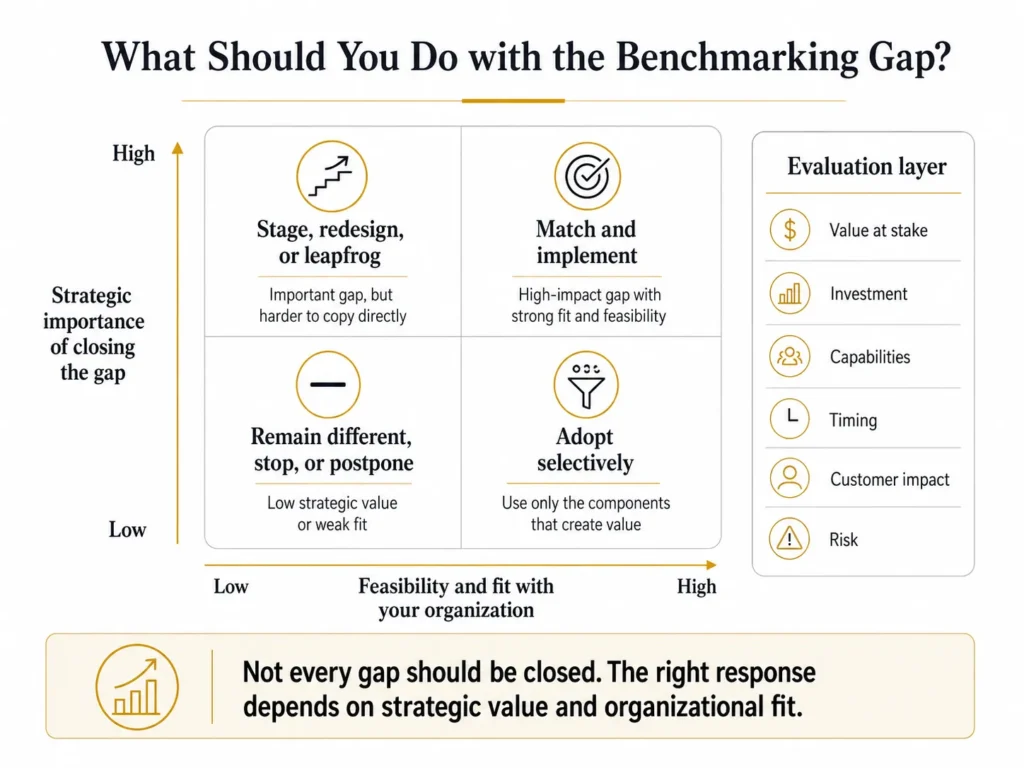
Figure 4. Benchmarking becomes strategic when your leadership team prioritizes gaps according to value, feasibility, fit, timing, and customer impact.
How Our Benchmarking Consulting Engagements Work
Every project is tailored to your strategic question, markets, functions, and existing knowledge. The methods and deliverables vary, but the engagement generally follows six stages.
1. Define the strategic question
We begin with the decision, not the data. Together, we clarify what your leadership team needs to understand, which performance gap triggered the project, how the findings will be used, and what success would look like.
2. Build your internal baseline
Before comparing your company with the market, we develop a consistent view of your current operating model.
This may include:
- Processes and workflows.
- Costs and economics.
- Roles and organization.
- KPIs and definitions.
- Incentives and governance.
- Channels and customer coverage.
- Technology and capabilities.
- Performance differences across units or countries.
This step prevents an external benchmark from being compared against an incomplete or inconsistent internal picture.
3. Select the right comparators
We identify the companies, internal units, markets, or operating models that can genuinely inform the decision.
The reference set may include direct competitors, best-in-class companies, adjacent industries, regional peers, internal units, or organizations with a particularly relevant capability.
4. Reconstruct the external benchmark
We combine multiple lawful and ethical sources to understand how selected organizations operate.
Depending on the project, these may include:
- Executive and expert interviews.
- Customer, distributor, supplier, and channel perspectives.
- Former industry participants.
- Company disclosures.
- Industry and regulatory information.
- Specialized databases.
- Field research.
- Midas’s local and sector experience.
We triangulate material findings whenever feasible rather than relying on a single source.
5. Normalize and explain the gap
We align definitions and separate scale, geography, product mix, regulation, taxes, labor, channel models, asset configuration, outsourcing, customer mix, and other structural differences from the true performance gap.
We then identify the practices, capabilities, incentives, technologies, economics, and decisions that explain the remaining difference.
6. Prioritize and mobilize improvement
We translate the analysis into practical choices.
Depending on the engagement, this may include:
- Opportunity sizing.
- Prioritized improvement initiatives.
- Strategic alternatives.
- Quick wins and longer-term changes.
- Investment and capability requirements.
- Risks and dependencies.
- Targets and owners.
- An implementation roadmap.
- Monitoring indicators and decision triggers.
The final output should make it easier for your leadership team to decide what to change, what not to change, and where to focus first.
Why We Share Preliminary Benchmarking Consulting Findings Before the Final Recommendation
A benchmarking project should not disappear into a research phase and return with a final answer months later.
We usually work in analytical waves.
First wave: Establish the comparison and initial gap explanation
We align definitions, develop the internal baseline, reconstruct external practices, and identify preliminary drivers.
Leadership discussion: Challenge and redirect
Your team reviews the early findings, adds internal knowledge, tests assumptions, and identifies which gaps require deeper analysis.
Second wave: Deepen the decision-critical questions
We focus additional interviews and analysis on the practices, economics, capabilities, comparators, and implementation issues that can change the final recommendation.
This process improves relevance and helps build ownership before the improvement roadmap is finalized.
What You Receive with Our Benchmarking Consulting
The deliverables are designed around your strategic decision rather than a standard report template. Depending on the scope, you may receive:
- An executive synthesis of the performance gap and its strategic implications.
- A consistent internal baseline and definition architecture.
- A selected comparator and reference-company framework.
- A normalized external comparison.
- An explanation of structural and addressable differences.
- Process, cost, commercial, organizational, service, or capability maps.
- Customer, supplier, distributor, or expert evidence.
- Performance-driver and root-cause analysis.
- Opportunity sizing and value-at-stake estimates where feasible.
- Alternative responses: match, adapt, stage, leapfrog, remain different, or stop.
- Quick wins and longer-term capability requirements.
- An executive presentation and leadership working session.
- A prioritized implementation roadmap with owners, milestones, and indicators.
We do not aim to overwhelm your team with every fact collected. We prioritize the evidence and implications that can change your strategic choice.
When Benchmarking Consulting Should Be Combined with Other Services
Benchmarking explains where performance differs and why. Some decisions require additional strategic lenses.
Competitor Analysis Consulting
Use competitor analysis when you need to understand rival objectives, assumptions, capabilities, constraints, likely moves, and responses, not only current practices and performance.
Strategy Consulting
Use strategy consulting when the gap requires broader choices about positioning, portfolio, investment, capabilities, organization, and resource allocation.
Go-to-Market Consulting
Use go-to-market consulting when the benchmark reveals gaps in customer segmentation, sales coverage, channels, pricing, value proposition, or commercial execution.
Distributor Search and Partner Evaluation
Use distributor search when stronger market access, service, inventory, credit, or local relationships depend on finding or upgrading a channel partner.
Value Proposition Consulting
Use value-proposition consulting when the benchmark shows that competitors create greater customer value, confidence, relevance, or switching motivation.
Business Wargaming
Use business wargaming when implementing a major price, channel, service, capacity, or strategic change could trigger significant competitive reactions.
Scenario Planning
Use scenario planning when the future benchmark may change because of regulation, technology, market structure, customer behavior, or economic uncertainty.
Why Leadership Teams Choose Midas for Benchmarking Consulting
We explain the gap instead of stopping at the ranking
We reconstruct the operating practices, capabilities, economics, incentives, and decisions behind stronger performance.
We normalize before recommending action
We separate structural, measurement, geographic, product, customer, channel, and regulatory differences from the gap your organization can actually address.
We select benchmarks according to the decision
The most visible company is not always the most useful reference. We build the comparison set around the performance question.
We work in opaque and difficult-to-measure markets
When public information is incomplete, we combine primary interviews, channel and customer evidence, operational logic, specialized sources, and regional experience.
We help you adapt rather than copy
We identify the transferable principle, enabling capabilities, implementation requirements, and potential unintended consequences.
We connect benchmarking with strategy
We evaluate the value at stake, strategic fit, investment, timing, customer impact, and competitive consequences of closing the gap.
We collaborate with your team
Preliminary findings are discussed before final recommendations so your executives and specialists can challenge conclusions, redirect the work, and build ownership.
We translate insight into measurable action
The engagement ends with priorities, targets, owners, investments, capabilities, milestones, and next steps, not only analysis.
We bring extensive experience in benchmarking consulting
Midas Consulting has completed more than 300 benchmarking projects across Latin America and selected global markets and brings more than 25 years of benchmarking-consulting experience.
We have a Net Promoter Score of 82.2%, based on client feedback collected between 2020 and 2025.
“We’ve done benchmarking before, but never have I been so clear on how and why competitors act the way they do.”
— President, Regional Industrial Company
“We are extremely pleased with the benchmarking. It helped us reassess our priorities and redirect our resources.”
— Market Segment Leader
“Just to reiterate, this is fantastic. I’m really excited to see such valuable insights and information! Thank you again!”
— Vice President
Industries We Serve with Our Benchmarking Consulting
We adapt the comparison architecture, research methods, normalization logic, and strategic interpretation to the economics of your industry.
Selected Strategic Applications of Benchmarking Consulting
Redesigning a regional salesforce
We benchmarked the sales structures, roles, compensation, coverage, and commercial practices of important competitors across Argentina, Brazil, Mexico, and Peru for a multinational diabetes-monitoring company.
The company adapted its model by country while maintaining a clearer regional logic. The program contributed to a 30% increase in sales within one year.
Improving commercial focus in Chile and Peru
We analyzed customers, channels, representatives, competitor strengths, value propositions, and sales practices for a multinational equipment company serving rock-driller customers.
Changes in sales focus and value proposition contributed to a reported 40% first-year sales increase in each market.
Benchmarking successful institutional access
We reconstructed two successful vaccine-inclusion cases in Colombia, including the formal pathway, stakeholder environment, evidence, communication, and implementation practices.
The findings were translated into a structured roadmap aligned with government and stakeholder expectations.
Determining when not to close the gap
Benchmarking can show that a competitor’s apparent advantage depends on scale, channel risk, structural conditions, unattractive economics, or capabilities that do not fit your strategy. Choosing not to copy can be the strongest decision.
Benchmarking Consulting Across Latin America
Regional comparisons require careful normalization. Taxes, labor, regulation, channels, imports, geography, customer density, data availability, and operating models can vary materially across countries.
Explore the market most relevant to your decision:
- Benchmarking across Latin America
- Benchmarking in Argentina
- Benchmarking in Brazil
- Benchmarking in Chile
- Benchmarking in Colombia
- Benchmarking in Mexico
- Benchmarking in Peru
Learn More About the Strategic Benchmarking Consulting Discipline
This service page focuses on how Midas supports your benchmarking decision.
For a detailed explanation of benchmarking types, the step-by-step process, data collection, normalization, implementation, strengths, and limitations, visit Benchmarking: How to Compare, Learn, and Improve Your Competitive Position.
For a broader executive perspective on why benchmarking should explain the gap and clarify where to match, leapfrog, or remain different, visit Benchmarking That Delivers Real Competitive Advantage.
Ethical, Lawful, and Reliable Competitive Intelligence for Benchmarking Consulting
We comply with SCIP’s Code of Ethics, the profession’s gold standard. We comply with applicable laws, accurately disclose relevant identity and organizational information before interviews, avoid conflicts of interest, provide honest recommendations, and promote ethical conduct throughout the engagement.
We do not seek trade secrets, request confidential documents, misrepresent who we are, induce contractual breaches, or encourage sources to violate legal or contractual obligations.
We also protect analytical integrity by:
- Aligning definitions before comparison.
- Triangulating material findings whenever feasible.
- Normalizing structural differences.
- Distinguishing verified evidence from estimates and hypotheses.
- Using ranges when exact data would create false confidence.
- Explaining limitations and confidence levels.
- Reviewing preliminary conclusions with your team.
Review SCIP’s ethical intelligence guidance and Code of Ethics.
Frequently Asked Questions About Benchmarking Consulting
What is strategic benchmarking consulting?
Strategic benchmarking compares your company with selected competitors, peers, internal units, or best-in-class organizations to understand not only where performance differs, but why, and what your company should do about it.
How is this different from traditional benchmarking consulting?
Traditional benchmarking often compares indicators and produces rankings. Strategic benchmarking explains the gap, normalizes structural differences, assesses transferability, estimates the value at stake, and translates insight into choices and implementation priorities.
How is benchmarking consulting different from competitor analysis?
Benchmarking focuses on performance gaps, practices, capabilities, and operating models. Competitor analysis focuses more broadly on rival objectives, assumptions, strategies, capabilities, constraints, likely moves, and responses. The services can be combined.
Which companies should we benchmark?
The answer depends on your decision. The right reference set may include direct competitors, internal leaders, regional peers, global best-in-class organizations, adjacent industries, or a future-state model.
Can you do benchmarking consulting about private competitors?
Yes. We combine lawful public sources with interviews, customer and channel evidence, supplier perspectives, former industry participants, field research, and economic or operational logic. We clearly distinguish verified findings from estimates.
Can you benchmark costs when exact competitor data is unavailable?
Yes. We reconstruct cost ranges from multiple sources and operating assumptions. We identify the evidence and avoid presenting estimates as verified facts.
Can you do benchmarking consulting in several countries?
Yes. We establish common definitions and strategic dimensions while normalizing taxes, regulation, labor, channels, imports, geography, scale, and other material country differences.
Can you identify internal best practices with your benchmarking consulting?
Yes. Internal benchmarking can reveal which country, plant, team, store, service operation, or business unit performs better and which practices can be scaled.
How do you prevent benchmarking consulting from becoming copying?
We identify why a practice works, which capabilities and conditions support it, what principle is transferable, what must change in your organization, and which unintended consequences could result.
How do you decide in your benchmarking consulting which gaps deserve action?
We prioritize gaps according to strategic importance, value at stake, feasibility, fit, investment, timing, customer impact, risk, and organizational readiness.
Can benchmarking consulting support an investment or acquisition decision?
Yes. It can clarify performance potential, capability gaps, operating synergies, investment requirements, target quality, and whether the proposed model can reach the required benchmark.
Do you conduct interviews for benchmarking consulting?
Yes, when primary research is appropriate. Interviews may involve customers, distributors, suppliers, experts, former industry participants, executives, institutions, and other knowledgeable sources.
What happens during the benchmarking consulting project?
You receive preliminary findings before the final recommendation. This allows your team to challenge conclusions, contribute internal knowledge, refine priorities, and redirect deeper research.
How long does a benchmarking consulting project take?
The timing depends on the number of markets, companies, functions, processes, interviews, and variables included. A focused benchmark may take several weeks, while a multi-country or highly technical engagement may require several months.
How do you protect confidentiality in your benchmarking consulting projects?
Your internal data, objectives, and strategic priorities are treated as confidential. Where appropriate, the engagement can operate under a mutual nondisclosure agreement.
About Midas and Benchmarking Consulting
Midas Consulting is the corporate author and provider of this benchmarking service.
We help C-level executives and leadership teams make stronger decisions through benchmarking, competitor analysis, strategic intelligence, market analysis, market entry, go-to-market strategy, distributor evaluation, value proposition development, business wargaming, scenario planning, and strategy consulting.
Our work combines regional experience, lawful primary research, rigorous normalization, strategic interpretation, and practical collaboration with your team.
Our benchmarking practice is led by Adrian Alvarez, PhD, Managing Partner of Midas Consulting, Wharton Alumnus, MBA Professor at Universidad Argentina de la Empresa (UADE), Competitive Intelligence Fellow, and former SCIP Board Member. His experience strengthens the firm’s methodology, but the service, recommendations, and page authorship belong to Midas Consulting as an organization.
Last reviewed: August 2026
What Performance Gap Are You Trying to Explain?
You may be trying to understand why a competitor has lower costs, why another team sells more, why one country performs better, how a distributor creates advantage, or whether a major operating-model change is justified.
You do not need another ranking or industry average. You need to understand whether the gap is real, what causes it, what is transferable, how much value is at stake, and what your organization should do differently.
In an initial conversation, we will discuss your strategic question, the performance gap, functions, markets, comparators, internal data, decision timetable, and the actions the benchmark must support.
We can then propose a tailored benchmarking engagement with a clear scope, comparison architecture, research plan, normalization approach, collaboration model, deliverables, timing, and investment.