Win-Loss analysis in Latin America: Maximize your share by grasping the core reasons behind your sales victories and defeats, and using those insights to drive improvement
Across Latin America, what your sales team hears after a deal is rarely the complete explanation.
A buyer may say the price was too high, the budget disappeared, headquarters made the decision, the timing was not right, or another proposal was already more advanced.
Any of those explanations may be partly true. They may also hide the issues that actually shaped the decision: lack of trust, weak local credibility, implementation risk, an incumbent relationship, internal politics, an influential stakeholder your team never met, a competitor’s stronger service model, unclear differentiation, or fear that your company could not deliver locally.
The challenge becomes more difficult when you operate across several Latin American countries. Regional teams naturally look for common patterns, but buyer behavior, decision authority, procurement practices, relationship dynamics, service expectations, competitive alternatives, and willingness to speak openly differ by market.
At Midas Consulting, we help you move beyond polite answers and internal assumptions. We interview buyers who chose you, buyers who chose someone else, and buyers who decided not to move forward. We identify the decision system behind those outcomes and translate it into action across sales, value proposition, pricing, product, service, channels, and go-to-market strategy.
The result is not a collection of interview summaries. It is a regional buyer-intelligence system that shows what is consistent across Latin America, what changes by country, and what your leadership team should do next.
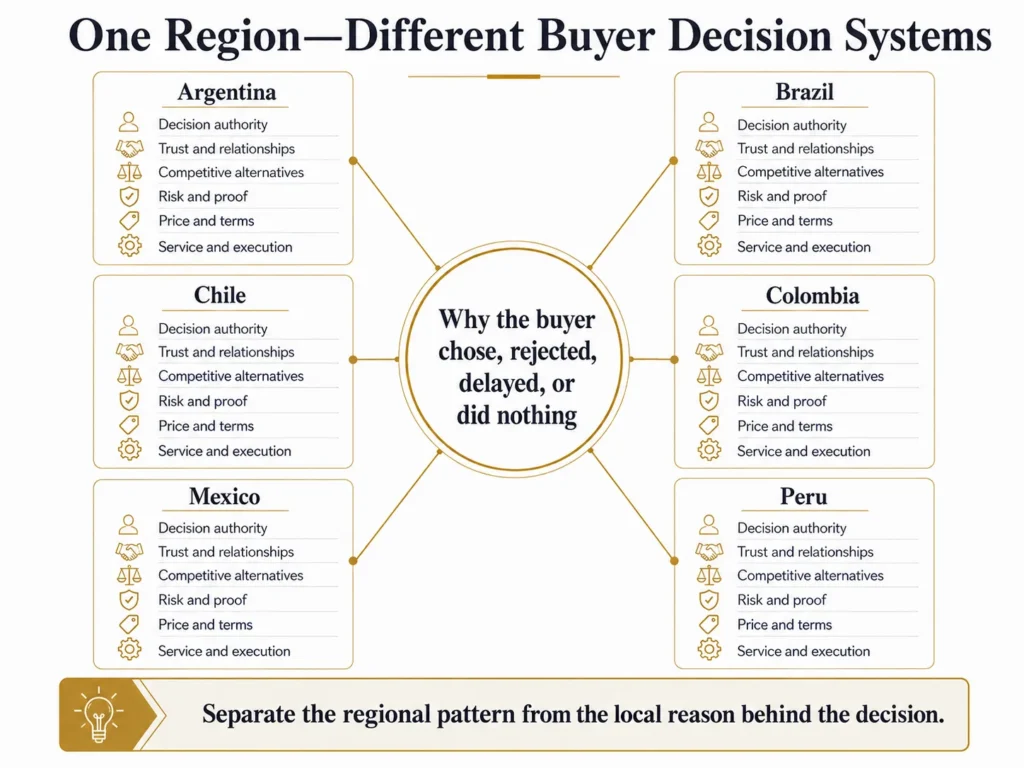
Figure 1. Regional win-loss analysis should identify common buyer patterns while preserving the country-specific decision dynamics that explain each outcome.
The Strategic Question Is Not Simply “Why Did We Win or Lose?”
The stronger executive question is:
What do buyer decisions reveal about how your company competes, where customers see value or risk, how competitors are winning, and what your organization must change to grow more profitably?
A strong regional win-loss analysis should help your leadership team understand:
- Which customer needs and outcomes truly influence decisions.
- Who participates in the decision and who holds final authority.
- Which competitors, substitutes, incumbents, internal options, and no-decision alternatives are considered.
- How buyers perceive your value proposition, proof, price, service, and local capability.
- Which factors move an opportunity forward and which quietly stop it.
- Where sales teams misread the decision.
- Which patterns are regional and which are specific to one country, segment, account type, or channel.
- What should change in positioning, offer, product, service, pricing, channels, or sales process.
Why Internal Explanations Are Often Incomplete
Sales teams know the account and opportunity. Their perspective is essential—but it is not neutral.
They may receive softened feedback because the buyer wants to preserve the relationship. They may hear only from the visible contact rather than the final decision-maker. They may interpret a loss through the factor discussed most openly, even when the deeper issue was confidence, fit, internal politics, or competitor strength.
Other teams develop their own explanations:
- Sales may say the problem was price.
- Product may say a feature was missing.
- Marketing may believe the message was clear.
- Service may believe expectations were unrealistic.
- Management may assume the market was not ready.
Buyer interviews create an external reality check. They show how the decision was experienced by the people who made or influenced it, not only how the company recorded it internally.
Wins, Losses, and No-Decisions Teach You Different Things
Wins show what is working
They reveal which strengths buyers value, which proof is credible, which sales behaviors build confidence, and where your company has a meaningful advantage.
Losses show where alternatives are stronger
They reveal gaps in positioning, trust, product fit, service, pricing, local execution, or the buying process.
No-decisions show why the buyer chose not to act
They can reveal weak urgency, internal misalignment, unclear value, implementation fear, budget risk, or insufficient confidence in any available option.
A balanced sample gives leadership a more complete view of the decision system.
Latin America Shares Some Patterns, but Not One Buying Culture
Across the region, buyers may hesitate to give direct negative feedback, especially when they expect to interact with the salesperson again. Relationships, local credibility, and implementation confidence often matter. Decisions may also involve informal influencers that do not appear in the CRM.
Those similarities should not become stereotypes. The way buyers express disagreement, build trust, evaluate risk, involve procurement, use headquarters, compare local and multinational suppliers, and weigh service can differ materially by country and industry.
Argentina
Price may be the visible explanation while trust, local understanding, commercial flexibility, continuity, or post-sale support play a deeper role.
Brazil
Relationship quality, local presence, Portuguese-language communication, response speed, service, and confidence in execution may materially influence the decision.
Chile
Professionalism, references, evidence, supplier risk, incumbent relationships, and subtle doubts about delivery may carry significant weight.
Colombia
Trust, reputation, local adaptation, implementation confidence, and the influence of distributors or relationships may sit behind polite explanations.
Mexico
Final authority may sit outside the visible relationship. Headquarters, procurement, legal, engineering, or other stakeholders may influence the decision.
Peru
Informal networks, legacy relationships, perceived local risk, hierarchy, distributors, and behind-the-scenes influence may affect an apparently rational process.
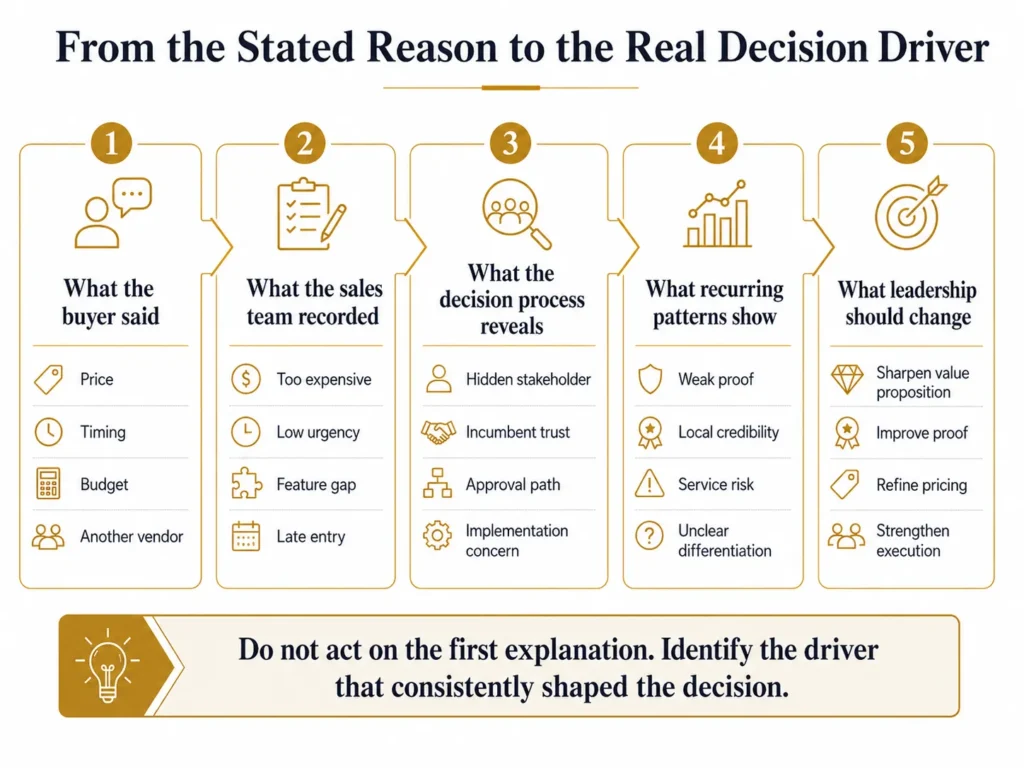
Figure 2. Strong win-loss analysis moves beyond the stated reason and identifies the recurring decision drivers that leadership can address.
Price Is Often Real, but Rarely the Whole Story
Win-loss analysis should not begin with the assumption that price is an excuse. Price can be decisive.
The more useful question is: How did the buyer evaluate price relative to value, risk, proof, terms, implementation, service, and the alternatives?
A buyer may describe the issue as price when:
- The value difference was unclear.
- The competitor provided stronger proof.
- The buyer perceived greater implementation risk.
- The incumbent felt safer.
- Your commercial terms created cash-flow pressure.
- Your offer included services the buyer did not value.
- The buyer used price to justify a decision made for another reason.
Win-Loss Analysis in Latin America Reveals the Buyer’s Competitive Reality
Public competitor analysis shows what companies say and do. Win-loss interviews show how buyers perceive those competitors during an actual decision.
- Which competitors are truly considered.
- Which competitors influence specifications early.
- Which claims buyers believe.
- Where competitors appear safer, faster, more local, or easier to buy from.
- Which competitor weaknesses buyers tolerate.
- Which alternatives your teams underestimate.
- Why buyers sometimes prefer doing nothing.
The Decision Process Matters as Much as the Criteria
A deal may be lost even when your offer scores well against the formal criteria. Interviews can reveal who initiated the project, defined the specifications, controlled the budget, influenced the shortlist, challenged the decision, held veto power, and brought procurement or headquarters into the process.
Win-Loss Analysis in Latin America Insight Should Improve More Than Sales
Value proposition
Buyer feedback shows whether customers understand your difference, value it, believe it, and see it as relevant.
Product and service
It helps distinguish gaps that influence revenue from improvements that are interesting but not decisive.
Pricing and terms
It reveals how customers evaluate price, risk, financing, flexibility, total cost, and contract conditions.
Customer experience
It can identify weaknesses in onboarding, implementation, responsiveness, documentation, support, and post-sale confidence.
Channels and partners
It shows whether distributors, integrators, representatives, and service partners strengthen or weaken confidence.
Competitive strategy
It shows where competitors are winning in the buyer’s eyes and where you can differentiate credibly.
Organizational alignment
It gives sales, marketing, product, service, and leadership one external fact base.
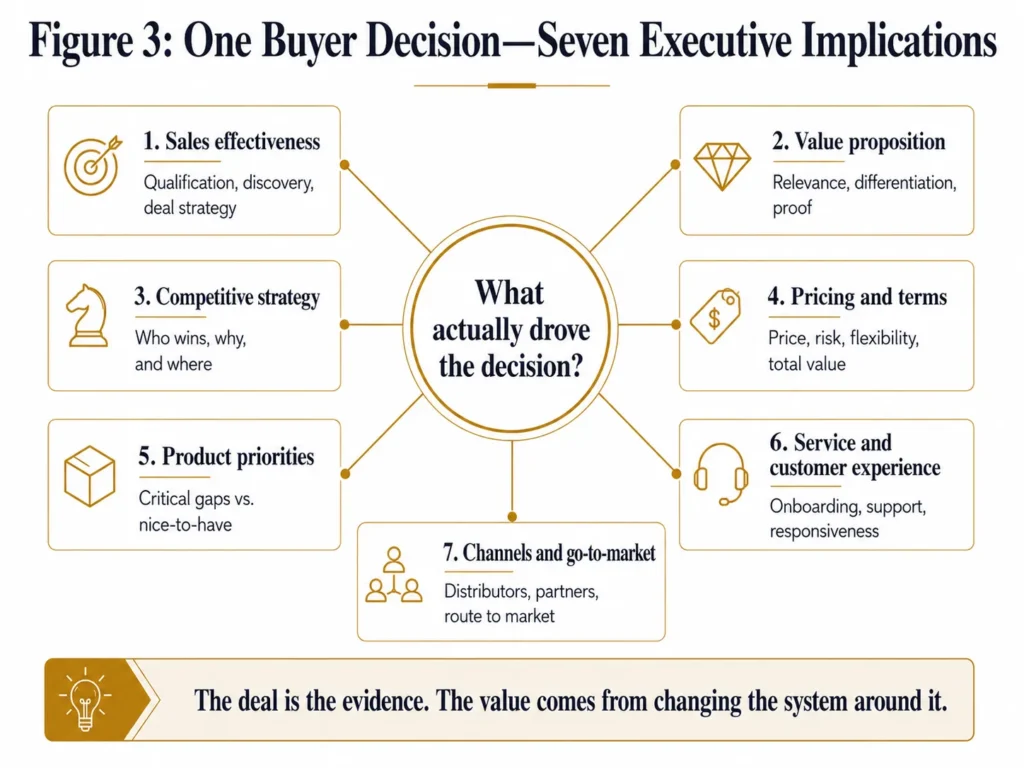
Figure 3. Buyer feedback creates strategic value when it improves multiple functions, not only sales execution.
How Midas Conducts Regional Win-Loss Analysis in Latin America
1. Define the strategic learning objectives
We clarify whether leadership needs to improve win rates, test the value proposition, analyze competitors, refine pricing, evaluate channels, improve onboarding, or redesign go-to-market.
2. Build a balanced sample
We select wins, losses, and no-decisions across countries, segments, deal sizes, products, competitors, sales teams, and outcomes.
3. Review the internal record
We examine CRM data, proposals, pricing, sales notes, account context, product information, competitor intelligence, and internal explanations.
4. Conduct independent buyer interviews
We speak with decision-makers and influencers in Spanish or Portuguese. Because we were not part of the sale, buyers can speak more freely.
5. Reconstruct the decision journey
We examine the need, alternatives, stakeholders, criteria, proof, sales experience, pricing, risk, service expectations, and final trigger.
6. Identify root causes and recurring patterns
We distinguish isolated opinions from repeatable themes and compare countries, segments, competitors, products, channels, and outcomes.
7. Translate insight into action
We convert evidence into recommendations for positioning, proposals, demos, pricing, product, service, channels, account strategy, and go-to-market.
8. Align leadership and assign ownership
We help teams agree on priorities, ownership, and indicators.
9. Repeat the learning cycle
For ongoing programs, we refresh the sample and monitor whether perceptions and outcomes improve.
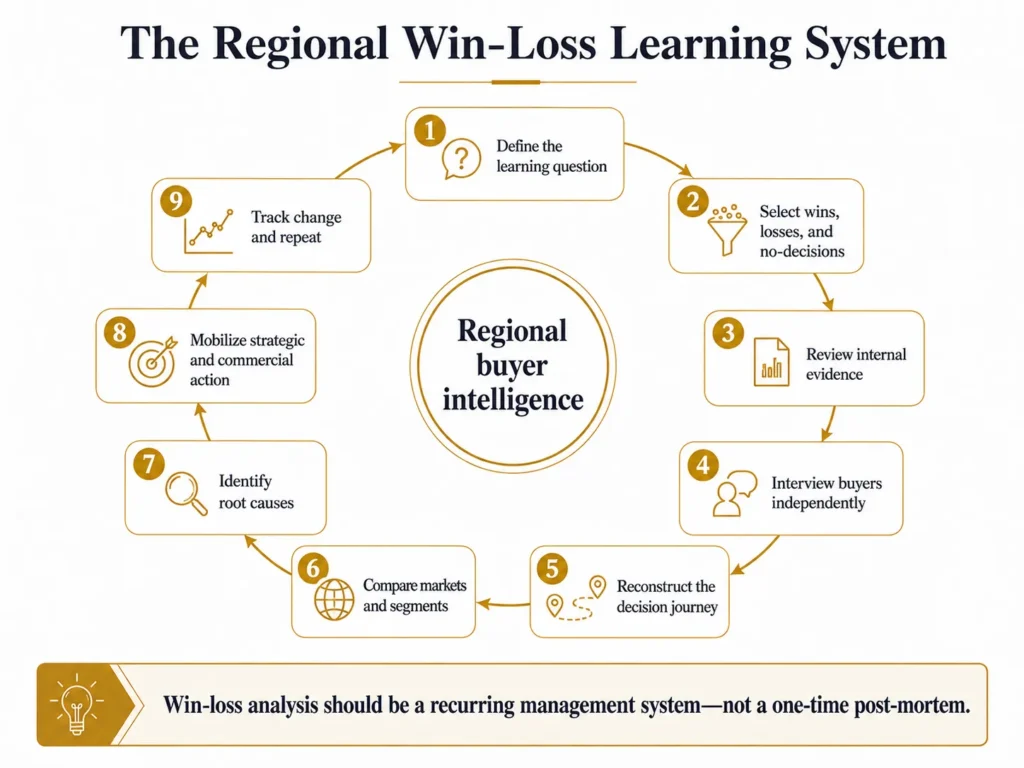
Figure 4. Regional win-loss analysis creates more value when it operates as a recurring learning and action system rather than a one-time review.
How to Compare Countries Without Losing the Meaning
A regional program needs a common framework for comparison and enough flexibility to capture local decision dynamics.
We use a shared structure covering customer need, stakeholders, value perception, competitor comparison, sales experience, price and terms, product-service fit, implementation risk, and the final decision driver.
We then identify:
- Patterns that recur across the region.
- Issues concentrated in one country.
- Differences related to segment, product, competitor, sales team, or channel rather than geography.
- Regional actions that should be standardized.
- Local actions that require country ownership.
What Leadership Should Receive with a Win-Loss Analysis in Latin America
- Executive summary of the main decision drivers.
- Country-by-country findings.
- Regional patterns and local exceptions.
- Win, loss, and no-decision comparisons.
- Competitor perception maps.
- Buyer decision-process maps.
- Value proposition and proof gaps.
- Pricing and commercial-term implications.
- Sales, product, service, channel, and account recommendations.
- A prioritized action plan with owners and indicators.
- An executive alignment workshop.
When Regional Win-Loss Analysis In Latin America Is Especially Valuable
- Country teams give different explanations for performance.
- Your CRM contains broad loss codes but little insight.
- Sales teams frequently blame price or timing.
- Win rates differ significantly by market or segment.
- Your regional value proposition does not resonate consistently.
- Competitors win for reasons your teams do not understand.
- You are entering a market or launching an offer.
- You want to redesign the go-to-market model.
- Distributors influence the customer experience.
- You need a stronger fact base for strategic decisions.
Explore Win-Loss Analysis by Country
- Win-Loss Analysis in Argentina
- Win-Loss Analysis in Brazil
- Win-Loss Analysis in Chile
- Win-Loss Analysis in Colombia
- Win-Loss Analysis in Mexico
- Win-Loss Analysis in Peru
For the complete educational methodology, visit Win-Loss Analysis: Your Secret Weapon for Growth Beyond Sales.
For the consulting offer, visit Win-Loss Analysis Consulting.
Case Example: Closing the Gap Between Regional Strategy and Local Execution
A multinational B2B service provider performed strongly in some Latin American countries but struggled in others. Regional leadership believed pricing was the main issue.
We interviewed buyers across wins, losses, and stalled opportunities. We examined decision authority, competitor comparisons, trust, local credibility, service expectations, proposal quality, pricing, implementation concerns, and the sales experience.
Some strengths were regional, but the reasons for losing were not. In one market, the issue was weak local credibility. In another, buyers lacked implementation confidence. Elsewhere, the visible contact did not hold final authority. In some accounts, a competitor’s service model mattered more than price.
Leadership preserved the core proposition but changed country proof points, stakeholder mapping, service commitments, account planning, and sales guidance.
“We stopped guessing. Once we understood the real reasons behind our losses, we changed our pitch and won a key client within weeks.”
— Sales Vice President, B2B Services Company
Why Midas for Regional Win-Loss Analysis in Latin America?
- Strategic buyer intelligence: We connect deal outcomes with leadership decisions.
- Independent interviews: Buyers can speak more openly with someone outside the sales process.
- Spanish and Portuguese: We work in the buyer’s language and interpret local context.
- Regional and local analysis: We distinguish common patterns from country exceptions.
- Action—not summaries: Recommendations can address sales, value proposition, pricing, product, service, channels, and go-to-market.
- Deep regional experience: Midas has focused on Latin America for more than 25 years.
Ethical, Independent, and Reliable Buyer Research
We comply with SCIP’s Code of Ethics, the profession’s gold standard. We comply with applicable laws, accurately disclose relevant identity before interviews, avoid conflicts of interest, and provide honest recommendations.
We do not misrepresent who we are, seek trade secrets, request confidential documents, or encourage buyers to violate legal or contractual obligations.
We distinguish individual comments from recurring evidence and separate buyer feedback, internal assumptions, competitor claims, hypotheses, and unknowns.
Frequently Asked Questions About Win-Loss Analysis in Latin America
Is win-loss analysis only about lost deals?
No. Wins reveal what works, losses show barriers and competitor advantages, and no-decisions explain why buyers chose not to act.
Why use a neutral third party for win-loss analysis in Latin America?
Buyers are often more candid with someone who was not involved in the sale and will not manage the commercial relationship afterward.
Can one interview guide work across every country in a win-loss analysis in Latin America?
A common framework supports comparison, but language, probes, context, and interpretation should adapt locally.
How many interviews are required for a win-loss analysis in Latin America?
The number depends on the objective, countries, segments, and deal diversity. A focused diagnostic can begin with a balanced sample; broader programs require more coverage.
Can you analyze no-decisions and stalled deals in your win-loss analysis in Latin America?
Yes. They often reveal weak urgency, unclear value, internal misalignment, implementation fear, or budget risk.
Can win-loss analysis in Latin America improve the value proposition?
Yes. It shows which claims resonate, which sound generic, what proof is missing, and which benefits customers value.
Can it improve product and service decisions?
Yes. Buyer feedback can identify product, onboarding, implementation, support, and service gaps that affect revenue.
Can you compare findings across countries with your win-loss analysis in Latin America?
Yes. We identify regional patterns, country-specific issues, and differences associated with segments, products, competitors, channels, or teams.
Can win-loss analysis in Latin America be continuous?
Yes. A recurring program can monitor buyer perceptions, competitor behavior, and whether actions improve outcomes.
Will the findings of your win-loss analysis in Latin America criticize our sales team?
The objective is not blame. It is to improve the full system around sales, including offer, proof, pricing, product, service, channels, and management decisions.
About the Author
Adrian Alvarez, PhD is Managing Partner at Midas Consulting, Wharton Alumnus, MBA Professor at Universidad Argentina de la Empresa (UADE), and Competitive Intelligence Fellow. He specializes in competitive strategy, strategic intelligence, buyer research, win-loss analysis, value proposition design, and executive decision-making under uncertainty in Latin America.
His work has been published in the United States, Spain, and Germany. You can access his library of strategic insights and published research here
View professional profile on LinkedIn
Turn Every Buyer Decision into Better Regional Strategy
You may be trying to understand why some countries outperform others, reduce discounting, improve your regional value proposition, respond to competitors, strengthen channels, or identify why apparently healthy deals disappear.
You do not need more broad loss codes or another internal debate. You need to hear how buyers actually made the decision, compare those decisions across markets, and translate the patterns into action.
In an initial conversation, we will discuss your countries, segments, deal volume, sales process, current explanations, competitor landscape, and the strategic questions the program must answer.