


Strategy workshops are often treated as brainstorming sessions. At Midas Consulting, we see them differently: a strategy workshop is a structured executive decision-making process designed to help leadership teams align around priorities, challenge assumptions, and convert strategic discussion into action.
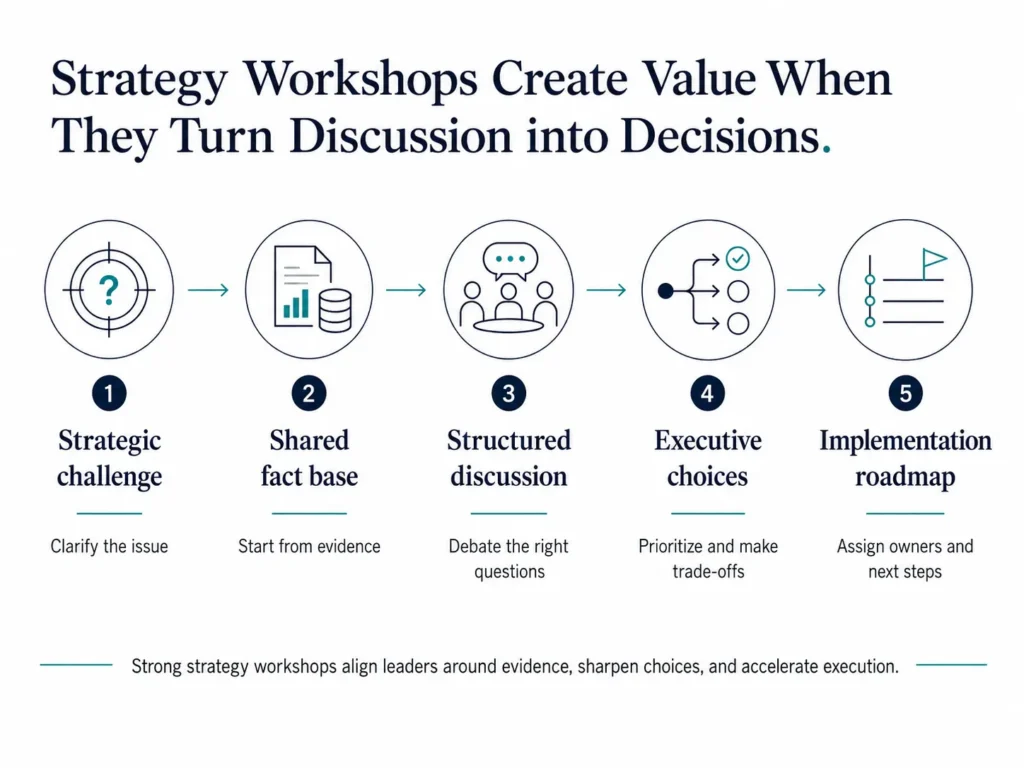
Figure 1: The value of a Midas strategy workshop is not the meeting itself, but the path it creates from insight to execution.
The real value of a strategy workshop is not that it brings people into a room. The real value is that it creates the conditions for better decisions: the right facts, the right participants, the right questions, the right facilitation, and a clear path from insight to execution.
This distinction matters because many companies do not lack ideas. They lack alignment, prioritization, ownership, and disciplined follow-through. Teams may agree at a high level but disagree on what matters most, which trade-offs to accept, what resources to allocate, or who is accountable for implementation.
For that reason, this page focuses on strategy workshops as an executive alignment and decision-making mechanism. It complements our broader article on strategy workshops for turning insights into action, which explains how workshops help organizations move from analysis to implementation. Here, the focus is narrower: when a strategy workshop is the right tool, how to design it well, and how to make sure it produces decisions instead of only discussion.
At Midas Consulting, we often combine strategy workshops with market analysis, competitor analysis, benchmarking, value proposition design, win-loss analysis, business wargaming, and strategic foresight.
In this article, we explain what strategy workshops are, when they are most useful, how they help executive teams make better choices, how to run them effectively, where their limitations are, and how they connect with broader strategy work.
When Strategy Workshops Are the Right Tool
A strategy workshop is most useful when the organization needs to make a strategic decision that requires shared understanding, debate, prioritization, and ownership. It is especially valuable when leadership teams need to:
- Align around a new strategic direction, growth agenda, or market priority.
- Translate market, customer, competitor, or internal insights into concrete decisions.
- Prioritize initiatives when there are too many ideas and limited resources.
- Challenge assumptions that have become accepted internally but may no longer fit the market.
- Build cross-functional agreement among leadership, marketing, sales, finance, operations, product, and regional teams.
- Prepare a go-to-market plan, market entry roadmap, value proposition, competitive response, or strategic initiative portfolio.
- Create implementation ownership by involving the people who will execute the strategy.
The key point is that a strategy workshop should not be used only because “we need a meeting.” It should be used when the company needs a structured process to reach better decisions and align the team around execution.
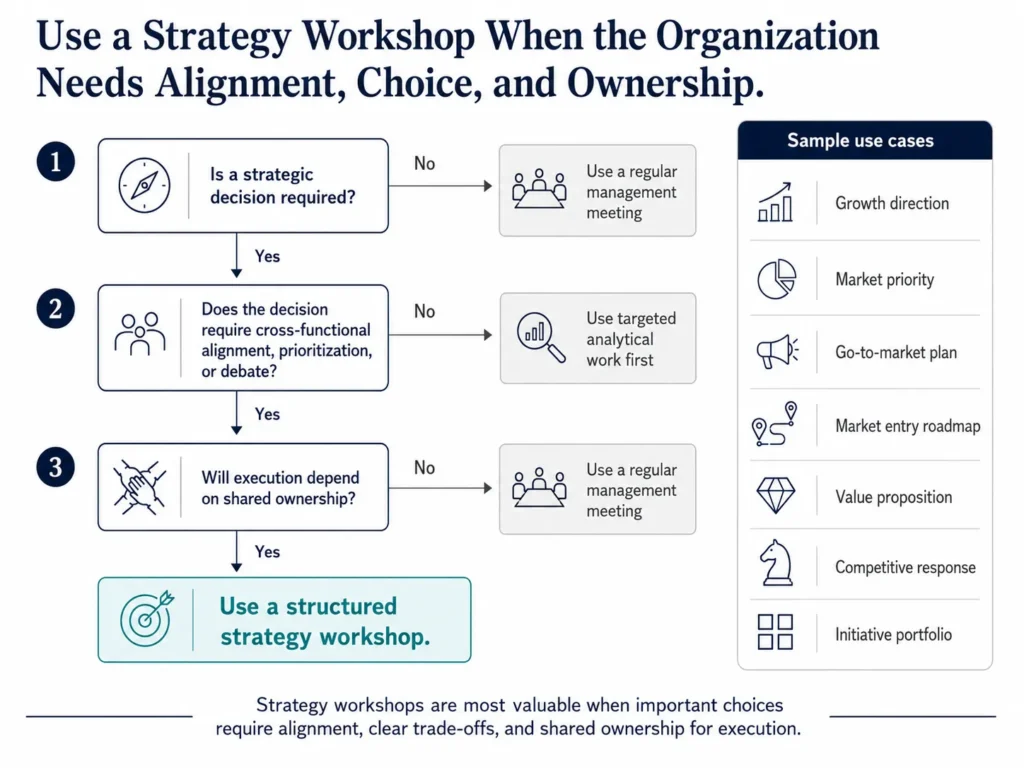
Figure 2: A strategy workshop is most useful when better decisions depend on structured debate and execution alignment.
What Are Strategy Workshops?
A strategy workshop is a structured, facilitated process that brings the right people together to analyze a strategic challenge, evaluate options, make choices, and define next steps.
Unlike routine meetings, strategy workshops are designed around a specific decision or strategic problem. They require preparation, relevant data, clear roles, disciplined facilitation, and a practical output. The objective is not only to discuss strategy. The objective is to help the team decide what to do and how to move forward.
A strong strategy workshop typically includes:
- A clear strategic question: What decision does the workshop need to support?
- Relevant preparation: Market, customer, competitor, financial, operational, or internal inputs that help participants start from evidence rather than opinion.
- The right participants: People with decision authority, implementation responsibility, market knowledge, customer understanding, and operational perspective.
- Structured facilitation: A process that helps the group challenge assumptions, avoid circular discussion, and make progress.
- Prioritization: A way to compare options based on impact, feasibility, risk, resources, and strategic fit.
- Decision outputs: Strategic choices, initiatives, trade-offs, responsibilities, timelines, and follow-up actions.
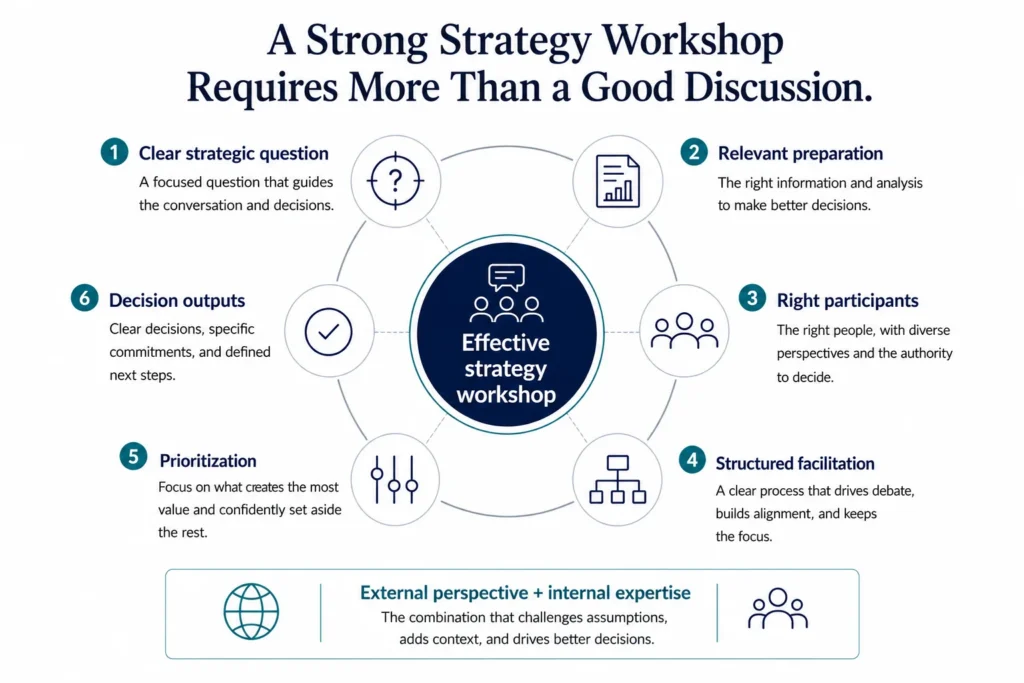
Figure 3: Well-run workshops depend on preparation, structure, and decision discipline—not just energy in the room.
At Midas Consulting, we believe strategy workshops work best when external perspective and internal expertise are combined. External facilitation helps challenge assumptions and structure the discussion. Internal expertise ensures the strategy reflects business reality and can be implemented by the organization.
A methodology grounded in practice and executive education
This view of strategy workshops also extends beyond our consulting engagements. Adrian Alvarez, Managing Partner of Midas Consulting, explored the methodology in Strategy Workshops: From Vision to Action, published by the Faculty of Economic Sciences at the Universidad de Buenos Aires (UBA).
The article examines how structured workshops can help organizations bridge one of strategy’s most persistent gaps: moving from vision and strategic discussion to alignment, priorities, ownership, and execution. It reinforces a principle that guides our work at Midas: involving the people who must execute the strategy is not simply a way to increase participation. When the process is properly designed, it improves shared understanding, exposes differences early, and creates stronger ownership of the decisions that follow.
Three Executive Benefits of Strategy Workshops
1. Better strategic alignment
Strategy often fails not because the idea is weak, but because the organization is not aligned on what it means, what trade-offs it requires, or how it should be executed. A strategy workshop creates a structured space for leaders to build a shared understanding of the challenge, the facts, the choices, and the priorities.
This alignment is especially important when different functions see the problem differently. Marketing may focus on customer perception. Sales may focus on competitive pressure. Operations may focus on feasibility. Finance may focus on profitability. A good workshop does not suppress these differences. It makes them visible and turns them into better decisions.
2. Stronger prioritization
Most organizations have more initiatives than they can execute well. Strategy workshops help leadership teams separate what is important from what is merely interesting.
By comparing initiatives against clear criteria: impact, feasibility, urgency, resources, risk, and strategic fit, teams can focus on the few actions that matter most. This helps avoid diluted execution, conflicting priorities, and strategies that look impressive but are impossible to implement.
3. Greater ownership and implementation commitment
People are more likely to implement a strategy they helped shape. Strategy workshops create ownership because participants are not passive recipients of a recommendation. They help interpret the evidence, debate the options, make trade-offs, and define the action plan.
This does not mean every decision is made by consensus. It means the process gives the team a clearer understanding of why choices were made and what each area must do next.
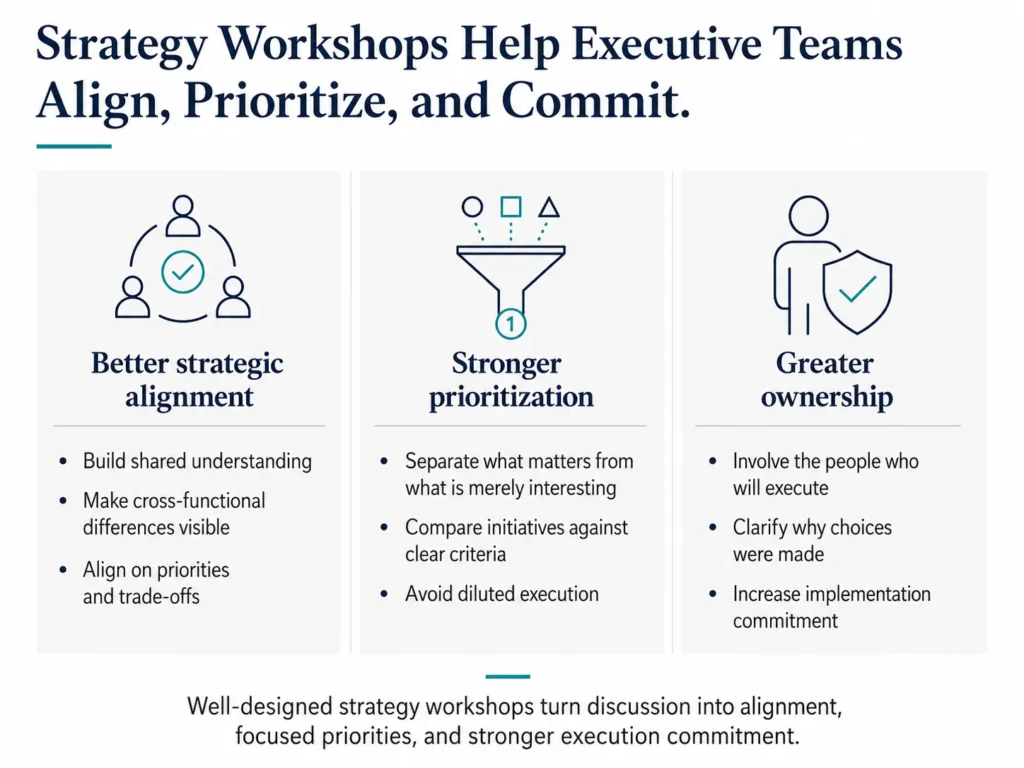
Figure 4: The best workshops strengthen not only strategic thinking, but also the organization’s ability to act on it.
How to Run a Strategy Workshop That Produces Decisions
A strategy workshop should be designed backwards from the decision it needs to support. The agenda, participants, exercises, inputs, and outputs should all connect to that decision.
Step 1. Define the strategic decision
Start by clarifying the decision the workshop must help the team make. Is the company deciding which market to enter? Which customer segment to prioritize? How to respond to a competitor? How to reposition a brand? Which growth initiatives to fund? How to improve go-to-market execution?
A vague objective produces a vague workshop. A clear decision creates focus.
Step 2. Prepare the evidence base
Effective workshops start before the workshop. Preparation may include interviews, market analysis, competitor analysis, benchmarking, customer insight, win-loss analysis, financial data, operational constraints, or internal surveys.
The goal is to reduce the risk that the session becomes a debate based only on opinions or hierarchy. Participants should arrive with a shared fact base and enough context to make informed choices.
The quality of that evidence can change the strategic conversation. For example, in the Midas Import Competition Monitor 2026, we analyzed 151 business decisions made in response to Argentina’s trade opening and found very different responses to similar competitive pressure. Forbes Argentina used our research to examine how companies are investing, reconfiguring production, regionalizing, importing, reducing capacity, or exiting the market. Evidence like this helps a workshop start with real market behavior rather than internal assumptions alone.
Step 3. Bring the right people into the room
The workshop should include people who understand the market, own the decision, and will be responsible for implementation. Depending on the topic, this may include leadership, marketing, sales, finance, operations, product, customer service, regional teams, or external partners.
Too few participants can lead to poor implementation buy-in. Too many participants can slow decision-making. The group should be large enough to represent the business, but focused enough to make progress.
Step 4. Structure the discussion
Good facilitation helps the team move from insight to options, from options to priorities, and from priorities to action. The process should encourage debate while avoiding circular conversations, dominant voices, groupthink, and premature agreement.
Useful workshop tools may include decision matrices, scenario exercises, competitor response simulations, customer journey mapping, value proposition canvases, initiative prioritization, strategic trade-off discussions, and action planning templates.
Step 5. Prioritize and make trade-offs
A strategy workshop should force prioritization. If everything is a priority, execution becomes diluted. The team should decide what to focus on, what to postpone, what to stop, and what assumptions need further validation.
This is where the workshop creates real value: not by generating more ideas, but by helping the team choose.
Step 6. Translate decisions into an implementation roadmap
The final output should include clear actions, owners, timing, milestones, dependencies, and follow-up mechanisms. Without this, the workshop risks becoming an inspiring conversation that does not change behavior.
A good workshop should make it easier to act the next day.
How to Avoid a Workshop That Feels Productive but Changes Nothing
Many workshops feel successful in the room. Participants are engaged, the discussion is lively, and the energy is positive. But weeks later, little has changed.
This usually happens because the workshop produced conversation, not commitment. To avoid that problem, strategy workshops should be designed with several safeguards:
- Define the decision before the session. The team should know what must be decided, not only what will be discussed.
- Use evidence, not only opinions. Market, customer, competitor, and internal data should anchor the conversation.
- Make trade-offs explicit. A strategy is not a list of everything the company could do. It is a set of choices about where to focus.
- Assign owners. Every priority should have a responsible person or team.
- Set deadlines and milestones. Implementation should be translated into visible next steps.
- Clarify what will not be done. Stopping or postponing initiatives is often as important as launching new ones.
- Schedule follow-up. The workshop should be connected to a management rhythm that tracks progress and removes obstacles.
The test of a strategy workshop is not whether participants liked the session. The test is whether the organization makes better decisions and acts on them.
A Practical Strategy Workshop Decision Matrix
One useful way to evaluate strategic options in a workshop is to compare two dimensions: strategic impact and execution feasibility.
- High impact / high feasibility: Prioritize. These initiatives should receive focus, resources, and clear accountability.
- High impact / low feasibility: Redesign or stage. These ideas may be attractive, but the team must reduce barriers, build capabilities, or test assumptions before scaling.
- Low impact / high feasibility: Consider selectively. These may be quick wins, but they should not distract from more important priorities.
- Low impact / low feasibility: Stop or postpone. These initiatives are unlikely to justify leadership attention or resources.
This type of matrix helps leadership teams avoid two common mistakes: choosing initiatives because they are easy, and approving ambitious ideas without understanding what execution would require.
A good workshop does not only ask “What should we do?” It also asks “What are we truly capable of executing well?”
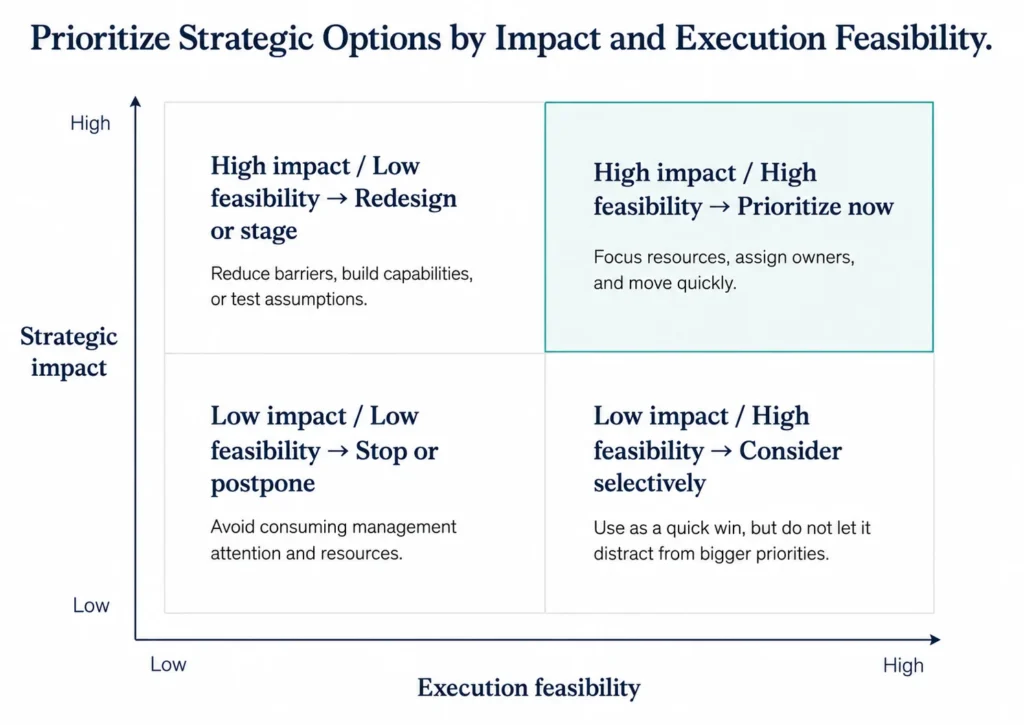
Figure 5: A strategy workshop creates value when it forces trade-offs between what is attractive and what is truly executable.
Practical Example: From Strategic Discussion to Executive Alignment
A company asked Midas Consulting to facilitate a strategy workshop after several internal discussions had failed to produce a clear direction. The leadership team had many ideas, but priorities were unclear and different functions were pulling in different directions.
Before the workshop, Midas reviewed market information, competitor moves, customer feedback, internal performance data, and the company’s current strategic initiatives. This preparation helped the session start with a shared fact base rather than a blank page.
During the workshop, participants evaluated strategic options against two dimensions: expected impact and execution feasibility. This forced the team to discuss trade-offs openly. Some initiatives that had strong internal support were postponed because they required capabilities the company did not yet have. Other initiatives received priority because they combined customer relevance, competitive advantage, and operational feasibility.
The final output was not only a list of ideas. It was a focused roadmap with strategic priorities, owners, milestones, and assumptions to validate. The workshop helped the leadership team move from fragmented discussion to aligned action.
This is the value of a strategy workshop when it is properly designed. It turns discussion into decisions, and decisions into a practical execution path.
Strengths and Limitations of Strategy Workshops
Strategy workshops are powerful when they are well prepared, well facilitated, and connected to execution. But like any strategic tool, they also have limitations.
Strengths
- They create alignment. Workshops help leadership teams develop a shared understanding of the challenge, the options, and the priorities.
- They improve decision quality. A structured process helps teams challenge assumptions, compare alternatives, and make trade-offs more explicitly.
- They build ownership. People are more committed to strategies they helped shape and understand.
- They accelerate prioritization. Workshops can compress weeks of scattered discussion into a focused decision process.
- They connect strategy with execution. Good workshops translate choices into initiatives, owners, timelines, and follow-up mechanisms.
Limitations
- A workshop is not a substitute for evidence. If the fact base is weak, the discussion may only formalize internal assumptions.
- Facilitation matters. Without structure, workshops can be dominated by hierarchy, politics, groupthink, or circular conversations.
- Not every issue can be solved in one session. Some decisions require additional research, financial analysis, customer validation, or competitive intelligence.
- Execution still requires discipline. A good workshop creates clarity, but implementation depends on leadership follow-through, resource allocation, and accountability.
- Consensus is not always the goal. The objective is better decision-making, not avoiding disagreement.
For that reason, strategy workshops should be treated as part of a broader strategy process, not as a stand-alone event.
Conclusion: Strategy Workshops Should Produce Decisions, Not Just Discussion
Strategy workshops are not valuable because they create a collaborative meeting. They are valuable because they help leadership teams make better choices and align around execution.
When done well, a strategy workshop helps executives answer practical questions: What decision do we need to make? What facts should guide us? Which assumptions must be challenged? Which options are most attractive? What trade-offs are required? Who owns the next steps? How will we know whether we are making progress?
At Midas Consulting, we use strategy workshops to help companies move from fragmented discussion to focused action. The goal is not to replace leadership judgment. The goal is to structure the decision process so that leadership judgment is better informed, better aligned, and easier to execute.
In Latin America, this discipline is especially important because market conditions, customer expectations, competitor behavior, channel dynamics, and regulatory realities can vary significantly by country and segment. A strategy that sounds clear at headquarters may need to be tested and adapted before it can work in the market.
If your company needs to align leadership, prioritize initiatives, challenge assumptions, or translate insight into a practical execution roadmap, a strategy workshop can help turn strategic complexity into clear decisions and committed action.
About the Author
By Adrian Alvarez, PhD. Adrian Alvarez is Managing Partner at Midas Consulting, Wharton Alumnus, MBA Professor at Universidad Argentina de la Empresa (UADE), and Competitive Intelligence Fellow. e specializes in competitive strategy, strategy workshops, business wargaming, strategic intelligence, market analysis, competitor analysis, and strategic decision-making under uncertainty in Latin America.
He has facilitated dozens of executive strategy workshops across Latin America, helping leadership teams align around growth priorities, competitive responses, market entry decisions, value propositions, go-to-market choices, and implementation roadmaps.
Adrian is the author of numerous works published in the United States, Spain, and Germany. You can access his library of strategic insights and published research here or view professional profile on LinkedIn.
Selected External Sources
This article is informed by Midas Consulting’s experience facilitating executive strategy workshops, strategic decision-making sessions, business wargames, market entry workshops, go-to-market workshops, and competitive response workshops across Latin America, as well as by respected sources on strategy execution, alignment, decision-making, and team effectiveness.
- Harvard Business Review: Strategy Execution
- Harvard Business Review: When Strategy and Execution Fall Out of Sync
- Harvard Business Publishing: Why Strategic Alignment Matters
- MIT Sloan Management Review: Closing the Gap Between Strategy and Execution
- Universidad de Buenos Aires, Faculty of Economic Sciences, Adrian Alvarez: Strategy Workshops: From Vision to Action
Related Midas Insights
For executives who want to go deeper, these Midas articles provide additional context on how strategy workshops connect with strategy execution, market analysis, competitor analysis, value proposition design, go-to-market strategy, wargaming, and strategic foresight:
- Strategy Workshops: Turning Insights into Action
- Strategy Consulting: Define Where to Compete and How to Win
- Market Analysis: The Key to Informed Strategic Decisions
- Competitor Analysis: Benefits and Step-by-Step Guide
- Value Proposition: Are You Losing Customers Because You Don’t Have a Strong Value Proposition?
- Go-to-Market Strategy in Latin America: From Plan to Execution
- How to Design and Implement a Wargame
- Strategic Foresight and Competitive Response: Executive Insights
Related Midas Services
Strategy workshops are often part of a broader strategic decision process. Depending on the question your company needs to answer, Midas Consulting can combine strategy workshops with other strategy services:
- Strategy Consulting: When leadership teams need to make major strategic choices about growth, competitive positioning, market priorities, resource allocation, and execution.
- Market Analysis: When the workshop needs a stronger fact base on market size, demand, customer needs, barriers, channels, and opportunity attractiveness.
- Competitor Analysis: When the leadership team needs to understand competitor behavior, likely reactions, competitive intensity, positioning, pricing, and threats before deciding.
- Benchmarking: When teams need to compare practices, capabilities, performance, or strategic choices against competitors or reference companies.
- Value Proposition Design: When the workshop needs to clarify why customers should choose the company and how to make that value more credible and differentiated.
- Win-Loss Analysis: When leadership teams need buyer feedback to understand why customers choose, reject, switch from, or stay with specific offers.
- Go-to-Market Strategy: When workshop decisions need to be translated into segmentation, channels, pricing, messaging, sales tools, and commercial execution.
- Business Wargaming: When the decision could trigger competitor reactions and the team needs to test moves, countermoves, and risks before committing resources.
Together, these services help executive teams move from strategic discussion to evidence-based decisions, alignment, and implementation.
Knowing the benefits and process of a strategy workshop is one thing, but doing it successfully is another. Count on us. We’ll guide you seamlessly at every stage.
We are by your side organizing your strategy workshop!
After conducting dozens of strategy workshops, we’ve perfected our approach and templates. We’re passionate about helping companies like yours stay one step ahead!

Here’s what some of our clients have to say about our work:


Some of our strategy workshop clients:




How to move forward with a strategy workshop:
Schedule a quick call
In a brief call, we’ll ask for some basic information to prepare a custom proposal. Once ready, we’ll send it over for your review, and once approved, we’ll begin working on your workshop
Design and implement your strategy in a workshop
During the workshop, we’ll guide the process and manage all the details. Two weeks later, you’ll receive a report with the strategies and outcomes we’ve developed together
Implement your strategy successfully
By implementing this strategy, you’ll succeed in the market because it’s pressure-tested from multiple perspectives
We’re ready when you are! Let’s work together to achieve your goals!
If you liked this blog post, please share it in your networks: