


Business wargames are often described as simulations of competitor behavior. At Midas Consulting, we see them more specifically: a business wargame is a structured decision process that helps leadership teams test strategic moves, anticipate competitor reactions, reveal blind spots, and prepare better countermoves before the market reacts.
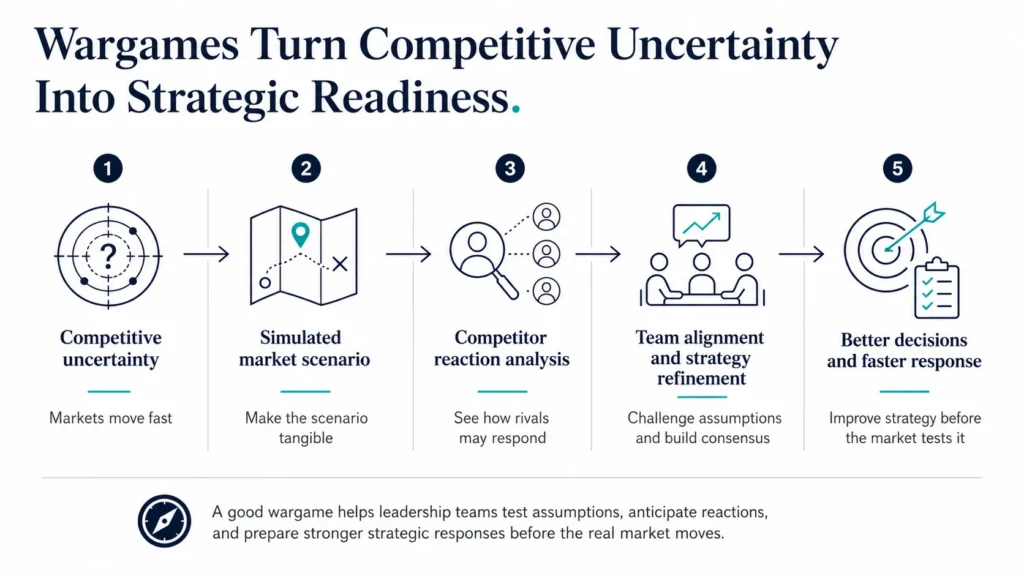
Figure 1: The value of a wargame is not the exercise itself, but the strategic readiness it creates before competitors move.
This page focuses on the practical question: how to design and implement a business wargame. It complements our broader article on why wargames should be part of your strategy, which explains the business risk of ignoring competitor reactions. Here, the focus is narrower and more operational: how to define the objective, design the simulation, prepare playbooks, select participants, facilitate the session, and translate the results into action.
The distinction matters. A wargame is not a generic workshop, a brainstorming session, or a prediction exercise. It is a disciplined way to explore how competitors, customers, regulators, channels, or other market actors may respond to a strategic move. The goal is not to forecast the future with certainty. The goal is to make strategic assumptions visible, test them under pressure, and improve preparedness.
For that reason, we often combine business wargaming with competitor analysis, market analysis, strategic foresight, strategy workshops, market entry analysis, and go-to-market strategy.
In this guide, we explain when a wargame is the right tool, what a strong wargame should include, how to prepare it, how to run it, how to avoid common mistakes, and how to convert simulation insights into strategic action.
When a Business Wargame Is the Right Tool
A business wargame is most valuable when the company is considering a strategic move that could trigger reactions from competitors or other market actors. It is especially useful when leadership teams need to:
- Test a market entry strategy before committing resources.
- Anticipate how competitors may respond to a price change, product launch, acquisition, channel move, or commercial campaign.
- Evaluate whether a strategy is vulnerable to retaliation, imitation, escalation, or disruption.
- Prepare countermoves before competitors act.
- Challenge internal assumptions about competitor passivity or customer response.
- Align cross-functional teams around competitive risks and implementation priorities.
- Explore how customers, distributors, regulators, or substitutes could influence the outcome.
The key point is that a wargame should not be used because the team wants an interesting exercise. It should be used when the decision is important, the competitive response matters, and the organization needs to improve preparedness before acting.
What Is a Business Wargame?
A business wargame is a structured simulation in which participants role-play competitors, customers, regulators, distributors, or other relevant market actors to test how a strategic situation may evolve.
Unlike a standard strategy workshop, a wargame forces the organization to see the market from outside-in. Participants temporarily stop defending the company’s current plan and instead ask: What would a competitor do? How would a customer react? Which move would create the most pressure? Where is our strategy exposed?
A strong business wargame typically includes:
- A clear strategic question: What decision or move are we testing?
- Defined players: Which competitors, customers, channels, regulators, or substitutes should be simulated?
- Evidence-based playbooks: What information does each team need to behave realistically?
- Structured rounds: How will moves, reactions, countermoves, and learning cycles unfold?
- Cross-functional participation: Which leaders and teams need to understand the competitive dynamics and own the response?
- Facilitated challenge: How will assumptions be tested and blind spots surfaced?
- Actionable outputs: What decisions, countermoves, early warning signals, and implementation priorities should emerge?
The value of a wargame is not that it predicts the exact future. The value is that it helps executives prepare for plausible competitive reactions before those reactions happen.
Three Executive Benefits of Business Wargaming
1. Stress-test strategy before the market does
A strategy may look strong when analyzed internally, but become weaker once competitors react. A wargame helps leadership teams test whether their plan remains robust when rivals cut prices, change positioning, launch a counteroffer, lock up distributors, influence customers, or escalate commercially.
This is the central benefit of wargaming: it exposes strategic vulnerabilities before they become market problems.
2. Reveal blind spots and hidden assumptions
Many strategies contain implicit assumptions: competitors will not respond quickly, customers will value the offer as expected, distributors will cooperate, regulators will not interfere, or the market will evolve in a predictable way.
By forcing participants to role-play other actors, a wargame makes those assumptions visible. Teams often discover that the risk was not in the plan itself, but in what the plan assumed others would do.
3. Build alignment around countermoves and execution
A wargame helps teams align not only around the strategy, but also around what to do if the market reacts differently than expected. This is especially useful for cross-functional teams because competitor reactions often affect pricing, sales, marketing, operations, legal, channels, finance, and leadership decisions at the same time.
The best output is not a set of interesting observations. It is a clearer set of strategic choices, prepared countermoves, early warning indicators, and implementation priorities.
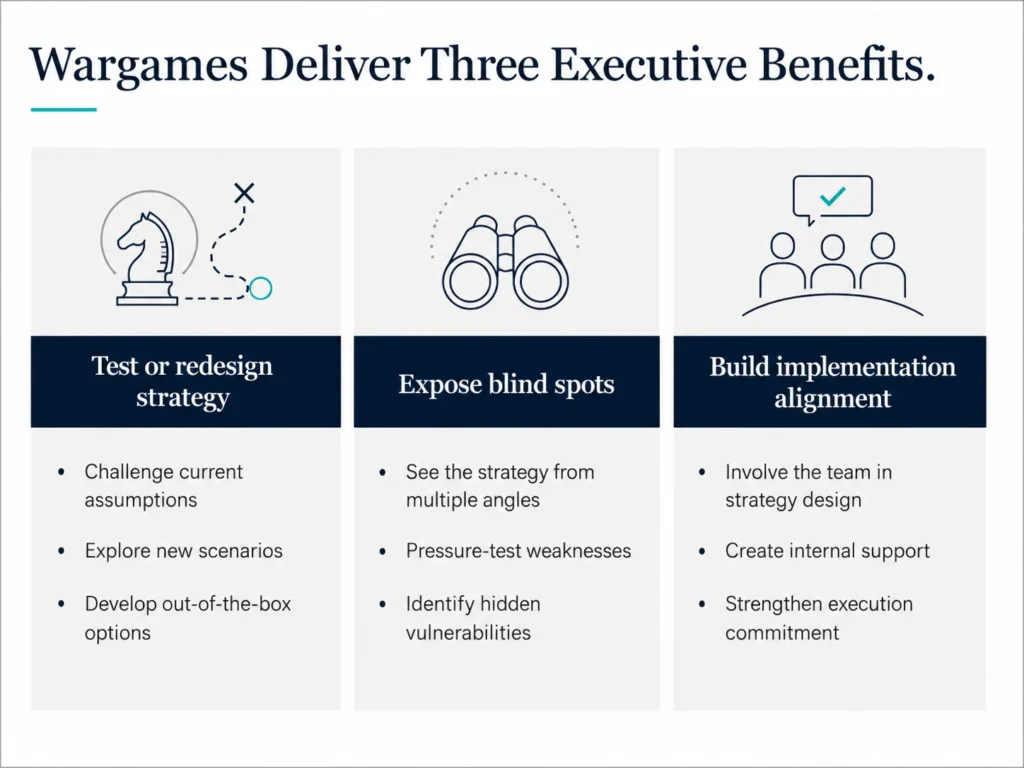
Figure 2: Midas wargames create value by improving strategy quality, revealing weaknesses, and building buy-in for execution.
How to Design and Implement a Business Wargame
A successful wargame has two major phases: preparation and implementation. The quality of the simulation depends heavily on the quality of the preparation. If the fact base is weak, the playbooks are superficial, or the strategic question is unclear, the wargame will produce interesting discussion but limited strategic value.
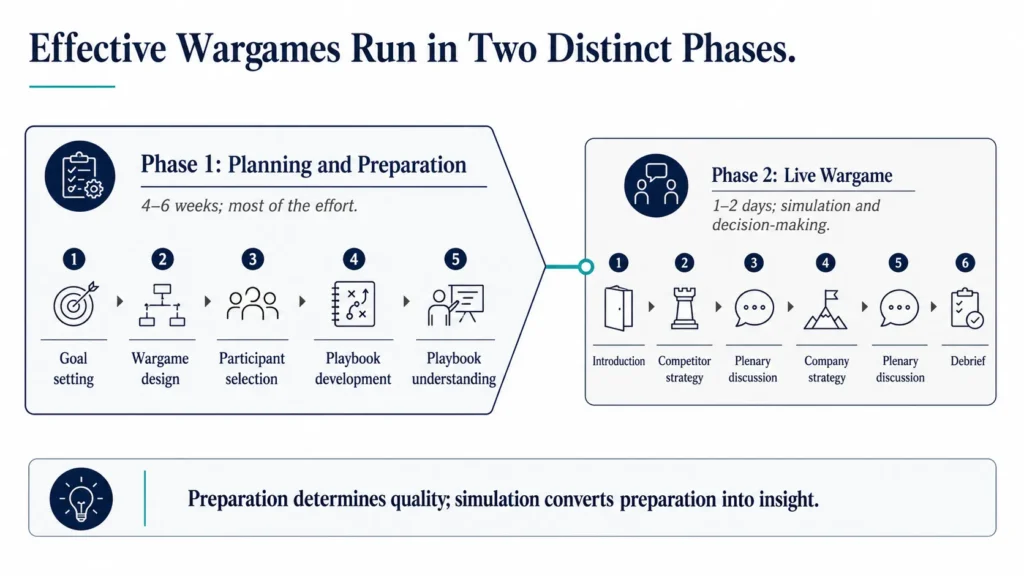
Figure 3: Strong wargames are built twice: first in preparation, then in live simulation.
In our experience, the preparation phase usually requires more effort than the workshop itself. It is where objectives are clarified, players are selected, competitive intelligence is gathered, playbooks are built, participants are prepared, and the simulation logic is designed.
The implementation phase is where the team plays the scenario, develops moves, presents them, challenges assumptions, designs countermoves, and translates lessons into strategic action.
Phase 1: Planning and Preparation
The preparation phase determines whether the wargame will be realistic, useful, and actionable. This phase should not be rushed. The objective is to create the conditions for participants to think and act like the players they are simulating.
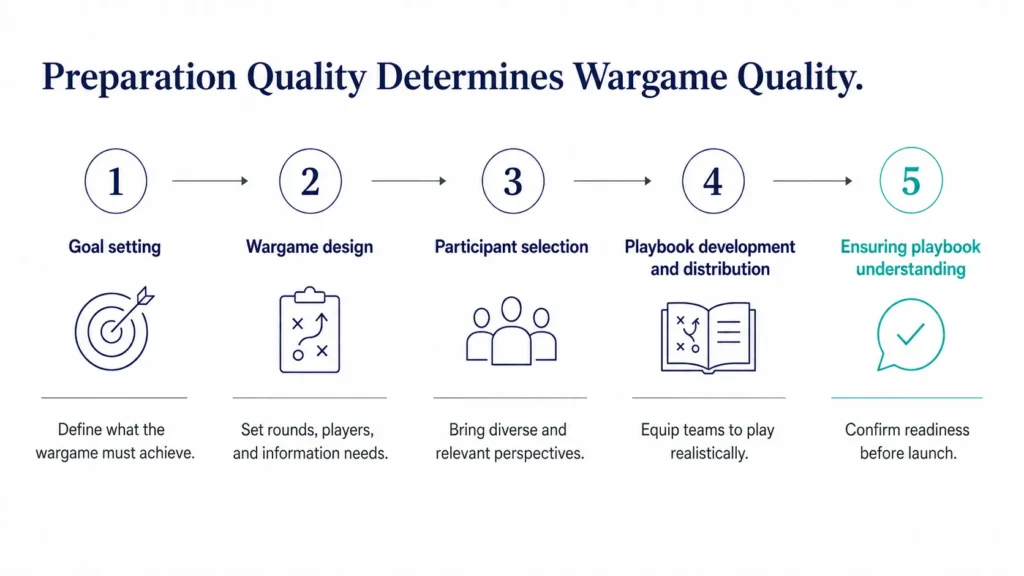
Figure 4: Most of the value of a Midas wargame is created before the live session starts.
Step 1. Define the strategic decision
Every wargame should begin with a clear decision or strategic question. Are you testing a market entry strategy? A pricing move? A product launch? A go-to-market plan? A competitor response? A distributor strategy? A defensive move against a new entrant?
The question determines the scenario, the players, the information required, the rounds, and the outputs. A vague question produces a vague wargame. A focused question creates strategic value.
Step 2. Identify the players to simulate
The next step is deciding who should be represented in the game. In some cases, the players are direct competitors. In others, the relevant actors may include customers, distributors, regulators, substitute solutions, new entrants, internal business units, or strategic partners.
The goal is to simulate the actors whose reactions could change the outcome of the strategy.
Step 3. Build the competitive fact base
A wargame should be grounded in evidence. Preparation may include competitor analysis, market analysis, customer interviews, distributor interviews, pricing analysis, channel assessment, regulatory review, scenario analysis, and internal performance data.
This fact base helps participants avoid generic role-play. It gives each team enough information to behave plausibly, make realistic moves, and challenge the company’s strategy in a credible way.
Real-world competitive responses are especially useful when building that fact base. In the Midas Import Competition Monitor 2026, we analyzed 151 business decisions made in response to the same shift in Argentina’s competitive environment and found very different responses: investing to defend local production, reconfiguring operations, importing, regionalizing, reducing capacity, or exiting the market. Forbes Argentina used the Midas Consulting Monitor to examine these different strategic responses. Evidence like this helps you build playbooks around observed behavior rather than assumptions about how a competitor should react.
Step 4. Develop playbooks for each team
Playbooks translate the fact base into practical guidance for the teams. Each playbook should summarize the player’s objectives, capabilities, constraints, likely incentives, strategic priorities, strengths, weaknesses, and possible moves.
A good playbook does not tell participants exactly what to do. It gives them enough context to think like the player they are representing.
Step 5. Select and brief participants
Participants should include people with different perspectives: leadership, marketing, sales, finance, operations, product, regulatory, supply chain, regional teams, or other functions depending on the topic.
The group should be diverse enough to capture different realities, but focused enough to work effectively. Participants should receive pre-read materials and understand the objectives, rules, timeline, and expected outputs before the session begins.
Step 6. Design the simulation structure
The final preparation step is to define how the wargame will unfold. This includes the number of rounds, the sequence of moves and reactions, the format of presentations, the role of facilitators, the decision criteria, and the way outputs will be captured.
The structure should be simple enough for participants to engage quickly, but robust enough to reveal meaningful competitive dynamics.
Phase 2: Running the Wargame
The implementation phase is where preparation becomes strategic learning. The facilitator’s role is critical: the process must be energetic and interactive, but also disciplined enough to produce decisions and useful outputs.
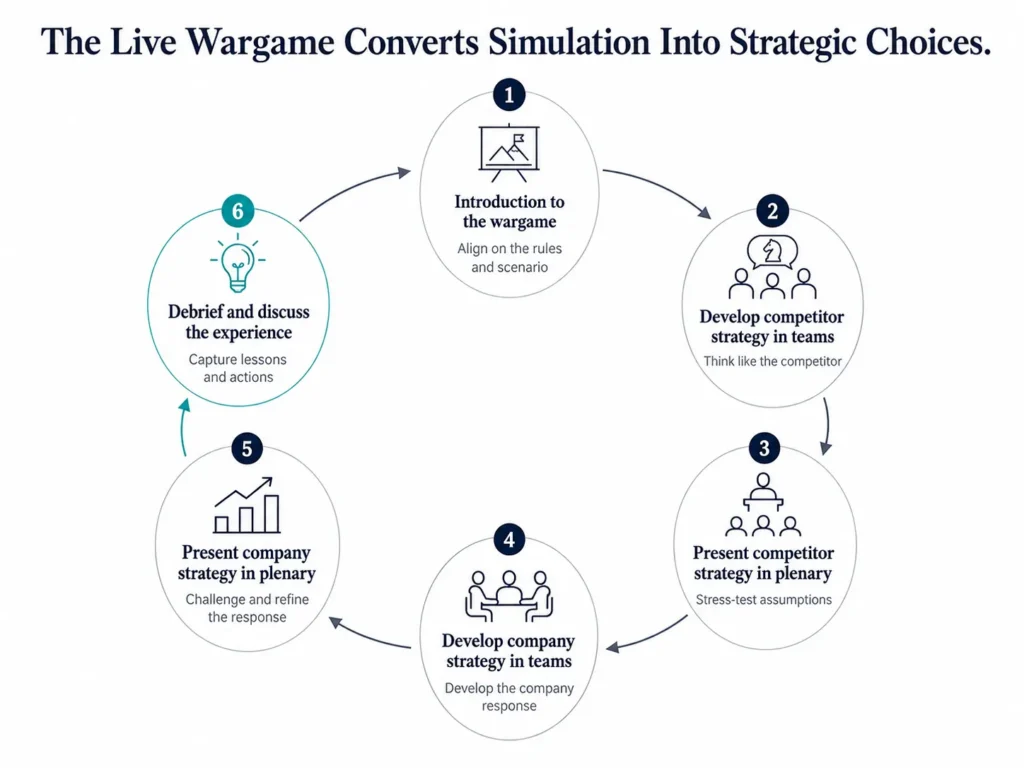
Figure 5: The live session works because it forces teams to think like competitors before deciding how the company should respond.
Step 1. Set the context and rules
Begin by explaining the strategic question, the scenario, the players, the rules, the timeline, and the expected outputs. Participants should understand that the objective is not to defend existing assumptions, but to test them.
This opening also ensures that everyone starts from the same fact base and understands how the game will work.
Step 2. Develop competitor or actor moves
Teams then work from the perspective of their assigned player. Competitor teams may design pricing moves, product launches, channel strategies, communication campaigns, partnerships, lobbying efforts, capacity expansion, or account-specific actions.
Customer, distributor, or regulator teams may explore how those actors would react to different market moves. The objective is to understand the system, not only direct competitors.
Step 3. Present moves and challenge assumptions
Each team presents its moves in plenary. Facilitators and other teams challenge the logic: Is this move realistic? What incentive would the player have? What capabilities would be required? What would make the move more or less likely? How would it affect customers and the market?
This step is where many blind spots become visible.
Step 4. Develop countermoves
After competitor and market reactions are explored, participants return to the company’s perspective. The question becomes: What should we do now?
Countermoves may include adjusting the strategy, changing pricing, strengthening the value proposition, modifying the launch sequence, protecting key accounts, preparing channel responses, building early warning indicators, or delaying a move until specific risks are reduced.
Step 5. Prioritize implications
Not every insight deserves action. The team should prioritize the implications based on strategic importance, probability, impact, feasibility, and urgency.
This prevents the wargame from producing a long list of observations without a clear executive decision.
Step 6. Debrief and translate lessons into action
The final step is a structured debrief. The team should answer: What did we learn? Which assumptions were challenged? Which risks are most important? Which countermoves should be prepared? Which indicators should we monitor? What changes should be made to the strategy?
The output should include clear actions, owners, timing, and follow-up. A wargame creates value only if its lessons influence decisions and execution.
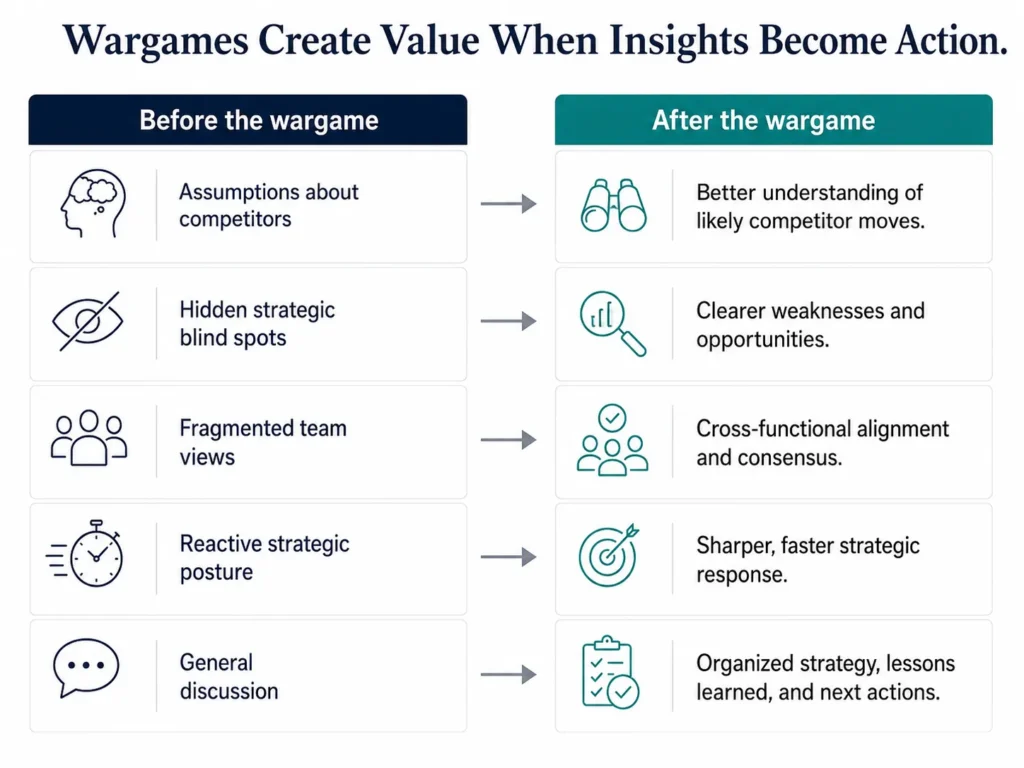
Figure 6: A wargame adds value only when it changes how the organization thinks, aligns, and acts.
Common Wargame Design Mistakes
Business wargames can produce powerful insights, but only if they are designed with discipline. Several mistakes can reduce their value:
- Starting with an unclear question. If the strategic decision is vague, the simulation will lack focus.
- Using weak competitor intelligence. Without a solid fact base, teams may role-play stereotypes instead of realistic competitors.
- Choosing the wrong players. Some wargames fail because they ignore customers, distributors, regulators, or substitutes that could strongly influence the outcome.
- Letting the session become entertainment. A wargame should be engaging, but the objective is decision quality, not theater.
- Allowing internal hierarchy to dominate. If senior voices suppress debate, the wargame will not reveal blind spots.
- Failing to prioritize outputs. A long list of insights is less useful than a short list of critical risks, countermoves, and decisions.
- Not following up. If lessons are not translated into owners, actions, and monitoring signals, the wargame becomes a one-time event instead of a strategic tool.
The best wargames are realistic enough to challenge assumptions, structured enough to produce decisions, and practical enough to influence execution.
Practical Example: From a Confident Launch Plan to Prepared Countermoves
A company asked Midas Consulting to test a planned product launch in a competitive market. Internally, the launch plan looked strong: the value proposition was clear, the target segment was attractive, and the commercial team believed customers would respond positively.
The wargame revealed a risk that had been underestimated. When participants role-played the strongest competitor, they designed a likely countermove: an aggressive short-term discount combined with direct pressure on distributors and a message questioning the new product’s reliability.
This did not mean the company should cancel the launch. It meant the launch needed to be strengthened before going to market. The team prepared distributor talking points, clarified proof points around reliability, developed an account-specific response plan, and defined early warning indicators to detect competitor retaliation quickly.
The result was not a prediction of the future. It was better preparedness. The company entered the market with a stronger launch plan, clearer defensive actions, and greater alignment across sales, marketing, product, and leadership.
This is the value of a well-designed wargame. It turns competitor reactions from an afterthought into part of the strategy.
Strengths and Limitations of Business Wargaming
Business wargaming is powerful when it is evidence-based, well facilitated, and connected to decisions. But like any strategic tool, it also has limitations.
Strengths
- It reveals blind spots. Wargames expose assumptions about competitor passivity, customer behavior, channel reactions, or market stability.
- It improves preparedness. Teams can identify risks, prepare countermoves, and define early warning signals before acting.
- It builds alignment. Cross-functional participation helps leadership, sales, marketing, finance, operations, and regional teams understand competitive dynamics together.
- It supports better strategic decisions. Wargames help test whether a plan is robust under plausible competitive reactions.
- It turns intelligence into action. Competitor and market analysis become more useful when teams actively use them to simulate moves and responses.
Limitations
- A wargame does not predict the future. It explores plausible reactions and prepares the organization, but competitors may still behave unexpectedly.
- The quality depends on the fact base. Weak market or competitor intelligence leads to weak simulation.
- Participant behavior can bias results. Teams may overestimate or underestimate competitors if facilitation is not disciplined.
- Not every decision requires a wargame. If competitor reactions are unlikely to matter, simpler tools may be enough.
- Follow-up is essential. Insights create value only if they are converted into decisions, countermoves, monitoring indicators, and execution plans.
This is why wargaming should be treated as part of a broader strategic intelligence and decision-making process, not as a stand-alone event.
Conclusion: A Wargame Is Only as Strong as Its Design and Follow-Through
Business wargames are valuable because they help leadership teams test strategy before the market tests it for them. But the value does not come from the simulation alone. It comes from disciplined design, strong preparation, realistic playbooks, structured facilitation, and a clear link between insights and action.
When done well, a wargame helps executives answer practical questions: How could competitors react? Where is our plan exposed? What assumptions are we making? Which countermoves should we prepare? Which signals should we monitor? What should we change before implementing the strategy?
At Midas Consulting, we use wargames to help companies move from competitor assumptions to prepared strategic options. The goal is not to predict exactly what will happen. The goal is to improve decision quality, reduce avoidable surprises, and help teams act faster when the market reacts.
This page has focused on the practical design and implementation of a business wargame. For a broader discussion of why wargames matter, see our article on the cost of ignoring competitor reactions.
If your company is preparing a market entry, product launch, pricing move, strategic repositioning, channel decision, or competitive response, a business wargame can help you pressure-test the plan and prepare better options before acting.
About the Author
By Adrian Alvarez, PhD. Adrian Alvarez is Managing Partner at Midas Consulting, Wharton Alumnus, MBA Professor at Universidad Argentina de la Empresa (UADE), and Competitive Intelligence Fellow. He specializes in competitive strategy, business wargaming, competitor analysis, strategic intelligence, market entry, go-to-market strategy, and strategic decision-making under uncertainty in Latin America.
He has designed dozens of strategic wargaming simulations to help companies anticipate competitor moves, test market entry plans, prepare competitive responses, align leadership teams, and convert strategic intelligence into practical action.
He also served as a Board Member of SCIP, the global association for strategic and competitive intelligence professionals, during the 2009–2011 period, and has trained executives and practitioners on competitive intelligence practices and ethics in Latin America.
Adrian is the author of numerous works published in the United States, Spain, and Germany. You can access his library of strategic insights and published research here
View professional profile on LinkedIn
Selected External Sources
This article is informed by Midas Consulting’s experience designing and facilitating business wargames, competitive simulations, competitor analysis projects, and strategic decision-making workshops across Latin America, as well as by respected sources on wargaming, competitive reaction, strategy stress-testing, and decision-making under uncertainty.
- Harvard Business Review: Why You Need to Stress Test Your Strategies and Tactics
- Harvard Business Review: Predicting Your Competitor’s Reaction
- RAND: Wargaming Research and Analysis
- Washington University Olin Business School: To Gain Competitive Edge, Companies Should Try War Gaming
- Long Range Planning: Organizational Persistence in the Use of War Gaming and Scenario Planning
Related Midas Insights
For executives who want to go deeper, these Midas articles provide additional context on how business wargaming connects with competitor reactions, competitor analysis, market entry, go-to-market strategy, strategy workshops, and strategic foresight:
- The Cost of Ignoring Competitor Reactions: Why Wargames Should Be Part of Your Strategy
- Competitor Analysis: Benefits and Step-by-Step Guide
- Market Entry Analysis: How to Determine Which Markets to Enter
- Go-to-Market Strategy in Latin America: From Plan to Execution
- Strategy Workshops: How to Align Teams and Turn Decisions into Action
- Strategic Foresight and Competitive Response: Executive Insights
Related Midas Services
Business wargaming is often part of a broader strategic decision process. Depending on the question your company needs to answer, Midas Consulting can combine wargames with other strategy services:
- Wargames and Competitive Simulations: When your company needs to anticipate competitor reactions, pressure-test a strategy, prepare countermoves, and align teams before acting.
- Competitor Analysis: When the wargame requires a stronger fact base on competitor strategies, incentives, capabilities, constraints, and likely moves.
- Market Analysis: When the team needs to understand market size, demand, customer needs, barriers, channels, and opportunity attractiveness before simulating reactions.
- Market Entry Analysis: When the company needs to evaluate whether a market is attractive and winnable before testing how incumbents may respond.
- Go-to-Market Strategy: When wargame insights need to be translated into segmentation, channels, pricing, messaging, sales tools, and commercial execution.
- Strategy Workshops: When leadership teams need to convert wargame findings into priorities, decisions, ownership, and implementation roadmaps.
- Strategic Foresight and Competitive Response: When uncertainty is high and the company needs to explore alternative futures, weak signals, competitive reactions, and potential disruptions.
Together, these services help executive teams move from competitor assumptions to better-tested strategies, prepared countermoves, and stronger execution.
If your company needs to test a market entry plan, product launch, pricing move, channel strategy, or competitive response before the market reacts, contact Midas Consulting to discuss how a business wargame can support your next strategic decision.
Some of our customers:






If you liked this blog post, please share it in your networks: