

We help you close more sales and reduce discounts through tailored win-loss analysis consulting!
Your CRM records whether a deal was won or lost. It rarely explains why the buyer made that decision, or what your leadership team should change next.
When an opportunity closes, the internal explanation is often reduced to price, timing, budget, a missing feature, or competitor activity. Those factors may be real. They may also conceal deeper issues: weak differentiation, insufficient proof, implementation risk, hidden stakeholders, local-credibility gaps, service concerns, procurement friction, channel weakness, or a competitor that simply felt safer.
If leadership acts on the wrong diagnosis, the company may discount unnecessarily, add features customers do not value, rewrite sales scripts without addressing the offer, or blame execution when the real problem is strategic positioning.
At Midas Consulting, we treat win-loss analysis as a strategic buyer-intelligence system. We independently interview buyers who chose you, buyers who chose someone else, and buyers who decided not to act. We reconstruct the decision, identify recurring drivers, and translate the evidence into action across sales, value proposition, pricing, product, service, customer experience, channels, and go-to-market strategy.
The purpose is not to explain the past. It is to improve the quality of your next strategic and commercial decisions.
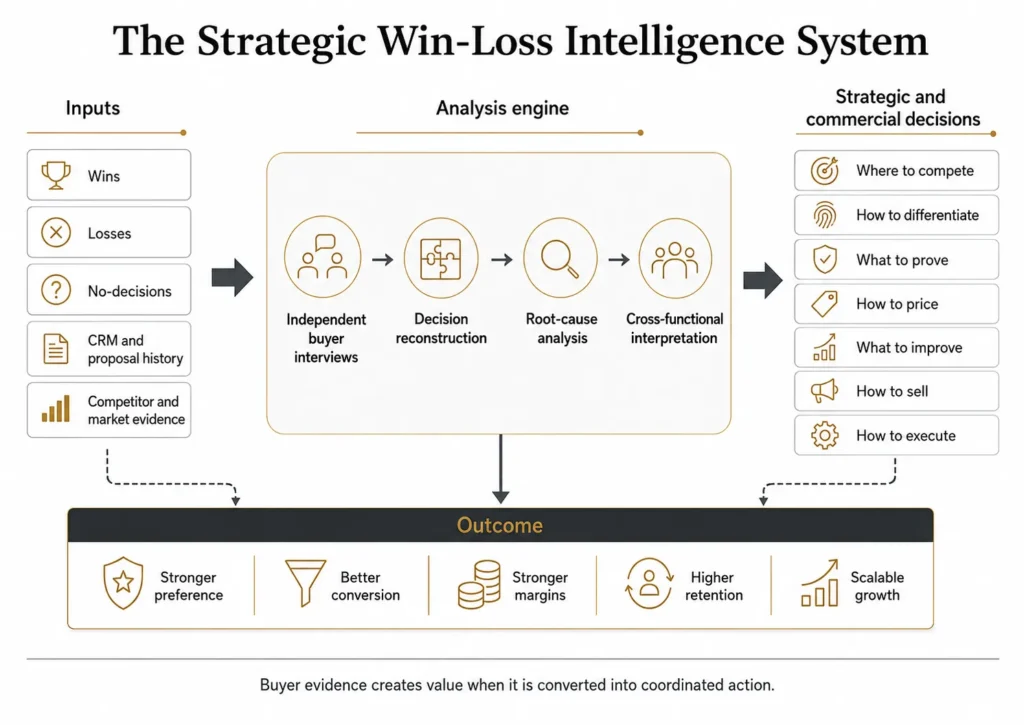
Figure 1. Win-loss analysis creates value when won, lost, and no-decision opportunities are converted into coordinated strategic and commercial choices.
Win-Loss Analysis Consulting Should Answer a Strategic Question
The question is not simply: Why did we win or lose this deal?
The stronger executive question is:
What do real buyer decisions reveal about how we compete, where customers see value or risk, why alternatives appear stronger, and what our organization must change to grow more profitably?
A strong engagement can help your leadership team answer:
- Which customer outcomes truly drive preference.
- Why buyers believe some claims and dismiss others.
- Which competitors and alternatives are actually considered.
- Where buyers see risk in your offer or organization.
- Who influences the decision and where authority sits.
- When price is the root cause—and when it is only the visible explanation.
- Which product, service, channel, and customer-experience gaps materially affect revenue.
- Which sales behaviors build confidence or create friction.
- What should change at company, segment, country, channel, or account level.
This focus on the buyer’s underlying decision is consistent with Harvard Business Review’s Jobs to Be Done framework, which examines the progress customers are trying to achieve and why they choose one solution over another.
Why Internal Explanations Are Not Enough
Sales teams understand the account and opportunity. Their perspective is essential—but it is not neutral.
Buyers may soften feedback to preserve the relationship. The visible contact may not know the complete decision. Sales may interpret the result through the objection discussed most openly. CRM categories may force a complex process into one field.
Other functions also bring assumptions:
- Sales may conclude that the problem was price.
- Marketing may believe the message was clear.
- Product may assume a feature was missing.
- Service may believe expectations were unrealistic.
- Management may attribute the result to the market.
Independent buyer interviews provide an external reality check. They show how the decision was experienced by the people who made, influenced, approved, or blocked it.
When Win-Loss Analysis Consulting Becomes a Leadership Priority
- Your CRM contains broad loss codes but little strategic insight.
- Sales teams repeatedly blame price, timing, or budget.
- Win rates differ materially by segment, country, channel, product, or team.
- Your value proposition is not producing consistent preference.
- Competitors win for reasons your organization cannot clearly explain.
- Deals look healthy until they suddenly disappear.
- You rely too heavily on discounts to protect conversion.
- You are entering a new market or launching a new offer.
- Your channel or distributor model may be affecting customer confidence.
- Product, service, and sales teams disagree about what customers value.
- You need a stronger fact base for a strategic or go-to-market decision.
Wins, Losses, and No-Decisions Reveal Different Types of Value
Wins reveal the foundations of preference
They show which strengths matter, which proof is credible, which relationships build confidence, and where your company earns a meaningful advantage.
Losses reveal competitive and organizational gaps
They show where competitors, incumbents, substitutes, internal alternatives, or lower-risk choices appear stronger.
No-decisions reveal why the buyer chose not to act
They expose weak urgency, internal misalignment, unclear value, implementation fear, budget risk, or insufficient confidence in every available option.
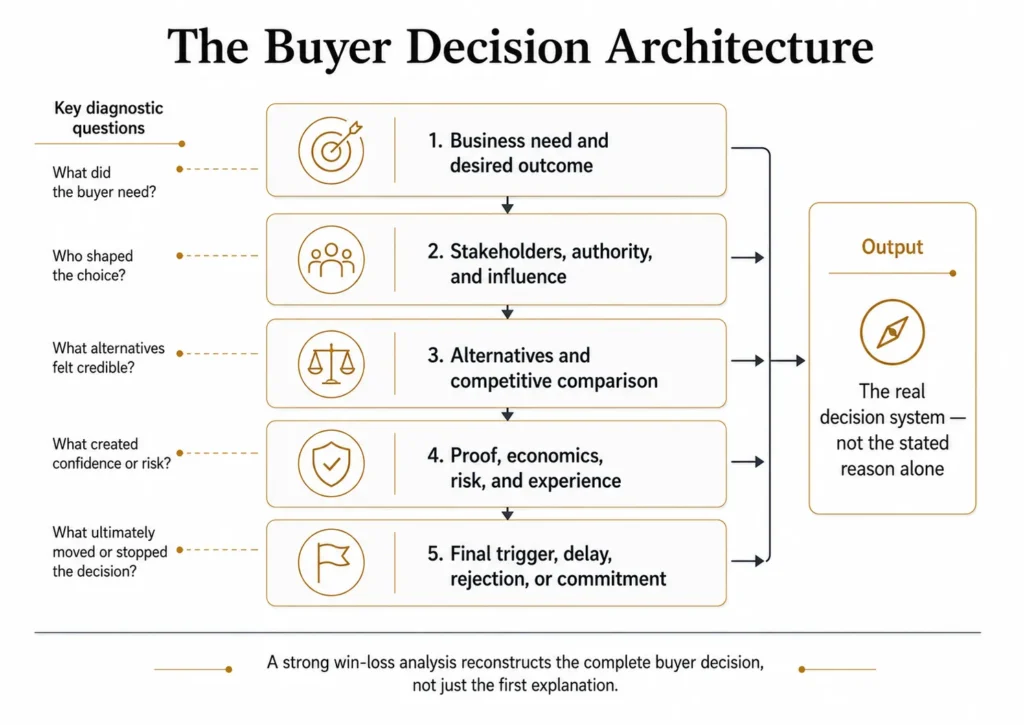
Figure 2. A strong win-loss analysis reconstructs the complete buyer decision architecture rather than accepting the first explanation.
Our Strategic Approach to Win-Loss Analysis Consulting
1. Define the management decisions the program must improve
We begin with the executive question, not the interview script. Your objective may be to improve win rates, test a value proposition, understand competitor strength, redesign pricing, improve onboarding, evaluate a distributor, support market entry, refine a product roadmap, or align a regional go-to-market strategy.
2. Build the right opportunity portfolio
We select a purposeful mix of wins, losses, and no-decisions across countries, segments, products, deal sizes, competitors, sales teams, channels, and strategic accounts.
The objective is not sample size for its own sake. It is to obtain enough diversity and repetition to identify useful patterns and test the most important hypotheses.
3. Review the internal fact base
We examine CRM records, proposals, pricing, sales notes, stakeholder maps, competitor intelligence, product information, customer-success feedback, and other relevant evidence.
4. Conduct independent buyer interviews
We speak directly with decision-makers and influencers, without the salesperson present.
Our interviews explore:
- The original business need and desired outcome.
- Decision criteria and stakeholders.
- Authority and informal influence.
- Alternatives considered.
- Value and differentiation.
- Proof and credibility.
- Price and commercial terms.
- Implementation risk.
- The sales and proposal experience.
- Service and post-sale expectations.
- The final decision trigger.
5. Reconstruct the decision and identify root causes
We do not treat the first answer as the conclusion. “Price” may mean the offer was too expensive. It may also mean the value was unclear, proof was weak, terms were unfavorable, implementation felt risky, or the competitor appeared easier to work with.
We distinguish stated reasons from underlying drivers, individual opinions from recurring patterns, symptoms from root causes, and facts from hypotheses and unknowns.
6. Triangulate buyer evidence
We compare interviews with internal data and external evidence. This helps prevent management from overreacting to one anecdote or dismissing a repeated pattern.
7. Translate findings into strategic choices
We connect buyer evidence with specific decisions across competitive positioning, value proposition, proof, pricing, product, service, onboarding, customer experience, channels, account strategy, market entry, and go-to-market design.
8. Mobilize the organization
Insight creates no value until ownership is clear. We help leadership prioritize actions, define owners, establish indicators, and align sales, marketing, product, service, finance, channel management, and customer success.
9. Repeat and measure
A one-time study can solve a focused question. A recurring program creates a management feedback loop that tracks changing buyer priorities, competitor behavior, and whether your actions are improving outcomes.
Three Engagement Models
Focused diagnostic
Designed for one urgent strategic question, product, market, competitor, segment, or recent performance issue.
Typical use: test whether the company is truly losing on price, diagnose a launch, understand a competitor’s momentum, or identify why a strategic segment is underperforming.
Strategic deep dive
Designed to compare multiple deal types, segments, products, channels, or countries and support broader strategic choices.
Typical use: refine the value proposition, redesign the sales process, evaluate product-service priorities, or improve regional go-to-market execution.
Continuous buyer-intelligence program
Designed as a recurring system with periodic interviews, executive readouts, action tracking, and trend monitoring.
Typical use: monitor changing buyer behavior, competitor performance, strategic accounts, channel effectiveness, or transformation progress.
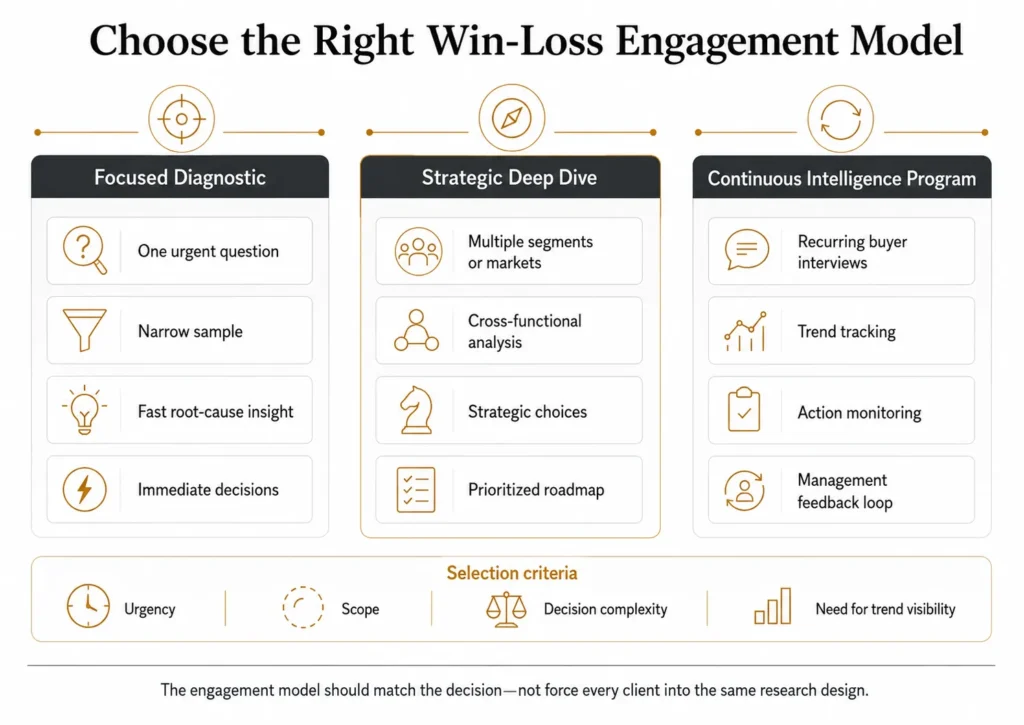
Figure 3. The right win-loss engagement model depends on the urgency, scope, complexity, and need to track change over time.
What You Can Expect from a Midas Win-Loss Analysis Consulting Engagement
- An executive summary of the real decision drivers.
- Win, loss, and no-decision comparisons.
- Buyer decision-process and stakeholder maps.
- Competitor and alternative perception analysis.
- Value proposition and proof gaps.
- Pricing and commercial-term implications.
- Sales-process and account-strategy recommendations.
- Product, service, onboarding, and customer-experience priorities.
- Channel and partner findings.
- Country, segment, product, team, or competitor comparisons.
- A prioritized action roadmap with owners and indicators.
- An executive workshop to align the organization.
The deliverable is designed to help you decide what to change, not merely document what buyers said.
How Win-Loss Analysis Consulting Creates Business Impact
Stronger conversion
Your teams focus on the decision drivers that truly shape buyer preference rather than relying on generic objections.
Better margins
You reduce unnecessary discounting when the underlying issue is proof, trust, service, implementation, or differentiation.
Buyer value is rarely limited to product performance and headline price. Harvard Business Review’s B2B Elements of Value framework illustrates how economic, operational, strategic, personal, and reputational benefits can influence business purchasing decisions.
Sharper positioning
You learn which claims matter, which sound generic, what customers believe, and where competitors own a stronger perception.
More disciplined product and service investment
You distinguish revenue-critical gaps from requested improvements that do not materially affect customer choice.
More effective channels
You understand whether distributors, resellers, integrators, and service partners strengthen or weaken confidence.
Better customer experience
You identify where onboarding, implementation, support, responsiveness, or continuity affect new-business decisions and retention.
Stronger strategic alignment
You give leadership and cross-functional teams one external fact base rather than several competing internal narratives.
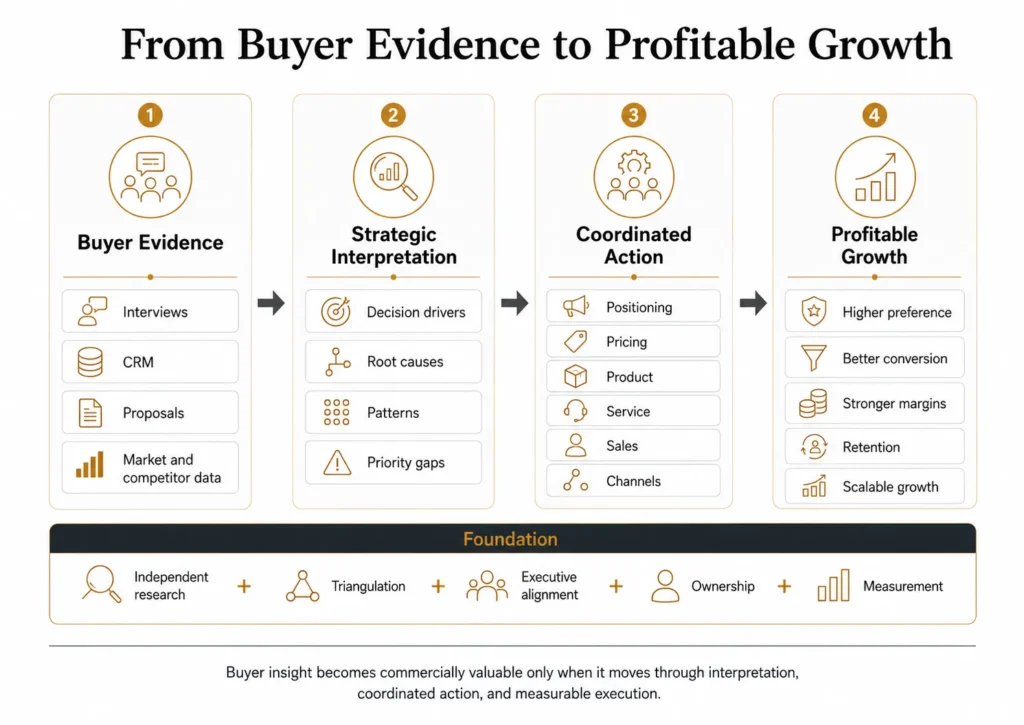
Figure 4. Buyer evidence becomes commercially valuable only when it is converted into strategic interpretation, coordinated action, ownership, and measurable execution.
Win-Loss Analysis Consulting in Latin America Requires Regional and Local Intelligence
Across Latin America, buyers may avoid direct negative feedback, value local confidence, and involve decision influencers that do not appear clearly in the CRM.
Those similarities should not become stereotypes. Decision authority, relationship dynamics, procurement practices, service expectations, communication styles, and competitor alternatives vary by country, industry, segment, and account.
Midas conducts interviews in Spanish and Portuguese and compares regional patterns with local exceptions. This helps you decide what should be standardized and what requires country-specific action.
- Win-Loss Analysis in Latin America
- Win-Loss Analysis in Argentina
- Win-Loss Analysis in Brazil
- Win-Loss Analysis in Chile
- Win-Loss Analysis in Colombia
- Win-Loss Analysis in Mexico
- Win-Loss Analysis in Peru
For the detailed methodology and uses beyond sales, visit Win-Loss Analysis: Your Secret Weapon for Growth Beyond Sales.
Industries We Support with Our Win-Loss Analysis Consulting
We adapt the research design to the buying system, not only the industry label. Midas supports organizations in key industries, such as:
Why Choose Midas Consulting for Win-Loss Analysis?
We treat win-loss analysis consulting as strategy, not a sales survey
We connect buyer evidence with competitive positioning, value proposition, pricing, product, service, channels, customer experience, and go-to-market decisions.
We interview buyers independently
Buyers can speak more openly with someone who was not part of the deal and has no commercial stake in the answer.
We understand executive decisions
We begin by clarifying what leadership must decide and design the engagement around that need.
We understand Latin America
We work in Spanish and Portuguese and distinguish regional patterns from country, industry, segment, and account-specific realities.
We triangulate evidence
We compare buyer interviews with CRM data, proposals, sales notes, pricing, market information, and competitor intelligence.
We focus on action and ownership
Our work does not end with findings. We help prioritize changes, assign ownership, and define indicators.
We bring experienced strategic judgment
Midas has focused on Latin America for more than 25 years and has conducted win-loss, market, competitor, value proposition, and strategy engagements across complex B2B, B2C, industrial, technology, pharmaceutical, healthcare, automotive, consumer, and regulated markets.
Selected Client Feedback About Our Win-Loss Analysis Consulting
“Thanks to Midas, we discovered that our assumptions were wrong. We were losing deals for reasons we never suspected. The insight changed how we sell.”
— Sales Director
“The interviews and recommendations were detailed, professional, and insightful. We redesigned our pitch and won back several clients.”
— Head of Commercial Strategy
Ethical, Independent, and Reliable Buyer Research
We follow the SCIP Code of Ethics for competitive and market intelligence, the profession’s recognized framework for ethical intelligence gathering. We comply with applicable laws, accurately disclose relevant identity and organizational information before interviews, avoid conflicts of interest, and provide honest recommendations.
We do not misrepresent who we are, seek trade secrets, request confidential documents, or encourage buyers to violate legal or contractual obligations.
We explain how feedback will be used, protect confidentiality according to the agreed research design, and distinguish individual comments from recurring evidence.
We also separate buyer evidence, internal assumptions, competitor claims, hypotheses, and unknowns so your leadership team can understand the strength of each conclusion.
Frequently Asked Questions About Win-Loss Analysis Consulting
What is win-loss analysis consulting?
It is the structured process of interviewing buyers after wins, losses, or no-decisions; reconstructing the buying decision; identifying recurring drivers; and translating the evidence into strategic and commercial action.
Is win-loss analysis consulting only for sales?
No. It can improve value proposition, pricing, product priorities, service, onboarding, customer experience, channels, competitor strategy, and go-to-market design.
Why should interviews be conducted by an independent third party in win-loss analysis consulting?
Buyers are often more candid with someone who was not involved in the sale and will not manage the future commercial relationship.
Do you interview only lost opportunities in your win-loss analysis consulting?
No. Wins reveal what creates preference, losses reveal barriers and competitor advantages, and no-decisions explain why the buyer chose not to act.
How many interviews are needed for your win-loss analysis consulting?
The number depends on the decision, sample diversity, countries, segments, deal sizes, competitors, and desired confidence. A focused diagnostic may begin with a relatively small balanced sample; a broader program requires more coverage.
Can you analyze a specific competitor in your win-loss analysis consulting?
Yes. We can design the sample to understand why buyers choose that competitor, which strengths they believe, and where your company can respond credibly.
Can you test whether price is really the problem?
Yes. We examine price relative to value, proof, terms, risk, implementation, service, incumbent confidence, and the alternatives.
Can you evaluate distributors or channel partners?
Yes. Buyer interviews can reveal whether partners strengthen customer access, technical credibility, responsiveness, service, trust, and the overall buying experience.
Can win-loss analysis consulting support market entry?
Yes. It can clarify buyer priorities, incumbent advantages, proof requirements, channel expectations, and barriers a new entrant must overcome.
Can you work across several Latin American countries?
Yes. We use a common analytical framework while adapting interviews and interpretation to country-specific buying dynamics.
Will the findings blame our sales team?
No. The objective is to understand the complete buyer decision system and improve the offer, proof, pricing, product, service, channels, execution, and management choices surrounding sales.
Can the win-loss analysis consulting program be recurring?
Yes. A continuous program can track changing buyer priorities, competitor behavior, channel effectiveness, and whether management actions are improving outcomes.
How do you protect confidentiality?
We define the research protocol in advance, explain how feedback will be used, protect interviewee confidentiality according to the agreed design, and report themes at an appropriate level.
What happens after the final report?
We can facilitate an executive workshop, prioritize actions, define ownership and indicators, and support follow-up reviews or recurring buyer-intelligence cycles.
How to Move Forward
1. Clarify the decision
We discuss the commercial or strategic question your leadership team needs to answer.
2. Design the engagement
We define the sample, interview approach, markets, internal evidence, deliverables, timing, collaboration model, and investment.
3. Interview and analyze
We conduct independent buyer interviews, share relevant early signals, reconstruct decisions, and identify root causes and patterns.
4. Decide and mobilize
We present the findings, challenge assumptions, prioritize actions, and help align ownership across the organization.
About Midas Win-Loss Analysis Consulting
With more than 250 win‑loss analysis engagements completed, Midas Consulting is the corporate author and provider of this specialized win-loss analysis service.
We support C‑level executives and leadership teams in making stronger decisions through win‑loss analysis, competitor and market analysis, strategic intelligence, market entry, go‑to‑market strategy, benchmarking, value‑proposition development, business wargaming, and strategy consulting.
Our approach blends regional expertise, local market research, strategic interpretation, and hands‑on collaboration with your team. Since 2000, we have delivered over 250 win-loss analysis projects across B2B, B2C, industrial, consumer, technology, healthcare, and regulated markets.
The win‑loss analysis practice is led by Adrian Alvarez, PhD, Managing Partner of Midas Consulting, Wharton Alumnus, MBA Professor at Universidad Argentina de la Empresa (UADE), and Competitive Intelligence Fellow. His expertise strengthens the firm’s methodology, while the service, recommendations, and page authorship belong to Midas Consulting as an organization.
Last reviewed: August 2026
Turn Buyer Decisions into Your Next Strategic Advantage
You may be trying to explain falling win rates, reduce discounting, strengthen your value proposition, understand a competitor, improve a launch, fix a channel, or identify why apparently healthy deals disappear.
You do not need another internal explanation. You need an independent view of how buyers actually decided, and a disciplined process for turning that evidence into action.
In an initial conversation, we will discuss your business objectives, markets, segments, sales process, current loss explanations, available data, and the strategic decisions the engagement must support.
We can then propose a focused diagnostic, strategic deep dive, or continuous buyer-intelligence program tailored to your needs.